The Forgotten "Internet" of Tubes: How Pneumatic Mail Shaped Urban America
By [Your Name/News Outlet Name]
Published: August 13th, 2026
In a world increasingly defined by the instantaneous flow of digital information, it’s easy to forget the tangible, physical networks that once underpinned communication and commerce. Yet, a fascinating chapter of American urban history, largely relegated to the realm of nostalgic curiosity, offers a striking parallel to our modern digital age: the pneumatic tube mail delivery systems that crisscrossed major cities for over half a century. These intricate networks of underground pipes, once hailed as technological marvels, represent a pioneering, albeit short-lived, attempt to revolutionize the speed and efficiency of mail delivery, echoing the very aspirations that drive today’s internet.
The public consciousness of these "series of tubes" was, ironically, reignited by a misspoken analogy. In 2006, U.S. Senator Ted Stevens, in a now-infamous remark, described the internet as "a series of tubes." While met with widespread amusement and derision, his analogy, though imprecise, held a kernel of truth rooted in a forgotten technological past. Stevens, born in 1923, likely drew upon memories of a groundbreaking innovation from his youth: the sophisticated pneumatic tube systems that transported mail underground in major American cities from the late 19th century until the mid-20th century. These systems, a testament to human ingenuity and a precursor to the rapid transit of information we now take for granted, deserve a closer examination.
The Dawn of Underground Speed: A Global Precedent and American Adoption
The concept of pneumatic tube transport was not a purely American invention. European cities like London, Paris, and Berlin had already embraced the technology, establishing their own networks in the mid-19th century. These early systems demonstrated the potential for rapid, automated delivery of documents and small parcels, paving the way for their adoption across the Atlantic.
Philadelphia holds the distinction of being the first American city to embrace this subterranean revolution. In 1893, the city’s transition to a pneumatic tube system was spearheaded by John Wanamaker, a visionary department store magnate who had also served as Postmaster General. Wanamaker, a staunch advocate for technological advancement in public services, envisioned a faster, more efficient postal system. The inauguration of Philadelphia’s system was marked by a symbolic act: Wanamaker placed a Bible, wrapped in an American flag, into a canister. With a resounding "whish," the canister was propelled underground to the Central Post Office, heralding a new era of postal speed.
The Philadelphia network quickly expanded, eventually encompassing nearly twenty miles of tunnels beneath the city’s streets. Its success spurred other major urban centers to follow suit. By 1898, New York City, Boston, Chicago, and St. Louis had all implemented similar pneumatic mail delivery systems, all operated by the U.S. Post Office Department. These cities became pioneers in a nationwide movement to modernize their postal infrastructure, recognizing the economic and social benefits of rapid communication.
The Mechanics of the "Series of Tubes": How It Worked
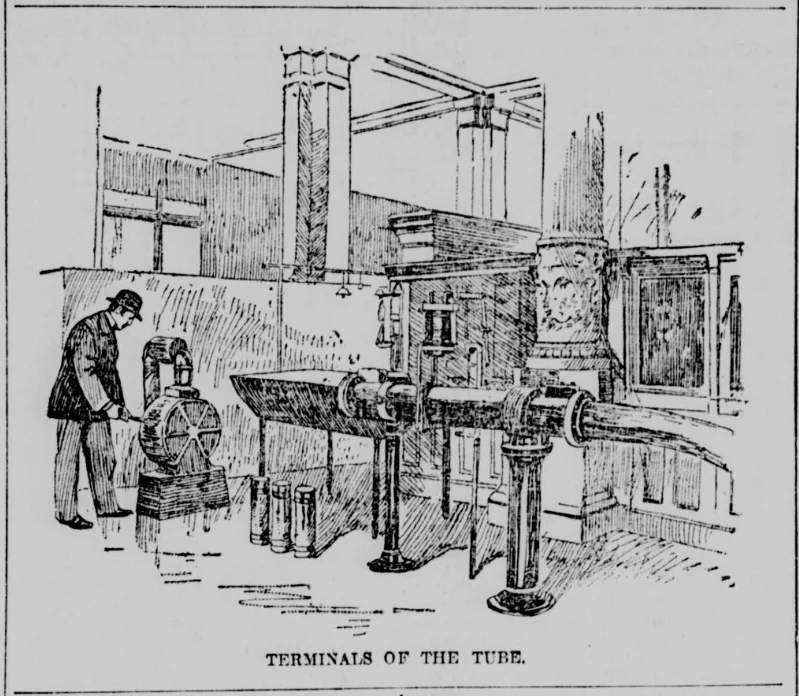
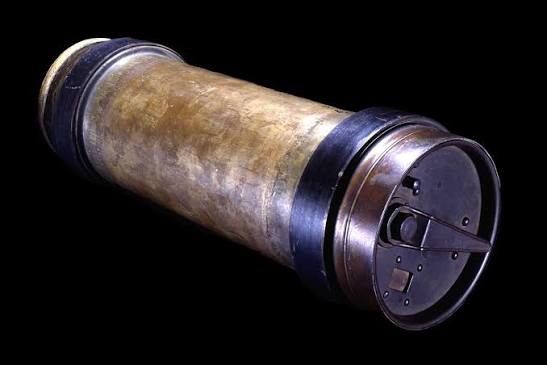
The operation of these pneumatic tube systems was a marvel of engineering for its time. At its core, the system relied on the principles of air pressure. A network of interconnected cast-iron tubes, typically ranging from 2.5 to 3 inches in diameter, was laid beneath the city streets. Mail was placed into specially designed cylindrical canisters, often made of steel.
At sending stations, an operator would load the canister into a pneumatic tube transmitter. By manipulating valves, air pressure would be generated or released, propelling the canister through the tubes. Two primary methods were employed:
- Compressed Air Propulsion: In this method, compressed air was used to push the canister forward. This was often achieved by utilizing large compressors housed in central power stations. The pressurized air would be released into the tube behind the canister, forcing it to move towards its destination.
- Vacuum Suction: Alternatively, a vacuum could be created in front of the canister, drawing it forward. This was achieved by drawing air out of the tube, creating a lower pressure zone that the canister would naturally move towards.
The canisters traveled at impressive speeds, often exceeding 30 miles per hour, allowing for near-instantaneous delivery between connected post offices, businesses, and even some residences. The "whish" sound that accompanied the canisters’ passage became a familiar, almost comforting, urban soundscape in cities equipped with these systems.
A Chronology of Progress and Decline
The era of pneumatic tube mail delivery was marked by a dynamic interplay of innovation, expansion, and eventual obsolescence.
- Late 19th Century (1890s): The widespread adoption of pneumatic tube systems begins in major American cities, with Philadelphia leading the way in 1893. European cities had already established similar networks.
- Early 20th Century (1900s-1910s): The systems reach their zenith, with extensive networks in cities like New York, Boston, and Chicago. They become an integral part of urban life, facilitating rapid communication and business transactions.
- World War I (1914-1918): The U.S. Post Office suspends pneumatic tube service to conserve vital resources, a temporary setback for the burgeoning system.
- The Roaring Twenties (1920s): Service resumes in some areas, particularly in New York and Boston, where high mail volumes could still justify the operational costs. However, the seeds of obsolescence were being sown.
- The Great Depression and World War II (1930s-1940s): The economic challenges of the Depression and the resource demands of World War II further strain the pneumatic tube systems. The rise of the automobile begins to offer a more flexible and ultimately more cost-effective alternative for mail delivery.
- Post-War Era (Late 1940s-1950s): The proliferation of automobiles and the expansion of road infrastructure make underground pneumatic delivery increasingly inefficient.
- December 12, 1953: Pneumatic mail service is officially suspended across the entire country, marking the end of an era.
Supporting Data: The Limitations of a "Series of Tubes"
Despite their initial promise, the pneumatic tube systems faced inherent limitations that ultimately contributed to their demise.
Volume Constraints: As explained by retired U.S. Postal Inspector Robert A. Cohen, the fundamental physics of fluid dynamics played a critical role. "It takes a certain amount of time for a gallon of liquid to travel through a funnel. Two gallons take twice as long to pass through," Cohen noted in his historical account of these systems. This analogy highlights how increasing mail volume directly translated to slower delivery times within the tubes. The steel capsules and cast-iron tunnels, while robust, could only handle so much traffic before becoming bottlenecks. The efficiency of the system diminished proportionally as mail volumes increased, a stark contrast to the scalability of digital networks.
Operational Costs and Inefficiencies: Operating these complex underground networks was a costly endeavor. The need for specialized machinery, constant maintenance, and dedicated personnel contributed to significant expenses. During periods of economic hardship, such as the Great Depression, these costs became increasingly difficult to sustain. Furthermore, the suspension of service during World War I demonstrated the system’s vulnerability to external factors and resource allocation priorities.
The Rise of the Automobile: The most significant blow to the pneumatic tube systems came with the widespread adoption of the automobile and the subsequent development of road-based infrastructure. Delivering mail by truck offered a flexibility and cost-effectiveness that underground tubes could not match. Roads provided direct access to businesses and residences, eliminating the need for specialized drop-off and pick-up points associated with the tube network.
Official Responses and the Public’s Fascination
While the postal authorities ultimately deemed the pneumatic systems unsustainable, the public’s fascination with them remained strong throughout their operational life. The speed and novelty of underground mail delivery captured the imagination. Anecdotes from the era paint a picture of a technology that was not only functional but also imbued with a sense of wonder.
The mention of "rocketeers" – the operators of the pneumatic tube systems – and their alleged use of the network to receive orders from sandwich shops highlights a perhaps more whimsical aspect of the technology’s integration into daily life. This romanticized view, though possibly exaggerated, speaks to the public’s perception of these tubes as a futuristic and even slightly mysterious mode of transport.
The enduring legacy of these "series of tubes" is evident in how they continue to spark curiosity and comparison to modern communication technologies. The "It’s History" video referenced in the original article, alongside other historical documentaries and articles, demonstrates a continued interest in understanding this forgotten infrastructure.
Implications: A Precursor to the Digital Age
The pneumatic tube mail systems, though ultimately defunct, offer profound implications for our understanding of technological evolution and the pursuit of rapid communication.
Early Embodiment of Connectivity: These systems were, in essence, an early form of a "networked" society. They connected disparate parts of a city with a speed and efficiency previously unimaginable, mirroring the foundational principles of today’s internet. The aspiration to transmit information rapidly and reliably across distances was the same driving force behind both innovations.
The Challenge of Scalability: The pneumatic tube systems’ struggle with increasing mail volume serves as a crucial lesson in the importance of scalability. While effective for a certain capacity, they could not adapt to the exponential growth of communication needs in the same way that digital networks can. This highlights a fundamental difference between physical and digital infrastructure – the inherent limitations of physical space and material constraints versus the more fluid and adaptable nature of digital data.
The Enduring Appeal of Speed: The public’s embrace of pneumatic mail underscores a timeless human desire for speed and convenience in communication. This desire, amplified by the internet, continues to shape our technological landscape. The "hooked on food delivery" analogy at the end of the original article subtly points to how the rapid delivery of goods and services, initiated by systems like pneumatic tubes, has become deeply ingrained in our modern lifestyle.
The story of pneumatic tube mail is not just a historical footnote; it’s a vital reminder of the long and winding road of innovation. It demonstrates that the quest for faster, more efficient communication is a constant human endeavor, and that even the most seemingly outlandish technological analogies can, upon closer inspection, reveal a profound connection to our past. As we navigate the ever-evolving digital frontier, understanding these "series of tubes" offers a valuable perspective on the persistent human drive to connect and communicate, a drive that has, for over a century, propelled us forward, both above and below the bustling streets of our cities.