William N. Copley’s Provocative "X-Rated" Series Takes Center Stage at Galerie Max Hetzler, Berlin
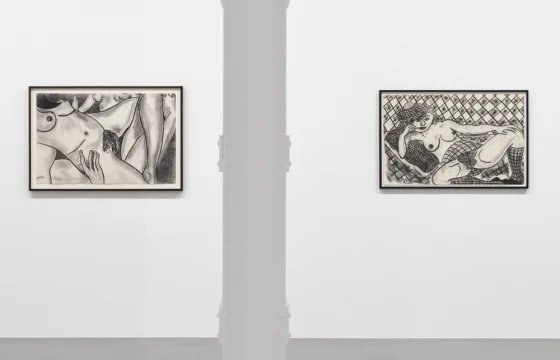
Berlin, Germany – Galerie Max Hetzler is set to unveil a significant solo exhibition, "X-Rated (1972–1974)," dedicated to the provocative paintings and works on paper of the influential American artist William N. Copley. This marks the gallery’s fourth presentation of Copley’s oeuvre, offering a deep dive into a pivotal and often controversial period of his artistic career. The exhibition will be on view through April 22, 2026, providing ample opportunity for art enthusiasts and scholars alike to engage with Copley’s unique vision.
Copley’s artistic journey was far from conventional. Possessing an early ambition to be a writer, his path to painting was circuitous, marked by a brief but impactful stint in the late 1940s co-founding and managing Copley Galleries in Beverly Hills. This venture, co-directed with his brother-in-law, artist John Ployardt, became a crucial nexus for Copley’s immersion into the avant-garde. The gallery became a vital platform for exiled Surrealists such as Man Ray, Max Ernst, and Marcel Duchamp, fostering an environment of artistic exchange that profoundly shaped Copley’s developing artistic sensibilities. It was also through this period that Copley forged a significant relationship with the renowned dealer Alexander Iolas, who became a pivotal advocate, encouraging Copley to embrace his nascent artistic practice. It was around the closure of Copley Galleries that the artist began signing his work with the distinctive moniker "CPLY," making his debut exhibition at a Los Angeles bookstore in 1951, shortly before relocating to France.
While Copley emerged a generation after the core Surrealist movement, his artistic output is indelibly marked by its conceptual and personal resonance with Surrealist principles. His distinctive style, characterized by bold black outlines and a self-taught, figurative approach, draws evident parallels with the aesthetics of comic strips and Pop Art. However, Copley approached the canvas with a distinctly literary sensibility, employing narrative strategies that not only embodied Surrealist tenets but also propelled the structural evolution of his compositions. Like many Surrealists, Copley recognized the fundamental role of humor, psychology, and eroticism in the creative process. Yet, his exploration of overtly sexual themes transcended the often playful eroticism of his contemporaries, venturing into more audacious and unflinching territory.
A Deep Dive into the "X-Rated" Series: Challenging Norms Through Eroticism and Art
The centerpiece of the exhibition is the artist’s prolific "X-Rated" series, conceived between 1972 and 1975. This body of work, first showcased in 1974 at the New York Cultural Center in an exhibition bearing the same title, draws heavily from erotic imagery and ritualized motifs culled from adult magazines. Copley himself articulated his intention for this series as seeking to "break through the barrier of pornography into the area of joy." This was a bold statement in an era when the sale of hardcore pornography remained illegal in the United States. Copley would procure "adult magazines" surreptitiously, utilizing them as a rich source for his inventive figurative and narrative paintings. These works delved into the complexities of eroticism, sexual politics, and the uninhibited pursuit of pleasure.
The "X-Rated" paintings are a testament to Copley’s remarkable ability to convey a diverse spectrum of emotional tones. Works such as The Seven Year Itch (1973) exude a tender sensibility, while pieces like Viridiana (1973) pulse with an exuberant energy. Nearly all of the works in the series are imbued with an overt and disarming humor. Copley’s perspective on sexuality was one of liberation and endless possibility, as evidenced by his declaration: "That’s what makes sex so much fun: since nobody really understands it, the possibilities for originality are endless." This sentiment underscores his artistic philosophy, which sought to embrace the inherent mystery and expansive nature of human desire.
The Genesis of Creation: From Sketch to Canvas
Copley’s meticulous approach to his craft is further illuminated within the exhibition through the inclusion of his preparatory drawings. He typically employed a two-stage process before commencing a painting: an initial, small-scale study, followed by a larger, more refined version. This second stage allowed him to meticulously adjust compositions, introduce crucial alterations, and amplify the pictorial dynamism of the nascent work. The resultant paintings often retain a deliberately "slapdash" or spontaneous style, with figures rendered with a loose, energetic hand rather than meticulous detail. The exhibition thoughtfully presents this developmental process by juxtaposing preparatory drawings with their completed painted counterparts, including the striking pairing of Calcutta (1973) and its related drawing, Untitled (1973). This allows viewers an intimate glimpse into Copley’s creative thinking and the evolution of his visual language.
Visual Language: Bold Abstraction and Unflinching Depiction
The canvases of the "X-Rated" series are characterized by scenes of copulation and orgiastic revelry set against vibrant, brightly colored backgrounds. These backdrops are animated by bold, geometric patterns, a stylistic choice that led critic James R. Mellow to observe that the works were "too artful to be libidinous, let alone lascivious." It is precisely this sophisticated treatment of backgrounds, coupled with the contorted, entwined bodies rendered with attenuated limbs and schematic outlines, that has prompted art historians to draw connections between Copley and the work of Henri Matisse.
However, while depictions of the nude and sexual imagery throughout art history have traditionally relied on suggestion, euphemism, and idealization, Copley’s approach was strikingly direct. He presented the sexual act with an unflinching candor, leaving virtually nothing to the viewer’s imagination. This directness, combined with his bold visual language, challenged conventional notions of artistic representation and the portrayal of sexuality.
Cultural Resonance and Critical Acclaim
Copley’s engagement with popular culture extended to his choice of titles. He frequently borrowed titles from iconic Hollywood films, such as Les Quatre Cent Coups, The Exorcist, and Tobacco Road. This practice served to temper the potential shock value of his pornographic imagery through a lens of playful humor and a keen understanding of pop cultural sensibilities. The films themselves rarely aligned explicitly with the direct content of the images, yet their titles initiated a cascade of associations for the viewer, inviting a complex interplay of recognition and subversion.
The very title of the series, "X-Rated," itself draws from cinematic terminology. Until the 1990s, the "X-rated" classification in the United States designated films deemed suitable only for adult audiences, a term carrying an implicit warning and a suggestion of transgressive content. Despite the cautionary notices that accompanied the 1974 exhibition at the New York Cultural Center, which acknowledged the potentially offensive nature of the subject matter, the show, curated by the progressive director Mario Amaya, garnered a notably positive critical reception. Peter Schjeldahl, writing for Art in America, lauded the presentation as a "uniformly gorgeous exhibition" and a "highly satisfying development in Copley’s work." This critical endorsement underscored Copley’s ability to navigate controversial themes with artistic integrity and compelling visual execution.
A Legacy of Subversion and Artistic Freedom
The "X-Rated" series stands as a singular and audacious chapter within Copley’s extensive body of work. It was a deliberate departure from the prevailing artistic currents of the early 1970s, carving out a unique space for exploration and expression. Even in today’s image-saturated and arguably more desensitized world, Copley’s suggestive canvases retain a potent subversive charge. By masterfully merging the realms of fine art and eroticism, Copley consistently challenged conservative societal norms and rejected the notion of artistic neutrality. He systematically dismantled moralistic constraints, advocating instead for a direct, honest, and humorously charged engagement with the human experience, particularly its most intimate and often taboo aspects. Galerie Max Hetzler’s exhibition offers a vital opportunity to re-examine this groundbreaking period of Copley’s career and its enduring relevance in contemporary art discourse.