
The Front Row Redefined: How Meta’s Immersive Goo Goo Dolls Concert Signals a New Era for Digital Media
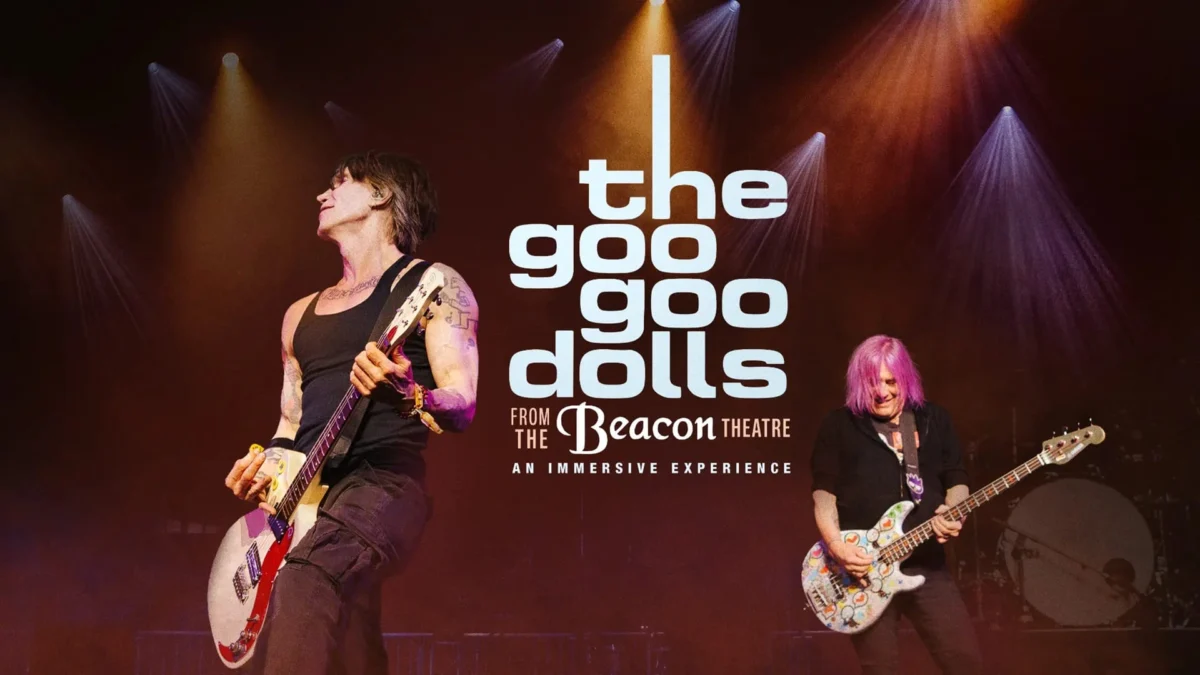
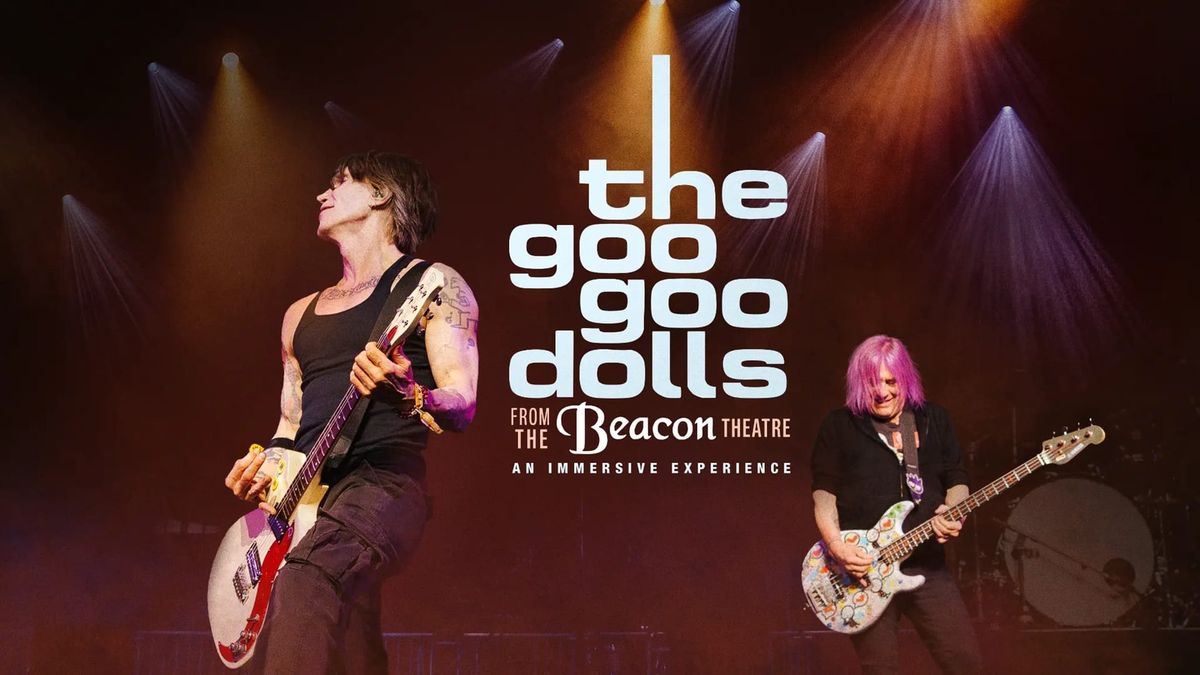
The landscape of live entertainment is undergoing a seismic shift, moving away from the flat rectangles of smartphones and televisions toward the volumetric depths of virtual reality. Meta has recently expanded its burgeoning library of immersive content on the Horizon TV app with a headline-grabbing addition: a full-length, VR180 performance by the Goo Goo Dolls, captured at New York City’s historic Beacon Theatre.
This release is not merely another video file added to a streaming service; it represents a sophisticated evolution in how fans consume music. By placing the viewer in the middle of the stage and among the rafters of one of the world’s most iconic venues, Meta is making a clear argument for the Quest 3 as a premier entertainment device, rather than just a gaming console.
Main Facts: A New Perspective on Alternative Rock
The Goo Goo Dolls immersive concert is the latest high-profile production to land on Meta Horizon TV, the central hub for non-gaming media on the Quest platform. Filmed in high-fidelity VR180 3D, the experience allows users to witness the multi-platinum band—fronted by John Rzeznik and Robby Takac—performing their greatest hits, including the era-defining anthem "Iris."
The production utilizes a multi-camera setup designed specifically for stereoscopic depth. Unlike traditional 360-degree videos, which often suffer from "stretching" and a lack of focus, VR180 concentrates the resolution in front of the viewer, providing a much sharper image that mimics the human field of view. The result is a crisp, 180-degree window into the Beacon Theatre, characterized by:
- Exceptional Image Clarity: Optimized for the 4K-per-eye capabilities of the Quest 3, the footage retains detail in low-light conditions—a notorious challenge for VR filming.
- Dynamic Camera Work: The production features a mix of static wide shots from the "best seats in the house" and a roving immersive rig that glides across the stage, bringing the viewer within arm’s reach of the performers.
- Spatial Audio Integration: The soundscape is designed to shift as the viewer moves their head, ensuring that the roar of the crowd and the acoustics of the theater feel geographically accurate.
This concert joins an elite roster of artists who have embraced the medium on Meta’s platform, including Coldplay (performing at a sold-out Wembley Stadium), Sabrina Carpenter, and Arcade Fire.
Chronology: The Evolution of the Virtual Venue
The journey to the Goo Goo Dolls’ VR debut has been a decade in the making, marked by significant technological hurdles and shifting consumer expectations.
The Early Days (2014–2018)
In the early days of the Oculus Rift and Gear VR, immersive concerts were largely experimental. Most were filmed in 360-degree monoscopic video, which lacked depth and often left viewers feeling nauseated due to low frame rates and poor stitching between camera lenses. These early attempts were seen as gimmicks rather than legitimate ways to enjoy music.
The Rise of VR180 (2019–2022)
Recognizing that 360-degree video was often "too much" for seated viewers and technically taxing for hardware, the industry pivoted toward VR180. This format allowed for stereoscopic 3D (giving objects a sense of physical weight and distance) while doubling the effective resolution. During the pandemic, the demand for virtual attendance spiked, leading to Meta’s initial "Venues" experiments, which hosted live-streamed avatars watching 2D screens.
The High-Fidelity Era (2023–Present)
With the launch of the Meta Quest 3 and the Apple Vision Pro, the hardware finally caught up to the vision. The Goo Goo Dolls performance at the Beacon Theatre represents the "Gold Standard" of this current era. It moves away from the "metaverse" aesthetic of low-poly avatars and instead focuses on "Immersive Video"—ultra-high-bitrate, real-world footage that prioritizes presence over interactivity.
Supporting Data: Why Immersive Video is Winning
The success of the Goo Goo Dolls experience is rooted in technical data that explains why VR180 is becoming the preferred format for music.
The "Presence" Metric
Psychological studies into VR often measure "presence"—the feeling of "being there." Traditional 2D concert films, even in 4K, rarely trigger the brain’s spatial awareness. However, VR180 3D at 60 frames per second (fps) or higher tricks the vestibular system into accepting the environment as physical space. Users reporting on the Goo Goo Dolls experience frequently cite the "Iris" performance as a turning point, where the combination of the crowd’s scale and the proximity to John Rzeznik creates an emotional resonance that 2D media cannot replicate.
Hardware Optimization
The Quest 3 features a "4K+ Infinite Display" (2064 × 2208 pixels per eye). To fill this resolution effectively, Meta’s Horizon TV has moved toward 8K source files. The data throughput required for these experiences is immense, often requiring high-speed Wi-Fi 6/6E connections to stream without buffering. This technical overhead is the price of admission for an experience that avoids the "screen door effect" that plagued earlier VR generations.
Consumption Trends
Meta’s push into Horizon TV follows internal data suggesting that a significant portion of Quest users spend more time in media apps (YouTube VR, Netflix, Horizon TV) than in high-end games. By curating a library of "passive" but "immersive" content, Meta is targeting a demographic that wants the "VR experience" without the steep learning curve of complex gaming mechanics.
Official Responses: Meta vs. Apple in the War for Reality
The release of the Goo Goo Dolls concert is a strategic move in the ongoing rivalry between Meta and Apple. Both tech giants are currently vying to define what "Immersive Media" looks like.
Meta’s Strategy
Meta has taken a "breadth and accessibility" approach. By hosting the Goo Goo Dolls on the Horizon TV app, they are making high-end content available to the millions of Quest 2 and Quest 3 owners. A Meta spokesperson recently highlighted that their goal is to build a "sustainable ecosystem for creators and performers," citing their partnership with legendary filmmaker James Cameron as a sign of their long-term commitment to 3D storytelling. Meta’s positioning is clear: they are the "People’s VR," offering premium experiences at a $499 entry point.
The Apple Counterpoint
Apple, meanwhile, has marketed "Apple Immersive Video" as a luxury tier of entertainment for the Vision Pro. Their recent Metallica concert experience was met with critical acclaim for its staggering bitrate and visual fidelity. However, Apple’s content remains locked behind a $3,500 hardware barrier. Meta’s inclusion of the Goo Goo Dolls—a band with massive, multi-generational appeal—is a direct attempt to prove that the Quest 3 can deliver "Apple-level" immersion at a fraction of the cost.
Implications: The End of the Nosebleed Seat?
The implications of the Goo Goo Dolls’ immersive concert extend far beyond the music industry. It suggests a fundamental change in the economics and accessibility of live events.
1. The Democratization of Access
Historically, the "front row" experience was reserved for the wealthy or the incredibly lucky. Immersive video eliminates this barrier. A fan in a rural area or a different country can now stand on the stage of the Beacon Theatre. This "virtual touring" allows bands to reach millions of fans simultaneously without the carbon footprint or logistical nightmare of a global tour.
2. A New Revenue Stream for Artists
As streaming royalties for recorded music remain low, live performance is the lifeblood of the industry. VR concerts offer a "third way": a premium, ticketed or ad-supported digital experience that can be sold long after the physical tour has ended. The Goo Goo Dolls experience serves as a "digital twin" of their tour, immortalizing a specific night in New York in a format that will remain relevant as headset technology improves.
3. The "Killer App" for Non-Gamers
For years, critics have asked what VR is for, if not for gaming. The answer appears to be "Presence." The ability to teleport to a historic theater and feel the vibration of a guitar string is a universal value proposition. As the library of immersive concerts grows to include sports, Broadway plays, and educational tours, the Quest 3 moves closer to becoming the "spatial computer" Meta envisions.
4. Technical Challenges Remain
Despite the success of the Goo Goo Dolls release, challenges persist. File sizes for 8K VR180 video are massive, and streaming them requires robust internet infrastructure. Furthermore, the "social" aspect of concerts—feeling the literal heat of a crowd and the physical bass in one’s chest—is still missing. However, with haptic vests and improved social VR integration on the horizon, these gaps are narrowing.
Conclusion
The Goo Goo Dolls’ performance on Meta Horizon TV is a landmark moment for immersive media. It proves that when high-quality production meets capable hardware, the result is more than just a movie—it is a memory. By capturing the atmosphere of the Beacon Theatre with such precision, Meta has provided a blueprint for the future of the music industry. In this new world, the best seat in the house isn’t in the front row; it’s wherever you put on your headset.


Leave a Comment