The Geothermal Renaissance: Mazama Energy Secures $135 Million to Unlock Super-Hot Rock Power
The global race for carbon-free, baseload electricity has a new frontrunner. Mazama Energy, a geothermal pioneer incubated at Khosla Ventures, announced on Thursday that it has successfully closed an oversubscribed $135 million Series B funding round. The capital injection marks a pivotal moment for the "super-hot rock" geothermal sector, a technology increasingly viewed as the "dark horse" in the quest to power the energy-hungry infrastructure of the artificial intelligence era.
The funding round was led by heavyweights Centaurus Capital and Doerr Capital, with significant participation from oil and gas giants ConocoPhillips and Shell Ventures. They were joined by a coalition of elite climate and tech investors, including Gates Frontier, Khosla Ventures, SiteGround Capital, H. Barton Asset Management, and the Jeffrey and Marieke Rothschild Foundation.
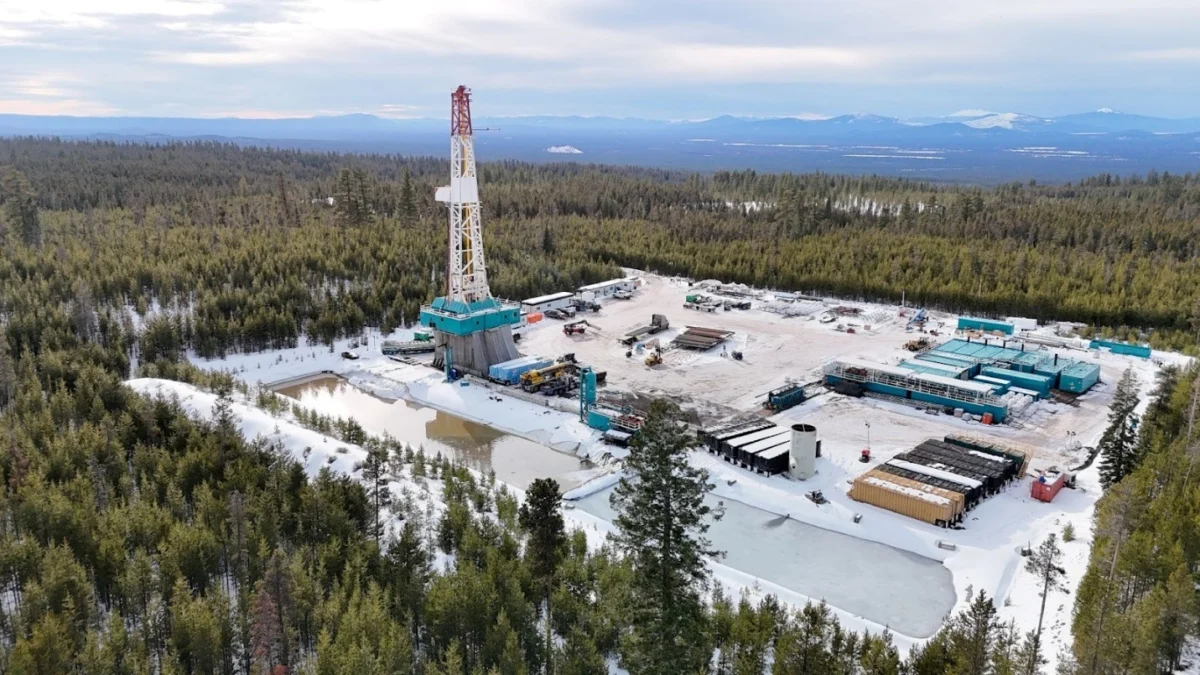
This influx of capital is earmarked for the development of Mazama’s ambitious project in Oregon, where the company aims to tap into temperatures exceeding 750°F (400°C) to generate "supercritical" steam. This technology promises to deliver power at a scale and density previously unthinkable in the geothermal industry.
I. Main Facts: Redefining Geothermal Capability
Mazama Energy is not pursuing traditional geothermal energy, which relies on naturally occurring pockets of steam near the earth’s surface. Instead, the company is pioneering Enhanced Geothermal Systems (EGS) focused on super-hot rock (SHR).
The Power of Supercritical Fluids
At the heart of Mazama’s value proposition is the physics of "supercritical" water. When water is subjected to extreme heat (above 374°C) and high pressure, it enters a phase that is neither fully liquid nor fully gas. In this state, the fluid’s energy-carrying capacity increases exponentially. Mazama estimates that a single well tapping into these conditions can produce up to 15 megawatts (MW) of electricity—roughly ten times the output of a conventional geothermal well.
The Oregon Frontier
The company’s primary focus is its flagship site in Oregon. Recent geological assessments have led to a massive upward revision of the site’s potential. While investor Vinod Khosla initially estimated the site could support 5 gigawatts (GW) of capacity, Mazama’s latest data suggests the resource is capable of producing 10 GW. To put this in perspective, 10 GW is equivalent to the output of approximately ten large-scale nuclear power plants, enough to power millions of homes or dozens of hyperscale data centers.
Strategic Backing
The participation of ConocoPhillips and Shell Ventures is particularly noteworthy. It signals a growing consensus that the drilling expertise, subsurface modeling, and mechanical engineering prowess of the oil and gas industry are directly transferable to deep geothermal exploration. This "drilling for heat" approach allows fossil fuel giants to pivot their core competencies toward renewable energy.
II. Chronology: From Incubation to Industrial Scale
The trajectory of Mazama Energy reflects the broader acceleration of the geothermal sector over the last three years.
- Incubation and Early Concept: Mazama was born within Khosla Ventures, a firm known for its "moonshot" investments in clean energy. Under the guidance of Vinod Khosla, the company focused on the theoretical feasibility of drilling into basement rock—the deep, ancient crustal layers that hold vast reserves of thermal energy.
- The 2024 Breakthrough: Last year, Mazama gained significant traction when it demonstrated the ability to drill at unprecedented speeds. The company reported drilling past 10,000 feet in just 15 days, a feat that drastically reduces the "levelized cost of energy" (LCOE) for geothermal projects, which have historically been plagued by high upfront drilling costs.
- The Series B (Present): The $135 million round announced this week provides the "runway" needed to move from experimental drilling to commercial power generation. The company is currently targeting a depth of 15,000 feet at its Oregon site.
- The 2025–2030 Roadmap: Mazama plans to begin generating its first electrons for the grid sometime in 2025. By 2030, the company aims to have the first 200 MW of the Oregon site fully operational, serving as a blueprint for the eventual 10 GW build-out.
III. Supporting Data: The Economics of Deep Heat
The enthusiasm surrounding Mazama is rooted in compelling technical and economic data. The geothermal industry is currently undergoing a "shale-like" revolution, applying hydraulic fracturing and horizontal drilling techniques to heat extraction.
Drilling Efficiency
Traditional deep-well drilling is often slow and prone to equipment failure due to the extreme hardness of basement rock. Mazama’s ability to reach 10,000 feet in 15 days represents a paradigm shift. If these speeds can be maintained at the 15,000-foot target depth, the capital expenditure (CAPEX) for geothermal could drop to levels competitive with solar plus long-duration storage.
Global Resource Potential
According to data from the University of Twente and the Clean Air Task Force (CATF), the global potential for super-hot rock geothermal is staggering. Tapping into just 1% of the world’s super-hot rock resources could generate 63 terawatts (TW) of electricity. For context, the total global electricity demand is currently around 25–30 TW. This makes SHR one of the few energy sources capable of meeting the entirety of human energy needs many times over.
Land Use Efficiency
Unlike solar and wind, which require vast tracts of land (approximately 30 to 100 times more land than geothermal per unit of energy), Mazama’s wells have a minimal surface footprint. A 15 MW well occupies a fraction of an acre, making it an ideal solution for regions with strict land-use regulations or for co-location with industrial facilities.
IV. Official Responses and Investor Perspectives
The diversity of the Series B investor pool highlights the multi-faceted appeal of Mazama’s technology.
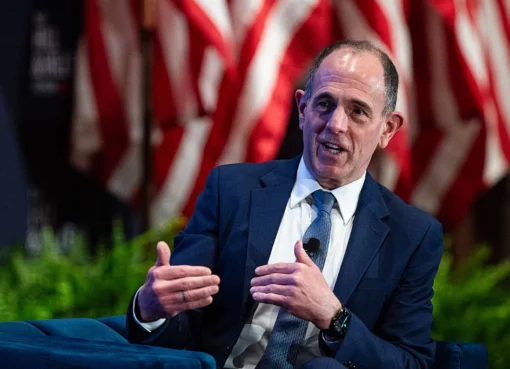
John Arnold, Founder of Centaurus Capital, noted the critical role of geothermal in a balanced grid: "As the world moves toward a carbon-free future, we cannot rely solely on intermittent sources. Mazama’s technology offers the holy grail of clean energy: a 24/7, high-density power source that can be deployed almost anywhere."
Vinod Khosla of Khosla Ventures, an early champion of the company, emphasized the scale of the Oregon discovery: "When we first looked at the Oregon site, we knew it was special. But the data we’re seeing now—the 10 GW potential—changes the conversation. This isn’t just a power plant; it’s a regional energy hub."
Industry analysts suggest that the involvement of ConocoPhillips and Shell indicates a strategic hedge. As the internal combustion engine is phased out, these companies are looking for "subsurface" opportunities. Geothermal energy allows them to utilize their existing workforces—geologists, reservoir engineers, and drillers—in a green economy.
V. Implications: The AI Factor and the Future of the Grid
The timing of Mazama’s funding is no coincidence. The technology sector is currently facing a power crisis driven by the meteoric rise of generative AI.
Powering the Data Center Boom
AI data centers require massive amounts of "firm" power—electricity that is available 24 hours a day, 365 days a year. While Google and Microsoft have made strides in purchasing wind and solar credits, the intermittent nature of those sources creates a mismatch with the constant load of a server farm. Consequently, many tech giants have been forced to rely on natural gas to fill the gaps.
Mazama’s 15 MW wells provide a solution. By offering carbon-free baseload power, geothermal can allow data center operators to achieve true "net-zero" operations without relying on the volatility of the natural gas market or the limitations of battery storage.
Energy Security and Decarbonization
The development of the Oregon site has implications for regional energy security. As coal and gas plants are retired across the Pacific Northwest, the 10 GW potential of Mazama’s project could stabilize the grid, providing a reliable backbone that allows for even more wind and solar integration.
Technical Challenges Ahead
Despite the optimism, significant hurdles remain. Drilling into 400°C rock requires specialized drill bits and electronics that can withstand heat that would melt standard equipment. Furthermore, creating the "radiator" systems underground—the fractures through which water flows to pick up heat—requires precision engineering to ensure the system doesn’t lose pressure or trigger seismic activity.
Conclusion
Mazama Energy’s $135 million Series B is more than just a successful funding round; it is a signal that the "super-hot" geothermal era has arrived. By combining the speed of modern drilling with the raw power of supercritical fluids, Mazama is positioned to transform geothermal from a niche energy source into a pillar of the global power grid. As the company prepares to break ground on its commercial phase in Oregon, the eyes of the energy world—and the tech giants desperate for power—will be watching closely. If Mazama succeeds, the heat beneath our feet may finally provide the path to a truly sustainable industrial future.