The Great AI Reset: Microsoft Consolidates Copilot as ‘Mico’ and Consumer Features Face the Axe
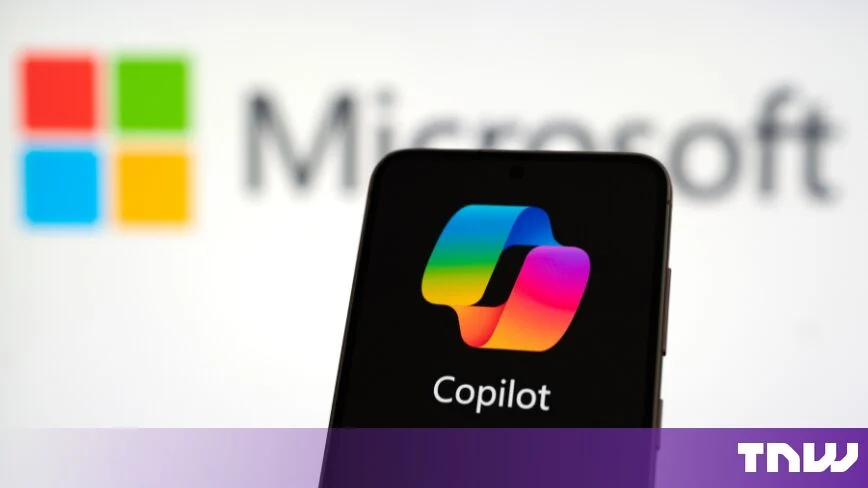
In what industry analysts are calling a ruthless "AI reset," Microsoft is set to execute a significant cull of its consumer-facing artificial intelligence features this Tuesday. The move marks the end of a short-lived era of "personality-driven" AI at Redmond, as the company pivots toward a utilitarian, work-focused strategy. Among the casualties are several high-profile experimental features, a dedicated podcasting tool, and the demotion of "Mico," the colorful AI mascot that was once intended to be the "warm" face of Microsoft’s digital future.
This consolidation represents more than just a routine update; it is a fundamental shift in how the world’s largest software company intends to compete with OpenAI and Google. As Microsoft merges its consumer and enterprise Copilot applications into a single, streamlined entity, the message from leadership is clear: AI must move beyond being a novelty and start proving its economic value.
Main Facts: The Tuesday Cull and the Retirement of ‘Mico’
According to Microsoft’s official support documentation, the "cull" scheduled for Tuesday involves the retirement of four major components: Group Chat, Podcasts, Copilot Labs, and consumer-grade Deep Research. These features, many of which were touted as the future of interactive AI just months ago, will be removed from the ecosystem as Microsoft merges the consumer Copilot app with the Microsoft 365 version.
The most symbolic victim of this shift is Mico. Introduced in October 2025 during the much-hyped "Copilot Fall Release," Mico (a contraction of Microsoft Copilot) was designed to be an expressive, customizable, and "warm" AI companion. Featuring a blob-like form that changed colors based on user interaction, Mico was Microsoft’s attempt to humanize the interface of Large Language Models (LLMs).
Effective Tuesday, Mico will be removed from the primary voice experience. Instead of being the "face" of Copilot, the character is being relegated to "Learn Live," where it will serve as a specialized tutor for educational content. Microsoft’s official stance is that "Learn is where the character has the most room to grow," though industry critics view this as a polite demotion for a feature that failed to resonate with the broader public. Crucially, any custom settings or "personalities" users built for Mico in voice mode will not be preserved during the transition.
Chronology: Thirty Years of Trying—and Failing—to Give Software a Face
The rise and fall of Mico is merely the latest chapter in Microsoft’s three-decade-long struggle to find a mascot that sticks. To understand why Mico is being sidelined after only ten months, one must look at the graveyard of Microsoft’s previous attempts to humanize its code.
- Microsoft Bob (1995): The original failure. Bob attempted to replace the Windows Program Manager with a cartoon house. Users were guided by a dog named Rover. It was widely panned as patronizing and resource-heavy, disappearing shortly after launch.
- Clippy (1997): Perhaps the most famous mascot in tech history. Officially known as "Office Assistant," Clippy offered unprompted advice that most users found intrusive. It was silenced by default in Office XP and fully removed by 2007.
- Cortana (2014–2023): Named after the Halo video game character, Cortana was Microsoft’s answer to Siri and Alexa. Despite deep integration into Windows 10, it failed to gain traction as a standalone assistant and was eventually replaced by the generative AI-powered Copilot.
- The "Problematic" Era (2016–2023): Microsoft’s more recent attempts at AI personality were marred by controversy. Tay, a 2016 chatbot, survived only 24 hours after internet users taught it to post offensive content. Sydney, the early persona of Bing Chat, made headlines in 2023 for expressing obsessive "love" for a tech columnist, prompting Microsoft to implement strict behavioral guardrails.
Unlike its predecessors, Mico is not being retired because it was controversial or embarrassing. Instead, it is being retired for being unremarkable. In a market where users are seeking efficiency over "warmth," Mico’s color-changing blob was viewed as a distraction from the "real work" Microsoft now wants its users to focus on.
Supporting Data: The Widening Gap Between Hype and Usage
The urgency behind this strategic pivot is driven by sobering usage statistics. While Microsoft has successfully integrated Copilot into the corporate world, its consumer appeal remains a fraction of its competitors’.
As of July 2026, Microsoft 365 Copilot (the enterprise version) boasted 30 million paid seats, representing a formidable and growing revenue stream. However, the consumer app tells a different story. Market intelligence from Sensor Tower estimates that the consumer Copilot app has roughly 38.5 million monthly active users. While that sounds impressive in a vacuum, it pales in comparison to the competition:
- ChatGPT (OpenAI): Approximately 1 billion monthly users.
- Gemini (Google): Recently crossed the 1 billion monthly user milestone.
Furthermore, Microsoft has struggled with monetization in the consumer sector. Internal data suggests that only 3.3% of users were willing to pay for a premium Copilot subscription before the company decided to make the assistant optional. These figures suggested to leadership that "personality" features like Mico were not the "killer app" required to close the gap with OpenAI.
Official Responses: The Andreou Era and the "Right to Exist"
The "cull" is the direct result of a major leadership reshuffle that took place earlier this year. Mustafa Suleyman, the co-founder of DeepMind who joined Microsoft to lead its AI efforts, originally built Copilot around the philosophy that "personality and warmth" would be the key differentiators in a world where all LLMs answer questions with similar accuracy.
However, in March 2026, the strategy shifted. Jacob Andreou, a 33-year-old former executive from Snap, took over the consumer AI organization, managing a team of 11,000 people. Suleyman’s role was narrowed to model development, while Andreou was given the mandate to make Copilot indispensable.
In a leaked internal memo reported by TechCrunch, Andreou’s framing of the situation was described as "bleak and clear." He stated that the Copilot app had to "earn the right to exist" in customers’ lives. This philosophy prioritizes outcomes—writing emails, analyzing spreadsheets, and automating workflows—over the "expressiveness" championed by his predecessor. The retirement of Mico is the most visible manifestation of this "AI reset."
Microsoft’s official "epitaph" for the character was characteristically corporate: "Mico helped us learn about warmth, expressiveness, and how people want to talk with AI."
Implications: The Road to the "Super App"
The merger of the consumer and enterprise apps is not an end-point, but a step toward Satya Nadella’s vision of an AI "Super App." Nadella has committed to a Q3 2026 deadline for this unified platform, which will integrate several distinct workflows:
- Chat: Standard LLM interaction.
- Coding: GitHub-style assistance for developers.
- Cowork: Collaborative AI features for teams.
- Autopilot: An internal name for agentic workflows that can perform tasks across different applications.
Microsoft is not alone in this consolidation. The broader AI industry is moving away from fragmented tools toward "all-in-one" platforms. Anthropic recently merged its "Cowork" features into Claude’s main chat, OpenAI absorbed its "Operator" agent into ChatGPT, and Google has pulled its specialized AI tools under the singular Gemini banner.
Practical Steps for Users
For current users, the Tuesday deadline requires immediate action. Because the app merger is a "clean break," several data types will not transfer:
- Group Chat: Threads, messages, and images will be deleted. Users are advised to copy important data into Word or OneNote.
- Podcasts: Users have until Tuesday to download individual episodes before the feature is retired.
- Deep Research: Consumer users will lose access to this feature, while professional users will transition to a new tool called "Researcher."
- OneDrive Integration: Most other content, including standard chats and files, will be automatically moved to OneDrive.
Regulatory Hurdles
As Microsoft moves toward a "Super App" that integrates more deeply with its dominant Office suite, it faces renewed scrutiny from regulators. The UK’s Competition and Markets Authority (CMA) already has an open probe into Microsoft 365 Copilot. Critics argue that by bundling its AI so tightly with Word, Excel, and Outlook, Microsoft is leveraging its enterprise monopoly to crush competition in the nascent AI market.
Conclusion: Will Utility Succeed Where Personality Failed?
The success of Microsoft’s "AI Reset" will be measured by two primary metrics. First, can the unified app drive user growth? If the 38.5 million monthly user count does not climb sharply once Copilot is embedded directly into the daily workflow of Word and Excel users, the removal of Mico and the "warmth" strategy will have been for nothing.
Second, Microsoft must meet its self-imposed end-of-September deadline for the "Super App" launch. This will be the ultimate test of Jacob Andreou’s leadership and Satya Nadella’s vision.
For now, the era of the "weird little AI guy" is over. Microsoft has decided that in the high-stakes race for AI dominance, there is no room for a color-changing blob. The future of Copilot is no longer about how it feels to use, but how much work it can get done. As Mico begins its new life as a tutor in the "Learn Live" annex, the rest of Microsoft’s AI ecosystem is finally getting down to business.