The Hero’s Journey in IMAX: Matt Damon and Christopher Nolan Set a New Course for ‘The Odyssey’
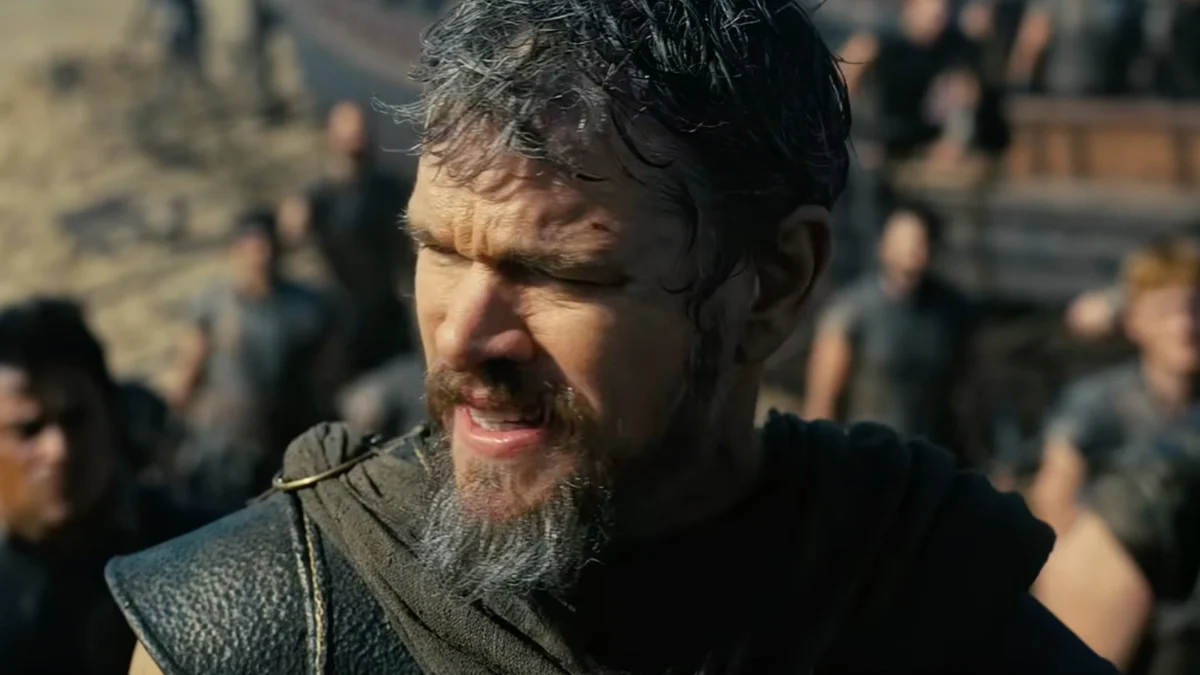
In the pantheon of modern cinema, few names command the same level of industry-wide anticipation as Christopher Nolan. Following the sweeping success of Oppenheimer, a film that dominated both the box office and the Academy Awards, Nolan has turned his sights toward the foundational text of Western literature: Homer’s The Odyssey. Scheduled for release on July 17, 2026, the project represents a seismic shift for the director, moving from the historical and theoretical realms of the 20th century into the mythic mists of Ancient Greece.
Leading this epic undertaking is frequent Nolan collaborator Matt Damon, who takes on the titular role of Odysseus. In a recent exclusive dialogue regarding the project, Damon offered profound insights into the film’s thematic architecture, suggesting that while the scale is massive, the core of the film remains an intimate, kaleidoscopic exploration of the human condition.
Main Facts: A Mythic Collaboration
The announcement of The Odyssey as Christopher Nolan’s next feature film sent shockwaves through the industry. Distributed by Universal Pictures, the film is being framed not merely as a historical epic, but as a technical and narrative evolution of the "sword and sandal" genre.
Key facts regarding the production include:
- Director: Christopher Nolan (marking his second collaboration with Universal).
- Lead Actor: Matt Damon as Odysseus, the cunning King of Ithaca.
- Format: Shot entirely on IMAX 70mm film, utilizing custom-engineered cameras to capture the Mediterranean landscapes and mythological set pieces.
- Release Date: July 17, 2026—a prime summer window that Nolan has historically utilized for his major tentpoles.
- Inspiration: Nolan has explicitly cited the work of legendary stop-motion animator Ray Harryhausen as a primary visual influence, signaling a desire to blend practical "monster movie" thrills with high-concept filmmaking.
Chronology: From Nuclear Physics to Ancient Myth
To understand the trajectory of The Odyssey, one must look at the timeline of Nolan’s recent career. After concluding his long-standing relationship with Warner Bros. following the release of Tenet (2020), Nolan moved to Universal for Oppenheimer (2023). That film’s unprecedented success—grossing nearly $1 billion and winning Best Picture—gave Nolan total creative autonomy and a "blank check" for his next endeavor.
In early 2024, rumors began to circulate that Nolan was looking to tackle a project he had long discussed in private circles: a "pure" adventure movie. While many speculated he might take on a James Bond entry or a remake of The Prisoner, Nolan instead opted for the oldest adventure story in the book.
Production reportedly began in late 2024, with filming locations spanning the rugged coastlines of the Mediterranean to capture the authenticity of Odysseus’ decade-long journey home from the Trojan War. By the time Matt Damon sat down with Jeremy Mathai for the film’s early press cycle, the project had transitioned from a secretive script to one of the most anticipated cinematic events of the decade.
![The Odyssey Star Matt Damon Explains What Christopher Nolan's New Movie Is Really About [Exclusive]](https://www.slashfilm.com/img/gallery/the-odyssey-star-matt-damon-explains-what-christopher-nolans-new-movie-is-really-about-exclusive/l-intro-1783085677.jpg)
Official Responses: Matt Damon on the "Rorschach Test" of Homer
In his exclusive comments, Matt Damon pushed back against the idea that The Odyssey can be reduced to a single genre or message. He describes the film as a narrative mirror, reflecting the internal life of the viewer back at them.
"I think people, depending on the experience, the personal experience you bring into the theater, things are going to hit you in different ways, because it’s so many stories in one," Damon stated. This versatility is, according to the actor, the secret to the story’s 3,000-year longevity.
Damon elaborated on the various lenses through which the crew and cast viewed the script during production:
- The Veteran’s Perspective: Damon noted that one crew member, a veteran, viewed the entire film as a meditation on Post-Traumatic Stress Disorder (PTSD). In this light, the monsters Odysseus faces—the Cyclops, the Sirens, Scylla, and Charybdis—are not just physical threats, but manifestations of a soldier’s inability to reconcile the violence of war with the peace of home.
- The Romantic Arc: For others, the film is a quintessential love story. It is the narrative of a man who rejects immortality and the advances of goddesses (Calypso and Circe) simply to return to his wife, Penelope, and his son, Telemachus.
- The Human Condition: Damon emphasized that the "beauty of Homer" lies in its ambiguity. "Maybe it’s a love story for people, or a story about war… it really depends on what you carry into it."
Supporting Data: The Legacy of ‘The Odyssey’ in Film
Nolan’s adaptation enters a crowded field of Homeric interpretations, yet it stands apart due to its commitment to the original’s "fantastical" elements. Traditionally, Hollywood has shied away from the gods and monsters of the Greek myths in favor of "grounded" history (such as Wolfgang Petersen’s Troy in 2004, which omitted the gods entirely).
Historical context for The Odyssey on screen includes:
- O Brother, Where Art Thou? (2000): The Coen Brothers famously reimagined the epic as a Great Depression-era folk comedy. While brilliant, it was a loose thematic adaptation rather than a literal one.
- The SpongeBob SquarePants Movie (2004): Even animation has paid homage, using the structure of the "perilous journey home" to drive its narrative.
- The Harryhausen Connection: Ray Harryhausen’s Jason and the Argonauts (1963) and Clash of the Titans (1981) remain the gold standard for mythological creatures. Nolan’s decision to revisit this aesthetic suggests a move away from the sterile CGI often found in modern superhero cinema, opting instead for the tactile, "weighted" feel of practical effects and animatronics.
The Nolan Touch: Structure and Spectacle
While the source material is ancient, the execution will be quintessentially Nolan. The director is known for his obsession with time—specifically, how it can be bent, slowed, or layered. The Odyssey is a non-linear text; it begins in media res (in the middle of things), with Odysseus trapped on Calypso’s island while his story is told through flashbacks.
Industry analysts expect Nolan to lean heavily into this structure. By intercutting Odysseus’ struggles at sea with Penelope’s struggle against the suitors in Ithaca, Nolan can create the same high-stakes cross-cutting tension seen in the "dock, air, and sea" sequences of Dunkirk.
![The Odyssey Star Matt Damon Explains What Christopher Nolan's New Movie Is Really About [Exclusive]](https://www.slashfilm.com/img/gallery/the-odyssey-star-matt-damon-explains-what-christopher-nolans-new-movie-is-really-about-exclusive/intro-1783085677.jpg)
Furthermore, the use of IMAX cameras for a story set primarily on the open ocean presents a logistical challenge that Nolan is uniquely equipped to handle. The "Odyssey" is, by definition, a journey, and Nolan intends to make the audience feel the salt spray and the sheer scale of the gods’ wrath through the largest film format available.
Implications: A New Era for the Epic?
The implications of Nolan’s The Odyssey extend beyond the box office. If successful, the film could signal a revival of the "High Myth" genre—stories that embrace the supernatural and the philosophical without descending into camp.
1. The Rejection of the "Grounded" Myth
For two decades, the trend in Hollywood was to "de-mythologize" legends (e.g., King Arthur: Legend of the Sword or Hercules). Nolan appears to be reversing this trend. By embracing the monsters and the divine intervention of the Greek pantheon, he is challenging the audience to accept a world where the metaphorical and the physical coexist.
2. The Practical Effects Renaissance
Nolan’s insistence on practical effects, even for mythological creatures, could force a shift in how studios approach creature design. If a 2026 audience responds more strongly to a practical, IMAX-sized Cyclops than a digital one, it could alter the production pipelines of future fantasy films.
3. The "Matt Damon" Factor
For Matt Damon, this role represents a late-career peak. Known for playing characters with high intelligence and grit (Jason Bourne, Mark Watney), his portrayal of Odysseus—the "Man of Many Turns"—allows him to play a character who is simultaneously a hero, a liar, a victim of fate, and a ruthless warrior.
Conclusion: The Long Way Home
As the July 17, 2026, release date approaches, the mystery surrounding The Odyssey will only grow. Christopher Nolan has built his career on the "event" movie—the idea that some stories are too big for a television screen and must be experienced in a darkened theater with a thousand strangers.
By choosing The Odyssey, Nolan is not just adapting a book; he is engaging with the very roots of storytelling. As Matt Damon suggested, the film’s success will not be measured merely by its technical prowess, but by its ability to speak to the "odysseys" we all face—the long, arduous journeys through grief, war, and time, fueled by the singular, desperate hope of finally finding our way home.