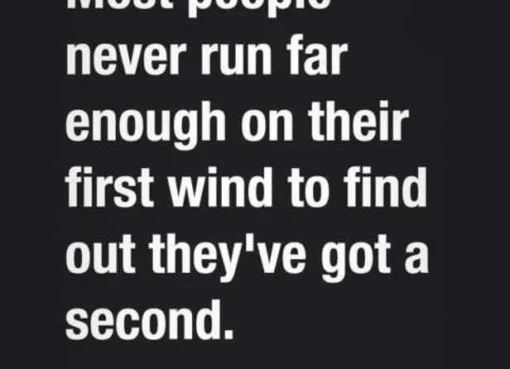
The High-Functioning Trap: Why ‘Good Enough’ is the Enemy of Human Potential

By [Your Publication Name] Staff
The human psyche is often motivated by crisis. We are accustomed to stories of "hitting rock bottom"—the dramatic collapse that forces a total life overhaul. However, a growing movement of psychologists and high-performance leaders are identifying a more insidious obstacle to personal growth: the plateau of "good enough."
Chris Sund, a prominent healthcare executive and author of You Are Capable of More, recently detailed his transition from a life that was "fine" to one defined by radical ownership. His journey highlights a critical psychological paradox: when life is going well, the motivation to improve often vanishes, leaving individuals stuck in a comfortable version of mediocrity.
“The curious paradox is that when I accept myself just as I am, then I can change,” Sund notes, quoting the influential psychologist Carl Rogers. This philosophy forms the bedrock of a shift that moved Sund from a standard high-functioning lifestyle to a state of sustained, intentional growth.
Main Facts: The Illusion of the "Straight Line"
For many high-achieving professionals, success is viewed as a linear progression. If the career is stable, the family is healthy, and social obligations are met, the assumption is that the individual has reached the "finish line." Sund argues that this is the most dangerous lie a person can tell themselves.
The core of Sund’s thesis is that high-functioning individuals often use gratitude as a "place to hide." By acknowledging their blessings, they inadvertently give themselves permission to stop striving. This creates a "comfortable lie"—the belief that because life isn’t falling apart, there is no need for rigorous self-examination.
Sund’s story is not one of recovery from ruin, but of recovery from complacency. As the President and COO of multiple healthcare firms, including Uniti Med and GQR Healthcare, Sund occupied a position of external success. Yet, he identified a persistent internal gap between his current output and his actual capability. His eventual transformation was triggered not by a single catastrophe, but by a voluntary challenge that exposed the fragility of his "fine" existence.
Chronology: From Dry January to Radical Ownership
The timeline of Sund’s transformation spans approximately two years, beginning with a common New Year’s resolution and culminating in a profound philosophical shift following a family tragedy.
January 1, Two Years Ago: The Voluntary Discomfort
Sund began a "Dry January" challenge. While he did not identify as having a clinical dependency on alcohol, he recognized that his "social" drinking occasionally led to a version of himself he didn’t respect—a version he didn’t want his wife or three sons to emulate.
The experiment proved more difficult than anticipated, not because of physical cravings, but because of social friction. Sund encountered repeated questioning at concerts, sporting events, and gatherings. This social pressure revealed a deeper truth: his discomfort wasn’t coming from the room, but from his own internal dialogue. By the end of the month, Sund decided to extend the sobriety indefinitely, choosing the "uncomfortable place" over the easy return to "normal."
The Mid-Point: The Clarity of Sobriety
Over the following months, the decision to remain sober bled into other areas of Sund’s life. He reported a new level of "clarity" in how he showed up for his family and his professional responsibilities. The primary benefit was consistency; he was now the same person in the evening as he was in the morning. This stability laid the groundwork for the resilience he would soon need.
The Turning Point: The Disney World Tragedy
While on a family vacation at Disney World and the Florida coast—a trip intended to celebrate his children’s first time seeing the ocean—Sund received a devastating phone call. His father, his "best friend" and a cornerstone of his support system, had passed away from a sudden heart attack in his fifties.
The contrast was stark: Sund was standing in the ocean with his children, experiencing a "peak moment," when the permanence of loss struck. This event shattered the illusion that "later" is guaranteed. It forced a realization that the time to become the person he was capable of being was not in the future, but in the immediate present.
The Present: The Era of Ownership
Following the death of his father, Sund moved away from "mood-based" self-improvement. He adopted a philosophy of "ownership," where decisions regarding health, presence, and professional excellence are made once and honored daily, regardless of emotional state.

Supporting Data: The Psychology of Compliance and Growth
Sund’s experience aligns with several established psychological frameworks regarding human behavior and change.
The Carl Rogers Paradox
Carl Rogers, one of the founders of humanistic psychology, posited that "radical acceptance" is the prerequisite for change. Sund’s journey illustrates this: by accepting that his life was "fine" but insufficient for his potential, he was able to initiate change without the shame of a "rock bottom" narrative.
Post-Traumatic Growth (PTG)
The sudden loss of Sund’s father serves as a case study for Post-Traumatic Growth. Unlike Post-Traumatic Stress, PTG refers to the positive psychological change experienced as a result of struggling with highly challenging life circumstances. According to research by psychologists Richard Tedeschi and Lawrence Calhoun, PTG often manifests as a greater appreciation for life, changed priorities, and increased personal strength—all themes present in Sund’s current philosophy.
The "Sober Curious" Movement
Sund’s decision to quit drinking despite the absence of a "problem" reflects a growing cultural trend known as the "Sober Curious" movement. Data suggests that more professionals are opting for sobriety to increase cognitive performance and emotional regulation. A study published in Health Psychology indicates that even moderate alcohol consumption can impact sleep quality and executive function, supporting Sund’s observation that sobriety provided him with "clarity" in his leadership roles.
Official Responses and Authoritative Perspectives
In his book, You Are Capable of More: A No-Excuses Guide to Becoming Your Best Self, Sund codifies his experiences into a leadership framework. As a COO in the healthcare sector, Sund’s perspective is particularly relevant to high-pressure environments where "burnout" and "autopilot" are common.
"Ownership took the mood out of it," Sund explains. This sentiment is echoed by many performance coaches who argue that "motivation" is a fickle resource. By shifting the focus to "ownership," Sund advocates for a system-based approach to personal development.
Industry peers note that Sund’s approach to leadership—treating personal health and presence as professional KPIs (Key Performance Indicators)—is becoming a standard in modern corporate wellness. "The executive who is ‘doing fine’ is often the one most at risk of stagnation," says one industry analyst. "Sund’s narrative provides a blueprint for mid-career course correction."
Implications: The Societal Cost of Settling
The implications of Sund’s philosophy extend beyond individual self-help; they touch upon the broader societal issue of human capital. When the "high-functioning" population settles for "good enough," there is a massive loss of potential innovation, leadership, and community presence.
1. The Redefinition of Gratitude
Sund’s warning that gratitude can be used as a "hiding place" challenges the modern mindfulness movement. While gratitude is essential for mental health, it must not be used to bypass the "honest voice" that demands more. The implication is that true gratitude should fuel growth, not stifle it.
2. The Myth of "Later"
The sudden death of Sund’s father serves as a grim reminder of the "arrival fallacy"—the idea that we will eventually reach a time when we are "ready" to take our health or relationships seriously. Sund’s experience suggests that waiting for a wake-up call is a high-stakes gamble.
3. The Power of "One Hard Thing"
Sund’s advice to "do one hard thing on purpose" provides a low-barrier entry point for those in the "high-functioning trap." By choosing voluntary discomfort (like a dry month or a new fitness regimen), individuals can recalibrate their relationship with difficulty. This builds the "ego strength" required to handle involuntary hardships later in life.
4. Leadership through Presence
For the corporate world, the implication is clear: the most effective leaders are those who are "consistent." Sund’s realization that his family deserved the same version of him in the evening as his employees got in the morning highlights a critical gap in work-life integration.
Conclusion: Beyond the Finish Line
Chris Sund’s transition from a "good life" to a "capable life" serves as a compelling narrative for the modern professional. It suggests that the greatest obstacle to excellence isn’t failure, but a comfortable level of success.
By removing the "daily argument" with himself and replacing it with radical ownership, Sund has moved beyond the "straight line" of his early career. He remains, by his own admission, a work in progress. However, the "comfort of his easiest excuse" has been replaced by something far more durable: the quiet, honest knowledge that he is finally showing up for the people who count on him—and for the person he was always meant to be.