The Human Frontier: Duncan Jones and the Eight-Year Quest for ‘Rogue Trooper’
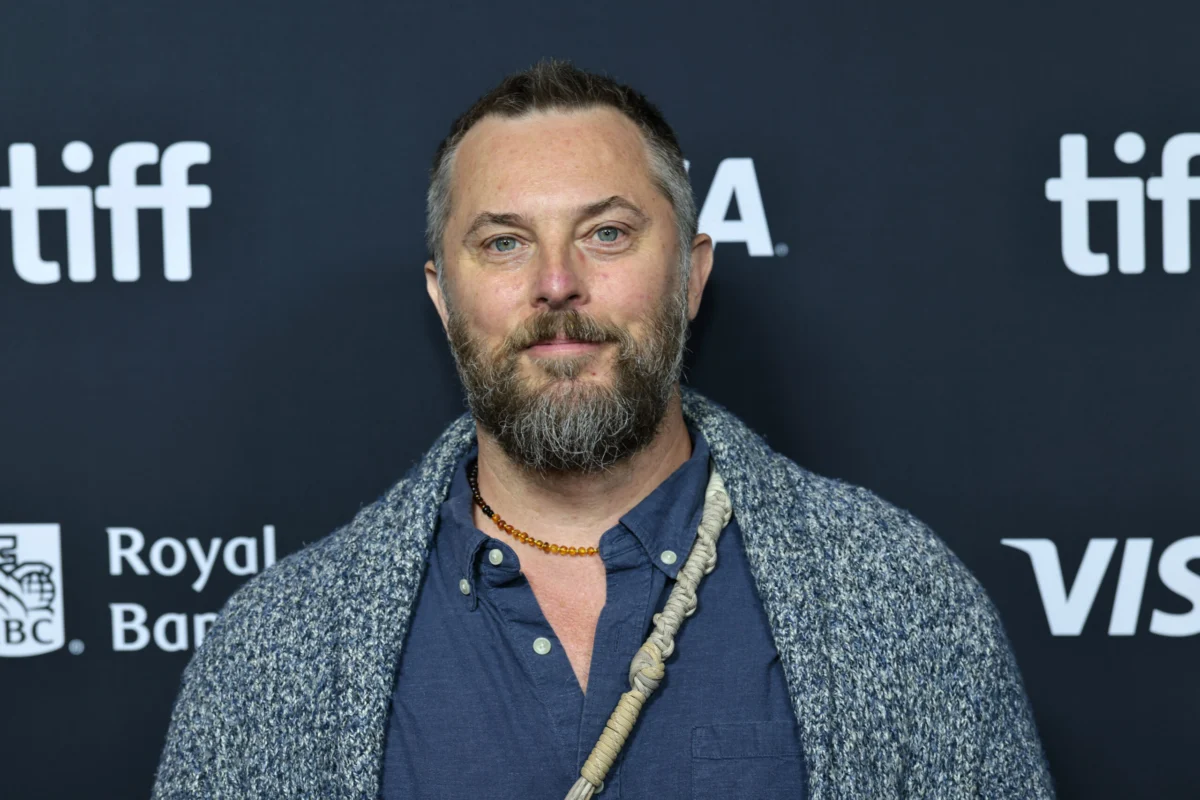
TORONTO — In an era where the silver screen is increasingly populated by pixels generated by prompts rather than pens, Duncan Jones has returned to the cinematic fold with a defiant message. Premiering his latest project, Rogue Trooper, at the 2026 Toronto International Film Festival (TIFF), the visionary director of Moon and Source Code is making one thing abundantly clear: his new animated feature was crafted entirely without the assistance of Artificial Intelligence.
The film marks Jones’ first directorial effort since 2018’s Mute, ending a nearly decade-long hiatus that has left fans and critics wondering about the whereabouts of one of science fiction’s most distinct voices. Rogue Trooper, an adaptation of the iconic British comic strip from the pages of 2000 AD, represents more than just a homecoming for Jones; it is a high-stakes gamble on the endurance of human-led independent filmmaking in an industry increasingly governed by algorithms.
Main Facts: The Genesis of ‘Rogue Trooper’
Rogue Trooper tells the visceral, high-concept story of a soldier known as "19" (voiced by Aneurin Barnard). A genetically engineered elite infantryman, 19 is the sole survivor of a massacre on Nu-Earth. He is not, however, alone. In a signature Duncan Jones twist of technological existentialism, 19 carries the consciousness of three fallen comrades—Helm, Gunnar, and Bagman—on "bio-chips" inserted into his equipment. These chips allow the deceased soldiers to communicate with 19, providing tactical support and sardonic commentary as they hunt for the Traitor General who sold them out.
The project is a co-production between Jones’ Liberty Films and Rebellion, the publisher of 2000 AD. While the film utilizes cutting-edge rendering techniques, Jones has been vocal about his refusal to use AI tools for asset generation, animation, or script doctoring.

"AI to me is a troubling one," Jones stated during an interview at TIFF. "It’s difficult to explain the use of AI in film as anything other than theft or being developed through the use of other people’s material, which was not paid for. I just want to stay away from it."
Chronology: A Quarter-Century in the Making
The road to the 2026 premiere of Rogue Trooper was neither short nor straight. To understand the film’s long gestation, one must look back twenty-five years to Jones’ first meeting with Jason and Chris Kingsley, the owners of Rebellion and 2000 AD.
2001–2017: The Long Wait
Jones, a lifelong fan of British comic books, expressed interest in the 2000 AD library long before he became a household name with Moon (2009). However, the cinematic track record for the publisher’s properties was checkered. The 1995 Sylvester Stallone vehicle Judge Dredd was a critical and commercial disappointment. While the 2012 reboot, Dredd, starring Karl Urban, earned cult classic status and rave reviews, its lackluster box office performance effectively chilled the market for 2000 AD adaptations.
2018: The Announcement
In the wake of releasing Mute on Netflix, Jones officially announced he was developing Rogue Trooper. At the time, the industry was shifting; streamers were spending heavily, and Jones seemed poised to move directly into production. However, the commercial failure of Dredd continued to haunt the project, making traditional studio backing impossible.

2019–2022: The Independent Pivot and Global Stasis
As the COVID-19 pandemic paralyzed the global film industry, Jones pivoted to a graphic novel project with Alex de Campi to stay creative. During this period, the decision was made to produce Rogue Trooper independently. Jones and his team spent these years "banging the patriotic drum," seeking UK-based investment by pitching the film as a purely British endeavor: British IP, British stars, and British production.
2023–2026: The Production Grind
The actual "making" of the film spanned four years. The team initially experimented with the Unreal Engine to handle the film’s massive scale on an independent budget. However, halfway through production, the team hit a wall—the visuals looked too much like a video game. It wasn’t until VFX supervisor Marty Waters (a veteran of Jones’ Mute) introduced supplementary, non-AI technologies that the film achieved its unique, cinematic aesthetic.
Supporting Data: The Technical and Financial Blueprint
Financing an independent animated film is notoriously difficult, often costing significantly more than live-action counterparts due to the sheer volume of labor required. Rogue Trooper bypassed the traditional studio system by leveraging a "middle-ground" budget, a tier of filmmaking that Jones argues is currently under threat.
The Technical Pivot
Initially, the production relied on Unreal Engine for real-time rendering. While efficient, Jones noted that the results were "too gamey." To bridge the gap between "game material" and "feature film quality" without ballooning the budget or resorting to AI, the production used a hybrid pipeline:

- Asset Derivation: High-quality assets were built in Unreal.
- Traditional Overlay: Marty Waters implemented a layer of traditional animation techniques to soften the digital edge and provide a hand-crafted feel.
- Motion Capture: The film utilized performance capture to ensure the emotional weight of the "bio-chip" characters resonated with the audience.
The British Strategy
By focusing on a "British film for a global audience" strategy, Jones secured financing that wasn’t beholden to the "notes culture" of major American studios. The cast reflects this regional focus, featuring Aneurin Barnard alongside a roster of prominent British comedians and character actors, ensuring the specific "2000 AD humor"—a blend of cynicism and grit—remained intact.
Official Responses: Jones on the Record
In his discussions at TIFF, Jones offered a candid critique of the current Hollywood landscape, comparing his struggle to maintain a "pure vision" to the experiences of legendary iconoclasts.
"I’m not putting myself in the same category as these people," Jones prefaced, "but when you see David Lynch movies or Terry Gilliam movies—people who enjoy being themselves—it’s harder now than ever. The whole independent and middle ground of theatrical releases is very hard these days."
Jones specifically targeted the "algorithm-driven" nature of modern streaming and studio decisions. He expressed concern that the reliance on data-driven greenlighting is creating a feedback loop that stifles original voices. "The problem is the algorithm… it’s just going to eat itself. It’s just going to get smaller and smaller until you’re only making one kind of movie with two or three actors in it."

Regarding the use of AI in films like Danny Boyle’s Ink, which faced backlash for even minor AI usage, Jones noted that while he understands the financial pressure "jobbing" artists face, he views the technology as an ethical dead-end for a director. For Jones, the "no-AI" stance was a matter of protecting the craft and the livelihood of the artists he employs.
Implications: The Future of the "Middle-Budget" Movie
The successful completion and premiere of Rogue Trooper serve as a litmus test for the industry. If a director of Jones’ caliber must spend eight years and go outside the studio system to make a mid-budget sci-fi film, the implications for the next generation of filmmakers are sobering.
The Death of the ‘Source Code’ Model
Jones pointed out that his 2011 hit Source Code—a mid-budget, original sci-fi thriller—likely wouldn’t be made in today’s climate. The international sales model that once funded such projects has largely collapsed, replaced by a "blockbuster or bust" mentality.
The Independent Animation Vanguard
Rogue Trooper joins a small but growing movement of independent animated features aimed at adults (following in the footsteps of films like Mad God or Spider-Man: Into the Spider-Verse, though the latter had studio backing). By proving that high-end animation can be achieved on an independent budget without AI shortcuts, Jones may have provided a blueprint for other creators to reclaim their IPs from studio "development hell."

A 2000 AD Cinematic Universe?
The reception of Rogue Trooper at TIFF will be closely watched by Rebellion and other IP holders. If the film finds its audience and secures a strong U.S. distribution deal, it could finally unlock the vault of 2000 AD characters, such as Strontium Dog and Sláine, which have languished in the shadow of the Dredd box office failure for over a decade.
As Rogue Trooper seeks its path to theaters and streaming platforms in the United States, it stands as a testament to Duncan Jones’ patience and his unwavering belief that in the world of storytelling, there is no substitute for the human soul—even if that soul is trapped on a computer chip in a soldier’s helmet.