
The Hunted Becomes the Hunter: ENVER Unveils Major "Fight Back" Combat Update for VR Sensation Scary Baboon
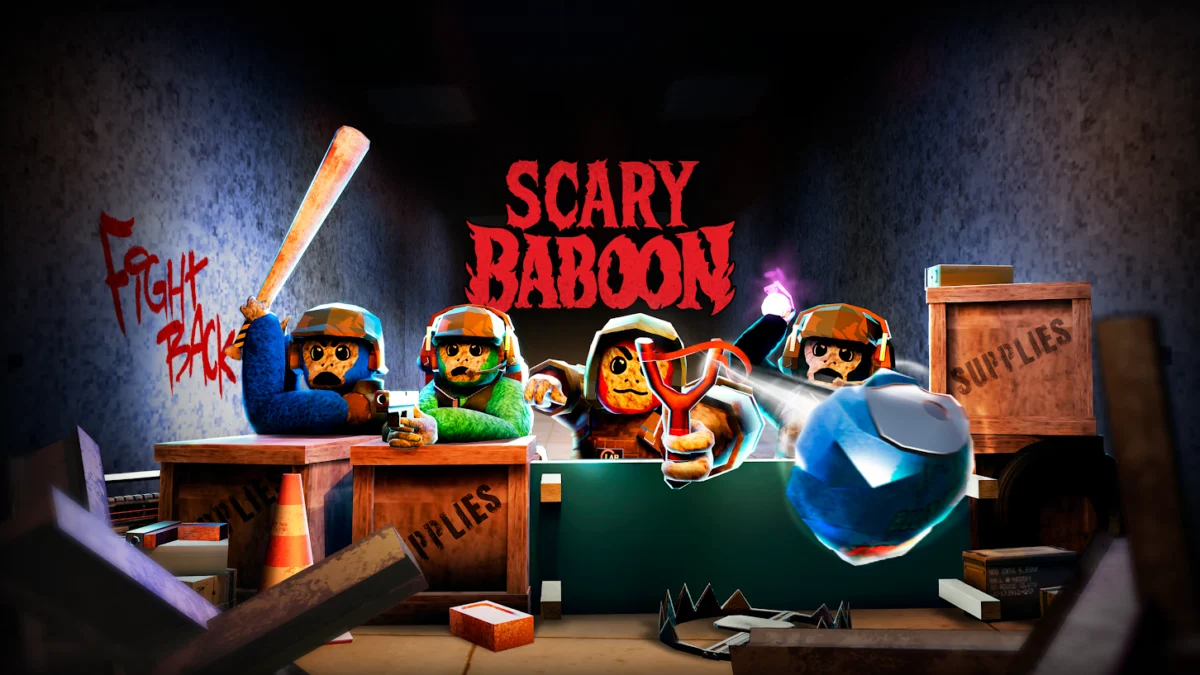
The landscape of virtual reality horror is undergoing a seismic shift as one of its most popular independent titles evolves from a pure survival-horror experience into a more complex, tactical combat-lite arena. ENVER, the developer behind the viral Meta Quest hit Scary Baboon, has officially launched its most significant content expansion to date: the "Fight Back" update. This milestone release marks the first time players are granted the agency to directly confront the horrors that have haunted the game’s dark corridors since its inception.
Main Facts: A New Era of Aggressive Survival
For months, the gameplay loop of Scary Baboon was defined by a singular, primal directive: run. As "failed experiments" navigating a labyrinthine laboratory, players relied entirely on their agility and the game’s unique locomotion system to evade a variety of nightmarish mutants and monsters. The "Fight Back" update fundamentally alters this dynamic by introducing dedicated combat mechanics and a suite of weapons.
While the core of the game remains rooted in the tension of being hunted, the update provides players with a "limited offensive capability." This means that while players are no longer defenseless, they are far from invincible. The weapons introduced are designed to stun or momentarily repel threats rather than provide a permanent solution to the laboratory’s many dangers.
The update is currently live and available to the millions of users who have downloaded the title on the Meta Quest platform. It represents a strategic pivot for ENVER, moving the game away from being a "jump-scare simulator" toward a more nuanced "social combat horror" title.
Chronology: From Viral Sensation to Community-Driven Evolution
To understand the significance of the "Fight Back" update, one must look at the meteoric rise of Scary Baboon within the VR ecosystem.
The Early Days and the "Gorilla" Influence
Scary Baboon emerged during a period where "Gorilla-locomotion" games—titles using arm-based movement popularized by Gorilla Tag—were exploding in popularity. However, where other clones failed to find an identity, Scary Baboon carved out a niche by blending this high-speed movement with the high-stakes tension of the horror genre.
The Surge of Popularity
Throughout late 2023 and early 2024, the game’s popularity surged, driven largely by organic growth on social media platforms like TikTok and YouTube. Its "failed experiment" narrative—where players take the form of baboon-like creatures in a dark, ever-changing facility—resonated with a younger demographic looking for shared, chaotic experiences.
The Call for Combat
As the player base matured, the feedback loop became clear. On the game’s massive Discord server, the "most requested" feature was consistently the ability to interact more aggressively with the environment. Players grew tired of being passive victims. ENVER spent several months in development, testing how to integrate weapons without stripping the game of its signature fear factor.
The Launch of "Fight Back"
In mid-2024, ENVER officially teased the update, culminating in the recent full release. The update was framed not just as a content drop, but as a response to the "millions" who had survived the facility’s halls and were ready to reclaim their territory.
Supporting Data: A Powerhouse on the Meta Quest Store
The "Fight Back" update is backed by metrics that place Scary Baboon among the upper echelon of independent VR titles. In an industry where many VR games struggle to maintain a consistent player base, the statistics for ENVER’s flagship title are staggering:
- User Engagement: The game currently boasts a 4.6-star rating on the Meta Quest Store. This rating is derived from more than 60,000 individual user reviews, indicating a high level of satisfaction and a remarkably stable technical performance for an indie title.
- Downloads: While ENVER has not released an exact final figure, the studio confirms "millions" of downloads, making it one of the most successful free-to-play social horror games in the VR market.
- Community Strength: The official Scary Baboon Discord community has exceeded 220,000 members. This level of engagement is critical for a social multiplayer game, providing a constant stream of feedback and a dedicated "beta-testing" audience for new features.
- Market Position: Within the "App Lab" and the main Meta Quest store, Scary Baboon consistently ranks among the top-performing horror titles, often outperforming games with significantly larger marketing budgets.
These numbers highlight why the "Fight Back" update was so essential. With a community this large, the developers needed to provide fresh "end-game" content to prevent player fatigue and maintain their position in the top charts.
Official Responses: Balancing Power and Fear
The philosophy behind the "Fight Back" update is one of "calculated empowerment." In an official statement, Kyle Joyce, the CEO of ENVER, emphasized that the goal was never to turn the game into a traditional first-person shooter, but rather to enhance the existing horror elements.
“Scary Baboon works because the community keeps pushing the game forward,” Joyce remarked. “Players have wanted to fight back against the monsters for a long time, and this update finally lets them do it.”
However, Joyce was quick to address the concerns of horror purists who might fear that giving players weapons would eliminate the game’s tension. He explained that the AI of the monsters has been adjusted to account for the players’ new capabilities.
“We’re not ruining what makes the game work,” Joyce continued. “You might be able to hit the monsters… but they’re not going anywhere. Take it too far, and they come back even harder.”
This "retaliation mechanic" is the cornerstone of the update’s design. By making the monsters more aggressive or resilient after being attacked, ENVER ensures that combat is a choice of last resort rather than a primary method of play. This keeps the "panic" element of the game intact, as players must weigh the benefit of a temporary reprieve against the risk of an even more dangerous encounter moments later.
Implications: The Future of Social VR Horror
The introduction of combat into Scary Baboon has wider implications for the VR industry and the "social horror" subgenre.
1. The Evolution of the "Gorilla-Tag" Formula
For a long time, the arm-based locomotion genre was seen as a limited "fad." Scary Baboon’s success in integrating complex AI, combat, and social mechanics proves that this movement style can support deep, multi-layered gameplay. This may lead to other developers experimenting with more "hardcore" mechanics within high-mobility VR games.
2. Player Retention in Social VR
One of the biggest challenges in VR is "churn"—players downloading a game, playing for an hour, and never returning. By adding a progression system tied to weapons and combat, ENVER is providing a reason for long-term engagement. The "Fight Back" update transforms the game from a "one-off" scare into a skill-based survival game.
3. The "Meta" of Horror
By allowing players to fight back, ENVER is tapping into a psychological shift in horror gaming. Modern audiences often enjoy "trolling" or "bullying" horror AI (a trend seen in titles like Phasmophobia or Lethal Company). By codifying this into the gameplay, Scary Baboon embraces the way people actually play social games, rather than forcing them into a rigid, scripted horror experience.
4. Technical Hurdles and Scalability
The "Fight Back" update also serves as a technical showcase. Managing combat interactions in a high-speed multiplayer environment with dozens of players and AI entities requires significant optimization. The success of this update could pave the way for even larger-scale "raids" or objective-based missions within the Scary Baboon universe.
Conclusion
The "Fight Back" update is more than just a patch; it is a declaration of intent from ENVER. It signals that Scary Baboon is no longer just a viral experiment, but a maturing franchise capable of evolving alongside its massive community. By giving players the tools to resist, the developers have paradoxically made the game more dangerous, ensuring that the dark halls of the laboratory remain a place of both empowerment and terror. As the monsters of the facility learn to adapt to the players’ new weapons, the game enters a new chapter—one where the line between the hunter and the hunted is thinner than ever before.



Leave a Comment