
“I dunno if I’m cooking or becoming cooked”: Iron Lung and Dusk dev David Szymanski is making a giant ant shooter set inside mountains of trash
By [Your Name/Publication Name]
Introduction: A Glimpse into a Ruined Future
In a world four centuries removed from our own, where the remnants of fallen civilizations form mountains of discarded detritus, humanity has found a precarious existence. Burrowed into these colossal trash heaps, survivors navigate a landscape shaped by ecological collapse and the forgotten excesses of the past. It is within this grim, yet strangely vibrant, future that David Szymanski, the acclaimed developer behind the claustrophobic cosmic horror experience Iron Lung, is crafting his next ambitious project: an isometric shooter tentatively titled "B.U.G.B.I.T.E." While not yet formally announced, Szymanski has been meticulously detailing the game’s development on social media, offering a compelling, albeit unsettling, vision of a world overrun and repurposed.
This exposé delves into the nascent details of "B.U.G.B.I.T.E.", exploring its unique setting, the lore underpinning its existence, Szymanski’s design philosophies, and the potential implications of this intriguing new title for the isometric shooter genre.
The World of B.U.G.B.I.T.E.: A Post-Civilizational Wasteland
The narrative of "B.U.G.B.I.T.E." is set a staggering 400 years into the future. This distant epoch is characterized by the rise and fall of multiple civilizations, each leaving behind an indelible mark of destruction and waste. Humanity, having weathered these unspecified catastrophic events, now ekes out an existence within the vast, stratified mountains of trash left behind. This unique environment dictates the game’s aesthetic and gameplay, presenting players with a "cobbled-together look" that reflects the desperate ingenuity of its inhabitants.
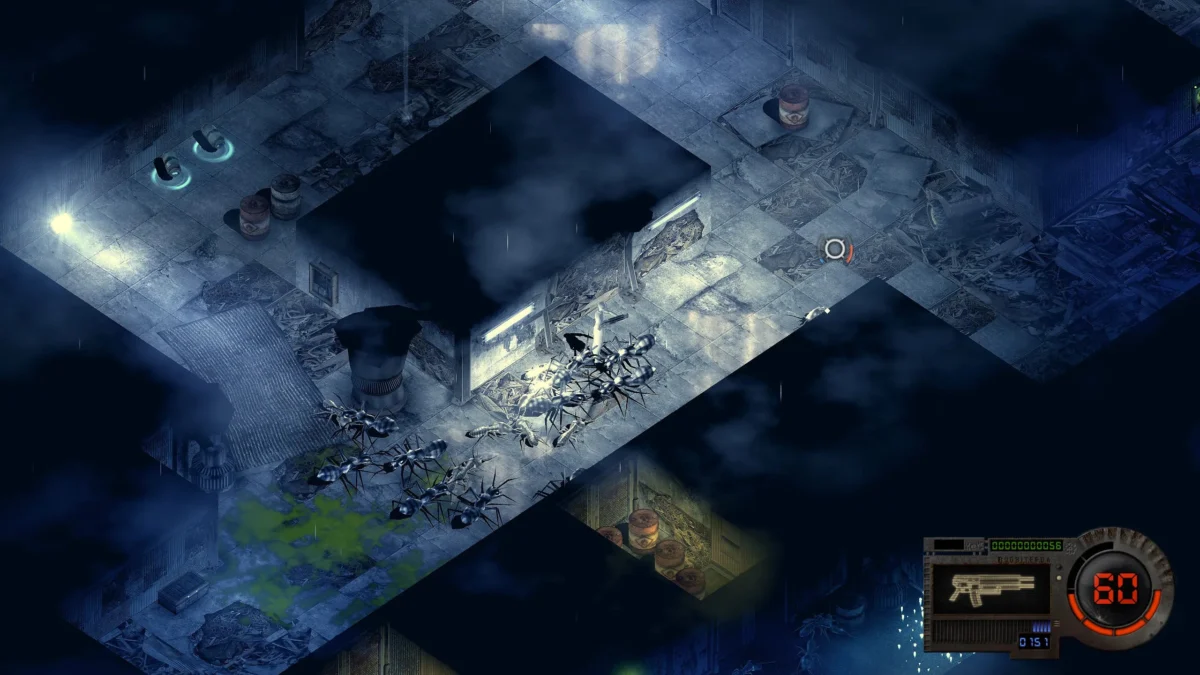
Szymanski’s vision paints a stark picture: "The game is set 400 years in the future after several civilizations have risen and experienced different catastrophic events, and humans now live burrowed into the mountains of trash from those civilizations, hence the cobbled-together look." This foundational premise suggests a world where resources are scarce, and survival hinges on scavenging and repurposing the detritus of bygone eras. The environments are described as "spoiling industrial labyrinths," evoking a sense of decay, oppressive scale, and potential danger lurking within their depths. The color palette is described as being reminiscent of "finely aged urine," a deliberately unappealing yet evocative descriptor that hints at the pervasive grime and toxicity of this future.
Beyond the immediate visual impact, Szymanski emphasizes the depth of the world-building. "I’ve learned my lesson from Iron Lung and I’m slowly building a fairly extensive lore bible for this game, even though it’s ‘just’ an isometric shooter," he stated. This commitment to lore suggests that "B.U.G.B.I.T.E." will not be merely a shallow action title, but a narrative-driven experience where the story and the world are intrinsically linked to the gameplay. Szymanski further elaborates, "The story and world are an integral component to making the action engaging here, even if the action is center stage." This indicates a carefully considered approach where the player’s actions and the unfolding narrative are designed to be mutually reinforcing, creating a more immersive and impactful experience.
The lore bible, a testament to Szymanski’s dedication, will likely explore the nature of the catastrophic events that led to this state, the societal structures that have emerged within the trash mountains, and the ongoing struggles for survival. The "cobbled-together look" of the human settlements hints at a society that has adapted to its environment, utilizing salvaged materials and perhaps even incorporating elements of the waste itself into their architecture and technology. This could lead to unique gameplay mechanics related to crafting, resource management, and environmental interaction.
The Antagonists: A Swarm of Giant Insectoid Horrors
The most prominent and unsettling inhabitants of this future are not other humans, but the colossal insects that have seemingly inherited the Earth. The game’s title, "B.U.G.B.I.T.E.", directly references these creatures and hints at the primary threat players will face. Szymanski’s personal anecdote about discovering an ant in his bathroom serves as a darkly humorous preamble to the game’s core conflict, suggesting a visceral and relatable fear of infestation magnified to an apocalyptic scale.
Szymanski has openly experimented with the scale and density of these insect enemies. He notes a point of diminishing returns in rendering massive swarms: "there are significant diminishing returns after like a few hundred enemies onscreen and it works better to spawn less enemies over a longer period of time vs tons of enemies at once." This suggests a tactical approach to enemy encounters, where overwhelming numbers might be less prevalent than strategically placed, formidable threats. However, to cater to those who wish to push the limits of their hardware, Szymanski plans to implement a level editor. This feature will allow players to create their own challenging scenarios, potentially simulating "as many insects as they please" and pushing their computers to their absolute limits.
The visual design of these giant ants and other potential insectoid enemies is crucial to the game’s horror and tension. The "finely aged urine" aesthetic of the environments likely extends to the creatures themselves, implying a grim, organic, and perhaps even mutated appearance. The sheer scale of these creatures, juxtaposed against the cramped, industrial labyrinths, promises a sense of claustrophobic dread and overwhelming power. Players will likely be tasked with navigating these treacherous environments, battling these monstrous arthropods, and uncovering the mysteries of their dominance. The "B.U.G.B.I.T.E." moniker itself implies a direct, confrontational struggle, suggesting combat that is both strategic and visceral.
Design Philosophy: The "Brown and Bloom" Aesthetic and the Piss Filter Debate
Szymanski’s approach to visual design for "B.U.G.B.I.T.E." is deeply rooted in a specific era of gaming aesthetics, which he terms the "’brown and bloom’ era." This refers to a visual style prevalent in many games from the late 1990s and early 2000s, characterized by a heavy reliance on muted, earthy tones, often dominated by browns and grays, contrasted with the use of bloom effects to create atmospheric lighting and a sense of depth.
"Heavy use of saturated lighting to ‘color in’ the environments and pops of standout color for gameplay-relevant things, and a general soft/blown-out look for lights sources and effects," he explains, outlining a deliberate strategy to imbue the often drab environments with visual interest and clarity. This means that while the overall palette might be desaturated, key elements – such as enemy weak points, interactable objects, or escape routes – will be highlighted with vibrant, saturated colors. This technique is crucial for maintaining readability in an isometric perspective, ensuring players can quickly identify threats and objectives amidst the environmental clutter.
Furthermore, Szymanski humorously references a controversial visual trend he calls the "piss filter." This term, he explains, refers to the stylized golden or amber sheen that characterized many action games of the noughties and early 2010s, citing examples like Deus Ex: Human Revolution and the Gears of War series. He jokes, "I won’t be happy unless I piss off at least one person for ‘bringing back piss filters’." This self-aware nod to established visual tropes suggests that while he’s drawing inspiration from these eras, he’s also aware of the potential for stylistic overkill. The intention seems to be to evoke a sense of gritty realism and atmospheric density without resorting to an overly monochromatic or aesthetically questionable filter. The lingering question of why these "piss filters" became so ubiquitous remains a point of bemusement for many, and Szymanski’s embrace of a similar aesthetic, albeit with a critical eye, is a fascinating design choice.
The combination of the "brown and bloom" aesthetic with intentional color pops and a nuanced approach to atmospheric lighting promises a visually distinct experience. It aims to balance the grim reality of a trash-filled future with the need for clear visual communication and engaging gameplay. The "soft/blown-out look for light sources and effects" will likely contribute to a sense of oppressive atmosphere, where light sources are often diffused and hazy, further enhancing the feeling of being deep within a forgotten and decaying world.
Chronology of Development and Unforeseen Challenges
The development of "B.U.G.B.I.T.E." has been a gradual and organic process, with Szymanski sharing his progress through sporadic social media updates. He revealed in a recent Bluesky post that he has been "working on B.U.G.B.I.T.E for more than a year now." This extended development period highlights the scope and complexity of his ambitions for the project.
Despite the significant time invested, Szymanski admits to a certain degree of uncertainty regarding his progress: "but I still haven’t actually announced it, explained it to people, put up a Steam page, set a release date, or for that matter started on finished level content." This candid confession reveals that "B.U.G.B.I.T.E." is still in its relatively early stages, with core gameplay loops and narrative elements being refined, but a fully polished product is still some way off. He humorously ponders his current state, "I dunno if I’m cooking or becoming cooked," a relatable sentiment for any creator undertaking a large-scale project.
The mention of not having started on "finished level content" is particularly noteworthy. While Szymanski has been exploring enemy AI and visual design, the actual construction of the levels where players will engage with these elements is still on the horizon. This suggests that the foundational mechanics and world-building are being prioritized before the detailed level design commences. This approach, while potentially leading to a longer development cycle, could result in a more cohesive and well-realized game world.
The path to a full release will undoubtedly involve overcoming various technical and creative hurdles. The ambition to simulate a vast number of insects, even with optimizations, presents significant performance challenges. The intricate lore and narrative elements will require careful integration into the gameplay to ensure they enhance rather than detract from the action. Moreover, the "cobbled-together" aesthetic demands a high degree of artistic finesse to avoid appearing amateurish or uninspired.
Szymanski’s self-deprecating humor and honest assessment of his progress suggest a developer who is deeply invested in his craft and aware of the difficulties inherent in game development. This transparency, while perhaps unsettling for those eager for a release date, fosters a sense of connection with his audience and allows for a more realistic understanding of the project’s trajectory.
Supporting Data: The Inspiration and Evolution of "B.U.G.B.I.T.E."
The genesis of "B.U.G.B.I.T.E." can be traced to Szymanski’s personal experiences and his ongoing artistic exploration. The mundane encounter with an ant in his bathroom, described with humorous hyperbole, serves as a relatable anchor for the game’s core theme of infestation and the unsettling proliferation of insect life. This personal anecdote, amplified to an apocalyptic scale, forms the emotional bedrock of the game.
His previous work, Iron Lung, a game lauded for its oppressive atmosphere and minimalist design, provides a crucial point of comparison and a testament to Szymanski’s ability to craft potent experiences with limited resources. The lesson learned from Iron Lung, as he articulates, is the importance of a robust lore bible. This indicates a conscious effort to imbue "B.U.G.B.I.T.E." with a narrative depth that transcends the typical scope of an isometric shooter. The "fairly extensive lore bible" is not merely a backdrop but an integral component designed to enrich the player’s understanding of the world and their place within it.
The visual inspirations are also well-documented. The "brown and bloom" aesthetic, while potentially polarizing, is a deliberate choice to evoke a specific mood and historical context within gaming. The "piss filter" reference, while playful, highlights an awareness of past design trends and a willingness to engage with them critically. This suggests a developer who is not afraid to draw from established visual languages while also seeking to innovate or subvert expectations.
The technical experimentation with enemy AI and swarm simulation, while currently revealing limitations, is a crucial part of the development process. The decision to prioritize spawning fewer, more impactful enemies over massive, computationally expensive swarms demonstrates a practical approach to game design, ensuring that the game remains playable and engaging. The inclusion of a level editor is a significant feature that promises extended replayability and community engagement, allowing players to become creators within the game’s world.
The evolution of "B.U.G.B.I.T.E." is a story of iterative design, where personal anecdotes, lessons learned from previous projects, and a keen eye for visual and narrative detail coalesce into a unique and compelling vision.
Official Responses and Developer Statements
As "B.U.G.B.I.T.E." has not yet received a formal announcement, there are no official statements from a publisher or studio in the traditional sense. However, David Szymanski himself has been the primary source of information, offering candid and insightful updates on his social media platforms, primarily Bluesky. His statements, though informal, serve as the "official" word on the game’s development.
His quotes, such as "The game is set 400 years in the future…" and "I’ve learned my lesson from Iron Lung…" are direct insights into his creative process and design intentions. His self-aware humor regarding the "piss filter" and his musings on whether he is "cooking or becoming cooked" reveal a developer who is both passionate and grounded in the realities of game creation.
These statements are crucial for understanding the game’s direction. They demonstrate a commitment to world-building, a willingness to learn from past experiences, and a clear vision for the game’s aesthetic and narrative. The lack of a formal announcement at this stage suggests that Szymanski is prioritizing the core development and refinement of the game before embarking on a public marketing campaign. This approach, while delaying widespread awareness, allows for a more robust and polished final product.
The developer’s willingness to share his ongoing process, even the less glamorous aspects, fosters a sense of transparency and community anticipation. It allows players to witness the evolution of the game and develop a deeper appreciation for the creative journey.
Implications for the Isometric Shooter Genre and Beyond
The development of "B.U.G.B.I.T.E." carries several significant implications for the isometric shooter genre and the broader landscape of indie game development.
Firstly, Szymanski’s commitment to deep lore and narrative integration within an isometric shooter challenges the perception that this genre is solely focused on mechanics and action. By emphasizing the "story and world as an integral component," he suggests a potential for greater narrative depth and thematic resonance in isometric titles, moving beyond simple objective-based gameplay. This could inspire other developers to invest more heavily in world-building and narrative design for their isometric projects.
Secondly, the game’s unique post-apocalyptic setting, characterized by mountains of trash and a future where humanity is literally burrowed into its own waste, offers a fresh and thought-provoking take on the genre. This environmental storytelling has the potential to create a highly atmospheric and memorable experience, differentiating it from more common post-apocalyptic tropes. It also touches upon contemporary themes of environmentalism and the consequences of unchecked consumption.
Thirdly, Szymanski’s experimental approach to enemy AI and the inclusion of a level editor speak to a desire for player agency and emergent gameplay. The challenge of rendering and managing large numbers of enemies, and the proposed solution of a level editor, suggest a game that aims for both engaging combat and long-term replayability, catering to both casual players and those who enjoy pushing the boundaries of game mechanics.
Finally, Szymanski’s development diary-style updates, while informal, highlight the power of direct developer-to-audience communication. In an era where transparency is increasingly valued, his candid sharing of progress, challenges, and design philosophies builds a loyal fanbase and generates organic hype. This approach can be a powerful tool for indie developers seeking to connect with their audience without the need for massive marketing budgets.
In conclusion, "B.U.G.B.I.T.E." is shaping up to be more than just another isometric shooter. It is a testament to David Szymanski’s creative vision, his dedication to intricate world-building, and his willingness to push the boundaries of genre conventions. As development continues, the gaming world will be watching with keen interest to see how this ambitious project evolves from its nascent stages into a fully realized experience, promising a future that is both terrifying and undeniably compelling. The echoes of fallen civilizations and the relentless march of giant insects await, and players will undoubtedly be eager to face them head-on.


Leave a Comment