The Infernal Charisma: A Deep Dive into Marjorie Bowen’s "The Bishop of Hell"
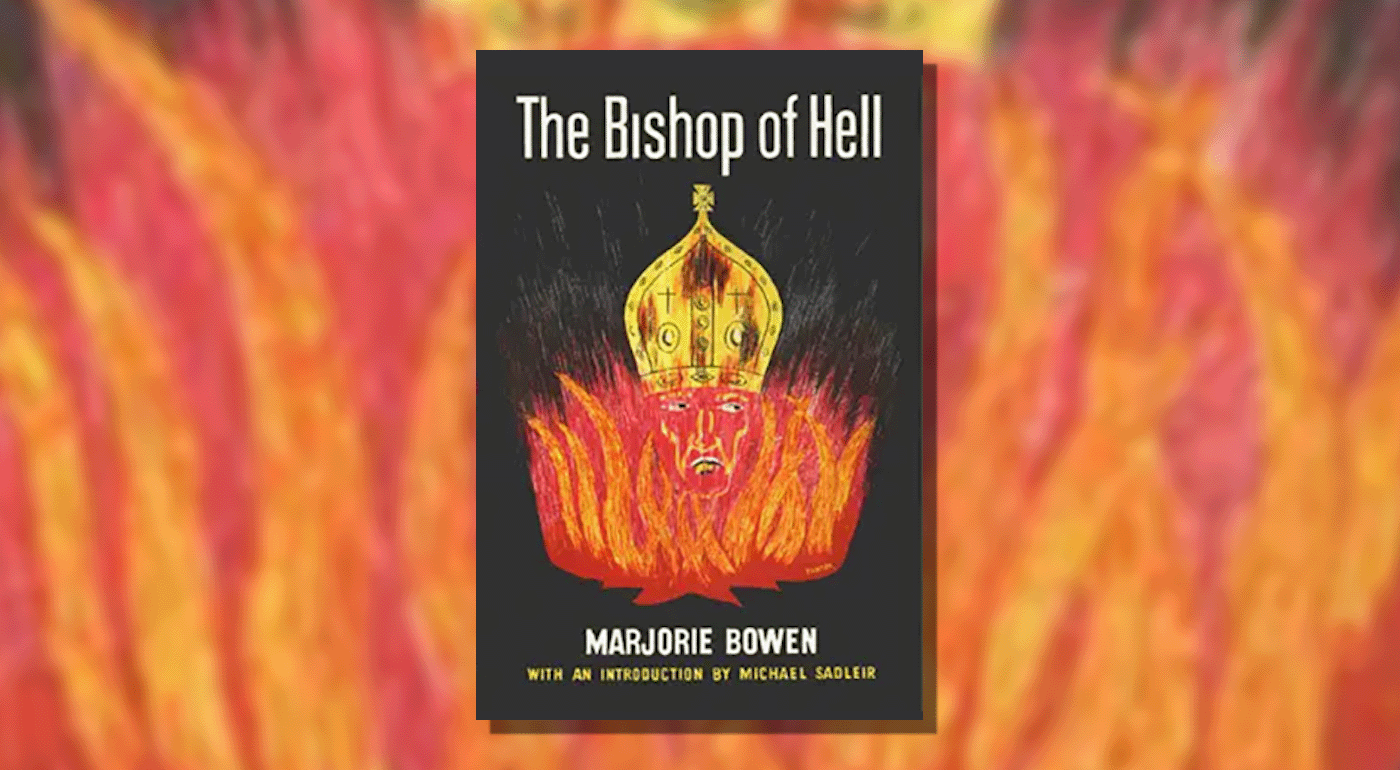
Welcome back to "Reading the Weird," the column dedicated to exploring the rich, often unsettling tapestry of weird fiction, cosmic horror, and Lovecraftiana, from its foundational roots to its most contemporary expressions. This week, our journey takes us back to the early 20th century to dissect a chilling piece of British gothic horror: Marjorie Bowen’s "The Bishop of Hell." First published in the September 1925 issue of The Blue Magazine, this story offers a stark moral fable wrapped in a tale of human depravity and supernatural retribution. Beware, for spoilers lie ahead as we peel back the layers of this fascinating, if sometimes frustrating, narrative.
Main Facts
Marjorie Bowen’s "The Bishop of Hell" presents a cautionary tale of unchecked vice and the inescapable consequences of moral corruption, set against the backdrop of late 18th-century England and Paris. At its core, the story chronicles the life and damnation of Hector Greatrix, a charismatic yet utterly amoral man whose descent into villainy earns him the moniker "the Bishop of Hell." The narrative is framed through the retrospective confession of Jack, a former associate haunted by Greatrix’s horrific end and the spectral visitation that confirmed his damnation.
Published in a popular pulp magazine of its era, the story blends elements of gothic romance, moralistic fiction, and the nascent genre of weird horror. While it predates the more cosmic and existential terrors that would define much of Lovecraft’s work, Bowen’s piece taps into a primal fear of spiritual corruption and divine judgment, albeit through a distinctly human lens. The central conflict revolves around Greatrix’s calculated seduction and ruination of Alicia, the innocent wife of his honorable cousin, Colonel Bulkeley, ultimately leading to a chain of events culminating in violence, despair, and a chilling supernatural encounter.
The story serves as an intriguing example of the diverse forms "weird fiction" took in its formative years, showcasing how authors explored the unsettling not just through otherworldly entities, but through the profound moral decay within the human soul and the traditional anxieties surrounding damnation.
Chronology
The narrative unfolds through Jack’s confession, written in 1790, two decades after the events that forever scarred his conscience.
The Narrator’s Burden (England, 1790)
The story opens with Jack, the narrator, in a state of profound psychological distress. Twenty years have passed since the events he is about to recount, yet they continue to haunt him with an intensity that only time seems to deepen. He describes it as "the most awful story [he knows]," a burden he hopes to alleviate through the act of writing and confessing "his small share therein." This opening immediately establishes a tone of somber reflection and moral reckoning, setting the stage for a narrative steeped in remorse and the heavy weight of past sins. Jack’s invocation of "God’s mercy" underscores the tale’s inherent moral framework and foreshadows the supernatural judgment to come.
The Rise of the "Bishop of Hell" (Circa 1770)
The focal point of Jack’s confession is Hector Greatrix, a figure he describes with a mixture of awe and revulsion as his "counsellor, companion, and prop in all things evil." Greatrix, a relative of the esteemed Earl of Culver, was initially destined for the Church. However, his innate predisposition for a "rakehell lifestyle" proved incompatible with piety, leading to his ignominious unfrocking. This early fall from grace cemented his reputation among his debauched companions, who bestowed upon him the chillingly apt nickname, "the Bishop of Hell."
In 1770, Hector, then thirty, is portrayed as a magnificent specimen of humanity, his beauty and charisma still untouched by the ravages of his dissolute life. He moves among a circle of "villains," a class from which Jack, with a degree of self-awareness, does not entirely exclude himself. The sole exception to this nefarious company is Colonel Bulkeley, Hector’s cousin, a man of "austere, upright, and punctilious" character. Hector’s ability to hoodwink Bulkeley, convincing him that his wildness was merely "unfortunate, and blameable, but in no way vile or dishonoured," speaks volumes about his manipulative charm. Bulkeley, in his misguided belief in Hector’s redeemability, not only mediates with Lord Culver to secure a generous allowance for Hector but also personally augments it, unwittingly funding his cousin’s escalating depravity.
The Unattainable Alicia and Hector’s Vile Bet
While Hector ostensibly pursues legal studies—a façade Jack genuinely maintains—their visits to patrons frequently bring them to Colonel Bulkeley’s house. Here, they encounter Alicia, the Colonel’s young bride. To the jaded eyes of Hector and Jack, Alicia appears "childish, insipid, with mere china-doll prettiness." Yet, her obvious adoration for the Colonel and his reciprocal affection underscore the idyllic nature of their marriage. However, Alicia possesses auburn hair, a shade that inexplicably ignites in Hector a "curious and persistent passion." In a moment of chilling cynicism, Jack jests that Alicia is the most unattainable woman he has ever seen. Hector’s response is swift and brutal: "Take Bulkeley away for a month, and the little lovebird would flutter to any man’s arms." This statement encapsulates Hector’s profound disregard for decency, honor, and the sanctity of marriage, revealing the predatory core beneath his charismatic exterior.
Jack’s Retreat and Alicia’s Downfall
Hector’s increasingly brazen disregard for moral boundaries begins to repulse Jack. The constant string of suicides and "questionable deaths" associated with Hector’s activities serves as a stark warning, driving Jack to seek more reputable company. His initial "wild and young" disposition gives way to a growing unease, compelling him to distance himself from the corrupting influence of the "Bishop of Hell."
The Bulkeleys’ marriage, however, initially remains untarnished. Their happiness endures until the Colonel’s regiment is unexpectedly summoned to India for a three-year tour of duty. This absence provides the precise window of opportunity Hector had cynically predicted. That winter, Jack encounters Alicia in a London ballroom. Despite being under the protection of her married brother and his family, Alicia is inexplicably dancing with Hector. Gossip soon intertwines their names, painting a clear picture of an illicit affair. Alarmed by the escalating scandal, Jack appeals to Hector to leave Alicia alone, while Alicia’s brother, too, attempts to guard her from the notorious rake. These efforts, however, prove futile. When Hector is forced to flee England to escape his mounting debts, he takes Alicia with him, abandoning her children and her reputation. Lord Culver, now fully aware of Hector’s true character, disinherits him completely. The illicit couple survives on Alicia’s meager allowance from her distraught brother. Colonel Bulkeley, upon learning of his wife’s betrayal, resigns his commission and returns to England. While he vows not to pursue the adulterers in their exile, he makes a chilling pledge: if Hector ever returns to England, one of them will die.
The Inheritance and Alicia’s Degradation in Paris
Hector’s fate, however, takes an unexpected and darkly convenient turn. One by one, Lord Culver’s heirs mysteriously perish, leaving Hector as the sole successor. Lord Culver soon follows, bestowing upon Hector his title and estate. Now Lord Culver, Hector settles into an opulent hotel in Paris. Alicia remains with him, but her life has become a living hell. Under Hector’s "protection," she has suffered "terrible humiliations and losses." She has birthed three children, all of whom have tragically died. Hector, true to his libertine nature, has never been without mistresses, often keeping them under the same roof as Alicia. In a final, depraved act to extort more money from her, he has even "pimped her to a series of ‘lovers’."
Summoned to Paris, Jack witnesses Alicia’s transformation. The "china-doll" prettiness has given way to a voluptuous figure, her dress and speech now sharp and clever. Her tone is defiant, yet the look in her eyes betrays the profound suffering and brokenness of a "whipped dog." Her desperate hope is for Colonel Bulkeley to grant the long-refused divorce, which would allow her to marry Hector and, astonishingly, re-establish herself as Lady Culver. Jack, though harboring "scant hope for either man," promises to speak to Hector on her behalf.
The Confrontation and Hector’s Fear
Hector, however, remains utterly unmoved by Alicia’s plight or her desperate plea for legitimacy. He cruelly swears he will "never marry Alicia, the ‘harlot’ of his own making." His immediate concern is far more self-serving: his desperate hope is that Bulkeley will renounce his pledge to duel. Hector, a man of vice rather than valor, deeply fears a confrontation with the "martial expert" Colonel. Jack, pitiless in his assessment, declares that if Hector shies away from the challenge, "all England would call Hector a coward."
The Fatal Duel and Its Aftermath
Eventually, Hector is compelled to return to London, having left Alicia in Paris with a fresh string of lies about his impending return. Jack meets Hector the night before his fated encounter with Bulkeley. Hector is with his old boon companions, but unusually sober and deeply agitated. He expresses a desire for Jack to draw up his will but is too distraught to begin. Dismissing Jack, Hector makes a chilling, prophetic promise: "If I go to Hell tomorrow, I’ll pay you a visit to let you know what ’tis like." Meanwhile, Alicia, driven by a desperate, misplaced hope, secretly follows Hector to London, planning to wheedle her way into Culver House during the duel.
The duel, when it occurs, is swift and decisive. Bulkeley drops Hector with a single shot. However, it is not a mortal wound but a deliberate, calculated act of revenge: the bullet shatters Hector’s jaw, leaving his once magnificent face "hideously mutilated, no longer kiss-worthy." Carried into Culver House, Hector’s rage at Alicia’s presence, presumably an unwelcome reminder of his downfall and disfigurement, erupts. He hurls her down the stairs, an act of final, brutal cruelty that proves fatal for her soon afterwards. Alicia dies, her hopes for a new life shattered by the man who destroyed her. On the day she is buried, Hector, unable to bear his disfigurement and the ruin he has wrought, effectively commits suicide by tearing off his bandages, succumbing to his wounds.
The Supernatural Retribution
In an attempt to escape the horrors he has witnessed, Jack attends a party. He returns home late to an unusually dark house. Striking a light, he sees a figure seated in a chair with its back to him. The visitor turns, revealing itself to be Hector. His face is "veiled with crimson fire," through which his eyes gleam with "unutterable woe." Flames rise above his head, coalescing into a "bishop’s mitre glittering with lambent jewels." As the terrifying spectre raises a hand in mock benediction, Jack, overwhelmed by the impossible horror, faints. The story concludes with the stark realization that "This fiend had been forced to keep his oath—to discover to another scoffer the truth of Hell." Hector, the self-proclaimed "Bishop of Hell," has returned from his infernal diocese to confirm the terrifying reality of damnation to his former, albeit less depraved, companion.
Supporting Data
Marjorie Bowen: A Master of Gothic and Historical Fiction
Marjorie Bowen was the most prominent pen name of Gabrielle Margaret Vere Campbell Long (1885-1952), an incredibly prolific British author who penned over 150 novels, historical biographies, and collections of short stories under various pseudonyms. While "The Bishop of Hell" showcases her foray into the gothic and supernatural, Bowen was primarily renowned for her historical romances and meticulously researched biographies, often focusing on dramatic historical periods and figures. Her work frequently explored themes of fate, moral struggle, and the darker aspects of human nature, making her a natural fit for the burgeoning weird fiction scene of the early 20th century.
Bowen’s writing style, characterized by its vivid descriptions and strong narrative drive, allowed her to craft atmospheric and emotionally resonant tales. "The Bishop of Hell" demonstrates her ability to build a sense of impending doom and moral decay, even if the supernatural element only fully manifests at the story’s climax. Her inclusion in The Blue Magazine in 1925 places her alongside other popular authors contributing to the vibrant pulp fiction landscape, a period where weird fiction was gaining traction, albeit often still rooted in earlier gothic traditions rather than the more cosmic horrors popularized by H.P. Lovecraft. She represents a significant, if sometimes overlooked, female voice in the development of the genre, proving that women writers were actively shaping the contours of speculative and horror fiction long before contemporary recognition.
The Archetype of the Libertine in Literature
The character of Hector Greatrix perfectly embodies the literary archetype of the "libertine," a figure with a rich and complex history. As noted by the Merriam-Webster Dictionary, the term’s evolution is fascinating: from Latin lībertīnus (a freed enslaved person), to Middle English "freedman," then to "freethinkers" (religious and secular) by the late 1500s, and finally, by the 18th century, to someone "too unrestrained, especially in moral affairs."
Hector, with his unfrocked clerical background, initially appears as a "freethinker" in the religious sense, rejecting the pious rules of the Church and dismissing concepts of Heaven and Hell as superstition. However, his rejection of spiritual dogma quickly devolves into a complete abandonment of moral constraints. He seeks "freedom" not for intellectual exploration but for unbridled self-indulgence and the pursuit of vice. This aligns him with infamous literary libertines like Don Juan, the Marquis de Sade, or characters from Les Liaisons Dangereuses, who systematically corrupt and destroy others for their own pleasure and ego.
Bowen’s portrayal of Hector highlights the destructive nature of such unchecked individualism. Unlike many romanticized rakes in contemporary novels who are ultimately redeemed by an "angelic" woman’s love, Hector remains impervious to any moral suasion. His consistent, unrepentant villainy, culminating in the horrific degradation of Alicia, underscores his commitment to a philosophy of self-serving nihilism. His intellect and courage are perverted, used to justify a life devoid of empathy or honor, believing himself above societal and divine judgment. This makes his eventual supernatural comeuppance particularly potent within the story’s moral framework.
Gothic Tropes and Moral Cautionary Tales
"The Bishop of Hell" is replete with classic gothic tropes, which Bowen skillfully employs to craft her moral tale. The setting, transitioning from the respectable drawing-rooms of 18th-century England to the decadent hotels of Paris, provides a rich backdrop for both social critique and escalating horror. The characters are archetypal: the charming yet depraved rake (Hector), the innocent victim (Alicia), the honorable but ultimately helpless husband (Colonel Bulkeley), and the conflicted, haunted narrator (Jack).
The story’s reliance on themes such as moral decay, the corruption of innocence, the inevitability of retribution, and the spectral visitation are hallmarks of the gothic genre. However, it also functions as a stark "moral cautionary tale." It reinforces the idea that true freedom is not found in abandoning all moral strictures but rather in upholding them, and that divine justice, even when scoffed at, will eventually claim its due. The climax, with Hector’s fiery spectral return, serves not just as a horror moment but as a definitive affirmation of the traditional Christian concept of Hell, directly refuting Hector’s lifetime of cynical disbelief. This emphasis on explicit moral judgment distinguishes it from later forms of weird fiction that often presented a universe indifferent to human morality.
The Portrayal of Women in Early 20th-Century Weird Fiction
The story’s depiction of Alicia Burgoyne, particularly through the lens of the "Degenerate Dutch" observation in the original review, offers a crucial insight into the role of women in much of early 20th-century popular and weird fiction. Alicia is initially presented as "flat, childish, almost imbecile, almost incredible," her worth seemingly reduced to her "china-doll prettiness" and the "hue of her hair." Her agency as a person is largely dismissed; her worth, and subsequent degradation, are tied entirely to her "sexual purity and then lack thereof."
This portrayal reflects prevalent societal attitudes of the time, where women were often secondary characters, serving primarily as catalysts for male action, objects of desire or destruction, or symbols of innocence to be corrupted. Alicia’s journey from an adored wife to a degraded, pimped-out mistress, and finally to a desperate, "whipped dog" clinging to a false hope of marriage, is a brutal illustration of this objectification. Her suffering is profound, but the narrative focuses more on its impact on Hector’s villainy or Jack’s moral awakening rather than on Alicia’s internal world or genuine agency. While her eventual defiance in Paris hints at a spark of resilience, it is ultimately extinguished by Hector’s final, fatal act of cruelty. This aspect of the story serves as a valuable historical document, revealing how even in tales of supernatural horror, deeply ingrained patriarchal biases shaped character development and thematic concerns.
Critical Reception and Analysis
Given its publication in a popular pulp magazine, "The Bishop of Hell" likely resonated with readers seeking thrilling, often moralistic tales infused with gothic suspense. In 1925, supernatural retribution stories were still a staple, and Bowen’s skillful prose would have delivered on the promise of a gripping read. However, modern critical analysis, as exemplified by the "Reading the Weird" reviewers Anne and Ruthanna, offers a more nuanced, and at times, critical perspective.
On Characterization: Jack’s Ambiguity and Hector’s Insufficient Evil
The reviewers highlight the intriguing ambiguity of Jack, the narrator. While he confesses to his "small share" in Hector’s evil and initially includes himself among the "villainous intimates," he quickly reframes himself as merely "wild and young than vicious." Throughout the narrative, he positions himself as the voice of honor and decency, admonishing Hector at various junctures. This shift from complicit friend to moral arbiter raises questions about Jack’s self-perception and his true culpability, suggesting a character who may be rationalizing his past to seek spiritual absolution.
Hector Greatrix, despite his compelling charisma, also receives critical scrutiny. Ruthanna aptly points out that his "suckage" – while undeniably vile – might be "insufficient to earn his title" of "Bishop of Hell." His sins, though horrific (seduction, abandonment, financial exploitation, emotional abuse, pimping, and ultimately, murder), are largely within the realm of human depravity, not the "unholy rites" or "playing with forces better left buried" that one might expect from such a diabolical moniker in a weird fiction context. This suggests a missed opportunity for Bowen to delve into a more esoteric, genuinely supernatural brand of evil prior to the ending, which could have elevated the story’s "weirdness" quotient.
On "Weirdness" and the Nature of Horror
A central critique from Ruthanna is the story’s perceived lack of "weirdness" compared to modern expectations for the genre. She notes that the story feels "a lot less weird in my weird than I was hoping for," and "a lot less history in my weird historical." This sentiment stems from the fact that while the ending is undeniably supernatural, the preceding narrative primarily functions as a conventional gothic melodrama focusing on human vice and social ruin. The "weird" element is front-loaded in the title and back-loaded in the climax, rather than pervading the atmosphere or challenging the reader’s perception of reality throughout.
The story’s reliance on a traditional Christian concept of Hell, with explicit divine retribution, also contributes to this feeling. For modern readers accustomed to the cosmic indifference or unknowable horrors of Lovecraft and his successors, a moralistic confirmation of a familiar religious damnation might feel less unsettling than a glimpse into truly alien, incomprehensible terrors. The horror, in this case, is not existential dread but a reinforcement of a cultural fear already deeply embedded in Western consciousness.
Thematic Depth and Reader Engagement
Both Anne and Ruthanna touch upon the story’s thematic depth and its impact on reader engagement. Ruthanna suggests that Bowen may have crafted the story around a single powerful image – Greatrix’s spirit wearing a mitre of hellfire – with the narrative merely serving to support this climactic vision. This approach can sometimes lead to a narrative that feels less organically developed and more teleological.
Furthermore, the story’s failure to make the fear personal for Jack, the narrator, is a significant point of contention. While Jack is visibly traumatized by the spectral visit, the reviewers argue that the story doesn’t adequately explore his own doubts about Hell, his potential guilt from his youthful association with Hector, or any lingering affection that might make Hector’s damnation a source of personal anguish. Instead, Jack already seems to have embraced traditional religious beliefs by the story’s end. This lack of internal conflict and personal stake diminishes the impact of the climax, as Jack’s religious convictions are merely confirmed rather than fundamentally challenged or transformed by the horrific visitation. The story, therefore, "assumes that readers will bring their own full baggage to the idea of hell," potentially alienating those who lack such pre-existing anxieties.
Implications
The Legacy of Marjorie Bowen
"The Bishop of Hell," despite its perceived shortcomings in modern "weirdness," remains a compelling example of Marjorie Bowen’s literary prowess. It showcases her strength in crafting vivid characters, building intense dramatic tension, and utilizing atmospheric gothic elements. While it might not be her most celebrated work, it contributes to her legacy as a versatile and prolific writer who could navigate both historical epic and chilling supernatural tales. It also firmly places her within the early landscape of genre fiction, demonstrating the diverse paths authors took in exploring the boundaries of horror and the fantastic.
The Evolution of Weird Fiction
This story serves as an excellent touchstone for understanding the evolution of weird fiction. It represents an earlier, more morally didactic, and often overtly gothic strain of the genre. Unlike the later cosmic horror that posits a vast, indifferent universe where humanity is insignificant, Bowen’s story grounds its horror in human transgression and divine judgment. The "weirdness" is less about existential dread and more about the confirmation of traditional eschatological fears. Studying "The Bishop of Hell" allows us to appreciate how the genre slowly shifted from these more conventional, moralistic supernatural tales towards the psychological, cosmic, and philosophical horrors that would come to define it. It illustrates a transitional phase, where the "weird" was still often intertwined with familiar religious narratives rather than actively subverting them.
Relevance for Modern Readers
For contemporary audiences, "The Bishop of Hell" might not deliver the same kind of unsettling, mind-bending horror as a Lovecraftian tale. However, it still offers significant value. As a well-crafted gothic cautionary tale, it provides a potent exploration of human depravity, the corrosive effects of unchecked ego, and the universal desire for retribution against profound injustice. Hector Greatrix, for all his literary limitations as a "Bishop of Hell," remains a chillingly recognizable figure of manipulative charisma and self-serving cruelty.
Moreover, the story’s historical context—a piece of early 20th-century horror by a female author—is invaluable for scholars and enthusiasts of genre fiction. It prompts discussions about gender roles in historical narratives, the conventions of horror in different eras, and the ongoing debate about what truly constitutes "weird fiction." It challenges us to consider our own "baggage" when approaching such tales, reminding us that horror is often deeply personal and culturally constructed. Even if its supernatural payoff feels less novel today, the human drama and moral lessons it conveys endure.
Next week, join us for the final fate of Three-Persons and Good Stab, in Chapters 23-24 of Stephen Graham Jones’ The Buffalo Hunter Hunter.