The Intersection of Reality and Productivity: Virtual Desktop Integrates BRINK Traveler’s Photorealistic Environments
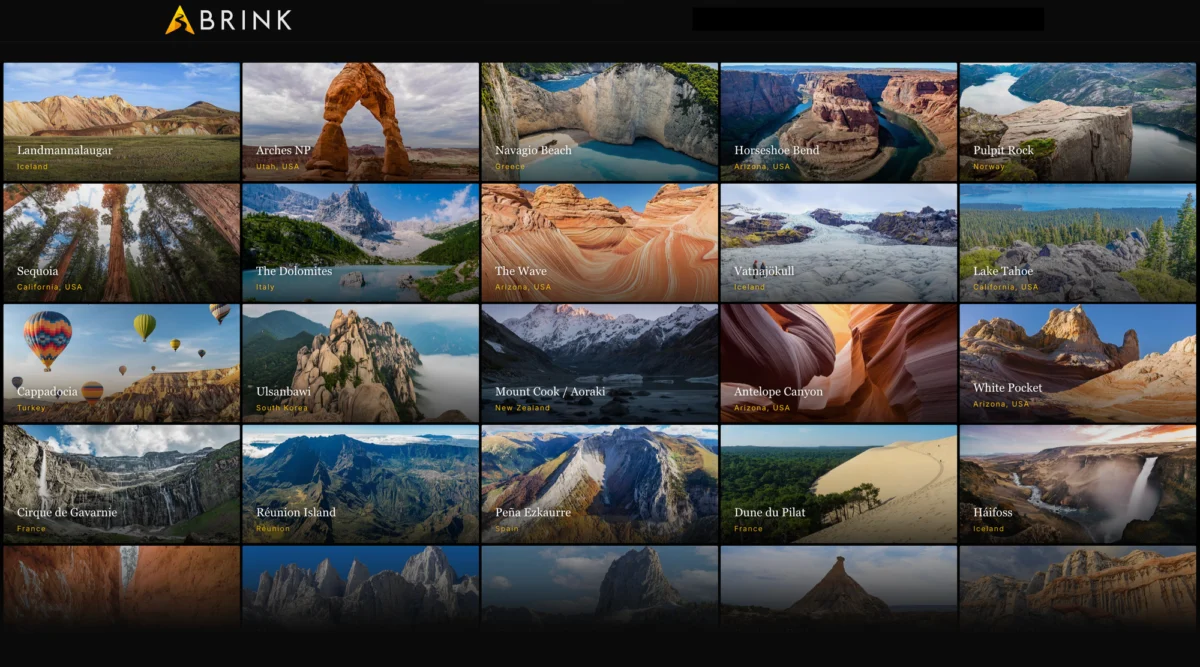
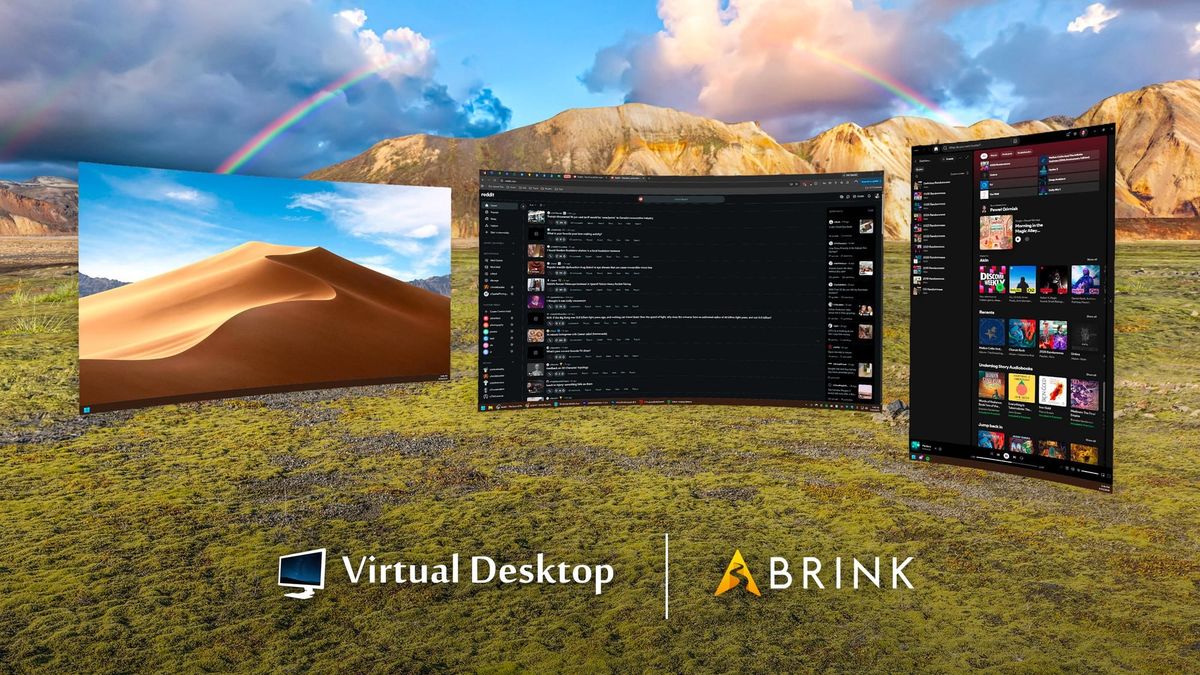
In the evolving landscape of spatial computing, the boundary between a functional workspace and the natural world has become increasingly blurred. The latest update to Virtual Desktop, the seminal VR streaming application developed by Guy Godin, marks a significant milestone in this progression. By integrating a stunning, high-fidelity 3D capture of Iceland’s Landmannalaugar from the BRINK Traveler library, the update offers users more than just a new "wallpaper"—it provides a portal to one of the most geologically diverse locations on Earth, optimized specifically for the rigors of virtual productivity.
Main Facts: A New Standard for Virtual Workspaces
Virtual Desktop has long been regarded as the "Swiss Army Knife" of the VR industry. It allows users to bypass the native interfaces of headsets like the Meta Quest and Pico, granting them full access to their PC desktops in an immersive 3D space. While the app has traditionally offered a variety of synthetic environments—ranging from futuristic apartments to cosmic voids—the addition of the "Iceland Riverbed" environment introduces a level of photorealism previously reserved for dedicated travel applications.
The environment is a product of BRINK XR, a studio specializing in high-end photogrammetry. Unlike traditional 360-degree photos or videos, which trap the user in a fixed "bubble," BRINK’s environments are fully reconstructed 3D volumes. This allows for Six Degrees of Freedom (6DOF), meaning users can lean, duck, and move within a designated area, experiencing natural parallax and a genuine sense of scale.
The specific location, Landmannalaugar, is situated in the Highlands of Iceland. Known for its multi-colored rhyolite mountains and expansive lava fields, it is a location that challenges the limits of digital recreation. Through this collaboration, Virtual Desktop users can now position their multi-monitor PC setups amidst the rugged, volcanic beauty of the North Atlantic, effectively turning a "teleportation" experience into a functional home office.
Chronology: The Journey from Experimental Art to Utility
The path to this collaboration spans nearly a decade, rooted in the early days of modern consumer VR.
The Oculus Story Studio Era (2015–2017)
The genesis of BRINK XR can be traced back to Akin Bilgic’s tenure at Oculus Story Studio. As part of the team behind Emmy-winning VR films like Henry and Dear Angelica, Bilgic was at the forefront of exploring how presence and immersion could redefine storytelling. During his spare time, Bilgic began experimenting with photogrammetry—the science of making measurements from photographs to recover the 3D shapes of real-world objects.
Bilgic’s early experiments were driven by a fundamental question: "What is the VR equivalent of photography?" He discovered that while a 2D photo of a mountain could be beautiful, it failed to convey the visceral "weight" of the landscape. By reconstructing these spaces in 3D, he realized he could create a "teleporter device."
The Birth of BRINK Traveler (2021)
Following the closure of Oculus Story Studio in 2017, Bilgic and his team focused on refining their capture and optimization pipeline, eventually launching BRINK Traveler on the Meta Quest store in 2021. The app was an immediate success, lauded for its ability to bring high-end PC-grade photogrammetry to standalone mobile hardware.
At launch, the studio provided a single Quest Home environment as a bonus. The overwhelming user demand for more "real-world" home spaces signaled a clear market desire: users didn’t just want to visit these places; they wanted to "live" and "work" in them.
The Pivot to Virtual Desktop (2023–2024)
While BRINK initially engaged in discussions with Meta to bring more locations to the native Quest Home interface, those efforts eventually stalled as Meta’s internal priorities shifted toward the "Metaverse" and social avatars. Recognizing the technical sophistication of the Virtual Desktop user base, Bilgic approached Guy Godin. The goal was to integrate BRINK’s high-fidelity assets into an app that users spend hours in every day, rather than a travel app they might visit for twenty minutes at a time.
Supporting Data: The Technical Challenge of Optimization
Integrating a BRINK environment into Virtual Desktop was not a simple matter of "copy and paste." The technical constraints were immense, requiring a ground-up rethink of how the environment was rendered.
The "Redline" Problem
When running the standalone BRINK Traveler app, the headset’s processor is dedicated entirely to rendering the environment. Bilgic notes that the Quest hardware is often "redlined," utilizing every available cycle of the CPU and GPU to maintain the high-resolution textures and complex geometry required for photorealism.
However, Virtual Desktop is a multi-tasking powerhouse. At any given moment, the app must:
- Stream High-Bitrate Video: Decode the incoming signal from the PC.
- Render Multiple Virtual Displays: Often supporting up to three high-resolution monitors.
- Manage Latency: Maintain the "Timewarp" and "Spacewarp" technologies that keep the experience smooth.
- Run Background Processes: Handling Discord, Spotify, or SteamVR overlays.
Strategic Compromise: The "Stationary" Optimization
To make the Iceland Riverbed viable for Virtual Desktop, BRINK had to create a bespoke version of the asset. In the original travel app, users are given a five-meter radius to explore. To save resources in Virtual Desktop, BRINK optimized the environment for a seated or stationary standing position.
- Detail Concentration: The ground and objects within the immediate vicinity of the user’s virtual desk remain at maximum resolution.
- Peripheral Optimization: Areas further than a few meters away—places a Virtual Desktop user is unlikely to walk to—utilize lower-resolution meshes and textures.
- Topographical Selection: The Iceland Riverbed was chosen specifically because its relatively flat terrain allows for a convincing 3D effect without the massive polygon count required by vertical cliffs or complex caves.
The result is an environment that, from the perspective of the user’s chair, looks identical to the full-power BRINK app, yet leaves enough "headroom" for the headset to stream 4K video and run PC VR games simultaneously.
Official Responses: Insights from the Architects
The collaboration has been met with enthusiasm from both developers, who view it as a response to years of community requests.
Akin Bilgic, Co-founder of BRINK XR:
"These locations are all perfect. It’s like the desktop wallpaper of VR. We’ve wanted to do more with these environments for years because the response to our initial Quest Home environment was so strong. Virtual Desktop has stood the test of time, and its users appreciate high-quality visuals. It was about pushing what we could do visually while giving as much headroom as possible for Virtual Desktop to do its thing."
Guy Godin, Creator of Virtual Desktop:
"We’ve had to do some back and forth testing the limits of what was possible with today’s headsets in terms of texture resolutions and also where to focus more details in the environment. We are always open to collaborations like this one. We’d be happy to bring more environments from BRINK in the future or from other apps who reach out to us."
Implications: The Future of Spatial Computing and Travel
The arrival of BRINK environments in Virtual Desktop suggests several broader trends in the VR and AR industry:
1. The Death of the "Gimmick" Environment
As VR matures, users are moving away from overly stylized or "gamey" environments. For professionals using headsets for 4–8 hours a day, there is a psychological benefit to "natural" light and real-world landscapes. This update validates the idea that photorealism is a key component of long-term VR comfort and adoption.
2. Platform Agnosticism and Third-Party Ecosystems
The fact that this collaboration happened outside of Meta’s official "Home" ecosystem highlights the power of third-party developers. By working together, Godin and Bilgic have provided a feature that users have requested from Meta for years, proving that the most significant innovations in VR often come from small, agile studios rather than platform holders.
3. "Travel-as-a-Service" for Productivity
This partnership suggests a future where travel apps and productivity apps are no longer distinct categories. We may see a "marketplace" for high-fidelity workspaces, where a user can choose to work from the Sahara one day and a Tokyo skyscraper the next, all captured via photogrammetry rather than artist-made 3D models.
4. Hardware Evolution
The necessity of the "optimization" process underscores the current limitations of standalone mobile chipsets (like the XR2 Gen 2). As hardware continues to improve, the need for these compromises will diminish, eventually allowing for entire, uncompromised real-world landscapes to serve as the backdrop for our digital lives.
In conclusion, the addition of Iceland’s Landmannalaugar to Virtual Desktop is more than a technical achievement; it is a glimpse into a future where "where we work" is limited only by where we can send a camera. For now, users can put on their headsets, fire up Virtual Desktop, and find themselves sitting by an Icelandic riverbed, their work catching the light of a sun that never sets.