The Last Turn of the Lathe: The End of an Era for Williamsburg’s American Wood Column Corporation
For over a century, the rhythmic hum of lathes and the scent of freshly turned cedar and mahogany have defined a specific corner of Williamsburg, Brooklyn. But as the neighborhood around it transformed from a gritty industrial hub into a global symbol of gentrification and luxury living, the American Wood Column Corporation remained a stubborn, sawdust-covered vestige of a different New York.
After 110 years of continuous operation, this family-owned institution—one of the last of its kind—is preparing to shutter its doors for good. The announcement marks not just the end of a business, but the disappearance of a specialized architectural craft that helped build the aesthetic identity of the city and provided the literal backdrops for some of Hollywood’s most iconic moments.

Main Facts: A Century of Architectural Excellence
The American Wood Column Corporation, located in the heart of Williamsburg, has officially announced its upcoming closure. Founded in 1914 by the grandfather of current owner Thomas Lupo, the company has spent eleven decades specializing in high-end architectural woodwork. Their repertoire includes decorative moulding, majestic columns, intricate balusters, corbels, and custom wood turning that defies modern mass-production techniques.
The closure was brought to public attention through a poignant new documentary directed and produced by filmmaker and photographer Joshua Charrow. The film serves as a final, intimate walk-through of the factory, capturing the scale of the operation and the depth of history housed within its walls.

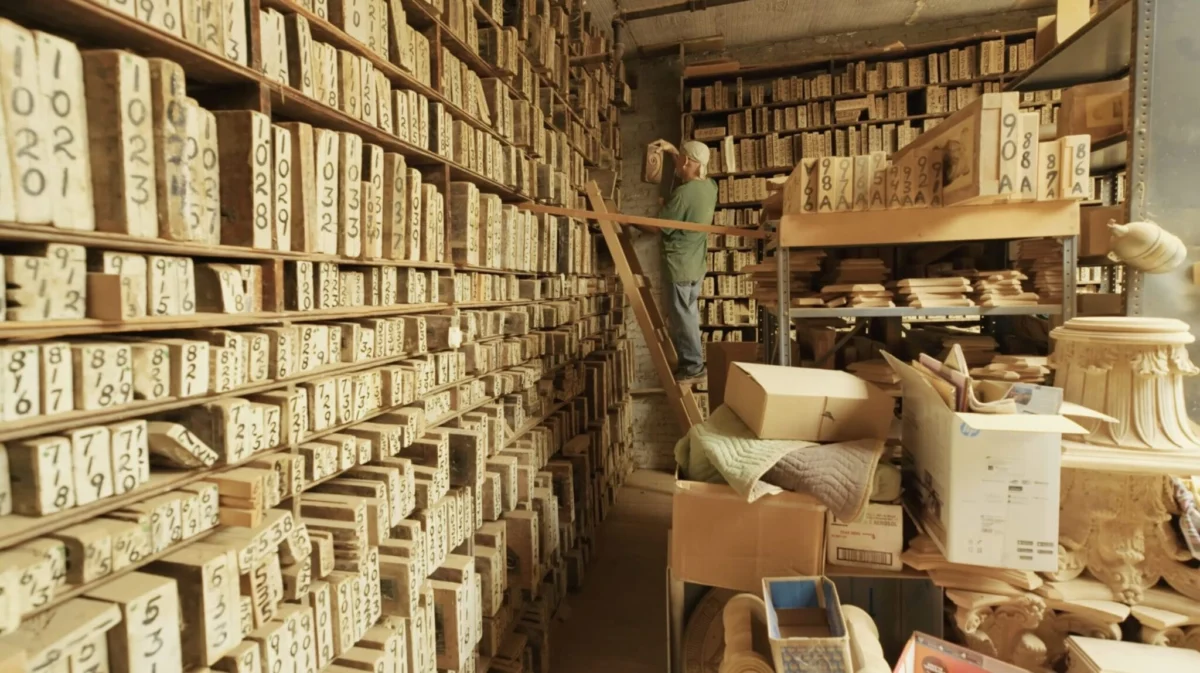
The factory is not merely a production site; it is a living museum. It houses a staggering collection of approximately 6,000 handmade wooden molds, many of which are "reverse carved." These molds, some of which Lupo estimates to be over 200 years old, represent a lineage of design that predates the company itself. Throughout its tenure, the corporation has served a diverse clientele ranging from high-society architects to legendary film directors, contributing to the sets of Saturday Night Live, The Godfather, and The Exorcist.
Chronology: From the 19th Century to the Modern Day
The history of the American Wood Column Corporation is a timeline of New York City’s industrial evolution.

The Foundation (Early 1900s)
The story begins with Thomas Lupo’s grandfather, an immigrant craftsman who established the business in 1914. During this era, Williamsburg was a dense thicket of factories, refineries, and workshops. The demand for ornate woodwork was at an all-time high as New York expanded upward and outward, with brownstones and civic buildings requiring the specialized columns and mouldings that the Lupo family perfected.
The Acquisition of History (The Mid-Century)
When Lupo’s grandfather founded the company, he didn’t just start from scratch; he acquired the tools of the trade from even older shops. This included a massive library of wooden molds. As Thomas Lupo explains in the Charrow documentary, "My grandfather bought these molds used, and they were used. So they’ve got to be over 200 years old." This suggests that the DNA of the American Wood Column Corporation stretches back to the early 19th century, carrying the design sensibilities of the Federal and Victorian eras into the modern age.

The Cinematic Golden Age (1970s–1990s)
As the demand for residential architectural columns fluctuated, the company found a lucrative and prestigious niche in the entertainment industry. Their craftsmanship became the silent star of American cinema. They produced the somber grave details seen in The Godfather, the iconic, tension-filled stairway in The Exorcist, and various ornamental columns for New York’s grand department stores. For decades, they have been the go-to shop for Saturday Night Live, providing the rapid-turnaround, high-quality woodwork needed for the show’s ever-changing sets.
The Decision to Close (Present Day)
The decision to close was not spurred by a sudden financial collapse or an eviction, as is often the case in Brooklyn. Instead, it is a "graceful retirement." Thomas Lupo, cognizant of his own aging and the fact that his core team has been with him for nearly 40 years, decided that the time had come to conclude the narrative. The business will phase out its operations, marking the end of a 110-year family legacy.

Supporting Data: The Scale of a Legacy
To understand the magnitude of what is being lost, one must look at the inventory and the longevity of the workforce.
- The Archive: The factory houses 6,000 handmade molds. Each of these corresponds to a numbered sample on the wall, allowing the craftsmen to replicate designs from any era of American architecture. These molds are "reverse carved," a difficult technique where the negative space is carved to create a positive wood casting or ornament.
- The Artifacts: Beyond standard columns, the factory contains unique curiosities, including six-foot-tall wooden pencils and bespoke ornamental pieces that reflect a century of eccentric commissions.
- Tenure of Staff: The company’s primary team has worked together for nearly four decades. This level of employee retention is virtually unheard of in the modern labor market and speaks to the specialized nature of the skills involved. It takes years, if not decades, to master the feel of the lathe and the idiosyncrasies of different wood species.
- The Documentary: Joshua Charrow’s film provides a visual census of the space. The footage reveals walls covered from floor to ceiling with wooden templates, a visual representation of 110 years of labor.
Official Responses: Reflections from the Factory Floor
In the documentary, Thomas Lupo speaks with a mixture of pragmatism and nostalgia. He does not view the closure as a tragedy, but rather as a natural conclusion to a long and successful story.

"I will be closing down the business. It’s not a question of if, it’s a question of when. That’s all," Lupo says in the film. His perspective is one of acceptance regarding the passage of time. "Like anything else, everything changes. Time goes on."
Lupo’s reflections emphasize the physical connection he has to the space. Having grown up inside the woodworking studio, the factory is more than a workplace; it is a repository of family memories. He describes the molds not just as tools, but as heirlooms. His team, similarly, views the retirement as a collective transition. Having spent 40 years working side-by-side, the bond between the craftsmen is as sturdy as the columns they produce.

Filmmaker Joshua Charrow, whose work often focuses on the hidden corners of New York, noted that the factory represents a "timeless" quality that is rapidly disappearing. His goal with the documentary was to document the "favorite pieces and timeless anecdotes" of an owner who has seen the city change through the window of a woodshop.
Implications: The Vanishing Artisan and the Future of Williamsburg
The closure of the American Wood Column Corporation carries several significant implications for the architectural, cultural, and local landscapes.

1. The Loss of Specialized Knowledge
When the lathes at American Wood Column stop turning, a vast amount of "tacit knowledge" will vanish. The ability to look at a 200-year-old mold and understand exactly how to calibrate a machine to replicate it is a skill that isn’t easily taught in trade schools. As these old-world shops close, the industry shifts toward CNC machining and 3D printing. While efficient, these modern methods often lack the "soul" and hand-finished quality of traditional wood turning.
2. The Final Stages of Williamsburg’s Industrial De-evolution
Williamsburg was once a powerhouse of American manufacturing. The departure of the American Wood Column Corporation is one of the final nails in the coffin of that identity. The neighborhood is now dominated by high-rise glass towers, boutique hotels, and tech hubs. The loss of a 110-year-old factory removes one of the last links to the neighborhood’s working-class, industrial roots.

3. The Future of the Archive
A major concern for historians and preservationists is the fate of the 6,000 molds. These artifacts are a primary source of American architectural history. If they are sold off piece-meal or destroyed, a vital record of 19th and 20th-century design will be lost. There is a growing call in the arts community to see these molds preserved in a museum or a design archive, though no official plans have been announced.
4. Cultural Impact on the Film Industry
New York-based film and television productions will lose a local treasure. The ability to walk into a shop in Brooklyn and find the exact "grave details" for a period-piece film is a luxury that production designers have relied on for years. The closure will likely force set designers to look further afield or rely on synthetic substitutes, potentially affecting the authenticity of New York-produced media.

Conclusion
The American Wood Column Corporation is a testament to the power of family and the endurance of craft. For 110 years, the Lupo family has stood as a pillar—quite literally—of the New York architectural world. As Thomas Lupo and his veteran team prepare to step away from the sawdust, they leave behind a city that they helped shape, one column at a time. The lathes may soon go silent, but the work they produced remains embedded in the brownstones of Brooklyn, the skyscrapers of Manhattan, and the silver screen of Hollywood history.