
The Misunderstood Crown: How a "YA" Label Obscured Joe Abercrombie’s Half a King
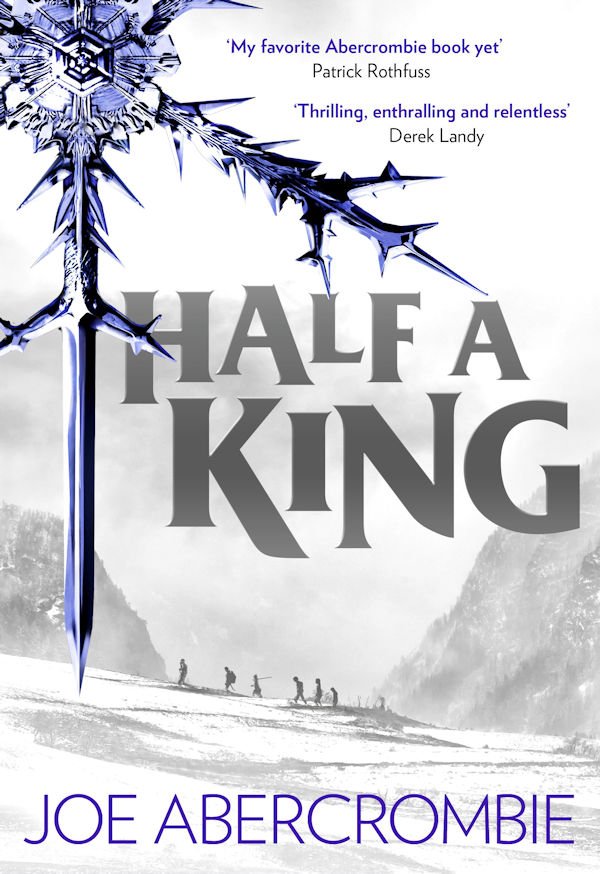
The release of Joe Abercrombie’s Half a King in 2014 was met with a perplexing dichotomy. For an author synonymous with the gritty, morally ambiguous world of "grimdark" fantasy, the first installment of his Shattered Sea trilogy arrived bearing a label that would fundamentally shape its reception: "YA." A decade later, the question persists: did this seemingly innocuous categorization inadvertently overshadow the novel’s true merits, diverting potential readers and creating a false impression of Abercrombie’s stylistic evolution? This article delves into the enduring impact of a marketing decision that placed a seasoned author’s work in an unexpected genre, examining how Half a King stands as a testament to Abercrombie’s consistent craft, regardless of its assigned demographic.
Main Facts: A Grimdark Author’s Unexpected Turn
Joe Abercrombie had, by 2014, cemented his reputation as a titan of modern fantasy, primarily through his acclaimed The First Law trilogy and subsequent standalone novels like Best Served Cold and The Heroes. His brand was clear: brutal realism, morally compromised characters, intricate political machinations, and a cynical, often darkly humorous, exploration of power and violence. His work defied simplistic notions of good versus evil, instead immersing readers in a world where heroes were flawed, villains were complex, and justice was a rare and often bloody affair.
Then came Half a King. The novel introduced Prince Yarvi, born with a crippled hand, deemed unfit for the throne, and thrust into a harsh world of raiders, slave ships, and treacherous politics. It promised revenge, survival, and a deep dive into the "uneasy weight of power" – themes unmistakably Abercrombie. Yet, the ubiquitous "YA" (Young Adult) tag on its cover and in its marketing immediately raised eyebrows among his established fanbase and, perhaps, created a barrier for new readers.
Chronology: From Grimdark Reign to Shattered Seas
The trajectory of Joe Abercrombie’s career prior to Half a King painted a clear picture. The Blade Itself (2006) introduced readers to the visceral world of The First Law, followed by Before They Are Hanged (2007) and Last Argument of Kings (2008), which solidified his "grimdark" reputation. Standalone novels like Best Served Cold (2009), The Heroes (2011), and Red Country (2012) further showcased his mastery of character-driven, morally complex narratives set in the same unforgiving universe. This consistent output built a loyal adult readership eager for his next dark fantasy epic.
When Half a King was released in 2014, it represented a perceived stylistic shift. While still steeped in a brutal, low-fantasy world, its tighter focus and more accessible prose led publishers to position it within the burgeoning YA market. This decision, while perhaps intended to broaden Abercrombie’s audience, instead sparked a quiet debate. Some long-time fans were intrigued by the prospect of Abercrombie tackling a new format, while others viewed the YA label as a potential "warning sign," fearing a dilution of his signature edge.
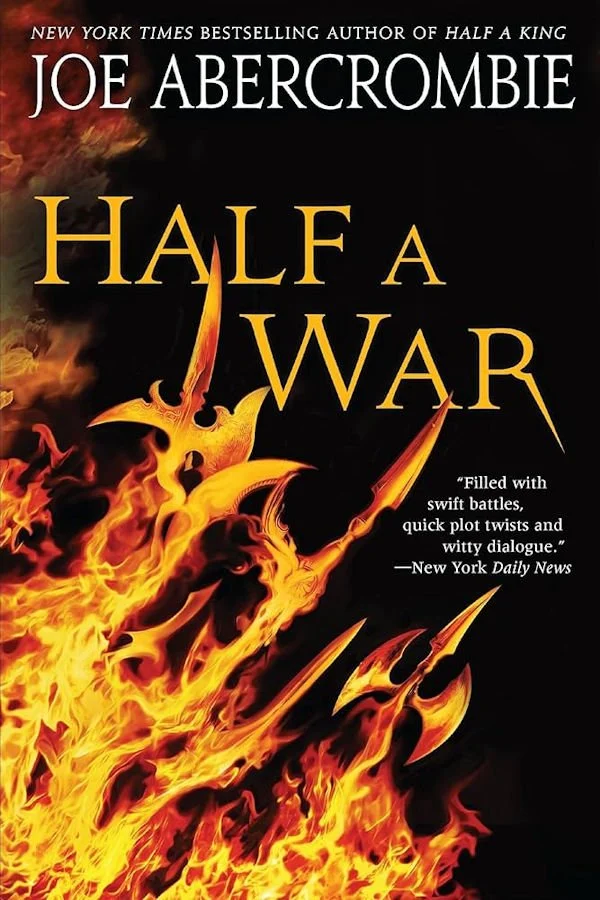
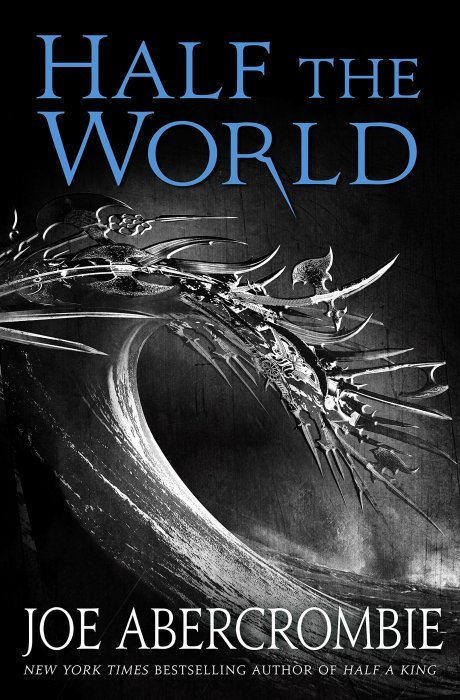
The Shattered Sea trilogy continued with Half the World (2015) and Half a War (2015), maintaining the narrative and thematic consistency established in the first book. Following this trilogy, Abercrombie returned to his First Law world with A Little Hatred (2019), the first book in The Age of Madness trilogy, which was unequivocally marketed as adult grimdark. This return seemingly reinforced the idea for some that Half a King was an anomaly, a temporary foray into a different genre. However, a closer examination reveals a continuous thread of Abercrombie’s distinctive voice woven throughout his entire bibliography.
Supporting Data: Deconstructing the "YA" Mask
The core of the debate surrounding Half a King lies in the prevalent assumptions associated with the "YA" tag. For many adult fantasy readers, YA literature often conjures images of a simple plot, clear-cut morality, a strong romantic subplot, and a coming-of-age journey where young protagonists navigate a dangerous world that, despite its perils, ultimately feels narratively "safe." Joe Abercrombie’s established work, in stark contrast, thrived on moral ambiguity, political cynicism, visceral violence, and the uncomfortable truth that power is rarely wielded by the virtuous. The concern was understandable: would a YA series blunt the Sharp Ends of The Blade Itself?
Half a King directly challenges these preconceived notions. At its heart is Prince Yarvi, a protagonist who immediately subverts conventional heroic archetypes. Born with a crippled hand, his physical weakness makes him an outsider, destined for the ministry rather than the throne. His journey is not one of physical prowess, but of cunning, observation, patience, and ruthless calculation. He survives and rises not through strength, but through intellect and a hard-won understanding of the world’s brutal realities. This focus on humility, adaptation, and a distinctly non-heroic path already pushes against many traditional YA conventions, where physical heroism or innate magical talent often define the protagonist’s ascendancy.
Furthermore, the thematic depth of Half a King is unmistakably Abercrombie’s. Trust is a fragile commodity, revenge is rarely clean, and good intentions frequently pave the way to terrible consequences. The world of the Shattered Sea is one of constant threat, where loyalty is bought and sold, and survival often demands morally compromising choices. These are not themes typically presented with the "safe" narrative wrapper often expected from YA. The dialogue retains Abercrombie’s signature dry wit and quiet cynicism, ensuring that even in a more streamlined narrative, the author’s voice remains distinct. Characters clash with sharp exchanges, schemes unfold with brutal efficiency, and victories are invariably stained with uncomfortable costs.
In terms of narrative structure, Half a King also echoes familiar Abercrombie patterns. Strip away the genre label, and readers encounter a band of unlikely companions forced together by circumstance, navigating a hostile world while larger political forces shift behind the scenes. This structure, seen in parts of The Blade Itself and variations thereof in his standalones, is a hallmark of his storytelling. Misfits, outcasts, and reluctant heroes are pushed into uneasy alliances, forced to survive through wit and desperation rather than conventional heroism. While the scale of Yarvi’s journey is smaller and more tightly focused than the sprawling epics of The First Law, the core elements – damaged protagonists, shifting loyalties, dark humor, a world that rewards cunning over virtue, and even a recurring disdain for elves – are all present and accounted for. Half a King does not represent a departure from Abercrombie’s style so much as a concentrated reframing of it.
The tighter narrative focus on Yarvi’s transformation, free from the weight of multiple viewpoints and sprawling geopolitics, allows for a compelling character study. His growth from an uncertain, physically disadvantaged prince to a calculating, formidable survivor unfolds with satisfying clarity. Each setback forces him to redefine leadership, loyalty, and strength, showcasing a classic coming-of-age arc, but filtered through Abercrombie’s characteristic skepticism about the very nature of heroism. This thematic sophistication elevates Half a King far beyond the perceived simplicity of many YA narratives.
Official Responses: The Publisher’s Gambit and Its Aftermath
While direct official statements from Abercrombie or his publishers regarding the specific "YA" labeling decision are scarce, the context of the publishing industry in the early 2010s provides some insight. The Young Adult market was experiencing an unprecedented boom, driven by blockbuster series like The Hunger Games and Divergent. Publishers were actively seeking to capitalize on this trend, and an established author like Abercrombie, whose stories often featured young protagonists facing extreme challenges, might have seemed a natural fit for expanding into this lucrative demographic. The goal would have been to broaden his readership beyond his loyal grimdark fanbase, introducing him to a new generation of readers.
However, this strategic positioning had unforeseen consequences. For Abercrombie’s existing adult readership, the YA label often triggered an immediate assumption of a softened narrative, a more predictable plot, and a less morally complex world – qualities antithetical to their expectations of "Lord Grimdark." Conversely, some traditional YA readers, drawn in by the label, might have found the Shattered Sea trilogy’s unflinching brutality, moral ambiguity, and lack of overt romance to be a jarring departure from their own expectations of the genre.
Abercrombie himself has, in interviews, acknowledged the differing perceptions of the trilogy. While he never explicitly distanced himself from the YA label, he often emphasized that the core themes and narrative approach were consistent with his other work. He clarified that the writing style was perhaps more accessible and streamlined, making it suitable for a broader audience, but not inherently "softer" or less profound. This implies that while the marketing placed it in a specific category, the authorial intent remained true to his distinctive voice.
Implications: The Enduring Power of a Label
The case of Half a King serves as a compelling illustration of the profound and often unintended implications of genre labeling in the publishing world. The YA tag, designed to broaden the book’s audience, may have inadvertently created a barrier, placing it in an awkward middle ground. It was perceived as too grim and morally complex for some traditional YA readers, and yet, for some adult fantasy enthusiasts, the label itself was enough to dismiss it as a less substantial offering than Abercrombie’s other works. This perception meant that Half a King often sat slightly outside the core of Abercrombie’s established reputation.
This miscategorization prevented a significant portion of his potential readership from engaging with a genuinely strong and characteristic Abercrombie novel. When Abercrombie returned to his adult First Law universe with The Age of Madness trilogy, the stark contrast in marketing reinforced the initial separation, making Half a King feel, for many, like a lighter, almost ancillary work. Yet, as this analysis shows, "lighter" does not equate to "lesser." It simply signifies a different artistic intention and a more concentrated narrative approach.
The enduring irony is that the very label intended to widen its appeal may have inadvertently narrowed its true appreciation. Readers who were willing to look beyond the "YA" designation discovered a fast-paced, cleverly constructed story driven by a compelling and nuanced protagonist. They found Abercrombie’s signature blend of dark humor, ruthless pragmatism, and unflinching realism, all focused through a slightly different lens. Half a King demonstrates that the distance between "YA fantasy" and "grimdark" isn’t always as wide or as absolute as marketing categories might suggest. It challenges readers to question their preconceived notions of genre and to engage with a book based on its intrinsic content rather than its assigned demographic. Ultimately, Half a King stands not as an outlier in Abercrombie’s bibliography, but as a vital, expertly crafted piece that enriches his body of work, proving that a master storyteller’s voice transcends convenient labels.

Leave a Comment