
The Mycelial Network of Myth: Unearthing the Enduring Legacy of Herne the Hunter
London, UK – Beneath the bustling surface of modern life, an ancient, intricate network thrives, connecting cultures, societies, and countless narratives. This unseen substratum, much like the vast mycelial mesh beneath a forest floor, is the vibrant ecosystem of folklore and tales. It feeds and informs the stories that emerge into the light, quietly spreading its tendrils, putting out new feelers, and perpetually renewing itself. For author Zoe Gilbert, this profound analogy became the guiding principle in her research for the novel Mischief Acts, leading her on a thrilling expedition into the tangled roots of one of Britain’s most enigmatic figures: Herne the Hunter.
While most of us walk through a forest oblivious to the mycorrhizal network underfoot – observing individual trees like English oaks or sessile oaks, noting their similarities and differences – a deeper, more exhilarating world awaits those willing to dig. These visible "oaks" are the stories and songs that emerge from our shared cultural commons, enjoyed for their beauty and shade. But for the folklorist, or the writer seeking inspiration, uncovering the threads of folkloric mycelium is an adventure in itself, revealing the hidden kinships, ancestors, and progeny that bind our myths together.
Gilbert’s journey into the heart of this folkloric web, prompted by her tracking of Herne the Hunter through the centuries for Mischief Acts, was not her first encounter with such interconnectedness. As any avid reader of folk tales knows, these narratives are constantly revealing their hidden relationships. However, Herne proved to be a particularly potent catalyst for uncovering a remarkably vast and unruly web of connections.
The Mycelial Network of Lore: A Foundation
Folklore, at its core, is a living, breathing entity, far more organic and interconnected than a mere collection of isolated stories. It is a dynamic system, constantly adapting, evolving, and influencing new narratives.
Beneath the Canopy: Understanding Folkloric Mycelium
The analogy of folklore as a mycelial network is remarkably apt. Mycelium, the vegetative part of a fungus, consists of a mass of branching, thread-like hyphae. These subterranean networks can span vast distances, forming symbiotic relationships with plant roots – mycorrhizae – through which nutrients, water, and even warning signals are exchanged. This "wood-wide web" demonstrates a profound interconnectedness, allowing diverse species to thrive by sharing resources and information.
Similarly, folklore operates as a deep, unseen structure that underpins our cultural narratives. Individual stories, like the majestic trees sprouting above ground, draw sustenance from this shared reservoir of archetypes, motifs, and symbols. They might appear distinct – an ancient myth here, a modern urban legend there – yet they are inextricably linked by unseen threads. A hero’s journey in one culture might echo another from a distant land; a trickster spirit in one era may re-emerge in a different guise centuries later. This constant exchange and nourishment ensure the vitality and resilience of our collective storytelling tradition. It’s a system of deep time and shared human experience, where ideas spread, mutate, and re-inform each other across geographical and temporal boundaries.
Herne the Hunter: A Mycological Manifestation
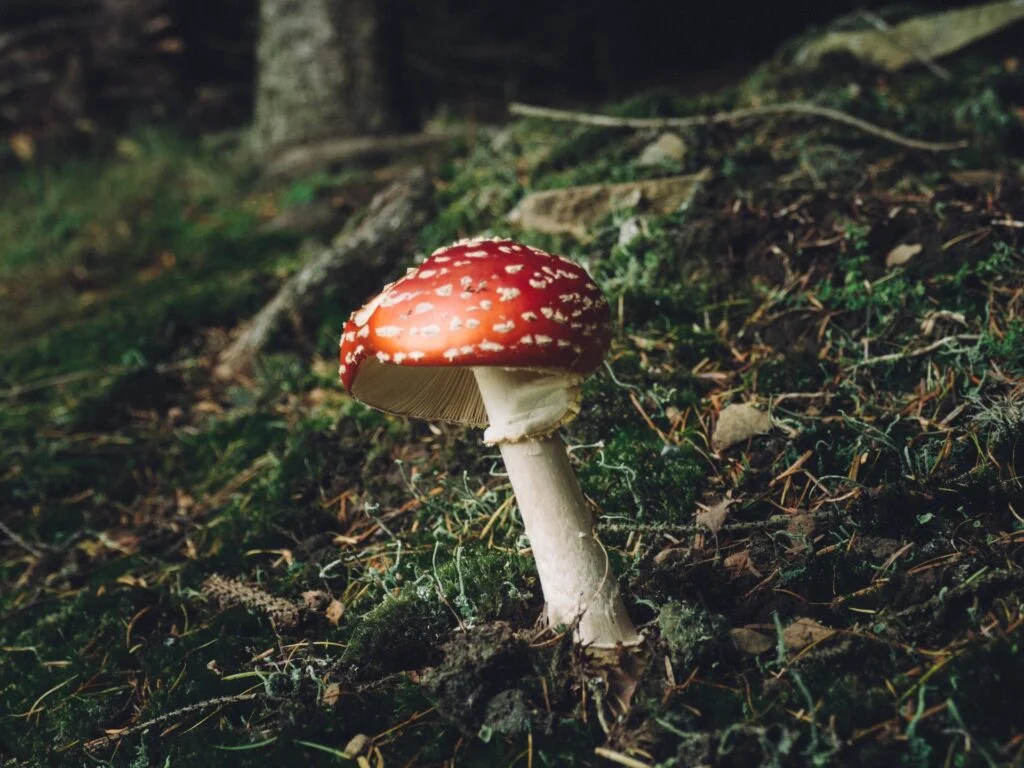
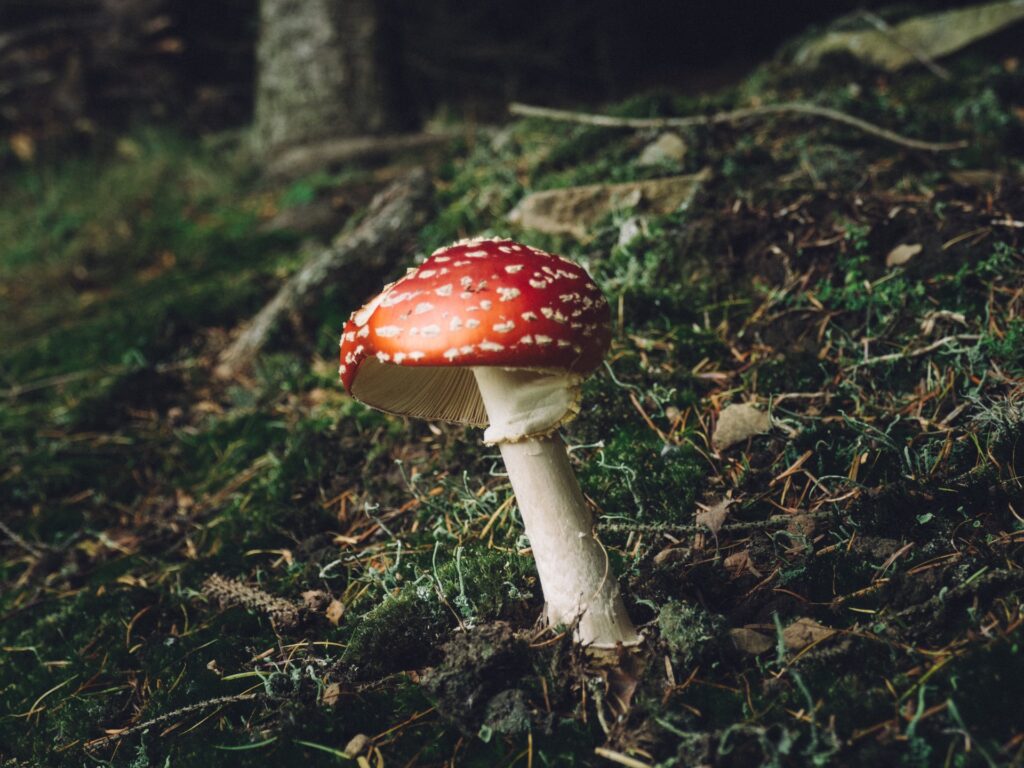
Within this intricate folkloric forest, Herne the Hunter stands as a prime example of a "mushroomy character." Like many fungi, he is often present if one knows where to look, yet rarely takes centre stage in the grand woodland diorama. His appearances are frequently peripheral, a haunting presence on the edge of the narrative, much like an arresting fly agaric mushroom (Amanita muscaria) might catch the eye in a forest clearing. It’s gorgeous, dangerous, and often found near human pathways, but not typically the main target for a foraging basket.
For many writers and readers, Herne has long lurked on the fringes of their folklore-vision, popping up in stories that ostensibly belong to other characters. This elusive, almost liminal quality is precisely what makes him such a powerful thread in the mycelial network of myth. He represents a persistent archetype that surfaces repeatedly, hinting at deeper, more widespread connections.
Tracing Herne’s Timeless Trails: A Chronology of Appearances
Herne the Hunter’s presence in English folklore is deeply rooted, yet his manifestations are surprisingly diverse, showcasing his adaptive nature within the broader mythological landscape.
From Windsor’s Woods to Modern Pages
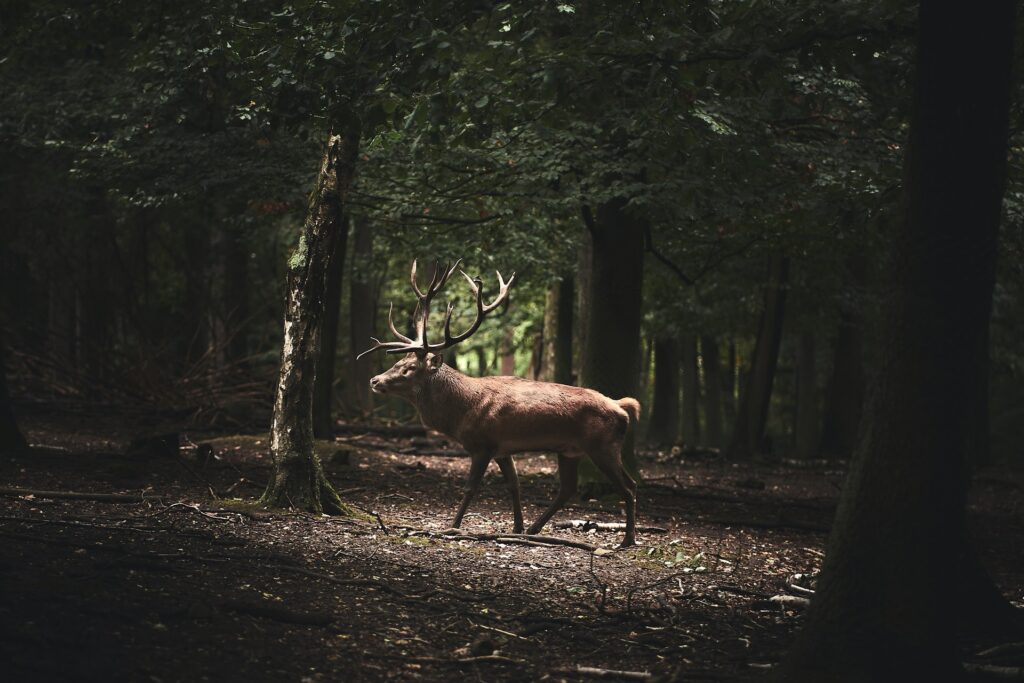
Herne’s most famous moment undoubtedly came with William Shakespeare’s The Merry Wives of Windsor. Here, he is presented as a spectral huntsman, haunting Windsor Forest, an antlered ghost whose oak tree is a site of nocturnal rendezvous and mischief. This dramatic depiction firmly cemented his association with the ancient royal hunting grounds. Later, William Harrison Ainsworth’s 1842 novel, Windsor Castle, provided Herne with a more elaborate and tragic origin story. Ainsworth reimagined him as a trusted keeper of the forest under King Richard II, unjustly disgraced, who hangs himself from an oak tree and returns as a vengeful, horned spirit, leading a ghostly hunt. This narrative significantly enriched Herne’s lore, solidifying his image as a tormented, wild entity intrinsically linked to the forest.
These foundational literary appearances provided a powerful bedrock for Herne’s subsequent manifestations, demonstrating how even within a specific tradition, narratives can be reinterpreted and expanded upon, adding new layers to an existing myth.
The Elusive Presence in Contemporary Fiction
Beyond these classic literary interpretations, Herne’s spectral presence has continued to ripple through more contemporary works, confirming his enduring appeal and adaptability. In John Masefield’s beloved children’s novel, The Box of Delights, Herne reappears not as a terrifying specter but as a wise and somewhat benevolent mentor to young Kay Harker, guiding him through magical adventures. This portrayal highlights Herne’s capacity for transformation, taking on a more protective, albeit still wild, aspect.
Similarly, in Susan Cooper’s seminal fantasy series, The Dark Is Rising, Herne emerges with a more menacing aura, his "owl eyes" casting a shadow over Will Stanton, the young protagonist. Here, he embodies the ancient, untamed forces of nature, a figure of both awe and potential danger in the eternal struggle between light and dark. Nick Hayes, in his evocative work The Book of Trespass, contemplates the symbolic power of Herne’s Oak, reflecting on the historical enclosures of land and the primal urge to connect with the wild, untamed spirit that Herne embodies. The author’s contemplation of breaking the law to touch Herne’s Oak speaks volumes about the character’s resonance as a symbol of wildness and rebellion against imposed order.
These diverse literary appearances illustrate Herne’s persistent cultural footprint. He is not confined to a single narrative or role but adapts to the needs of each story, much like a robust fungal network can produce different types of fruiting bodies depending on environmental conditions. He is a testament to the dynamic nature of folklore, continually reinterpreted and re-imagined by new generations of storytellers.
The Proliferation of the Wild Hunt: Supporting Data on Interconnections
Zoe Gilbert’s deep dive into Herne’s background quickly revealed that his story was not an isolated trunk but a central node in a sprawling network of interconnected myths and archetypes.
Beyond Herne: Kinships and Connections
The initial expectation, when tracing Herne’s lineage, was a clear link to figures like Odin. Both are mythic forces associated with sacred trees (Odin hanging himself from Yggdrasil, Herne from his oak) and both are leaders of the terrifying Wild Hunt – a spectral chase across the night sky, a harbinger of doom or change. This connection alone highlights a shared Indo-European heritage, a deep, ancient thread running through diverse mythologies.
However, the "mycelial network" around Herne proved far more expansive and intricate than a simple family tree. It proliferated, revealing interweavings that stretched across cultures and centuries, creating a rich tapestry of related figures.
A Pantheon of Wild Hunters and Tricksters
The research unearthed not merely dozens of Wild Hunt leaders – from the legendary King Herla, riding through the Herefordshire sky, to the Welsh Gwynn ap Nudd – but a host of characters who had carved out their own intricate ecosystems of lore. Harlequin, with his iconic diamond-patterned finery, emerged from the Italian Commedia dell’arte as Arlecchino, a mischievous servant whose origins hint at darker, demonic antecedents, often associated with the familia herlechini, a retinue of the Wild Hunt. The Erl-king, a sinister figure from German folklore, loomed from the shadows, luring children to their deaths, a chilling psychopomp. The Green Man, a ubiquitous leafy face peering from medieval carvings, offered a primordial, enigmatic grin, embodying the spirit of nature and fertility.
Further exploration brought forth figures like Oberon, the king of the fairies, and his playful counterpart Robin Goodfellow (Puck), both notorious mischief-makers and spirits of the wildwood. The Woodwose, or Wild Man, a hairy, primal figure inhabiting the deepest parts of the forest, and the Lord of Misrule, who presided over festive transgression and bacchanal during medieval celebrations, also joined this unruly assembly.
What united these disparate figures was a shared essence: they were not just psychopomps guiding souls or cursed ghosts haunting the living, but also entertainers, tricksters, and embodiments of wildness, lust, and transgression. Their forms might differ – a horned hunter, a masked jester, a leafy face, a hairy giant – but their underlying spirit, their role in challenging order and embodying the untamed aspects of nature and humanity, remained consistent. Each thread, when pulled, led to another, connecting fairyland to Tudor history, and Roman mythology to local legends, illustrating the pervasive and unruly nature of the familia herlechini.
Cernunnos and the Horned God Archetype
The ultimate horned god, Cernunnos, a deity revered in much contemporary pagan and Wiccan practice, might seem like the obvious central nexus of this "wood-wide web," with countless mycelial threads knotted about his ancient horns. Cernunnos, often depicted with antlers, is a pan-Celtic deity associated with fertility, animals, wealth, and the underworld, embodying primal masculine energy and the cycles of nature.
However, Gilbert’s research suggested that such a simple, singular solution did not quite align with the dynamic and often chaotic nature of Herne and his rascally family of woodsy hunters and seducers. It wasn’t merely that all the great mythic symbols seemed to converge here – life, death, freedom, lust, wildness, mischief – but the sheer range of their forms and territories. Herne’s multitudinous counterparts were spread far and wide: King Herla in Herefordshire, Harlequin as Arlecchino in Italy and beyond. Their wildness and mischief seemed to erupt wherever and whenever human societies, perhaps stifled by order and convention, most needed a touch of chaos and liberation. This sprawling, mycorrhizal network across space and time served as a secret source of countless sprouting tales, appearing precisely when and where they were most needed.
The Author’s Response: Reimagining Tradition
This profound understanding of folklore’s interconnected, adaptive nature provided Zoe Gilbert with a crucial permission: the freedom to engage actively with the tradition, to become a part of its ongoing evolution.
Transplanting Herne: From Windsor to the Great North Wood
Armed with this insight, Gilbert took her "trowel" to Herne, metaphorically transplanting him from his traditional haunt in Windsor Forest to the more contemporary, yet equally rich, landscape of the Great North Wood. This was not a casual decision but an act of deep respect for the dynamic spirit of folklore.
The Great North Wood, a vast ancient forest that once covered much of South London, now exists in fragmented remnants, with Sydenham & Dulwich Woods being among its best-known surviving strips. Gilbert was living near this "slender, seductive strip of woodland" when she began writing Mischief Acts. She was acutely aware of the wood’s deep history, a place inhabited by charcoal burners, famous gypsies, eccentric hermits, and even in recent times, a man named Solomon who received mail by hanging an old house number from a tree. This woodland, whether grand or diminished, seemed always to have possessed a genius loci, a protective spirit or presiding deity. The question arose: if the contemporary urban wood, and perhaps its human inhabitants, now needed Herne the Hunter, would he heed the call and come along for the ride?
Folklore’s Dynamic Nature: Rootedness vs. Universality
This act of transplantation highlights a fascinating tension inherent in folklore: its deep rootedness in specific places versus its universal appeal and adaptability. Gilbert articulates this tension powerfully: she strongly believes that local lore can reconnect us with landscapes, re-enchanting our understanding of place. The specificities of a regional myth bind us to the land, fostering a sense of belonging and continuity.
However, she also firmly believes in the universal human need for mischief, transgression, and wildness – both in the landscape and within the human soul. This is precisely what Herne the Hunter, along with his myriad likenesses, embodies. Therefore, it did not feel strange to borrow Herne and ask him to defend a wood she loved as if it were his own. He is the archetypal wildman, the spirit of the forest, the hooligan, and the trickster. Wherever civilization begins to lapse, where the ordered town gives way to the untamed wood, there we will find him. His presence is a reminder that the wild, unruly aspects of existence are never fully tamed, only waiting for an opportunity to re-emerge.
Implications: The Ever-Renewing Forest of Stories
The journey through Herne’s intricate folkloric web offers profound implications for how we understand the relationship between ancient traditions and contemporary creativity.
Fiction as a Catalyst for Evolution
Fiction has always played a crucial role in extending and morphing folklore, just as lore itself perpetually feeds new fictional creations. This symbiotic relationship ensures that folklore remains a living, evolving entity rather than a static relic of the past. Authors, by engaging with and reinterpreting traditional tales, contribute to their ongoing vitality, allowing ancient archetypes to speak to new generations and address contemporary concerns. Zoe Gilbert’s Mischief Acts is a prime example of this process, where a deeply researched understanding of folkloric connections empowers the author to boldly innovate within the tradition.
The Enduring Web of Myth
For this reason, it is highly probable that, much like the real mycorrhizal network beneath our feet, we will never truly discover the definitive edges of Herne the Hunter’s folkloric web. Its tendrils continue to spread, subtly connecting new narratives and re-informing existing ones. Just as not far from a striking fly agaric, one might find velvet shank and amethyst deceivers waiting quietly, or beech mast sprouting into new saplings and wood anemones expanding their territory, the forest of stories perpetually renews itself.
This continuous renewal is a beautiful symbiosis, a testament to the enduring power of human imagination and the fundamental need for storytelling. Folklore, far from being a collection of dusty tales, is a dynamic, interconnected force that continues to shape our understanding of ourselves, our environment, and the mysteries that lie just beyond the edge of the known. The work of authors like Zoe Gilbert not only illuminates these hidden connections but actively participates in the ongoing, vibrant life of this ancient, ever-growing network.
Further Reading: Works by Zoe Gilbert
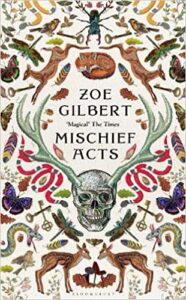
Mischief Acts by Zoe Gilbert
Herne the hunter, mischief-maker, spirit of the forest, leader of the wild hunt, hurtles through the centuries pursued by his creator.

A shapeshifter, Herne dons many guises as he slips and ripples through time – at candlelit Twelfth Night revels, at the spectacular burning of the Crystal Palace, at an acid-laced Sixties party. Wherever he goes, transgression, debauch and enchantment always follow in his wake.
But as the forest is increasingly encroached upon by urban sprawl and gentrification, and the world slides into crisis, Herne must find a way to survive – or exact his revenge.
With its intoxicating, chameleonic voice and boundless imagination, Mischief Acts is British folklore as you’ve never read it before: dangerous, sexy, troubling, daring, savage, an exhilarating race through time and space, weaving together the ancient and the contemporary.
Mischief Acts, by Zoe Gilbert, is available from Bloomsbury books.
The book can be purchased here.

Folk by Zoe Gilbert
The remote island village of Neverness is a world far from our time and place.
The air hangs rich with the coconut-scent of gorse and the salty bite of the sea. Harsh winds scour the rocky coastline. The villagers’ lives are inseparable from nature and its enchantments.
Verlyn Webbe, born with a wing for an arm, unfurls his feathers in defiance of past shame; Plum is snatched by a water bull and dragged to his lair; little Crab Skerry takes his first run through the gorse-maze; Madden sleepwalks through violent storms, haunted by horses and her father’s wishes.
As the tales of this island community interweave over the course of a generation, their earthy desires, resentments, idle gossip and painful losses create a staggeringly original world. Crackling with echoes of ancient folklore, but entirely, wonderfully, her own, Zoe Gilbert’s Folk is a dark, beautiful and intoxicating debut.
Folk, by Zoe Gilbert, is available from Bloomsbury books, or as a special edition with sprayed edges from Goldsboro books.
The book can be purchased here.


Leave a Comment