
Molly Bounds Illuminates the In-Between: "The Light That Loses, The Night That Wins" Premieres at Mrs. Gallery
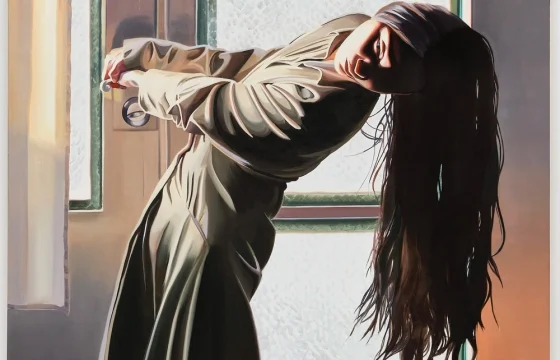
New York, NY – April 10, 2026 – Mrs. Gallery is proud to announce the opening of "The Light That Loses, The Night That Wins," a compelling solo exhibition by Los Angeles-based artist Molly Bounds. Marking her New York debut, this evocative collection of new paintings is on view at the gallery’s 6040 56th Drive location through May 2, 2026. This exhibition follows Bounds’ significant participation in The Armory Show in September 2025, further solidifying her presence in the contemporary art landscape.
Timed to coincide with the vernal equinox, a celestial event symbolizing balance and transition, Bounds masterfully employs light as a central, dynamic protagonist in her latest body of work. Light, in Bounds’ lexicon, is not merely an illuminator but a complex force capable of both concealment and revelation, a potent reminder of time’s relentless march. Through her signature style, she captures figures poised in moments of deep contemplation and sudden, candid movement, exploring the liminal spaces where stillness and urgency converge to shape atmosphere and emotion. Much like the season’s shift from winter’s dormancy to spring’s awakening, Bounds’ subjects stand on the precipice of profound transformation.
A Deep Dive into Bounds’ Vision: Solitude, Psychology, and the Passage of Time
Molly Bounds’ artistic practice is deeply rooted in the exploration of the individual psyche, often through depictions of figures enveloped in solitude. Her interior scenes are characterized by slumped and draping bodies, suggesting a state of rest and repose that, upon closer examination, subtly gives way to an undercurrent of unease. These are not mere physical representations but psychological portraits, delving into the persistent essence that endures behind dormant states and weary gazes.
In "The Armchair," Bounds constructs a scene of intimate warmth. The soft, inviting glow of a fireplace bathes a richly textured interior in a comforting luminescence. This warmth is artfully juxtaposed with the cool, muted blues of the early evening sky visible through the window, creating a palpable tension between the internal and external worlds. What begins as a moment of quiet contemplation gradually reveals an underlying psychological drama. The viewer is invited to perceive a mind at work, perhaps scheming, planning, or deeply engrossed in an internal dialogue. This is further underscored by the subtle detail of unraveling upholstery seams, a visual metaphor for fraying composure or the slow erosion of inner peace. The woman in the painting maintains a vacant stare, a gaze that seems to linger in an eternal present, leaving the viewer to question whether she resides in a state of blissful detachment or something far more complex and unsettling.
"Privacy Glass" presents another compelling exploration of self-imposed isolation. Here, a figure deliberately secludes herself from the external world, rendered with a dramatic interplay of warm and cool hues. The frosted glass acts as a semi-transparent barrier, diffusing light in a way that both illuminates the subject from behind and allows a distinct beam of light from the outside to penetrate the interior. This technique masterfully obscures the figure’s face, drawing the viewer’s attention to the draped clothing and the form beneath. The effect is reminiscent of the chiaroscuro mastery of Georges de La Tour, particularly in his treatment of light and shadow. In a manner akin to the vanitas tradition, Bounds conveys the profound theme of the fleetingness of time and the inevitable descent into darkness, prompting reflection on mortality and the ephemeral nature of existence.
Escapism and the Triumph of Spring: Landscapes of Hope and Renewal
In stark contrast to the introspective and often tense interior scenes, Bounds also offers moments of potent escapism within "The Light That Loses, The Night That Wins." In works like "It Sings in Me" and "Among of Green, Again," figures are depicted moving with uninhibited freedom amidst rolling green hills, bathed in the radiant warmth of the sun. These landscapes possess a bucolic quality, perhaps even an idealized one, leading to an intriguing question: are these scenes grounded in reality, or are they manifestations of an imagined realm? For Bounds, the definitive answer to this question is secondary. What takes precedence is her ability to construct optimism, to instill a profound belief in renewal and rebirth.
These verdant landscapes serve as a powerful counterpoint to the pensive interiority that characterizes other works in the exhibition. They communicate a sense of urgency, a vibrant celebration of life, and the boundless possibilities that lie ahead. They evoke a sense of fantasy, a yearning for liberation and joy. After enduring the metaphorical darkness of winter, the exhibition ultimately champions the triumphant arrival of spring, symbolizing hope, regeneration, and the enduring power of life’s cycles.
Chronology of an Exhibition: From Armory Show to New York Debut
The journey of Molly Bounds’ solo exhibition "The Light That Loses, The Night That Wins" to its New York premiere is a testament to her growing artistic trajectory and the strategic development of her presence within the international art world.
-
September 2025: Molly Bounds gains significant exposure and critical attention at The Armory Show, a prestigious international contemporary art fair held annually in New York. Her participation in this prominent event serves as a crucial stepping stone, introducing her distinctive artistic voice to a wider audience of collectors, curators, and art enthusiasts. This engagement likely sparks conversations and interest that pave the way for her subsequent solo presentation.
-
Early 2026: Mrs. Gallery announces the upcoming solo exhibition for Molly Bounds, titled "The Light That Loses, The Night That Wins." The announcement details the exhibition’s theme, the artist’s focus on light as a protagonist, and the exploration of liminal moments. This initial announcement builds anticipation within the art community.
-
March 20, 2026 (Vernal Equinox): The exhibition officially opens its doors to the public at Mrs. Gallery’s 6040 56th Drive location. The choice of opening date is deliberate and thematically aligned with the exhibition’s exploration of light, balance, and seasonal transition.
-
Through May 2, 2026: The exhibition remains on view, allowing ample time for the public, critics, and collectors to experience Molly Bounds’ latest body of work. This extended viewing period facilitates deeper engagement and broader discussion.
Supporting Data: The Artist’s Style and Critical Reception
Molly Bounds’ artistic style is characterized by a distinctive approach to painting that blends technical skill with profound psychological insight. Her works often feature a masterful use of light and shadow, creating atmospheric depth and emotional resonance. The figures she portrays are rendered with a palpable sense of presence, even in their stillness or moments of subtle unease.
While specific critical reviews for "The Light That Loses, The Night That Wins" are likely to emerge following its opening, her previous engagement at The Armory Show in September 2025 provided a significant platform for her work to be seen and discussed. Art fairs like The Armory Show are crucial for gauging initial reception, as they attract a diverse range of industry professionals and media outlets. Her inclusion in such a prominent event suggests a level of critical interest and market validation.
Bounds’ consistent exploration of themes such as solitude, introspection, the passage of time, and the nuances of human emotion has resonated with audiences and critics alike. Her ability to imbue her canvases with a sense of narrative, even in seemingly static scenes, is a hallmark of her artistic process. The psychological depth she achieves, coupled with her refined aesthetic, positions her as an artist with a compelling and evolving vision. The "supporting data" for her current exhibition lies not only in her past achievements but also in the thematic coherence and artistic maturity demonstrated in "The Light That Loses, The Night That Wins."
Official Responses: Gallery and Artist Statements
The opening of "The Light That Loses, The Night That Wins" is accompanied by official statements from both the presenting gallery and the artist, providing crucial insight into the exhibition’s intent and significance.
Statement from Mrs. Gallery:
"Mrs. is thrilled to present Molly Bounds’ New York debut solo exhibition, ‘The Light That Loses, The Night That Wins.’ This collection represents a significant evolution in Bounds’ practice, showcasing her profound ability to translate complex psychological states and universal themes into visually arresting paintings. By centering light as a protagonist, Bounds invites viewers to contemplate the ephemeral nature of existence, the introspective moments that shape us, and the enduring power of hope and renewal. We are particularly proud to open this exhibition on the vernal equinox, a date that beautifully mirrors the exhibition’s thematic explorations of balance, transition, and the cyclical rhythms of life. Molly’s work continues to captivate with its emotional depth and sophisticated aesthetic, and we are eager for New York audiences to experience this exceptional body of work."
Statement from Molly Bounds:
"This exhibition is a culmination of my ongoing exploration into the ways light shapes our perception and influences our emotional landscapes. ‘The Light That Loses, The Night That Wins’ is an invitation to consider the duality of experience – the moments of quiet introspection and the surges of urgent feeling, the periods of darkness and the inevitable dawn. I am fascinated by the in-between spaces, the thresholds where transformation occurs, and how light, in its myriad forms, can both reveal and conceal these delicate transitions. Opening this exhibition on the vernal equinox feels profoundly fitting, a natural alignment with the exhibition’s central metaphor of balance and the cyclical promise of renewal. I am deeply honored to share these new works with the New York art community through Mrs. Gallery."
These official statements underscore the thematic intentions of the exhibition, highlighting the artist’s conceptual framework and the gallery’s commitment to presenting impactful contemporary art.
Implications: Art, Time, and the Human Condition
"The Light That Loses, The Night That Wins" by Molly Bounds transcends a mere display of paintings; it offers a profound meditation on the human condition, viewed through the lens of time, light, and internal experience. The exhibition’s implications are multifaceted, touching upon our relationship with the ephemeral, the psychological weight of solitude, and the persistent human drive towards hope and renewal.
The deliberate timing of the exhibition’s opening on the vernal equinox is a significant implication in itself. It situates the artwork within a broader, universal narrative of cyclical change and the eternal interplay between light and darkness. By presenting light as a protagonist, Bounds encourages a deeper contemplation of its symbolic power – its ability to illuminate truth, to create illusion, and to mark the passage of time. The exhibition suggests that our understanding of reality is intrinsically linked to how we perceive and are affected by light.
The psychological depth of Bounds’ interior scenes carries significant implications for how we understand individual experience. Her depiction of slumped bodies and vacant stares speaks to the universal human experiences of weariness, introspection, and perhaps even existential unease. The unraveling upholstery in "The Armchair" serves as a potent metaphor for the subtle fraying of inner peace or the quiet anxieties that can accompany prolonged periods of solitude. These works imply that true portraits are not merely of physical likeness but of the enduring internal states that persist even in dormant moments. The exhibition challenges viewers to acknowledge the complexity of the human mind and the quiet dramas that unfold within us.
Conversely, the moments of escapism and the vibrant, idealized landscapes in works like "It Sings in Me" and "Among of Green, Again" offer a powerful implication of hope and the enduring human capacity for optimism. These scenes suggest that even in the face of internal struggle or the perceived darkness, the possibility of renewal and rebirth is always present. Bounds’ emphasis on the ability to build optimism, rather than its inherent presence, implies that hope is an active pursuit, a conscious creation. This offers a profound message of resilience, suggesting that even in the most introspective moments, the human spirit yearns for light and possibility.
Ultimately, "The Light That Loses, The Night That Wins" serves as a poignant reminder of time’s relentless march. The vanitas-like qualities evoked by "Privacy Glass" and the very title of the exhibition itself underscore the fleeting nature of our existence and the inevitability of change. However, Bounds masterfully balances this contemplation of ephemerality with the powerful message of spring’s victory. The exhibition suggests that even as light may momentarily "lose" to the encroaching night, the cycle will inevitably turn, and spring, symbolizing renewal and vibrant life, will always win. This imbues the exhibition with a sense of enduring optimism, positioning it as a significant contribution to contemporary discourse on art, time, and the enduring spirit of humanity.


Leave a Comment