Meta Horizon+ Transforms VR Value Proposition with Integrated Xbox Game Pass Starter Edition
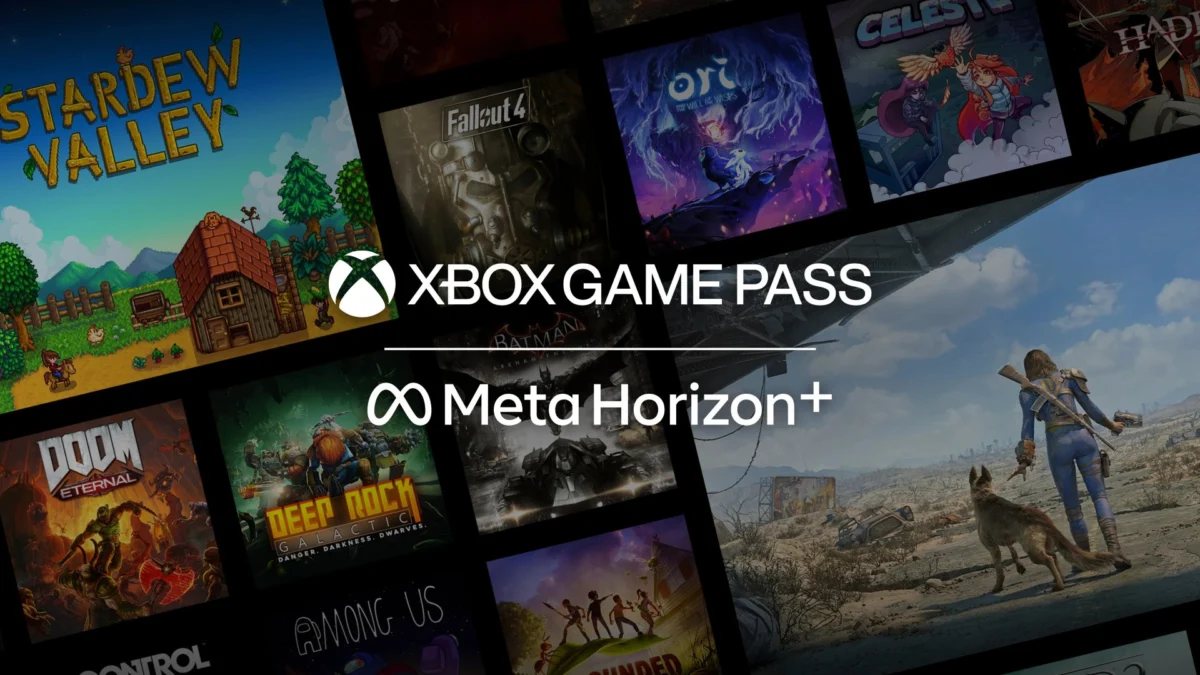
In a move that significantly recalibrates the value proposition of virtual reality subscriptions, Meta has announced a landmark expansion of its Horizon+ service. Effective immediately, the Meta Horizon+ subscription—the successor to the Meta Quest+ service—now includes a "Starter Edition" of Microsoft’s Xbox Game Pass at no additional cost. This strategic alliance bridges the gap between traditional "flatscreen" gaming and spatial computing, offering Quest 3 and Quest 3S users a library of blockbuster titles that can be played on massive virtual screens within their headsets.
The integration represents the latest chapter in the deepening partnership between Meta and Microsoft, two giants that have increasingly found common ground in the face of growing competition from Apple’s Vision Pro and Sony’s PlayStation VR2. By bundling the world’s most popular gaming subscription with the leading VR hardware ecosystem, Meta is positioning the Horizon brand not just as a niche for immersive experiences, but as a comprehensive entertainment hub.
Main Facts: The Details of the Horizon+ Overhaul
The newly bolstered Horizon+ subscription remains priced at $7.99 per month, or a discounted $59.99 for an annual commitment. Despite the price remaining static, the content library has seen a dramatic influx of value.
The Xbox Game Pass "Starter Edition"
The cornerstone of this update is the "Xbox Game Pass Starter Edition." While not the full "Ultimate" tier, this version provides Horizon+ subscribers with a curated selection of over 50 high-profile Xbox titles. The initial roster includes heavy hitters from the Bethesda catalog, such as Fallout 4 and Fallout 76, alongside cooperative hits like Grounded and Overcooked 2.
Hybrid Access Models
Subscribers are granted two primary ways to access these titles:
- Cloud Streaming: Games can be streamed via Xbox Cloud Gaming directly to the Meta Horizon OS. This allows users to project the game onto a customizable virtual cinema screen, which can be resized to fill the user’s entire field of vision.
- Local Play: For those who also own a gaming PC or an Xbox console, the subscription allows for the full download and installation of these 50+ titles on those devices, providing unlimited local play without the latency or bandwidth requirements of the cloud.
The 10-Hour Cloud Limitation
There is a notable caveat to the cloud streaming component. The "Starter Edition" included with Horizon+ is capped at 10 hours of Xbox Cloud Gaming per month. This limitation appears designed to serve as a "sampling" tier, encouraging power users to eventually upgrade to a full Xbox Game Pass Ultimate subscription while providing casual gamers with enough time for weekly sessions. It is important to note that games downloaded to a PC or console are not subject to this 10-hour restriction.
Chronology: The Road to Horizon+
The evolution of Meta’s subscription service reflects the broader shift in the company’s corporate identity. To understand the current state of Horizon+, one must look at the timeline of Meta’s gaming ecosystem.
2023: The Birth of Quest+
In mid-2023, Meta launched "Meta Quest+." Initially modeled after PlayStation Plus, it offered two curated VR titles per month that users could "claim" and keep as long as their subscription remained active. It was a modest start aimed at building a digital library for new headset owners.
late 2023: Xbox Cloud Gaming Beta
In December 2023, the first official Xbox Cloud Gaming (Beta) app arrived on the Meta Quest Store. At the time, it required a separate Xbox Game Pass Ultimate subscription and a Bluetooth-enabled controller. This was the first major signal of the Meta-Microsoft hardware-software synergy.
2025: The Great Rebranding
As Meta moved to unify its software ecosystem under a single banner, "Meta Quest+" was rebranded as "Meta Horizon+." This change coincided with the opening of the Horizon OS to third-party hardware manufacturers (such as ASUS and Lenovo). The rebranding signaled that the subscription was no longer tied strictly to Quest hardware, but to the Horizon software platform itself.
2026: The Integration Phase
Throughout late 2025 and early 2026, Meta began adding a "Rotating Catalog" of over 100 native VR games to Horizon+, moving away from the "two-games-a-month" model toward a Netflix-style library. The inclusion of Xbox Game Pass in mid-2026 marks the final stage of this transformation, turning the service into a cross-platform gaming powerhouse.
Supporting Data: Comparative Value and Market Positioning
The financial logic behind the Horizon+ update is compelling when compared to standalone gaming services.
| Service | Monthly Cost | Content |
|---|---|---|
| Meta Horizon+ | $7.99 | 100+ VR Games + 50+ Xbox Games + 10hrs Cloud Play |
| Xbox Game Pass Essential | $9.99 | Online Multiplayer + 25+ Console Games |
| Xbox Game Pass Ultimate | $16.99 | 400+ Games + Unlimited Cloud Play + PC/Console |
| GeForce Now (Priority) | $9.99 | Cloud Streaming for owned PC games |
By pricing Horizon+ at $7.99, Meta is effectively undercutting the standard Xbox Game Pass Essential price while offering a broader variety of content (both VR and flatscreen). For a Meta Quest 3S owner, the annual $59.99 price point (roughly $5/month) represents one of the most aggressive "loss leader" strategies in the history of interactive entertainment.

Technical Breakthroughs: The Gamepad Emulator
One of the historical friction points for Xbox gaming on Quest was the requirement of a secondary controller. Meta is addressing this with a new "Gamepad Emulator" software update. This feature allows the Quest Touch controllers to mimic the inputs of a standard Xbox controller. While some complex titles may still benefit from a dedicated gamepad, the emulator allows users to jump into Fallout 4 or Overcooked 2 using the hardware they already have in their hands, drastically lowering the barrier to entry for casual users.
Official Responses: A Shared Vision for the Future
While the partnership may seem surprising to some, official statements from leadership at both Meta and Microsoft suggest a deeply calculated alignment of interests.
In a recent press briefing, Meta’s VP of Metaverse Content, Jason Rubin, emphasized the importance of variety. "Our goal with Horizon+ is to ensure that the moment you put on a headset, you have access to the best entertainment in the world, regardless of whether it was built for VR or a traditional console. By bringing Xbox titles into the fold, we are providing a ‘big screen’ experience that a physical television simply cannot match."
From the Microsoft side, Xbox President Sarah Bond noted that the move is part of the "Xbox Everywhere" initiative. "We want to meet players where they are. There are millions of Quest users who are also fans of Xbox franchises. By integrating a Starter Edition into Horizon+, we are making it easier than ever for those players to stay connected to the Xbox ecosystem, whether they are on their couch or in a virtual environment."
Industry analysts suggest that for Microsoft, this is a customer acquisition play. The 10-hour cloud limit acts as a "taster," potentially converting Quest users into full Xbox Game Pass Ultimate subscribers. For Meta, it provides the "sticky" content needed to keep users returning to their headsets daily.
Implications: What This Means for the VR Industry
The inclusion of Xbox Game Pass in Horizon+ has far-reaching implications for the XR (Extended Reality) industry and the broader gaming market.
1. The End of the "VR-Only" Content Silo
For years, VR headsets were criticized for having "no games." By officially supporting high-quality flatscreen titles via virtual theaters, Meta is effectively bypassing the slow development cycles of native VR software. This "Hybrid" approach acknowledges that users want to use their expensive headsets for more than just 360-degree immersion; they want a personal, high-definition IMAX theater for all their media.
2. Pressure on Sony and Apple
Sony, which possesses a massive library of first-party titles, has been hesitant to bring its "PS Plus" cloud streaming to the PSVR2 in a meaningful way. Meta’s move puts direct pressure on Sony to offer a similar "Big Screen" streaming service for PlayStation titles. Meanwhile, Apple’s Vision Pro remains a high-priced productivity device; Meta’s aggressive gaming-centric value play solidifies its dominance in the consumer entertainment segment of the market.
3. The "Horizon OS" as a Universal Platform
By making Horizon+ so attractive, Meta is preparing for the era of third-party VR hardware. When ASUS or Lenovo release their own "Horizon OS" headsets in the coming years, the Horizon+ subscription will be the "glue" that keeps users in the ecosystem, much like how the App Store keeps users on iOS.
4. Cloud Gaming’s Second Wind
The 10-hour limit on cloud gaming is a pragmatic solution to the high costs of server maintenance. However, if successful, it could lead to a new tier of "Micro-Cloud" subscriptions across the industry, where users pay for small buckets of high-performance streaming time rather than expensive, unlimited plans.
Conclusion
The transformation of Meta Horizon+ into a hybrid VR-and-Xbox powerhouse is a watershed moment for the industry. By bundling 50+ Xbox titles and over 100 VR games for less than $8 a month, Meta has created a compelling "must-have" service for Quest owners.
While the 10-hour cloud limit may frustrate some, the ability to download titles to PC and the introduction of Touch Controller emulation show a commitment to user flexibility. As the lines between virtual reality and traditional gaming continue to blur, Meta and Microsoft have positioned themselves at the very center of the new digital living room. For the consumer, the message is clear: the headset is no longer just for VR—it is the best seat in the house for everything you play.