The Summer of Discontent: Assessing the Fractured State of the American Presidency in July 2026
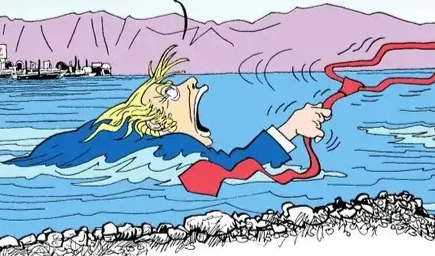
WASHINGTON, D.C. — As the United States enters the second half of 2026, the administration of President Donald J. Trump finds itself navigating a landscape of profound domestic instability, international ridicule, and a looming electoral reckoning. With the midterm elections only months away, the "America First" agenda is facing a series of high-profile failures that have left the Republican party fractured and the executive branch increasingly isolated.
From a flailing military reorganization led by Secretary of Defense Pete Hegseth to a series of legal rebuffs regarding the President’s personal finances, the current political climate is defined by what international observers describe as a "democracy in ruins." This report examines the pivotal events of the last eighteen months, the data behind the administration’s declining support, and the far-reaching implications of a presidency currently defined by existential dread.
I. Main Facts: A Presidency Under Siege
The Trump administration’s current crisis is characterized by three primary pillars: legislative stagnation, legal overreach, and a controversial shift in military culture.
- Electoral Vulnerability: President Trump’s approval ratings have reached historic lows as the 2026 midterm elections approach. Internal GOP polling suggests a significant risk of losing both the House and the Senate, which would effectively neutralize the President’s remaining two years in office.
- Legal and Ethical Setbacks: A federal judge recently dismissed an unprecedented attempt by the administration to declare the Trump family "tax-free for life." In a rare move, the judge referred the legal team—including the President’s nominee for Attorney General—for potential disbarment.
- Military Purge: Under the leadership of Pete Hegseth, the Department of Defense has initiated a systematic removal of high-ranking women and minority officers. This "macho" restructuring has sparked internal dissent and public outrage, particularly following the temporary removal of a Black Medal of Honor recipient’s profile from official military records.
- Foreign Policy Volatility: The administration has escalated military actions against Iran, a move critics claim is intended to distract from domestic failures. Simultaneously, diplomatic relations with South Africa have soured following the President’s adoption of unsubstantiated "white genocide" narratives championed by billionaire Elon Musk.
II. Chronology of Decline: 2024 to July 2026
The trajectory of the current administration can be traced through a series of high-stakes gambles that have largely failed to produce the promised "Golden Age."
- November 2024: Donald Trump secures a second term in the White House. Despite the Access Hollywood tapes and prior legal battles, his base remains energized.
- January 2025: Inauguration Day. The administration immediately moves to expand ICE operations, targeting Latino communities with increased surveillance and deportation efforts.
- Summer 2025: The "Master Coin" crypto initiative is launched. While marketed as a revolutionary financial tool, subsequent market volatility leads to massive losses for retail investors, many of whom were the President’s core supporters.
- March 2026: Secretary Hegseth begins the "DEI Purge" within the military. The disappearance of a Black Medal of Honor winner’s profile from the Department of Defense website creates a national firestorm. The administration later restores the profile, citing a "clerical error," though internal memos suggest a targeted effort to delegitimize diversity programs.
- July 4, 2026: The 250th Anniversary of the United States (Semiquincentennial). The administration’s much-vaunted celebrations are marred by low attendance and technical failures. The "renovated" Reflecting Pool, a pet project of the President, becomes a subject of national derision due to poor construction and aesthetic choices.
- July 15, 2026: A federal judge slaps down the "Family Tax-Free" proposal. The ruling marks a significant defeat for the President’s attempt to institutionalize dynastic financial protections.
- July 19, 2026: Current status. The President turns his focus toward Iran and claims of domestic voter fraud to shore up a diminishing base.
III. Supporting Data: The Erosion of the Base
While the President’s core "MAGA" base remains loyal, data suggests that the coalition that delivered him the 2024 victory is beginning to fray.
The Latino Backlash
In 2024, Trump made significant gains with Latino voters. However, 2026 polling indicates a sharp reversal. The aggressive tactics of ICE—including reports of harassment, arrests, and the accidental deportation of legal residents—have created a climate of fear. While Cuban-American voters in South Florida remain a stronghold, particularly following the administration’s threats of an invasion of Cuba, other Hispanic demographic groups have distanced themselves from the GOP.
The Economic Toll of Crypto and Conflict
The "Master Coin" venture, touted by the White House as a way for "regular Americans" to bypass traditional banking, has reportedly lost 60% of its value since its peak. Furthermore, the "feckless" approach to the war with Iran has destabilized global oil markets. According to economic analysts, the sanctions and supply chain disruptions resulting from the Iran confrontation have cost the average American household an additional $1,200 in energy costs annually.
Election Integrity Claims
In a bid to maintain control over the narrative, the White House recently released a series of "super-secret documents" allegedly proving widespread voter fraud. However, independent audits and even the documents themselves have refuted these claims. Analysis shows that the machines the administration claims were "hacked" are not connected to the internet and are used primarily to count paper ballots, making the President’s claims technologically impossible.
IV. Official Responses and International Critique
The reaction to the administration’s current state varies from defiant rhetoric within the White House to open mockery on the international stage.
The White House Position
Press Secretary officials have dismissed the low approval ratings as "fake news" and "deep state interference." Regarding the military purges, Secretary Hegseth has maintained that the goal is to return the U.S. armed forces to a state of "unapologetic masculinity." In a recent briefing, Hegseth argued that the removal of diversity initiatives is essential for "combat readiness," though he has yet to provide empirical evidence of battles lost due to a lack of "testosterone."
International Perspectives
Overseas, the perception of American stability has shifted from concern to "plain analysis" and, in some cases, open laughter.
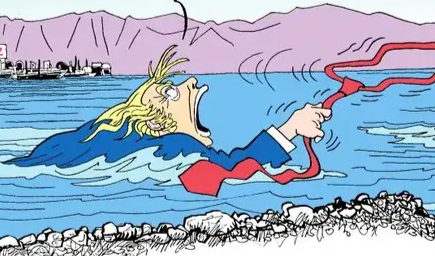
- Ireland: Political cartoonists and analysts in Dublin describe American democracy as "already in ruins," suggesting that the distance allows for a clearer view of the "existential dread" currently gripping the U.S.
- Austria: Analysts point to Trump’s "flailing" as a sign of a leader who realizes he is losing his grip on a Congress that may soon be out of his command.
- South Africa: President Cyril Ramaphosa has publicly hit out at the White House for spreading "baseless and blatant misinformation" regarding "white genocide." The South African government has expressed dismay that the U.S. refugee program was altered based on "racist lies" propagated by Elon Musk and endorsed by the President.
V. Implications: The Future of the American Experiment
The current state of the presidency suggests a period of extreme volatility as the United States moves toward the 2026 midterms and the 2028 general election.
The Military’s Identity Crisis
The Hegseth-led purge of women and minorities threatens to create a massive brain drain within the military. By pressuring high-ranking officers to retire or by declining their promotions, the administration is effectively dismantling decades of institutional knowledge. The move to create a "macho" fighting force is viewed by many as a performance of masculinity rather than a strategic improvement, drawing comparisons to the "Greatest American Hero"—a figure who possesses power but lacks the instruction manual to use it effectively.
The Midterm Reckoning
If Republicans lose control of Congress in November, the President will face a barrage of subpoenas and oversight hearings that could dwarf those of his first term. The referral of his Attorney General nominee for disbarment has already signaled that the judicial branch is no longer willing to tolerate unprecedented legal theories designed to protect the First Family’s assets.
The "Shattered Mirror" of Global Leadership
Perhaps the most lasting implication is the erosion of American soft power. When the world "laughs in the face" of the United States, the country’s ability to lead international coalitions or mediate conflicts (such as the Iran situation) is severely compromised. The administration’s tendency to believe "magical" documents over verifiable data has created a credibility gap that may take generations to bridge.
As of July 19, 2026, the United States remains a nation divided, led by a figure who—despite his bravado—is increasingly viewed as a "Man of Steel" with the structural integrity of "Kleenex." Whether the upcoming elections will serve as a course correction or a final confirmation of this decline remains the central question of the American political landscape.