The Paradox of the Prankster: Why Johnny Knoxville’s Biggest Box Office Success is a Movie He Never Physically Appeared In
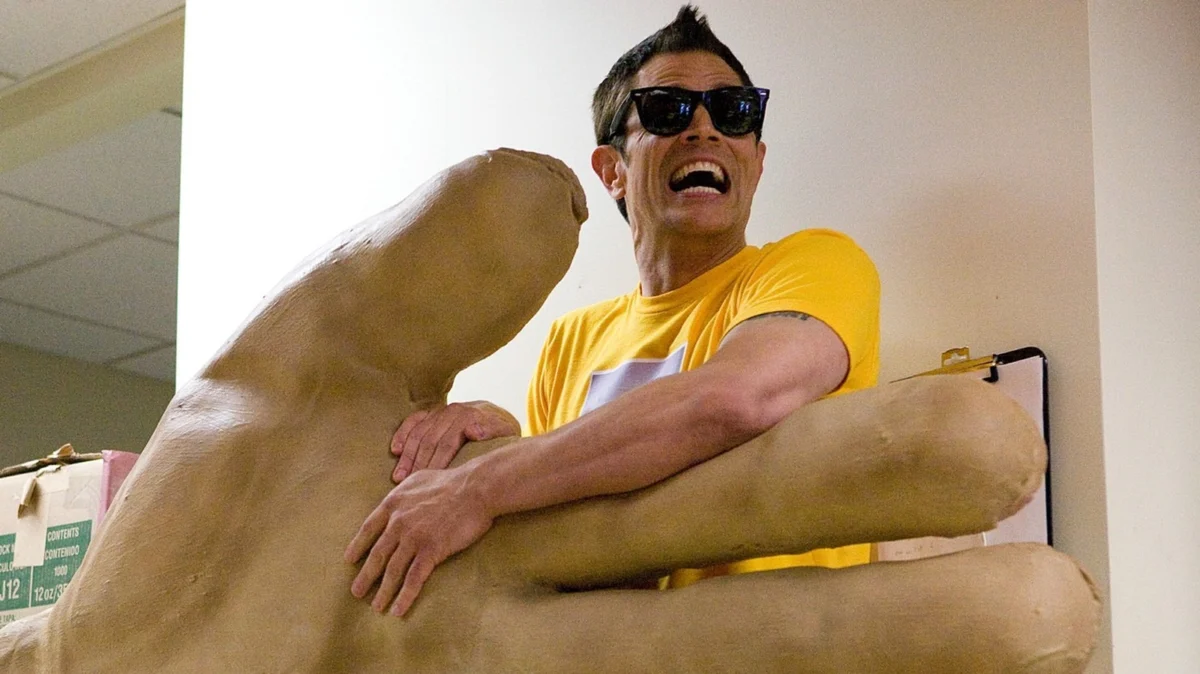
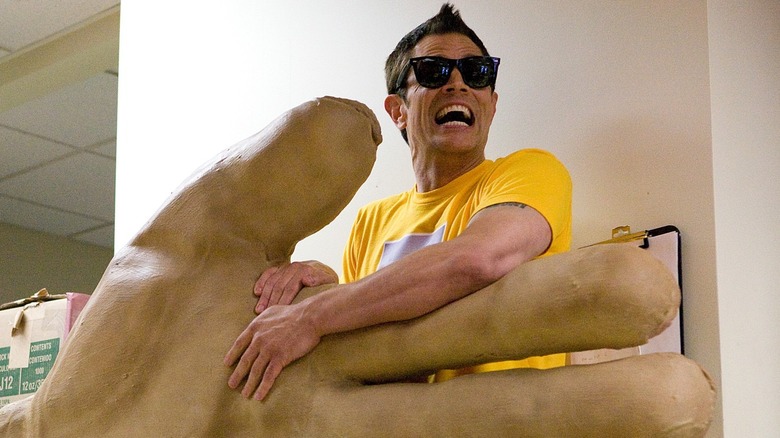
Johnny Knoxville has built a career—and a legendary status in American counter-culture—on the foundation of physical presence. As the co-creator and de facto leader of the Jackass franchise, Knoxville’s professional identity is inextricably linked to his corporeal form: his grin, his silver-streaked hair, and his willingness to subject his body to the most harrowing and absurd stunts ever captured on film. From being gored by bulls to being launched into the atmosphere in a portable toilet, Knoxville’s fame is rooted in the "real."
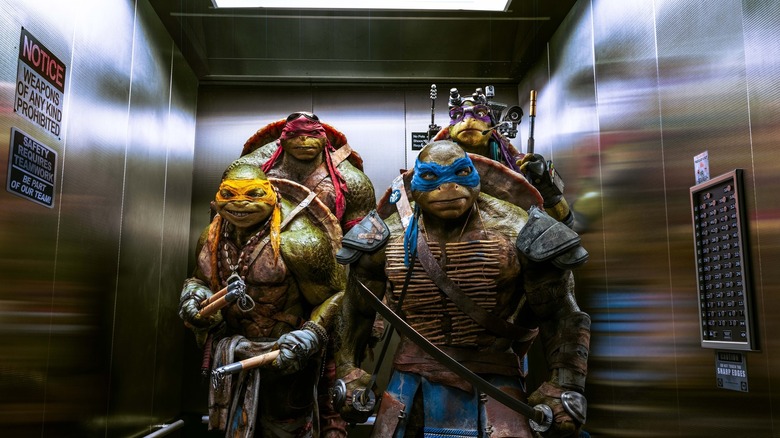
However, a dive into the cold, hard data of Hollywood box office receipts reveals a startling irony. While Knoxville is the face of a multi-million dollar stunt empire, his most commercially successful cinematic venture is a film in which his face never appears, his stunts are non-existent, and his physical presence was entirely replaced by computer-generated imagery. The film is the 2014 reboot of Teenage Mutant Ninja Turtles, a project that saw Knoxville lend his voice to the katana-wielding leader, Leonardo.
Main Facts: The Statistical Peak of a Stuntman’s Career
To understand the magnitude of Teenage Mutant Ninja Turtles (2014) in the context of Knoxville’s career, one must look at the numbers. Throughout the 2000s and 2010s, Knoxville was a reliable draw for mid-budget comedies and the cult-favorite Jackass films. Jackass 3D (2010), for instance, was a massive success for its genre, pulling in over $171 million globally on a modest $20 million budget. Yet, these figures are dwarfed by the scale of the Michael Bay-produced Teenage Mutant Ninja Turtles.
Directed by Jonathan Liebesman, the film was a high-octane, CGI-heavy reimagining of the beloved 1980s comic book and cartoon characters. Despite a wave of critical skepticism, the film became a juggernaut. It opened to a staggering $65.5 million domestically, eventually grossing $485 million worldwide. To date, this remains the highest-grossing film in Knoxville’s filmography.
His second-highest-grossing film, Men in Black II (2002), in which he played the two-headed alien Scrad/Charlie, earned $441 million. While Knoxville appeared in the flesh for that role, it was a supporting turn. In TMNT, he "headlined" as the voice of the primary protagonist, yet remained entirely invisible to the audience.
Chronology: From Bad Grandpa to the Half-Shell
The path to Knoxville’s casting as Leonardo was both unconventional and indicative of the shifting tides in Hollywood production during the early 2010s.
2013: The "Bad Grandpa" Momentum
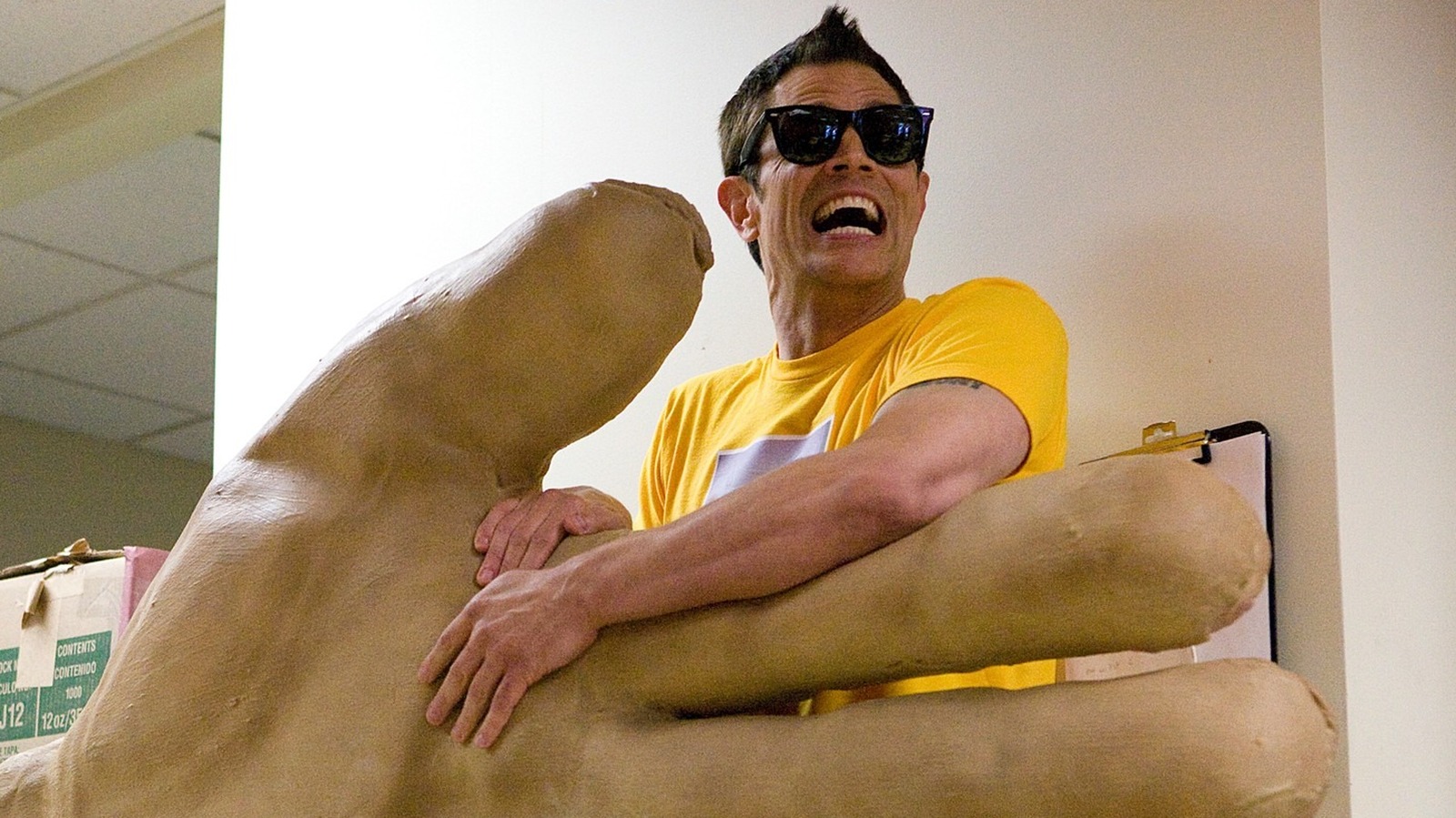
Following the critical and commercial success of Jackass Presents: Bad Grandpa in 2013, which earned an Academy Award nomination for Best Makeup and Hairstyling and grossed over $150 million, Knoxville was looking to diversify his portfolio. He was transitioning from a "stunt guy" to a recognized comedic actor capable of carrying a narrative film.
Early 2014: The Mo-Cap Conflict
During the principal photography of Teenage Mutant Ninja Turtles, the four titular brothers were portrayed on set by actors wearing motion-capture suits. Pete Ploszek was the actor responsible for Leonardo’s physical performance, providing the movement, timing, and on-set chemistry with co-stars like Megan Fox. However, as the film entered post-production, Paramount Pictures and the producers felt the need for "star power" to bolster the marketing of the film’s lead character.
April 2014: The Late Casting
In a move that surprised the industry, Knoxville was announced as the voice of Leonardo in April 2014—just four months before the film’s scheduled August release. This late-stage replacement of Ploszek’s voice with Knoxville’s was a strategic marketing decision, designed to give the film a recognizable name in the trailers and to appeal to an older demographic that grew up watching Knoxville on MTV.
August 2014: A Box Office Triumph
The film arrived in theaters during a crowded summer season. It faced off against Marvel’s Guardians of the Galaxy, which was in its second week of release. In a surprising turn of events, the "Heroes in a Half-Shell" unseated the cosmic outlaws, securing the number one spot and cementing the film as a financial hit, regardless of the lukewarm critical reception.
Supporting Data: Comparing the Numbers
The financial success of the 2014 TMNT reboot is best understood when contrasted with Knoxville’s other major works and the broader franchise history.
| Film Title | Release Year | Global Box Office | Knoxville’s Role |
|---|---|---|---|
| Teenage Mutant Ninja Turtles | 2014 | $485 Million | Voice (Leonardo) |
| Men in Black II | 2002 | $441 Million | Supporting (Scrad/Charlie) |
| Jackass 3D | 2010 | $171 Million | Lead/Producer (Himself) |
| Jackass Forever | 2022 | $80 Million | Lead/Producer (Himself) |
| The Dukes of Hazzard | 2005 | $111 Million | Lead (Luke Duke) |
The data illustrates a clear trend: Knoxville’s highest earners are high-budget studio spectacles where he is part of an ensemble or a digital creation. His self-produced "passion projects," the Jackass films, while significantly more profitable in terms of Return on Investment (ROI), do not reach the same global box office ceiling as a PG-13 superhero blockbuster.
Furthermore, the 2014 film remains the peak of the TMNT cinematic franchise. Even the highly acclaimed 2023 animated film Teenage Mutant Ninja Turtles: Mutant Mayhem failed to match its raw numbers, grossing approximately $180 million worldwide. This highlights the unique market conditions of 2014, where the combination of Michael Bay’s "Transformers-style" spectacle and a star-studded voice cast resonated with the global audience.
Official Responses: Motivation and Confusion
Knoxville’s involvement in the project was largely driven by personal factors rather than a desire to reinvent himself as a voice actor. In a 2014 interview with ScreenSlam, Knoxville admitted that his primary motivation was his family. "My son is a huge fan of the Ninja Turtles, so I thought, you know, if I want to score some points with my kids, that’s why I was very happy to take the job," he stated.
However, the experience was not without its complexities. The decision to use a celebrity voice over the performance of the motion-capture actor (Pete Ploszek) created a rift in the production’s legacy. Alan Ritchson, who played Raphael in the film, has been vocally critical of the production’s treatment of the mo-cap actors, suggesting that their contributions were undervalued in favor of "big name" replacements.
Even more perplexing to Knoxville was his exclusion from the 2016 sequel, Teenage Mutant Ninja Turtles: Out of the Shadows. Despite the first film’s success, the studio opted to let Pete Ploszek voice the character he was physically portraying for the second installment.
Speaking to Rama’s Screen in 2016, Knoxville expressed his bewilderment: "I have no idea! I’m like, why am I not doing the voiceover for this? I don’t know what happened. But I wish them all the luck in the world." This lack of continuity suggests that Knoxville’s inclusion in the first film was a tactical marketing "stunt" in its own right, rather than a long-term casting commitment.
Implications: The Hollywood "Star Power" Dilemma
The story of Johnny Knoxville and Teenage Mutant Ninja Turtles serves as a case study for several broader trends in the film industry.
1. The Value of the "Voice" vs. the "Body"
Hollywood has long struggled with how to credit and compensate motion-capture performers. The Knoxville/Ploszek situation mirrors the debates surrounding Andy Serkis and his roles in Lord of the Rings and Planet of the Apes. When a studio replaces a dedicated mo-cap actor’s voice with a celebrity’s, it prioritizes "marquee value" over artistic cohesion. For Knoxville, this meant his biggest hit came with the least amount of physical effort—a stark contrast to the rest of his career.
2. The Limits of the Reboot
While the 2014 film was a massive hit, it led the franchise into a cul-de-sac. The sequel, Out of the Shadows, saw a nearly 50% drop in box office revenue ($245 million), despite arguably being a better-reviewed film that was more faithful to the source material. This "flame out" suggests that while Knoxville’s involvement helped propel the first film to record heights, the "Bay-Turtles" aesthetic lacked the staying power to sustain a long-term cinematic universe.
3. Knoxville’s Legacy
As Knoxville steps away from the high-impact stunts of Jackass—noting that Jackass Forever and its spin-offs likely mark the end of his career as a human crash-test dummy—his filmography presents a fascinating dichotomy. He will be remembered for the pain he endured for his art, yet his commercial zenith was achieved in a recording booth, safely removed from the chaos.
In the final analysis, Johnny Knoxville’s career is a testament to the unpredictable nature of fame. He spent decades breaking bones to build a brand, but it was a CGI turtle and a desire to "score points" with his son that gave him his greatest box office victory. It is a irony that even the world’s most famous prankster could likely appreciate.