Unveiling the Enigma: "City of Six Moons" Challenges Players to Decipher an Alien Language Rulebook
A groundbreaking new board game, "City of Six Moons," is poised to redefine player engagement by presenting its entire rulebook in an undeciphered alien language. Designed by Amabel Holland and set for release next month from Hollandspiele, this single-player title thrusts players into the roles of linguistic archaeologists, demanding they decode an intricate system of glyphs and symbols before even beginning to understand the game’s mechanics. The audacious concept is further amplified by the designer’s resolute refusal to provide any clarification, leaving players in a perpetual state of interpretative uncertainty.
The board gaming world has long grappled with complex rulebooks, but "City of Six Moons" takes this challenge to an unprecedented level, transforming the act of learning into the game itself. This innovative approach is not merely a gimmick but an integral part of the experience, designed to immerse players in a truly alien perspective.
Main Facts: A Paradigm Shift in Game Design
"City of Six Moons" is an upcoming single-player board game developed by acclaimed designer Amabel Holland and published by Hollandspiele. Its central, revolutionary feature is a rulebook penned entirely in a fictitious alien language, composed of unique icons, glyphs, and symbols. Players are not merely tasked with learning rules; their primary objective, and indeed the initial hurdle, is to decipher this intricate alien script.
The premise of the game positions players as guides to an alien civilization, but critically, it is also conceptualized as if it were created by an alien civilization itself. This meta-narrative is the bedrock of the design, dictating that the very medium through which the game is understood – its rulebook – must reflect this alien origin. Consequently, players embarking on "City of Six Moons" must tap into their existing cultural assumptions while simultaneously embracing the profound differences inherent in an extraterrestrial culture.
A cornerstone of this audacious design is the deliberate ambiguity surrounding the translation process. Amabel Holland has explicitly stated that players will never definitively know if their interpretation of the alien language is perfectly accurate. This inherent uncertainty is not a flaw but a feature, fostering a unique cognitive challenge where every decision, from linguistic interpretation to strategic play, is tinged with a degree of educated guesswork. Compounding this challenge, the designer herself will not provide any answers to rules questions, sealing the game’s enigmatic nature. This firm stance ensures that the player’s journey of discovery and interpretation remains entirely self-contained, unmarred by external validation.
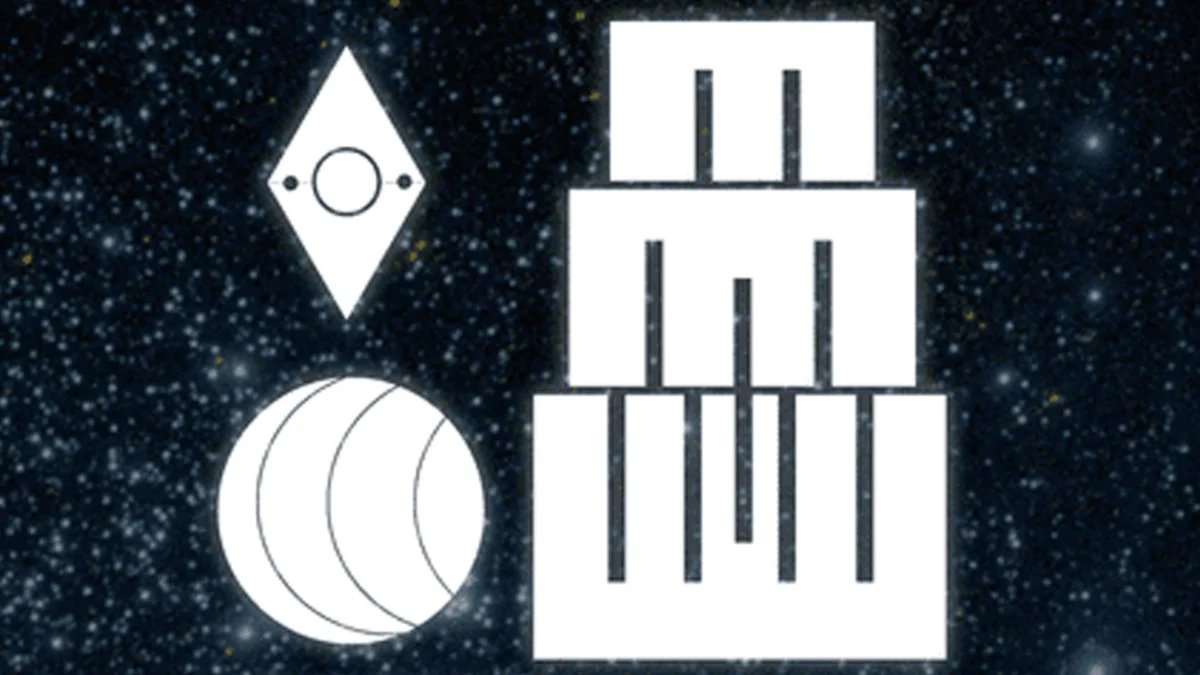
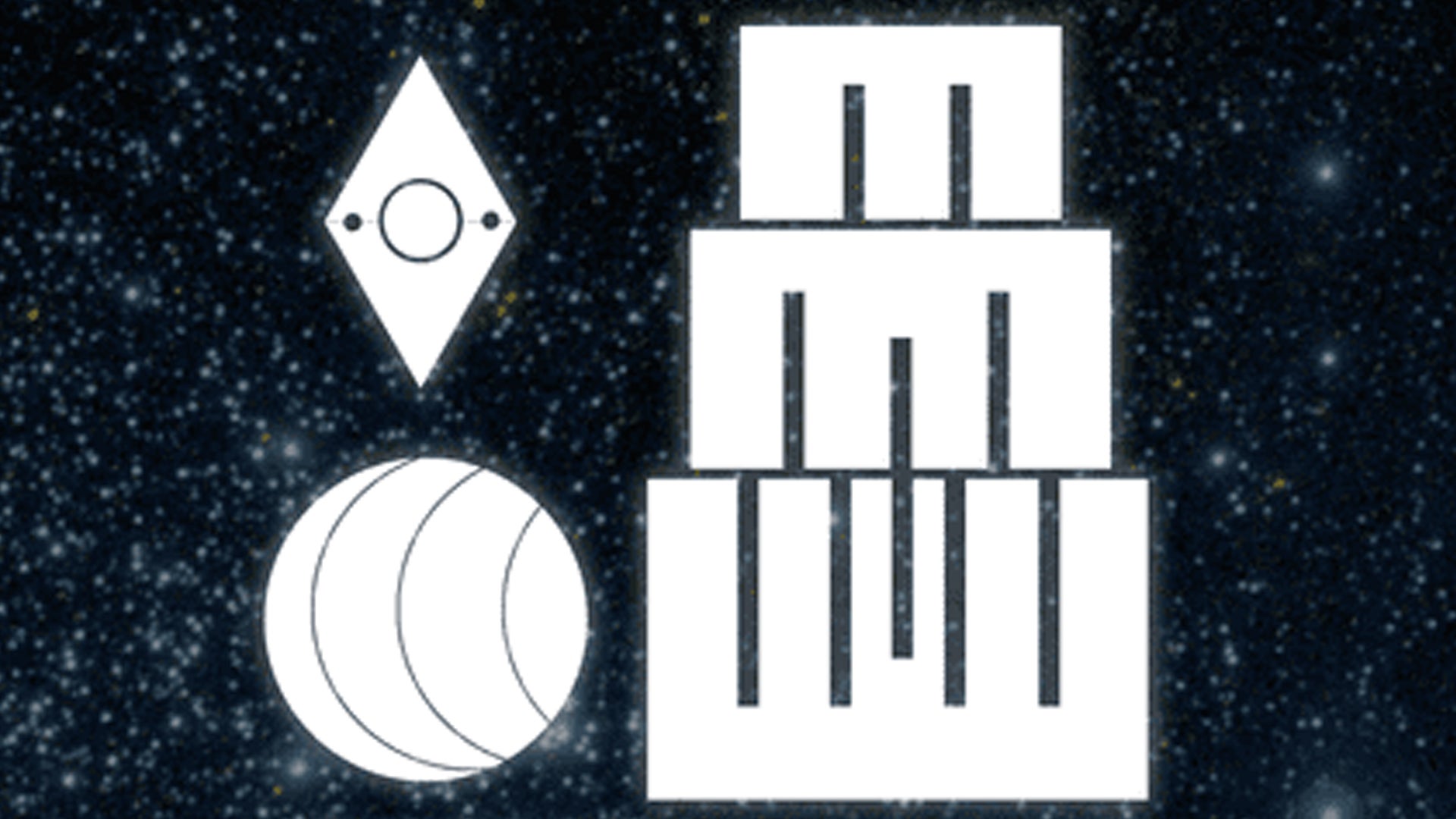
While the specific mechanics of the game remain shrouded in mystery, pending successful decryption, it is confirmed as a solitaire experience. The box will contain a set of components necessary for play, which, logically, are expected to either be devoid of language or marked with the same alien code found in the rulebook, further integrating the linguistic puzzle into the physical game elements. The cover artwork, which has been revealed, may offer the first tantalizing clues to unlocking the iconic language, serving as a visual Rosetta Stone for intrepid players. This innovative design pushes the boundaries of player interaction, transforming the traditionally passive act of reading instructions into an active, analytical, and deeply personal quest for understanding.
Chronology: A History of Innovation and Cryptic Challenges
The journey towards a game as uniquely structured as "City of Six Moons" is not an isolated event but rather a culmination of evolving trends in board game design that prioritize immersion, thematic depth, and intellectual challenge. While "City of Six Moons" undoubtedly represents a significant leap, it stands on the shoulders of various predecessors that have pushed the boundaries of player interaction and narrative delivery.
Precedents in Gaming:
The concept of obscuring information or presenting players with a puzzle as part of the core experience is not entirely new, though its application in "City of Six Moons" is novel. Video games, particularly, have explored similar territories. Titles like Myst and The Witness are renowned for their environmental puzzle-solving, where understanding the underlying logic of the world is paramount to progress. Players in these games often lack explicit tutorials, relying on observation, pattern recognition, and deductive reasoning to uncover game mechanics and narrative threads. Similarly, the burgeoning field of Alternate Reality Games (ARGs) frequently employs real-world puzzles, cryptic websites, and hidden messages that require community collaboration to decipher, blurring the lines between game and reality.
In the realm of board games, complexity and hidden information are common, but rarely is the rulebook itself the primary puzzle. Legacy games such as Pandemic Legacy or Gloomhaven introduce rules incrementally, often through sealed envelopes or sticker sheets, revealing new mechanics and narrative elements over time. While these games alter the rule-learning process, they still provide clear, unambiguous instructions. Even highly complex strategy games like Kingdom Death: Monster or intricate wargames, while demanding significant time to master their rulesets, provide those rules in standard, human-readable language. "City of Six Moons" diverges sharply by making the very translation of those rules the initial and ongoing challenge.
Hollandspiele’s Legacy of Thought-Provoking Design:
Hollandspiele, the publishing house co-owned by Amabel Holland and Mary Holland, has cultivated a reputation for producing distinct, often unconventional, and intellectually stimulating board games. Their catalog frequently features titles that explore niche historical themes, intricate strategic dilemmas, and designs that challenge conventional notions of what a board game can be. This publisher has consistently demonstrated a willingness to embrace experimental concepts, prioritize unique player experiences over mass-market appeal, and foster a deep engagement with the game’s underlying themes. Amabel Holland herself is known for her innovative design ethos, often integrating historical and cultural insights into her creations. Given this background, "City of Six Moons" aligns perfectly with Hollandspiele’s established identity as a vanguard of innovative and thought-provoking game design. It is not an outlier but a natural evolution of a design philosophy that values depth, intellectual rigor, and pushing the boundaries of the medium.
The Announcement and Initial Buzz:
The first hints of "City of Six Moons" and its audacious rulebook concept began to surface through designer Amabel Holland’s online presence. Mentions on platforms like BoardGameGeek and posts on Bluesky, a social media platform, served as the initial channels for this groundbreaking announcement. It was on Bluesky, for instance, where Holland confirmed that the game would be "functional, replayable" for those who successfully navigate its linguistic labyrinth. These early revelations sparked considerable discussion within the board gaming community, immediately positioning "City of Six Moons" as one of the most anticipated and talked-about upcoming titles, not necessarily for its mechanics, but for its unprecedented approach to player engagement. The deliberate drip-feed of information, coupled with the core mystery of the rulebook, has successfully generated a buzz rooted in intellectual curiosity rather than traditional gameplay hype. The revelation of the cover artwork also provided a tangible, albeit cryptic, visual anchor for players to begin contemplating the game’s alien aesthetic and potential symbolic clues.
Supporting Data: The Philosophy of the Unknowable
The audacious design of "City of Six Moons" is rooted in a profound philosophical undercurrent that challenges conventional notions of learning, understanding, and even the nature of reality. Amabel Holland’s vision extends beyond merely creating a puzzle; she aims to simulate the very experience of encountering and attempting to comprehend a truly alien culture.
The Philosophy of Design: Embodying the Alien Perspective:
Holland’s description of the game as "designed as if it actually were made by an alien civilization in real life" is key to understanding its core. This isn’t just a thematic wrapper; it’s a foundational principle influencing every aspect, particularly the rulebook. By presenting rules in an entirely foreign script, the game forces players to step outside human-centric frameworks of logic and communication. It’s an exercise in cognitive empathy, requiring players to imagine how an entirely different intelligence might conceptualize rules, actions, and objectives. This perspective shift is intended to be disorienting yet ultimately enlightening, offering a rare glimpse into the challenges of interspecies communication and cultural translation. The game isn’t just about guiding an alien civilization; it’s about thinking like one, or at least attempting to decode its thought processes through its communication.
The Cognitive Challenge: Linguistics, Cryptology, and Cultural Interpretation:
Deciphering the rulebook of "City of Six Moons" is less about traditional game-learning and more about applied linguistics and cryptology. Players will be confronted with a system of signs and symbols devoid of immediate context. Their task will involve identifying patterns, inferring meanings based on visual cues (potentially from the game components or artwork), and forming hypotheses about grammatical structures or logical sequences. This process mirrors the real-world challenges faced by historical linguists attempting to crack undeciphered scripts like Linear A or the enigmatic Voynich Manuscript. These historical precedents highlight the immense difficulty and the blend of scientific rigor and intuitive leaps required for such tasks.
Furthermore, Holland emphasizes the need to draw on "existing cultural assumptions" while accepting the profound differences of the alien culture. This suggests that the alien language might subtly play on human cognitive biases or expectations, only to subvert them. Players might find themselves projecting human logical frameworks onto the alien script, only to discover that the alien rules operate on an entirely different set of principles. This interplay between familiar and foreign is crucial to the game’s intellectual depth, forcing players to constantly re-evaluate their interpretative methods.
Fostering Community and Collaborative Decryption:
Given the unprecedented nature of the rulebook, "City of Six Moons" is almost certain to foster a vibrant online community dedicated to its decryption. Players will likely collaborate, sharing their interpretations, theories, and potential breakthroughs on forums, Discord servers, and social media. This collective effort could become a significant part of the game’s meta-experience, transforming a solitaire game into a shared intellectual pursuit. The inherent uncertainty — that no one will ever truly know if their translation is 100% correct — will fuel ongoing debate and multiple competing interpretations, adding layers of replayability and discussion far beyond the physical components. The collective journey of trying to understand, rather than just the destination of understanding, becomes a core communal activity.
The Deliberate "Loss" and the Ephemeral Nature of Discovery:
One of the most profound elements of Holland’s design philosophy for "City of Six Moons" is the concept of "loss." She stated on Bluesky that while the game is "functional, replayable" after decryption, knowing its secrets might make subsequent plays a "lesser" experience. Crucially, she adds: "That loss is a thing I want you to feel; I want it to linger." This statement elevates the act of decryption from a mere prerequisite to a central, emotional component of the game.
This intentional design choice speaks to the ephemeral nature of discovery. The thrill of the unknown, the intellectual struggle, and the eventual breakthrough are unique to the first encounter. Once the code is cracked, the primary puzzle is solved, and the sense of wonder associated with pure enigma dissipates. Holland wants players to consciously experience this transition, to acknowledge the unique value of that initial, arduous journey. It’s a meta-commentary on the player’s relationship with the game itself, highlighting how the process of learning and discovery can be as, if not more, impactful than the game’s mechanics alone. This "loss" is not a failure of design but a deliberate artistic statement, emphasizing the unique beauty of the first-time experience and the transformation that occurs when the incomprehensible becomes understood.
Official Responses: The Designer’s Unwavering Vision
In the realm of "City of Six Moons," the designer’s "official response" is as much about what is not said as what is. Amabel Holland has firmly established her stance, which is integral to the game’s identity: she will not answer any rules questions. This isn’t a lack of support but a deliberate design choice, transforming the traditional role of a game designer from an arbiter of rules into a silent observer of the players’ struggle for comprehension.
Amabel Holland’s Unambiguous Stance:
As widely reported and confirmed by her own statements on platforms like Bluesky, Amabel Holland will maintain complete silence regarding the interpretation of the alien rulebook. This unwavering position is critical to maintaining the game’s core premise: the player’s solitary and unassisted journey into the unknown. Any external clarification would undermine the central puzzle and the intended feeling of uncertainty. Her refusal to engage in rules clarifications forces players to rely solely on their own deductions, observations, and potentially, communal efforts with other players. This establishes a boundary between creator and player that is rarely seen in modern board gaming, where designers often engage directly with communities to clarify ambiguities. Here, ambiguity is the point.
Hollandspiele’s Alignment with Artistic Integrity:
Hollandspiele, as a publisher, is known for championing unique and artistically driven projects. Co-owner Mary Holland, alongside Amabel, has consistently supported designs that push thematic and mechanical boundaries. "City of Six Moons" fits perfectly within this philosophy. The publisher’s willingness to release a game with such a radically unconventional rulebook demonstrates a commitment to artistic vision over commercial expediency. Their "coming soon" page prominently features the title, signaling confidence in the game’s groundbreaking concept. The official marketing, therefore, doesn’t seek to demystify the game but rather to celebrate its enigmatic nature, inviting players who are prepared for an unprecedented intellectual challenge. This alignment between designer vision and publisher ethos reinforces the integrity of "City of Six Moons" as a singular artistic statement within the gaming landscape.
The "Response" as a Design Element:
In essence, the lack of a traditional "official response" from the designer is itself a critical design element. It is a tacit instruction to the player: "You are on your own. Your understanding is your own." This empowers the player to forge their own interpretation, creating a deeply personal and potentially varied experience for each individual. The absence of a definitive answer means there might be multiple "correct" ways to play, or perhaps no single correct way at all, aligning with the idea of a truly alien system that might not conform to human expectations of singular, unambiguous truths. This meta-interaction with the designer through their intentional silence is a profound commentary on authorship, interpretation, and the limits of knowledge.
Implications: Reshaping the Board Game Landscape
"City of Six Moons" is poised to leave a significant mark on the board gaming landscape, not necessarily through massive sales, but through its profound implications for design philosophy, player engagement, and the very definition of a game.
Impact on Board Game Design and Innovation:
This game represents a bold experiment that could inspire a new wave of innovative designs. By challenging the fundamental assumption that rules must be immediately comprehensible, "City of Six Moons" opens the door for other designers to explore unconventional methods of instruction, hidden mechanics, and meta-puzzles. It might encourage a greater emphasis on experiential learning within games, where understanding emerges from interaction rather than explicit instruction. Future games might incorporate elements of linguistic puzzles, cryptology, or interpretive challenges, pushing the boundaries of player interaction beyond traditional strategic decision-making. The success of "City of Six Moons" could demonstrate a viable market for "art games" that prioritize conceptual depth and unique experiences over traditional gameplay metrics.
Target Audience: A Niche for the Intellectually Curious:
It is clear that "City of Six Moons" is not designed for a mass market. Its demanding nature will appeal to a very specific niche: puzzle enthusiasts, amateur linguists, cryptology aficionados, and players who actively seek out intellectual challenges and unconventional experiences. It will attract those who relish the process of discovery, the frustration of the unknown, and the satisfaction of cracking a complex code. This game is for players who prioritize the journey of understanding over the immediate gratification of play. Its appeal lies in its ability to engage the mind on multiple levels, offering a profound sense of accomplishment derived from overcoming a truly unique barrier to entry. For these players, the initial decryption is the game, and the subsequent play is the reward for their intellectual perseverance.
Commercial Viability vs. Artistic Statement:
"City of Six Moons" exists at the fascinating intersection of commercial product and artistic statement. While Hollandspiele is a commercial entity, the game’s design prioritizes a singular artistic vision that deliberately limits its broad appeal. Its commercial success will likely be measured not by mainstream sales figures, but by its cultural impact within the gaming community and its ability to attract its intended niche audience. This game serves as a testament to the idea that board games can be more than mere entertainment; they can be platforms for profound intellectual exploration and artistic expression, pushing the boundaries of what the medium can achieve. Its existence validates the space for experimental and conceptual designs in a market often dominated by conventional formulas.
Challenges for Critics and Reviewers:
The game presents a unique predicament for reviewers and critics. How does one objectively review a game whose primary challenge is its rulebook, and whose designer refuses clarification? Traditional review metrics — clarity of rules, balance, replayability, fun factor — become inherently difficult to apply. Reviewers will need to adapt their methodologies, perhaps focusing on the elegance of the alien language system, the effectiveness of the puzzle, the quality of the components, and the overall player experience of decryption. The review itself might become a part of the meta-game, with critics offering their own interpretations and theories, rather than definitive analyses. This could lead to a fascinating period of critical discourse, further cementing the game’s unique place.
Longevity and Legacy:
Regardless of its commercial performance, "City of Six Moons" is poised to become a landmark title in board game history. Its bold, uncompromising design is likely to be discussed and analyzed for years to come, influencing future generations of designers. It challenges fundamental assumptions about game design and player interaction, proving that the medium is capable of far more than just traditional gameplay. Its legacy may lie not in widespread adoption, but in its role as a thought experiment made tangible, a playable artifact that redefines the very essence of what a board game can be. It will be remembered as the game that dared to make its instructions the ultimate puzzle, inviting players to truly earn their understanding of its world.
As "City of Six Moons" prepares for its release next month, it stands as a testament to the boundless creativity within the board gaming industry. For those brave enough to tackle its cryptic puzzle, it promises an intellectual odyssey unlike any other, a singular experience that transcends mere gameplay to become an act of profound discovery. Good luck to all who prepare to tackle the challenge of deciphering the language of the six moons.