
The Pen and the Swastika: The Third Reich’s Relentless War on Political Satire
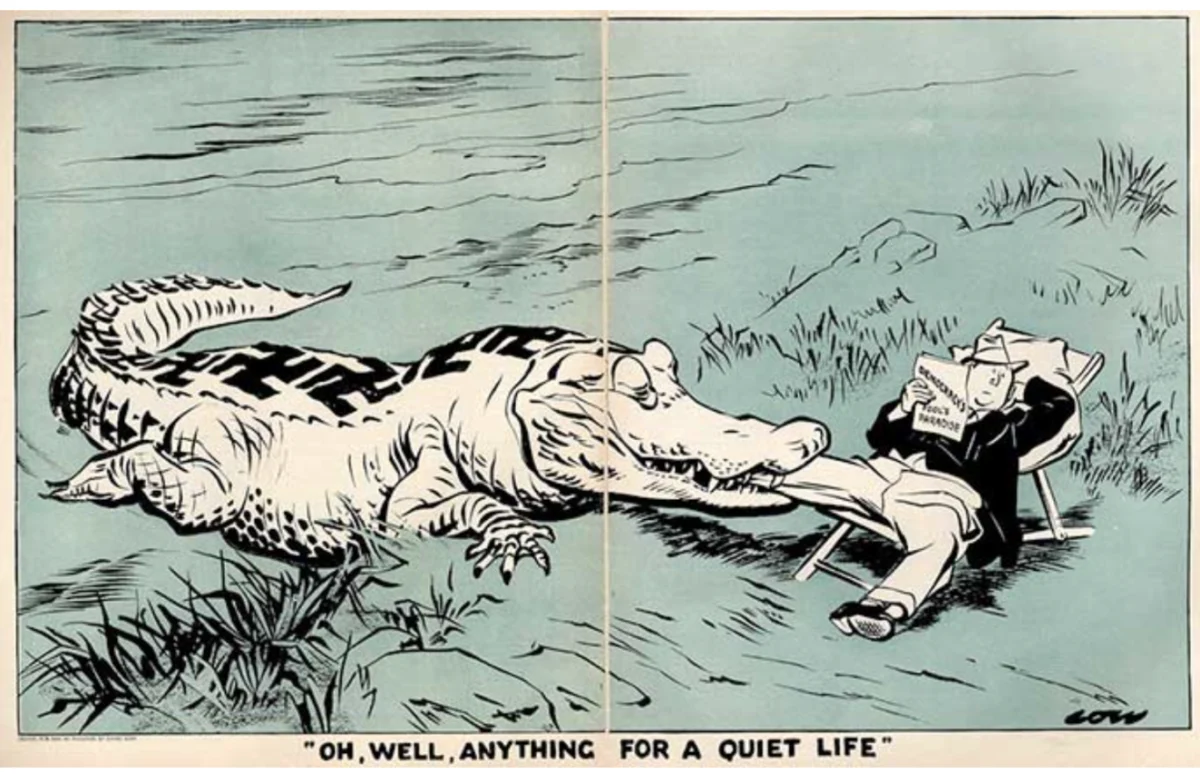
“No dictator is displeased by cartoons showing his terrible person stalking through blood and mud… What he does not want to get around is the idea he is an ass, which is really damaging.”
These words, penned by the legendary British cartoonist David Low, encapsulate a fundamental truth about authoritarianism: power is often built on an edifice of manufactured dignity. To portray a tyrant as a monster is to acknowledge his power; to portray him as a fool is to undermine his legitimacy. During the rise and reign of the Third Reich, this tension became a battlefield. While the Nazi regime utilized crude, dehumanizing illustrations to radicalize the German public, they simultaneously engaged in a global campaign to silence, intimidate, and even plan the execution of those who used the pen to mock the Führer.
Main Facts: The Dual Nature of Nazi Visual Propaganda
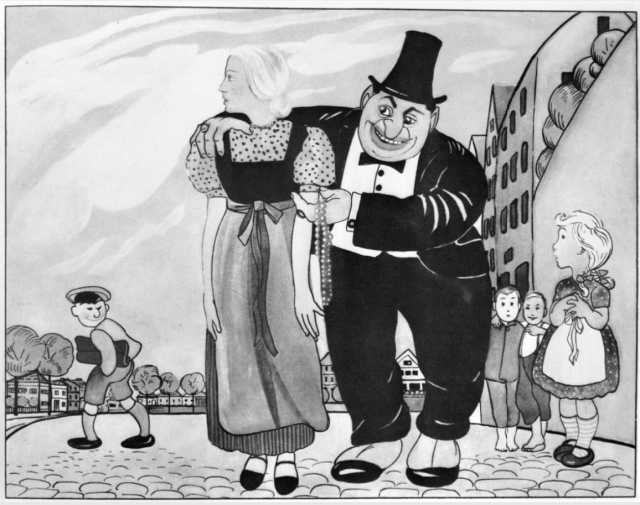
The Nazi relationship with cartooning was bifurcated between the weaponization of the medium for state-sponsored hate and the systematic destruction of independent satirical voices. Within Germany, the regime’s visual output was dominated by Der Stürmer (“The Stormer”), a tabloid published by the fanatical anti-Semite Julius Streicher. The paper’s primary artist, Philipp “Fipps” Rupprecht, created a visual lexicon of hatred that was essential to the Holocaust. His caricatures of Jewish people—depicted as spiders, snakes, or blood-drinking plutocrats—were designed to be understood by the illiterate and the young, bypassing intellectual discourse to strike at primal fears.
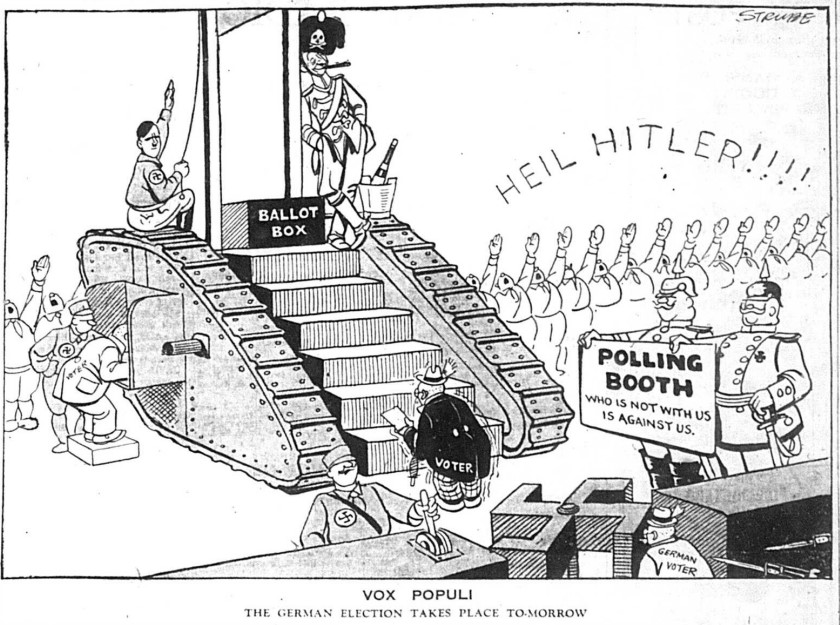
Conversely, the Nazi leadership exhibited an almost pathological sensitivity to mockery. Figures like Adolf Hitler, Joseph Goebbels, and Ernst “Putzi” Hanfstaengl monitored international newspapers with obsessive care. The regime viewed a biting caricature not merely as a piece of art, but as an act of political sabotage. This led to a multi-pronged strategy of suppression: domestic artists were labeled "degenerate" and hounded into exile, while foreign cartoonists were met with diplomatic protests and, eventually, inclusion on death lists for the planned invasion of Great Britain.
Chronology: From Weimar Freedom to Totalitarian Silence
1928–1932: The Pre-Power Persecutions
Even before seizing total control, the Nazi party and conservative elements of the Weimar Republic sought to stifle satirists. In 1928, George Grosz, a prominent member of the Berlin Dada movement, was prosecuted for blasphemy following the publication of a cartoon depicting Christ in a gas mask, a commentary on the clergy’s support for the horrors of World War I. Grosz, labeled "Cultural Bolshevist #1," recognized the shifting winds and fled to the United States just days before Hitler’s ascension in 1933.
1933: The Year of the Great Purge
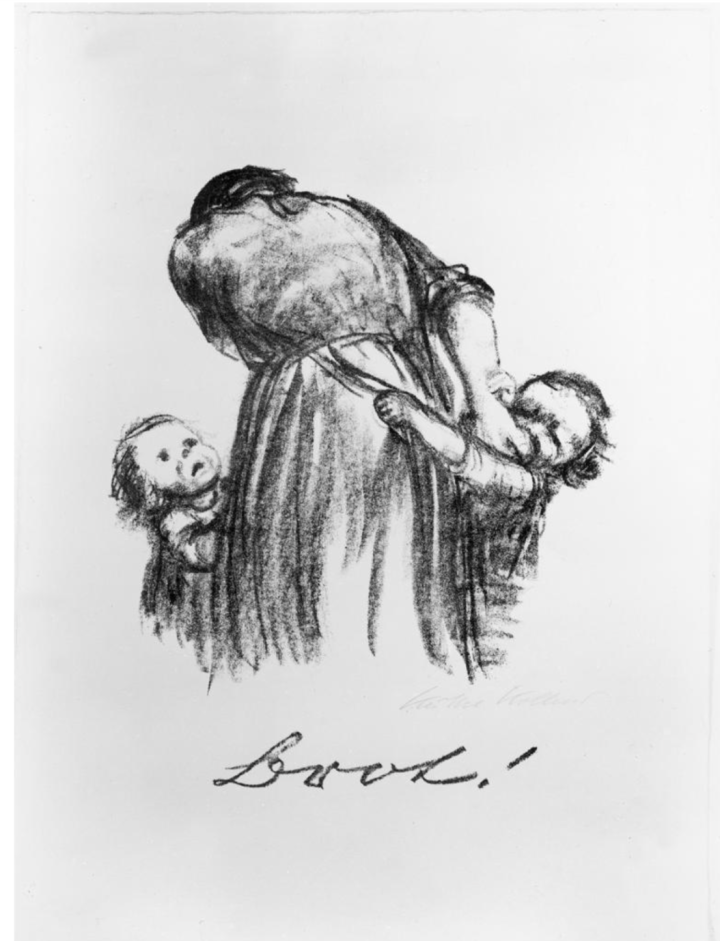
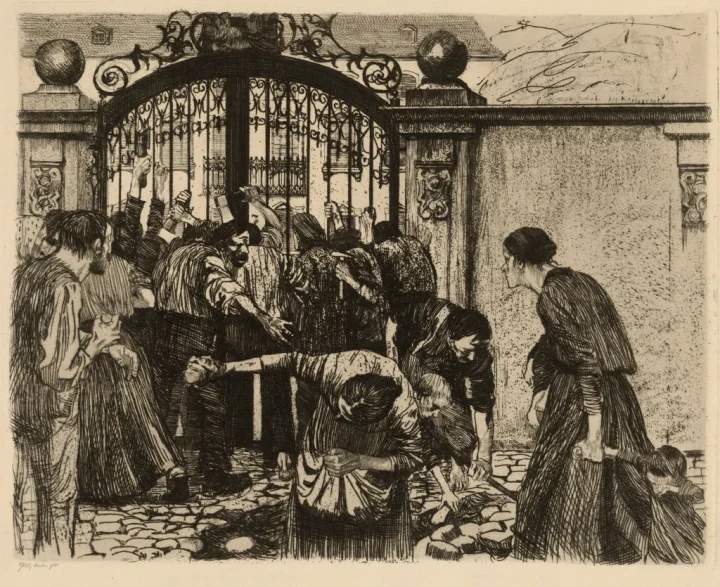
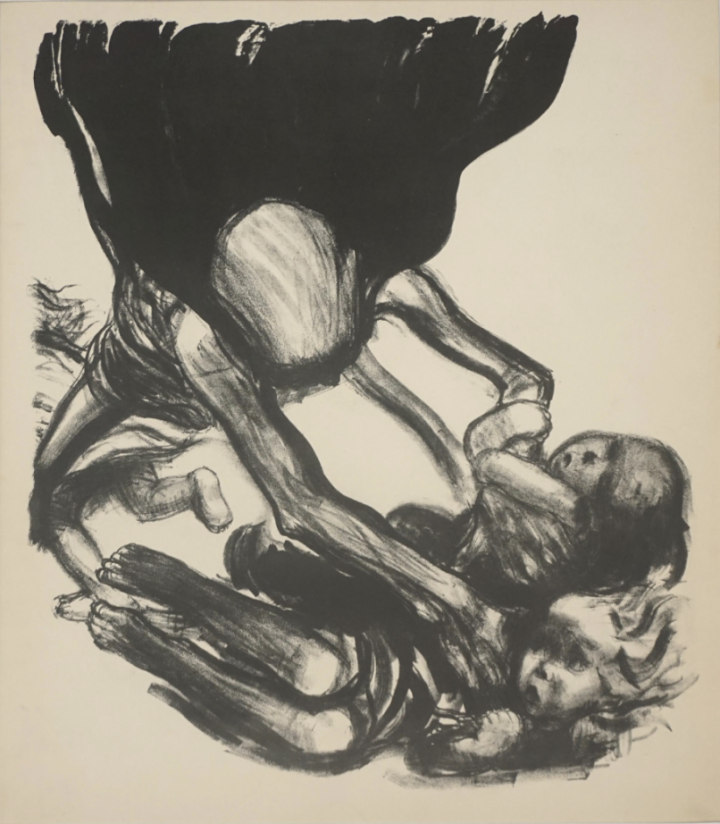
Upon taking power, the Nazis moved with ruthless efficiency against the artistic community. Käthe Kollwitz, a master of social realism whose work often appeared in the satirical magazine Simplicissimus, was forced to resign from the Prussian Academy. Her work was branded "degenerate." Simultaneously, John Heartfield, the pioneer of political photomontage, saw his home ransacked by the SS. He narrowly escaped capture by jumping from his balcony into a garbage bin, eventually fleeing to Czechoslovakia.
1934: The "Facts versus Ink" Offensive
In an effort to combat the negative image of Hitler abroad, Ernst “Putzi” Hanfstaengl published Hitler in der Karikatur der Welt: Tat gegen Tinte (Hitler in the Caricature of the World: Facts versus Ink). This bizarre volume attempted to "rebut" international cartoons with Nazi propaganda, marking a rare instance where a regime tried to argue logically against satire.
1937–1938: The War on Foreign Satire
As the Nazi war machine grew, so did its intolerance for foreign critics. The British cartoonist David Low became a primary target of Nazi ire. By 1937, the pressure was so great that British Foreign Secretary Lord Halifax personally requested that Low’s publisher tone down the cartoons to avoid provoking Hitler.
1940: The Black Book
When the Nazis drafted "The Black Book" (the Sonderfahndungsliste G.B.)—a list of persons to be immediately arrested upon the successful invasion of Britain—David Low was included. The regime intended to move from censoring his ink to spilling his blood.
Supporting Data: Case Studies in Artistic Resistance
The Photomontages of John Heartfield
Heartfield’s work remains some of the most potent anti-fascist art in history. His 1932 piece, Adolf der Übermensch: Schluckt Gold und redet Blech ("Adolf the Superman: Swallows Gold and Spouts Junk"), used X-ray imagery to show Hitler’s esophagus filled with coins, illustrating how the Nazi movement was funded by the very industrial capitalists Hitler claimed to oppose. The visual clarity of Heartfield’s work made him a high-priority target for the Gestapo.
The Humanism of Käthe Kollwitz
While Heartfield used irony, Kollwitz used grief. Her lithographs, such as Brot! (Bread!) and Killed in Action, highlighted the human cost of militarism. Although the Nazis refrained from sending her to a concentration camp—fearing the international outcry that would follow the imprisonment of such a world-renowned figure—they successfully erased her from German public life, banning her exhibitions and threatening her with the Gestapo.
The "Facts versus Ink" Failure
Hanfstaengl’s 1934 book provides a fascinating data point on the limits of propaganda. He took a cartoon from the American magazine The Nation showing Hitler as a skeletal grim reaper and countered it by citing the 1933 Four Powers Pact as "proof" of Hitler’s peaceful intentions. History, of course, proved the cartoonist right and the propagandist wrong. The book was reviewed by Dorothy Thompson, the first American journalist expelled from Germany, who noted that the world was "not amused" by Hanfstaengl’s attempts to frame a dictator as a man of peace.
Official Responses: Diplomatic Pressure and State Terror
The Nazi response to cartooning was not limited to the domestic police state; it was a matter of international diplomacy. The case of David Low and the London Evening Standard illustrates the regime’s reach. Joseph Goebbels, the Minister of Propaganda, was reportedly driven into "frenzies" by Low’s depictions of Hitler as a petulant, spoiled child.
The official German response was to lodge formal complaints with the British government. This led to a shameful period of "self-censorship" in the UK, where Lord Halifax argued that Low’s cartoons were "a factor going against peace." This diplomatic pressure briefly succeeded, and Low toned down his work for several months. However, the annexation of Austria in 1938 ended the artist’s restraint. Low realized that "quieting" his pen did nothing to stop the tanks; it only silenced the warning.
Internally, the "Degenerate Art" (Entartete Kunst) exhibition of 1937 served as the final official response to independent cartooning. By displaying modern and satirical works alongside the art of the mentally ill, the regime sought to codify the idea that any artist who mocked the state was biologically and socially "un-German."
Implications: The Modern Legacy of the War on Satire
The Third Reich’s war on cartoons was not an isolated historical curiosity; it established a blueprint for how modern autocracies handle visual dissent. The psychological mechanism remains the same: a leader who demands total devotion cannot tolerate being laughed at.
The Global Struggle Continues
Today, the spirit of the Nazi suppression lives on in various regimes. In Egypt, cartoonist Ashraf Omar currently faces terrorism charges—a modern echo of the "cultural Bolshevism" charges leveled against George Grosz. In Turkey, the government of Recep Tayyip Erdoğan has frequently imprisoned cartoonists like Pehlevan for "insulting the president" or "inciting hatred." In Palestine, Mohammad Sabaaneh was detained by Israeli authorities in 2013, facing similarly vague security charges.
Corporate Censorship and "Soft" Suppression
Even in democratic societies, the vulnerability of the political cartoonist is becoming apparent. The recent resignation of Ann Telnaes from the Washington Post after a cartoon mocking Jeff Bezos’s relationship with Donald Trump was spiked, and the dismissal of KAL from the Baltimore Sun after its acquisition by Sinclair Broadcast Group, suggest a new era of "soft" censorship. While these artists do not fear the Gestapo, they face a corporate environment where "political cowardice" often trumps the First Amendment.
Conclusion: The Persistent Power of the "Ass"
As David Low observed, the most damaging thing to a dictator is the revelation that he is an "ass." The history of the Third Reich’s obsession with cartoons proves that visual satire is one of the few mediums capable of cutting through the noise of state propaganda. Whether through Heartfield’s montages or Low’s caricatures, the ability to reduce a "towering" leader to a ridiculous figure remains a vital tool of democratic health. The fact that the most powerful regimes in history have gone to such lengths to silence a few lines of ink is the greatest testament to the cartoon’s enduring power.



Leave a Comment