The Phoenix Protocol: HTC’s Strategic Pivot Toward AI Smart Glasses and the VIVERSE Ecosystem
Introduction: A Legacy at the Crossroads
For over a decade, the narrative surrounding HTC has been one of managed decline. The Taiwanese tech pioneer, which once commanded nearly 10% of the global smartphone market and manufactured the world’s first Android handset, has spent the last eight years shedding weight, selling off assets, and attempting to find a foothold in the nascent Extended Reality (XR) sector.
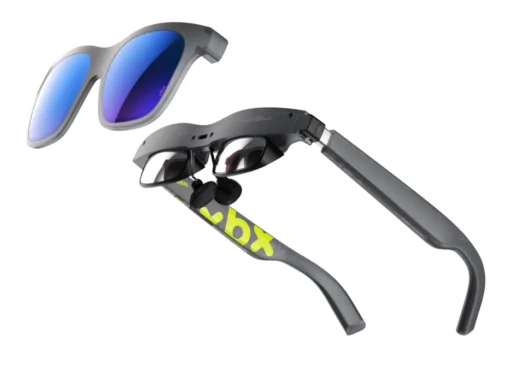
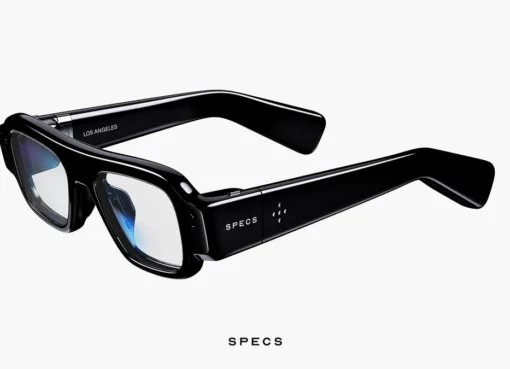
By mid-2026, the company’s trajectory appears to have reached a critical inflection point. While the "smartphone wars" are a distant memory for the brand, a new battleground has emerged: Ambient Artificial Intelligence. With the upcoming launch of the VIVE Eagle AI smart glasses, HTC is attempting to reinvent itself not as a hardware manufacturer for the masses, but as a specialized provider of open-platform AI eyewear and enterprise-grade XR solutions. The stakes are high; for HTC, this is no longer about regaining its former glory, but about proving that its "stability at a smaller scale" can finally translate into sustainable growth.
I. Main Facts: The State of HTC in 2026
HTC’s recent financial disclosures paint a picture of a company that has successfully stopped its freefall but has yet to find an upward draft. In June 2026, the company reported consolidated revenue of NT$292 million (approximately $10 million USD). While this figure is a fraction of the billions the company once generated monthly during the early 2010s, the rate of decline has significantly moderated.
Key Performance Indicators:
- Monthly Revenue (June 2026): NT$292 million ($10M USD), an 8.5% year-over-year (YoY) decrease.
- H1 2026 Performance: Total revenue for the first half of the year fell by 9.7% compared to 2025.
- The VIVE Eagle Launch: Scheduled for Q3 2026 in the United States and Europe, these AI-powered smart glasses represent the company’s first major consumer hardware push since the "reset" of its product roadmap.
- The VIVERSE Growth: Despite hardware struggles, HTC’s proprietary metaverse platform, VIVERSE, reported 1.7 million monthly active users (MAU) as of May 2026, supported by a creator economy of over 14,000 individuals.
The core of HTC’s 2026 strategy rests on three pillars: the VIVE Eagle glasses, the VIVERSE software ecosystem, and specialized enterprise XR deployments. By distancing itself from the high-volume, low-margin consumer smartphone market, HTC is betting that "Open AI" hardware will appeal to a privacy-conscious, platform-agnostic demographic.
II. Chronology: The Decades-Long Metamorphosis
To understand HTC’s current position, one must examine the systematic deconstruction and reconstruction of the company over the past decade.
2011–2017: The Smartphone Sunset
Following its peak in 2011, HTC struggled to compete with the marketing might of Samsung and the ecosystem lock-in of Apple. Despite producing critically acclaimed devices like the HTC One (M7), the company’s market share eroded. In 2015, under the leadership of Cher Wang, the company pivoted toward Virtual Reality, launching the original HTC Vive in partnership with Valve.
2018: The Google Infusion
In a landmark $1.1 billion deal, HTC sold a significant portion of its smartphone engineering team—specifically the talent responsible for the Google Pixel—to Google. This deal provided the capital necessary for HTC to survive but effectively signaled the end of its ambitions as a top-tier mobile phone manufacturer.
2024: The Enterprise Anchor
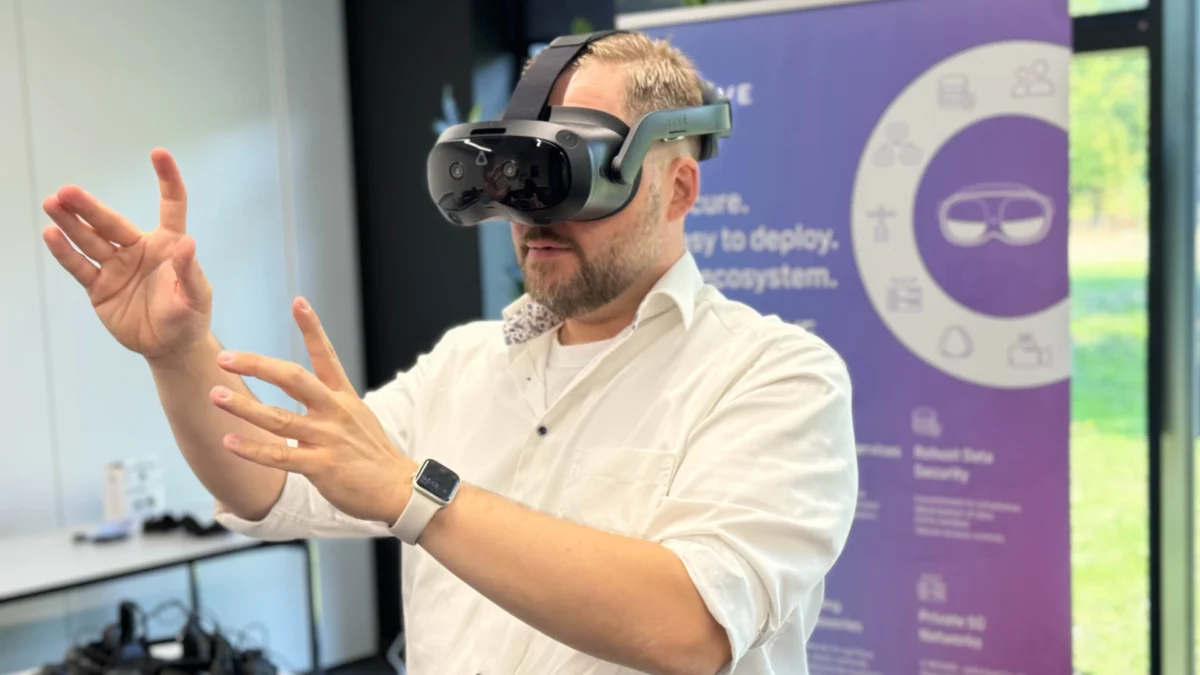
In September 2024, HTC launched the VIVE Focus Vision for $1,150. This headset was a bridge device, designed for high-end enthusiasts and enterprise training. While it offered robust features like built-in eye tracking and "lossless" DisplayPort support, it was criticized for its reliance on aging Fresnel lens technology, highlighting HTC’s shift away from the "bleeding edge" consumer hardware race dominated by Meta’s Quest 3.

2025: The XR Talent Transfer
In a move that mirrored the 2018 smartphone deal, Google acquired a significant portion of HTC’s XR (Extended Reality) engineering team in 2025. This move fueled speculation that Google was preparing its own return to the headset market, while leaving HTC with a leaner, more focused R&D department centered on software integration and niche hardware.
2026: The AI Pivot
With the announcement of the VIVE Eagle in mid-2026, HTC officially entered the "Smart Glasses" era, moving away from bulky VR headsets toward lightweight, AI-driven wearables.
III. Supporting Data: Analyzing the Ecosystem
The viability of HTC’s future depends on whether its software and services can generate revenue that its hardware currently lacks.
The VIVERSE Metrics
The VIVERSE platform is perhaps the most surprising success story in HTC’s recent history. While Meta’s Horizon Worlds has struggled with user retention, VIVERSE has carved out a niche in the "Industrial Metaverse" and education sectors.
- Active Users: 1.7 million MAU (May 2026).
- Content Library: Over 32,000 unique pieces of content, ranging from virtual art galleries to corporate training modules.
- Creator Base: 14,000+ creators, indicating a healthy, if specialized, ecosystem of third-party developers.
Hardware vs. Software Revenue
Historically, HTC was a hardware-first company. However, the June 2026 revenue figures suggest a shift. With hardware sales of the VIVE Focus Vision slowing, a larger percentage of the $10 million monthly revenue is attributed to enterprise software licensing and VIVERSE service fees. The company’s challenge remains the "Valley of Death" between stability and growth; $10 million a month covers overhead for a lean team but does not provide the R&D budget required to compete with Apple’s Vision Pro or Meta’s multi-billion dollar Reality Labs.
Competitive Landscape (2026)
- Meta: Dominates the low-cost consumer VR market with Quest 3S and Ray-Ban Meta glasses.
- Apple: Owns the high-end "Spatial Computing" niche with Vision Pro.
- HTC: Positioned as the "Open and Private" alternative, targeting users who reject the walled gardens of Big Tech.
IV. Official Responses: The Vision of Cher Wang
HTC Chairwoman Cher Wang has remained a steadfast believer in the convergence of AI and XR. During the 2026 shareholder update, Wang addressed the company’s pivot with a focus on "Ethical AI."
The "Open AI" Philosophy
Wang emphasized that the VIVE Eagle glasses would not be tethered to a single proprietary AI. "AI is the most significant trend of our generation," Wang stated. "But AI should not be a cage. The VIVE Eagle is designed to be an open gateway, allowing users to choose the intelligence that best serves their needs."
Privacy as a Product
A key component of HTC’s official messaging is data sovereignty. Unlike Meta or Alibaba, which have faced scrutiny over how user data (including camera feeds and voice recordings) is used to train machine learning models, HTC has pledged a "Zero-Training" policy.

- Official Stance: HTC asserts that user interactions with the VIVE Eagle are processed locally or via encrypted channels where data is not harvested for model refinement.
- Strategic Differentiation: This "Privacy First" marketing is a direct attempt to capture the enterprise and government sectors, where data security is a non-negotiable requirement.
V. Implications: Can "Open AI" Save HTC?
The arrival of the VIVE Eagle in Q3 2026 marks a high-stakes gamble for the company. There are several critical implications for the industry and for HTC’s survival.
1. The End of the VR-Only Era
HTC’s quietude regarding a "VIVE Focus 2" or a next-generation VR headset suggests that the company sees the future in Ambient AI—wearables that assist in daily life—rather than fully immersive VR. If the VIVE Eagle succeeds, it could validate the theory that consumers prefer "Assisted Reality" over "Virtual Reality."
2. The "Swiss Neutrality" of Hardware
By supporting both Google Gemini and OpenAI’s GPT-5 (or its 2026 equivalent), HTC is positioning itself as the "Switzerland" of AI hardware. In a world where Apple users are locked into Siri/Apple Intelligence and Meta users into Meta AI, HTC’s platform-agnostic approach could appeal to power users and developers who want to toggle between different LLMs (Large Language Models) for different tasks.
3. The Enterprise Moat
HTC’s survival likely lies in its ability to integrate the VIVE Eagle with VIVERSE for business. Imagine a technician wearing VIVE Eagle glasses that use OpenAI to identify a broken part, while simultaneously streaming a digital twin of the machine from VIVERSE. This "Full Stack" enterprise solution is where HTC can charge premium margins that the consumer market won’t support.
4. The Sustainability of "Smallness"
The most pressing question is whether a $120 million-a-year company can remain a global player in a field where competitors spend that amount in a single weekend of marketing. HTC has successfully downsized, but the "decline is slowing" is not the same as "growth is starting." The VIVE Eagle must not only be a good product; it must be a commercial catalyst that reverses a decade of shrinking revenues.
Conclusion
HTC is no longer the giant it once was, but it has proven to be remarkably resilient. By leaning into the AI revolution and leveraging its VIVERSE platform, the company is attempting to carve out a sustainable niche. The VIVE Eagle represents more than just a pair of smart glasses; it is HTC’s manifesto for a future where AI is open, private, and integrated into the very fabric of our visual world. Whether the market will embrace a "smaller, more open" HTC over the "larger, more closed" ecosystems of its rivals will be the defining story of the 2026 tech landscape.