The Publishing Renaissance: Cozy Fantasy and LitRPG Dominate as Sci-Fi Stages a Remarkable Comeback
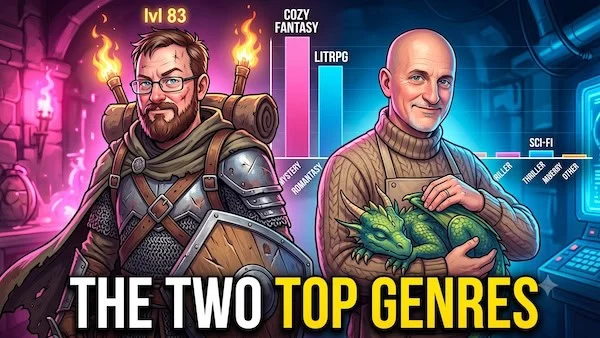
San Francisco, CA – October 26, 2026 – The landscape of science fiction and fantasy publishing is experiencing a seismic shift, with emerging genres like Cozy Fantasy and LitRPG surging to unprecedented popularity, while science fiction demonstrates a robust and sustained rebound. This dramatic evolution is detailed in the latest comprehensive analysis from K-lytics, an independent research firm specializing in the digital publishing market. Their Summer 2026 report, a deep dive into the intricate ecosystem of over 183 sub-categories within SF&F, reveals not only burgeoning reader demand but also a stark increase in competition, forcing authors and publishers to adopt increasingly strategic approaches.
The K-lytics data, meticulously compiled from tracking bestsellers across thousands of Amazon categories, paints a picture of a genre at its zenith. Science Fiction and Fantasy collectively represent the fourth largest segment in the Kindle store, trailing only Romance, Literature & Fiction, and Mystery, Thriller & Suspense. The average daily sales for a top 100 SF&F bestseller now hover around an impressive 277 units, a figure that surpasses even the surge witnessed during the pandemic reading boom. However, beneath this overarching success story lie divergent fortunes for the two main pillars of the genre.
The State of the Genre: A Tale of Two Halves
Fantasy, in particular, is experiencing a golden age. The K-lytics Summer 2026 report highlights that the genre has just achieved its strongest average sales rank ever recorded. This remarkable performance is largely attributed to the continued dominance of "Romantasy," a sub-genre that seamlessly blends romantic elements with fantastical settings and tropes. More recently, LitRPG, characterized by its integration of video game mechanics and progression systems into narrative, has emerged as a significant growth driver, adding further momentum to fantasy’s ascent.
Conversely, science fiction, after a prolonged period of stagnation, is in the midst of a genuine and broad-based recovery. The genre has shown consistent improvement in its relative market position for 18 consecutive months. Data indicates that top-tier science fiction titles have climbed from the 500-600 rank range in late 2024 to approximately the 300 mark by mid-2026. This resurgence is not being fueled by external Hollywood adaptations, but rather by organic reader engagement and a growing demand for book-native content.
"If you’re not following K-lytics, and if you don’t purchase the reports that pertain to your genre and subgenre, you absolutely should," advises Jonathan, a prominent figure in the indie publishing community. "The sheer amount of data available to help you with your advertising, your promotion, your marketing strategy, and your content production strategy is off the charts." He emphasizes the value proposition, noting that even a modest investment in a genre-specific report can yield significant strategic advantages.
The Undercurrent of Competition: A Great Dilution
While the overall health of the science fiction and fantasy market appears robust, a critical underlying trend poses a significant challenge for aspiring and established authors alike: the dramatic increase in competition. Over the past year, the supply of competing titles within SF&F has surged by an astounding 18%. This translates to approximately 179,000 new books entering the market annually, or a staggering 490 new science fiction and fantasy books published every single day.
This "Great Dilution," as it’s being termed, means that while demand at the top of the genre remains at record levels, the overall pie is not growing at the same pace as the number of participants. The average title’s share of the genre market is mathematically shrinking, even as the genre itself exhibits historical strength. K-lytics attributes this surge in supply, at least in part, to the widespread adoption of AI-assisted publishing tools. The consequence is clear: in an increasingly crowded marketplace, identifying and capitalizing on niches with high sales potential and low competition is no longer an option; it has become an imperative for survival and success.
The Financial Landscape: Lucrative Niches Emerge
The K-lytics reports offer a stark financial picture, illustrating the significant earning potential within these evolving genres. The bottom of the Fantasy bestseller list, for instance, now represents an income level capable of supporting a mortgage. The Sci-Fi bestseller list, while slightly less lucrative, still provides earnings comparable to a car payment. Crucially, both of these represent achievable targets for well-executed indie series launches, outperforming the annual earnings of many traditionally published midlist authors.
The top-earning publisher on the June Fantasy list serves as a powerful case study. It is not a major traditional publisher, but rather Dandy House, the personal imprint of Matt Dinniman, the celebrated LitRPG author behind the "Dungeon Crawler Carl" series. This success underscores the viability of independent publishing models, especially those that retain digital rights. Dinniman’s strategy of licensing only print rights while retaining ebook and audiobook ownership has proven exceptionally lucrative, with his series reportedly selling over six million copies.
Sci-Fi’s Resurgence: A Book-Native Demand
The comeback of science fiction is a narrative driven by the readers themselves, not by external media influences. Google search trends reveal a significant spike in interest for "science fiction books" in late 2025, reaching its highest indexed level in a decade. Concurrently, searches for "science fiction movies" have continued to decline. This same phenomenon is observed in the fantasy market, where "fantasy books" overtook "fantasy movies" in search volume around 2022, with the gap widening. This indicates a clear shift towards readers directly engaging with literary content, a trend that has significant implications for targeted advertising and marketing efforts.
The underlying drivers of this science fiction renaissance are multifaceted. K-lytics identifies two key factors: a substantial increase in the supply of "new adult" science fiction titles and a growing demand for "cozy" and "optimistic" science fiction. This suggests a broadening appeal within the genre, attracting a new generation of readers and catering to a desire for more hopeful and character-driven narratives.
The Winning Playbook: Strategy in a Crowded Market
Across both the fantasy and science fiction markets, a consistent set of strategies emerges among the top performers. These include:
- Series Length and Consistency: Authors who consistently publish long books within multi-book series demonstrate exceptional success. This strategy capitalizes on reader immersion and encourages binge-reading, particularly within subscription models like Kindle Unlimited (KU).
- Genre Blending: The lines between genres are increasingly blurred. Successful authors often incorporate elements of romance, litrpg, and even cozy aesthetics into their narratives, broadening their appeal.
- Strategic Keyword Implementation: Navigating Amazon’s complex keyword system is crucial. While broad terms may seem appealing, they often lead to metadata traps. Focusing on specific, high-value, and permitted keywords is essential for discoverability.
- Niche Identification and Exploitation: The era of broad appeal in generic categories is over. Identifying undersaturated niches with high demand-to-supply ratios is paramount.
- Reader Engagement and Community Building: Fostering a direct connection with readers through newsletters, social media, and other channels can build loyalty and drive sales.
The "Dinniman Story": A Paradigm of Independent Success
The meteoric rise of Matt Dinniman and his "Dungeon Crawler Carl" series offers a compelling blueprint for independent authors. Dinniman’s retention of ebook and audiobook rights, coupled with strategic print licensing, has positioned him as a dominant force. His success is amplified by the series’ length and the consistent release of new installments, which drives significant KU page reads.
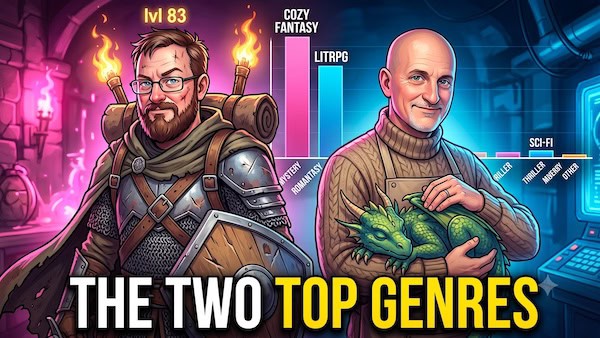
Bryan, an Amazon Ads account manager for a LitRPG author, shares his observations: "The series of his that sells best has nine books in it. His shortest book in that series is 550 pages and his longest is 850." He further elaborates on the author’s prodigious output and strategic use of AI for plotting, highlighting a relentless work ethic. "He does 80% of his sales as KU page reads. Long books, long series, page reads, and he is killing it." This illustrates the power of long-form content within the subscription model.
The K-lytics report also confirms that LitRPG, despite its growing popularity, still maintains a favorable demand-to-supply ratio, indicating continued opportunity within this niche.
The Overlooked Story: The Threat of Saturation
While the headline numbers for SF&F are impressive, the "Great Dilution" presents a significant challenge. The sheer volume of new titles entering the market daily means that discoverability is becoming increasingly difficult. K-lytics warns that the categories with the most bestsellers are often the most heavily contested. Shelf counts, which indicate where winners have landed, are a map of past victories, not necessarily a guide for future success.
Instead, authors are advised to focus on sales-to-competition ratios and trend lines – indicators of open ground and future reader demand. Cozy Fantasy, for example, boasts an exceptional sales-to-competition ratio of 23.1, despite having no representation on the Science Fiction Top 100 list, illustrating the importance of understanding niche categories beyond broad genre classifications.
Navigating the Keyword Minefield
The K-lytics report also sheds light on the complexities of Amazon’s advertising and backend keyword systems. A significant number of high-value search terms are flagged as problematic for KDP’s backend fields, despite being permissible for Amazon Ads. Terms like "fantasy books" and "sci fi books," while seemingly obvious, can lead to metadata penalties if used incorrectly.
Safer, high-scoring keywords for authors to focus on include "fantasy litrpg," "dark fantasy," "cozy fantasy," "scifi horror," and "scifi romance." It is also crucial to utilize all variations of the genre name, such as "science fiction," "sci fi," and "scifi," across metadata to maximize discoverability.
Winners and Losers: A Shifting Landscape
The K-lytics analysis reveals a clear realignment within the SF&F market over the past 12 months. Among the rising trends are:
- Cozy Fantasy: Experiencing significant growth due to its low competition and high demand.
- LitRPG: Continues its upward trajectory, fueled by long series and immersive gameplay mechanics.
- Dystopian: Seeing a resurgence, potentially reflecting current societal anxieties.
- LGBTQ+ Science Fiction: Demonstrating strong performance, indicating a growing and engaged readership.
- GameLit & LitRPG: Further reinforcing the popularity of game-inspired narratives.
Conversely, several sub-genres are experiencing a decline:
- Norse & Viking Fantasy: While still scoring well in snapshot views, its trend line shows a significant fall, highlighting the need to examine long-term trajectory.
- Colonization: Experiencing a dramatic 96% decline, which analysts attribute to a negative connotation and a lack of hopeful themes in the current socio-political climate.
- Military Sci-Fi Space Marine: A surprising 84% drop, despite its thematic alignment with "fourth turning" societal cycles.
- Cyberpunk: Showing a downward trend, suggesting a potential decline in reader interest or increased saturation.
The discussion around these falling trends delves into deeper socio-political and philosophical concepts. The decline of "colonization" themes, for instance, is linked to a broader societal sentiment of disillusionment and a lack of hope, a stark contrast to the inherent optimism of exploring new frontiers. Similarly, the fall of "Military Sci-Fi Space Marine" is debated in the context of societal cycles, with some suggesting it reflects a shift away from narratives of conflict towards those focused on societal rebuilding or internal struggles.
Implications for Authors: Charting a Course for Success
The comprehensive data presented by K-lytics offers critical insights for authors navigating the contemporary publishing landscape. The overarching recommendation is to eschew crowded bestseller lists and instead focus on identifying and entering underserved niches with favorable sales-to-competition ratios and positive trend lines.
"Don’t go where the bestsellers are," advises Jonathan. "That ground is already taken. Go to open ground. Use the sales-to-competition ratios and the trend lines, see where the trend is going, and set up your beachhead there. Then you’ll be established when the tide of readers hits."
For emerging authors, particularly those just starting their publishing journey, a strategic approach to market entry is crucial. Bryan, a publishing consultant, suggests focusing on establishing a strong presence within the Amazon ecosystem, particularly Kindle Unlimited, with a robust backlist of at least six to ten books. He emphasizes the importance of producing high-quality, long-form content within series to build a dedicated reader base. However, he cautions against making the first book the sole gateway to a series, as early works may not represent an author’s best craft. Standalone novels can serve as valuable introductory pieces to establish an author’s voice and build a readership before diving into extensive series.
Ultimately, the Science Fiction and Fantasy genres are in a period of dynamic growth and transformation. While the increased competition presents a formidable challenge, the emerging niches of Cozy Fantasy and LitRPG, coupled with the robust comeback of science fiction, offer significant opportunities for authors who can strategically adapt to the evolving demands of the market and connect directly with their target audience. The data clearly indicates that the future of publishing success lies not in following the well-trodden paths of established bestsellers, but in charting new territories within the burgeoning frontiers of reader interest.