"Dune: Part Three" Trailer Unleashes a Galaxy in Turmoil, Paul Atreides as a Ruthless Emperor
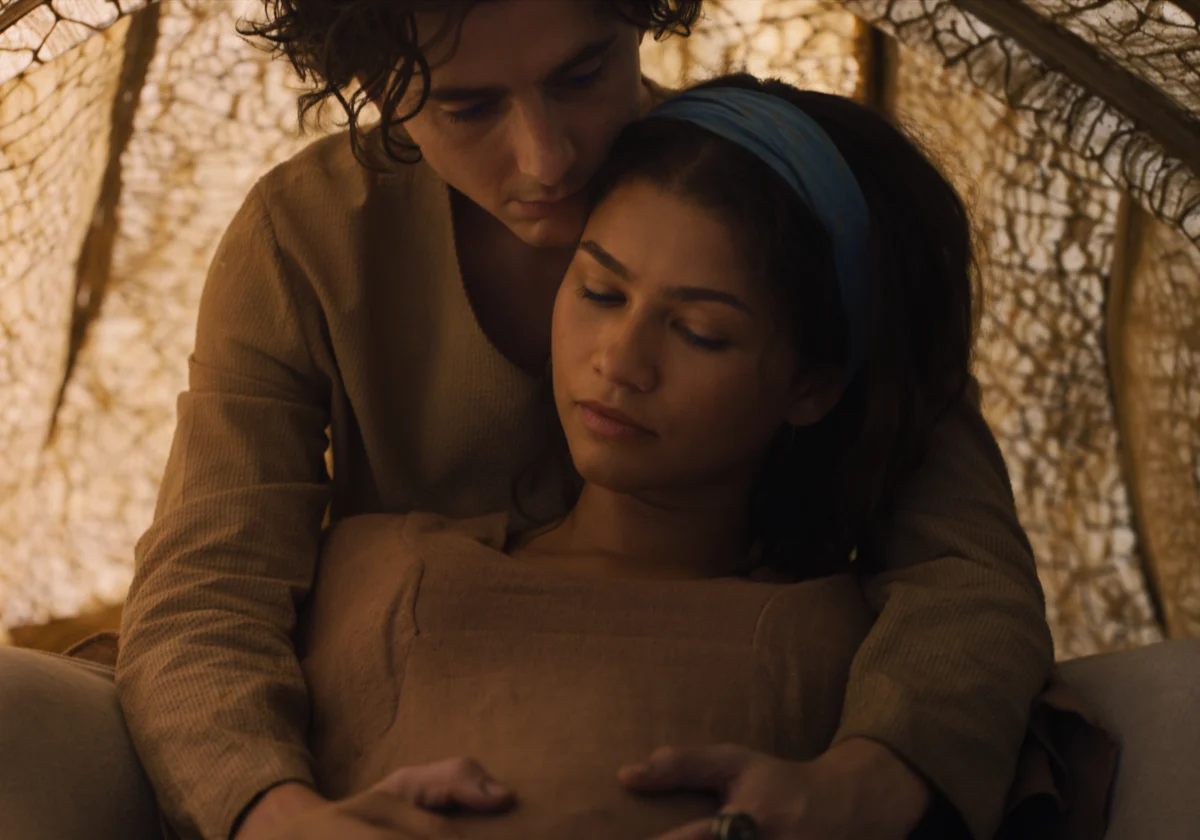
ARRAKIS PRIME – [Date of Publication] – The universe of Frank Herbert’s Dune saga is bracing for its climactic cinematic chapter as Warner Bros. and Legendary Pictures today unveiled the first full trailer for Denis Villeneuve’s highly anticipated Dune: Part Three. Set to premiere in theaters on December 18, 2026, this final installment in Villeneuve’s adaptation, encompassing both Herbert’s seminal novel Dune and its profound sequel Dune Messiah, promises a darker, more complex narrative that will irrevocably redefine the legacy of Paul Atreides.
The two-and-a-half-minute trailer plunges viewers nearly two decades into the future, revealing a chilling transformation: Timothée Chalamet’s Paul Atreides, once the messianic figure of Arrakis, now sits as the Emperor of the known galaxy, a ruler whose ascent has come at the cost of "thousands of worlds destroyed." The footage is a visceral tapestry of power, betrayal, and burgeoning rebellion, signaling a stark departure from the more hopeful, albeit somber, undertones of Dune: Part Two.
A central and heartbreaking revelation in the trailer is the fractured relationship between Paul and his former love, Chani, portrayed with raw intensity by Zendaya. No longer his devoted companion, Chani is seen actively seeking to dismantle the Imperium Paul has forged, her eyes burning with a fierce determination to bring him down. This conflict forms the emotional core of a narrative steeped in the tragic consequences of prophecy and unchecked power.
Adding to the shockwaves, the trailer confirms the return of Jason Momoa’s beloved Duncan Idaho, a revelation that will undoubtedly ignite fervent discussion among fans. While Herbert’s original novel Dune Messiah provides a fascinating explanation for this resurrection, the film’s approach remains shrouded in mystery, promising a compelling twist on a fan-favorite character.
The ensemble cast is further bolstered by the confirmed appearances of several new and returning figures crucial to Paul’s unfolding tragedy. Robert Pattinson, making his debut, is glimpsed as the sinister, blond villain Scytale, a character pivotal to the political machinations of Dune Messiah. Florence Pugh returns as the increasingly influential Princess Irulan, her role evolving beyond a mere observer. Anya Taylor-Joy delivers a striking, albeit brief, appearance as a blood-splattered Alia Atreides, hinting at the powerful and dangerous nature of Paul’s pre-born sister. Javier Bardem’s Stilgar continues his loyal, if misguided, devotion, while Rebecca Ferguson, Isaach de Bankolé, and Charlotte Rampling reprise their roles, rounding out a formidable lineup ready to navigate the treacherous currents of Paul’s reign.
Warner Bros. has officially confirmed that Dune: Part Three is the definitive conclusion to Villeneuve’s cinematic oeuvre within the Dune universe, promising a meticulously crafted and emotionally resonant finale.
Main Facts: The Emperor’s Fall and a Galaxy’s Reckoning
The core revelation from today’s trailer is the profound and disturbing evolution of Paul Atreides. The boy who embraced his destiny as Muad’Dib to liberate the Fremen has become a galactic emperor, his rule cemented by a devastating holy war that has claimed countless lives and planets. The official synopsis underscores this transformation, stating: "Dune: Part Three is set nearly two decades after Paul Atreides seized control of the Imperium. Now a ruthless Emperor, Paul must face the consequences of his reign as old allies return, terrifying new threats emerge, and betrayal lurks in every shadow. Haunted by visions of Imperial collapse and the reappearance of his long-lost love, Paul is drawn into a sweeping conspiracy, with Chani at the heart of its unfolding mystery. As rebellion brews and enemies close in, Paul must confront the true cost of power and the fate of those he loves the most."
This synopsis, coupled with the trailer’s visual cues, paints a picture of a protagonist consumed by the very power he once sought to wield responsibly. The "destroyer of thousands of worlds" moniker is not merely a descriptor but a testament to the unforeseen, devastating scale of the jihad Paul unleashed, despite his prescient warnings. His visions, once a guide, now appear to be a torment, showing him the inevitable collapse of his Imperium, a collapse potentially orchestrated by those closest to him.
Chani’s pivotal role as the architect of Paul’s downfall is a crucial narrative shift. Her disillusionment with Paul’s path, hinted at in Part Two, has evidently hardened into active resistance. Her character arc, from devoted lover and ally to fierce revolutionary, will provide a compelling counterpoint to Paul’s tyrannical rule. This promises a deeply personal and tragic conflict at the heart of the grand galactic drama.
The surprising return of Duncan Idaho, a character seemingly killed in Dune: Part One, is another major plot point. For those familiar with Herbert’s novels, this is a clear nod to the ghola concept – clones of deceased individuals, often with their memories suppressed or altered, created by the Bene Tleilax. The film’s inclusion of Duncan, particularly with Jason Momoa reprising the role, suggests a faithful, albeit potentially adapted, exploration of this unique aspect of Dune lore, adding layers of philosophical and ethical complexity to the narrative.
The introduction of Robert Pattinson as Scytale, a Face Dancer of the Bene Tleilax, immediately establishes a new, insidious threat. Face Dancers are shapeshifters and master manipulators, making Scytale a dangerous and unpredictable antagonist, likely involved in the "sweeping conspiracy" against Paul. Anya Taylor-Joy’s expanded role as Alia Atreides, the pre-born and extraordinarily intelligent sister of Paul, will see her navigating her own unique powers and influence within the Imperium, her "bloody" appearance in the trailer hinting at the violent realities she faces.
The screenplay, co-written by Villeneuve and acclaimed comic book writer Brian K. Vaughan (Paper Girls), indicates a thoughtful and dynamic approach to adapting Herbert’s dense material. Vaughan’s experience with character-driven, complex narratives bodes well for translating the philosophical depth of Dune Messiah to the screen.
Chronology: From Herbert’s Vision to Villeneuve’s Finale
The journey to Dune: Part Three is a testament to both Frank Herbert’s enduring literary legacy and Denis Villeneuve’s unwavering commitment to cinematic fidelity. Herbert published Dune in 1965, a groundbreaking work that redefined science fiction. He followed it with Dune Messiah in 1969, a much shorter, denser, and darker novel that served as a direct and immediate sequel. While Dune chronicles Paul’s rise as Muad’Dib and the Fremen’s liberation, Dune Messiah delves into the devastating aftermath: the jihad unleashed in his name, the burden of his prescient visions, and his struggle against the very religious fanaticism he inadvertently inspired. Herbert’s intention with Dune Messiah was to explicitly warn against charismatic leaders and the dangers of blind faith, deconstructing the heroic archetype he had built in the first novel.
Villeneuve’s cinematic journey began with Dune: Part One (2021), a critically acclaimed and commercially successful adaptation that covered roughly the first half of Herbert’s first novel. Its triumph, despite a hybrid theatrical and streaming release during the pandemic, immediately fueled calls for a sequel. Dune: Part Two (2024) picked up the narrative, completing the first book and garnering even greater critical and box office success, cementing Villeneuve’s vision as the definitive big-screen interpretation of Dune.
Throughout the production of the first two films, Villeneuve consistently expressed his desire to adapt Dune Messiah, viewing it not just as a sequel but as an essential part of Paul Atreides’ complete story arc. He repeatedly stated that his vision for Dune was always a trilogy, concluding with Dune Messiah, to fully explore the tragic implications of Paul’s hero’s journey. This commitment was crucial in securing the studio’s green light for Part Three.
The development of Dune: Part Three accelerated following the immense success of Part Two. Initial discussions confirmed Villeneuve’s return to direct, with Timothée Chalamet, Zendaya, and other key cast members expressing eagerness to reprise their roles. The involvement of Brian K. Vaughan as co-screenwriter was a significant announcement, bringing a fresh perspective while maintaining Villeneuve’s established narrative direction. Casting news, particularly Robert Pattinson’s inclusion as Scytale, generated considerable buzz, highlighting the film’s ambition to introduce new layers of intrigue and antagonism. Production timelines, while not extensively detailed, suggest a meticulous approach, allowing ample time for Villeneuve’s signature epic scale and intricate world-building to take shape before its December 2026 release.
Supporting Data: A Vision of Scale, Philosophy, and Artistic Integrity
The success of Villeneuve’s Dune films is not merely a box office triumph but a testament to a unique artistic vision. Dune: Part One grossed over $402 million worldwide and earned six Academy Awards. Dune: Part Two surpassed its predecessor, earning over $711 million globally and receiving widespread critical acclaim, lauded for its epic scope, stunning visuals, and faithful adaptation. This undeniable success has provided the necessary mandate for Dune: Part Three, allowing Villeneuve to complete his ambitious narrative arc without compromise.
Villeneuve’s directorial style is perfectly suited to Herbert’s universe. His films are characterized by an immersive quality, combining breathtaking cinematography with a masterful use of sound design and a preference for practical effects wherever possible. This approach lends a tangible weight and authenticity to the fantastical world of Arrakis, making the Spice, the sandworms, and the Fremen culture feel profoundly real. He has consistently demonstrated a deep respect for the source material, ensuring that the philosophical and political complexities of Herbert’s novels are not diluted but amplified on screen.
Thematic exploration in Dune: Part Three will be paramount. Dune Messiah is a profound meditation on the burden of prophecy, the dangers of charismatic leadership, and the moral ambiguities of power. Paul’s prescient abilities, initially presented as a tool for liberation, are revealed as a cage, trapping him in a future he desperately tries to avoid but inevitably creates. The film will explore how a hero can become a tyrant, how religious zealotry can be manipulated, and the devastating cost of a galactic holy war. These themes, perhaps more relevant than ever in contemporary society, resonate deeply with current discussions about populism, fanaticism, and political responsibility.
The casting choices continue to reflect a dedication to embodying these complex characters. Timothée Chalamet’s portrayal of Paul has evolved from an uncertain youth to a haunted, powerful leader, perfectly poised to convey the ruthless yet tormented Emperor. Zendaya’s Chani, whose skepticism and fierce independence were already evident, is now set to become a formidable force, embodying the resistance against Paul’s oppressive regime. Jason Momoa’s return as Duncan Idaho, whether as a ghola or through another narrative device, promises to explore themes of identity, memory, and loyalty in a compelling manner. Robert Pattinson’s casting as Scytale adds a layer of unexpected gravitas and a proven ability to portray complex, often morally ambiguous characters, making him an ideal choice for the manipulative Face Dancer. Anya Taylor-Joy’s Alia, already glimpsed as a child in Part Two, will likely be a fully realized, formidable force in Part Three, her pre-born consciousness making her a unique and potentially dangerous player in the galactic power struggle.
Villeneuve’s Dune trilogy stands alongside other cinematic sci-fi epics like Star Wars and The Lord of the Rings in its ambition and scope, but distinguishes itself with its profound philosophical depth and its unflinching exploration of complex ethical dilemmas. It’s a thinking person’s sci-fi epic, challenging audiences to consider the true cost of power and the nature of destiny.
Official Responses: A Director’s Passion, a Studio’s Trust
The journey to Dune: Part Three has been significantly shaped by the enthusiastic support from Warner Bros. and Legendary Pictures, fueled by the undeniable critical and commercial success of the preceding films. Their decision to greenlight the third installment so swiftly after Part Two‘s triumph speaks volumes about their confidence in Denis Villeneuve’s vision and the enduring appeal of Frank Herbert’s universe.
Villeneuve himself has been the most vocal proponent for adapting Dune Messiah. In numerous interviews leading up to and following Part Two, he emphasized that his primary goal was always to complete Paul Atreides’ story, which he believes is intrinsically linked to the events of the second novel. He famously stated that Dune Messiah acts as an "antidote" to the traditional hero’s journey, a necessary deconstruction of Paul’s messianic status that Herbert himself intended. "My dream would be to make a third movie that would complete Paul Atreides’s story… Dune Messiah was written in reaction to people who perceived Paul Atreides as a hero, which is not what Frank Herbert wanted," Villeneuve explained. "I would love to do that." His passion for these specific themes and his dedication to Herbert’s original intent have been a driving force behind the project.
The cast, too, has echoed this enthusiasm. Timothée Chalamet has spoken about the immense challenge and privilege of portraying Paul’s complex evolution. His character in Part Three demands a nuanced performance, showcasing a Paul who is both powerful and deeply conflicted, a ruler haunted by his own actions. Zendaya has also expressed excitement about Chani’s expanded and pivotal role, hinting at the character’s emotional depth and her agency in standing against Paul’s Imperium. Jason Momoa, whose return as Duncan Idaho is one of the trailer’s biggest surprises, will likely embrace the philosophical implications of his character’s resurrection, a concept deeply rooted in Herbert’s lore.
Brian K. Vaughan’s involvement as co-screenwriter is also a significant indicator of the film’s creative direction. While specific quotes from Vaughan about his contribution are not yet widely available, his reputation for crafting intricate, character-driven narratives with profound thematic undertones suggests a strong partnership with Villeneuve in adapting the challenging material of Dune Messiah. The collaborative spirit among the creative team and the studio’s full backing underscore the high expectations and the commitment to delivering a fitting conclusion.
Implications: Legacy, Resonance, and the Future of Sci-Fi Epics
The release of Dune: Part Three carries significant implications for the Dune franchise, Denis Villeneuve’s legacy, and the broader landscape of science fiction cinema. With this film, Villeneuve will have successfully adapted the foundational texts of one of sci-fi’s most revered sagas, solidifying Dune as a major cinematic event that rivals, and in some aspects surpasses, other contemporary epic franchises.
For Villeneuve, completing this trilogy will cement his status as a master of modern science fiction, a director capable of translating dense, philosophical literature into visually stunning and emotionally resonant cinematic experiences. His commitment to Herbert’s nuanced themes, particularly the anti-heroic arc of Paul Atreides, demonstrates an artistic integrity that sets his work apart. This trilogy will undoubtedly be a defining achievement in his career.
Thematic resonance will be a key aspect of Dune: Part Three‘s impact. Herbert’s warnings about the dangers of charismatic leaders, the seductive nature of power, and the perils of religious fundamentalism are perhaps more pertinent today than when Dune Messiah was first published. The film will serve as a powerful cautionary tale, inviting audiences to reflect on these complex issues within a grand, immersive narrative. It promises to be a darker, more introspective film than its predecessors, requiring audiences to engage with uncomfortable truths about heroism and destiny.
While Dune: Part Three is confirmed as the conclusion to Villeneuve’s specific adaptation of the first two novels, it opens doors for the broader Dune universe. The immense popularity generated by this trilogy may well spark further interest in adapting other books in Herbert’s extensive series, or even spin-off projects exploring different facets of the Imperium. However, it is crucial to reiterate that this film will provide a definitive closure to Paul Atreides’ arc as envisioned by Villeneuve, offering a complete, standalone narrative within his directorial framework.
Ultimately, Dune: Part Three is poised to leave a lasting cultural footprint, influencing future generations of filmmakers and storytellers. It will serve as a benchmark for ambitious science fiction, demonstrating that complex, character-driven narratives with profound philosophical underpinnings can achieve mainstream success. As the countdown to December 18, 2026 begins, the galaxy of Dune awaits its final, epic chapter, promising a journey that is as thought-provoking as it is visually spectacular.