
The Queen’s Gambit: How Isabella of France Invaded England to Topple a King
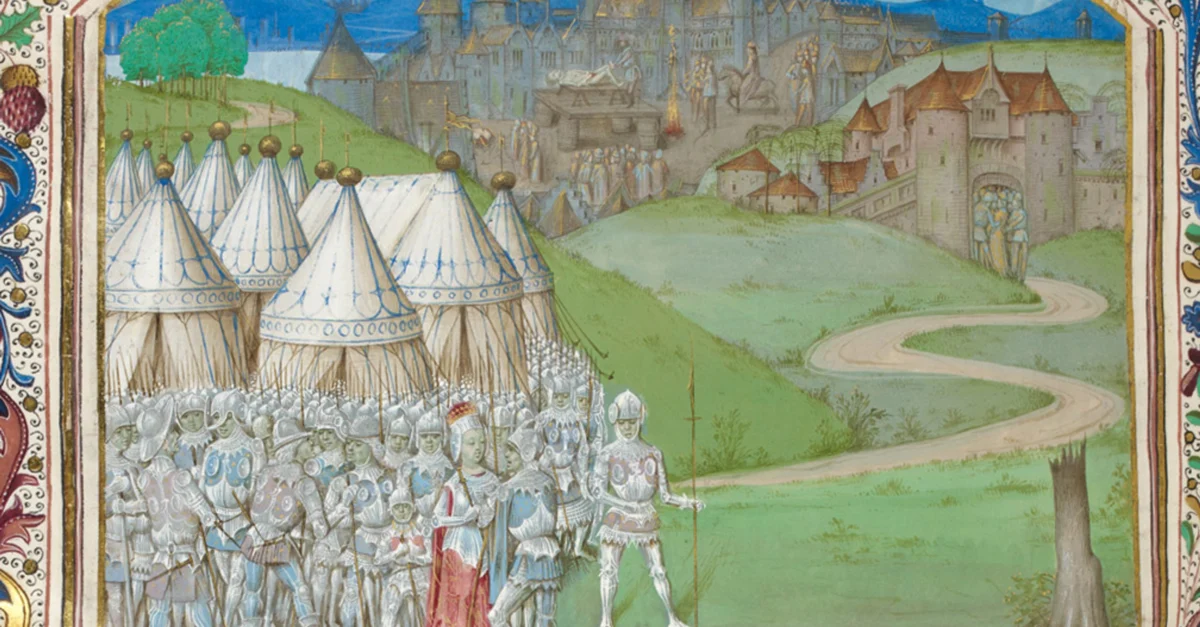
Suffolk Coast, England – September 24, 1326 – A chilling gale, born from the tumultuous North Sea, swept 95 ships onto the shores of England, likely in Suffolk. Two days earlier, on September 22, this formidable fleet had departed Flanders under fair skies, only for blue horizons to yield to a tempestuous storm, scattering the vessels. Yet, against all odds, by noon on the 24th, the disparate armada had re-grouped and made safe landfall. From the creaking hulls disembarked approximately 1,500 men, a motley but determined force. Their murmurs in English, German, and Dutch hinted at the diverse origins of this expedition, which, far from being a mere trade convoy, was an invasion force. Its audacious mission: to liberate England from the perceived tyranny that had ensnared its king and driven the kingdom to the brink of ruin.
At the heart of this extraordinary undertaking was the queen herself, Isabella of France, a formidable 31-year-old. Aided ashore by her loyal knights and attendants, a temporary haven was swiftly erected for her – "a house with four carpets, open in the front, where they kindled her a great fire," as chronicled by historian Alison Weir. Initially disoriented, Isabella immediately dispatched riders to ascertain their precise location. A wave of relief washed over her upon learning they had landed in the territory of a staunch ally, the Earl of Norfolk. Wasting no time, even as her men unloaded vital provisions, arms, and armor, the queen set pen to parchment. She penned urgent letters to the citizens of London and other key towns, proclaiming her arrival not as a conqueror, but as a liberator. Her cause, she declared, was just: to avenge the recent murder of the Earl of Lancaster and to permanently expel the reviled Despensers – "those enemies of the realm" – from their grip on power. She implored all loyal Englishmen to rally to her noble and righteous banner.
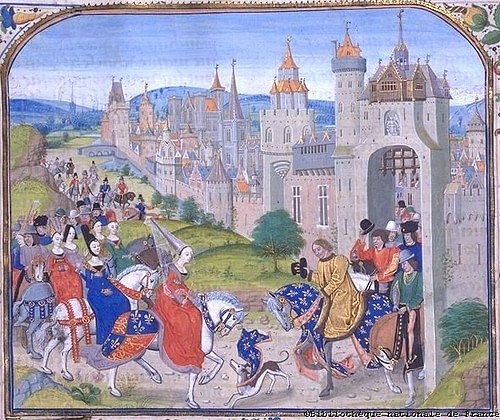
The following morning, the Earl of Norfolk personally greeted Queen Isabella, escorting her to his stronghold at Walton-on-the-Naze. There, a torrent of earls, barons, and knights flocked to her standard, pledging their allegiance and their swords. Clad in widow’s weeds, a powerful visual statement of her perceived oppression, the queen then led her burgeoning army inland, embarking "as if on a pilgrimage." At her side rode Roger Mortimer, a tall, striking figure who shared not only her battles but also her bed. Mortimer, a man fueled by three years of exile and a burning desire for vengeance against the Despensers, was a pivotal figure in this audacious scheme. Trailing behind the lovers was Prince Edward, Isabella’s 14-year-old son and the rightful heir to the English throne, a reluctant pawn in his mother’s grand design. As news of the invasion rippled across the kingdom, every man, from highborn lord to commoner, faced an inescapable choice of allegiance. The die was cast; the fate of England hung precariously in the balance.
The Unraveling of a Royal Marriage: Edward II’s Reign and Isabella’s Isolation
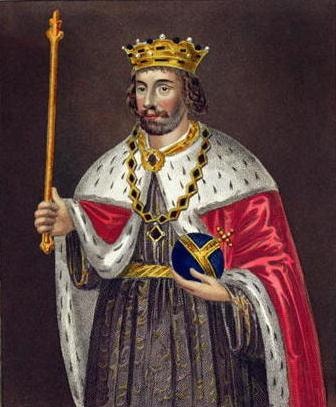
The path to this dramatic invasion was paved with years of escalating discontent and a profoundly unhappy royal marriage. Isabella’s first encounter with English soil was in February 1308, as a 12-year-old bride. Her husband, Edward II, 11 years her senior, presented a striking figure: over six feet tall, handsome, muscular, and adorned with curly, shoulder-length hair – every inch the fairytale king. Yet, appearances were deceiving. Edward II harbored little interest in the demanding duties of kingship, a stark contrast to his father, the formidable Edward I. Rumors had already reached Isabella’s ears: her new husband preferred the company of commoners – actors and fishermen – over knights and earls, indulging in rustic pursuits like thatching and swimming rather than noble pastimes such as jousting and hunting.
This stark reality became painfully clear at her own coronation. The king notoriously spent the entire night engrossed in conversation and laughter with his favorite, Piers Gaveston, pointedly ignoring his new bride. This egregious snub caused a minor diplomatic scandal, much to the displeasure of Isabella and her powerful father, King Philip IV of France. Isabella found herself increasingly isolated at court. Edward lavished Gaveston with attention and wealth, even gifting him some of Isabella’s own jewelry, which Gaveston brazenly displayed in public. While historians like Allison Weir note that Edward II could hardly be faulted for preferring the company of a man his own age over a child bride, Isabella felt deeply insulted and alienated. She confided in her father that Gaveston was the source of "all her troubles," having alienated the king from her and rendering her husband "an entire stranger to my bed."
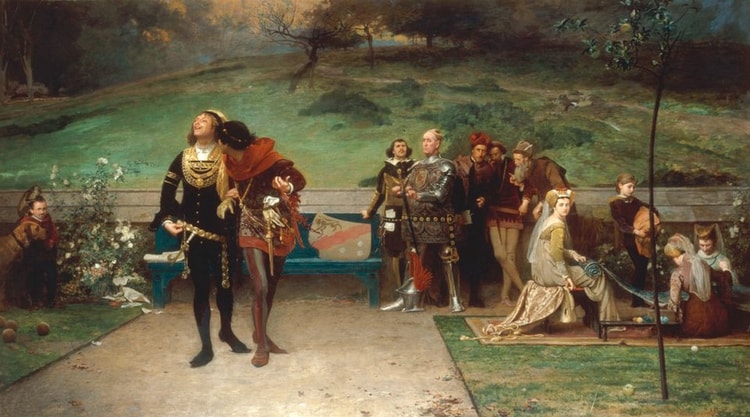
While Isabella, for a time, refrained from openly confronting Gaveston, the English nobility harbored no such restraint. The established earls and barons viewed Gaveston, a relatively lowborn Gascon knight, with contempt and alarm, fearing his undue influence over the monarch. Gaveston’s own haughty demeanor only exacerbated tensions. This simmering resentment boiled over in 1312 when Thomas, Earl of Lancaster, a powerful magnate, captured and executed Gaveston. Edward II, enraged, vowed revenge, but for the moment, he was powerless. Ironically, in the aftermath of Gaveston’s death, Edward and Isabella’s relationship briefly improved. Their first child, Prince Edward, was born in 1312, followed by three more children in subsequent years, offering a fleeting semblance of dynastic stability.
The Despensers’ Ascendancy and the Marcher Lords’ Fury
The fragile truce between the Crown and the barons proved short-lived. By the late 1310s, Edward II had found a new favorite, one who would prove even more rapacious and dangerous than Gaveston: Hugh Despenser the Younger. A man of insatiable ambition, Despenser cultivated the king’s favor, becoming royal chamberlain in 1318. Together with his father, Hugh Despenser the Elder, they embarked on a ruthless campaign of self-enrichment, accumulating vast lands and titles, swiftly becoming the most powerful figures in the kingdom outside the monarch himself. Much of their newly acquired wealth and territory lay within the Welsh Marches, the volatile borderlands between England and Wales. This blatant encroachment inflamed the fiercely independent Marcher lords, a powerful class of noblemen who deeply resented any perceived threat to their ancestral domains.
Among these incensed Marcher lords was Roger Mortimer, the young Baron of Wigmore. Mortimer, who had previously served the king loyally, including a successful campaign against Scottish incursions in Ireland, grew increasingly disillusioned by Edward’s boundless favoritism towards the Despensers. A historical animosity also fueled his fear: Mortimer’s own grandfather had slain Despenser’s grandfather in battle, leading Mortimer to believe that the Despensers, emboldened by royal power, would inevitably seek vengeance upon his family.
In 1321, the Marcher lords, unable to tolerate the Despensers’ unchecked power any longer, launched a coordinated strike. They led bands of armed men onto the Despensers’ estates, unleashing a wave of destruction, burning, and pillaging. Mortimer himself led a force to the very gates of London, where he was joined by the powerful Earl of Lancaster. Together, they issued an ultimatum to Edward II: exile the hated Despensers. The king, facing overwhelming baronial opposition, grudgingly agreed. However, no sooner had Mortimer and Lancaster disbanded their forces than Edward, ever mercurial, reversed his decision. He recalled the Despensers to England and immediately laid siege to the rebellious Leeds Castle, a decisive move that sowed fear among the rebels. Caught off guard, Mortimer was forced to surrender to the king at Shrewsbury in January 1322 and was imprisoned in the formidable Tower of London. Lancaster, however, met a harsher fate; captured after the Battle of Boroughbridge, he was executed in a manner chillingly similar to how he had treated Gaveston a decade earlier.
Following this crushing victory, Edward II, abandoning any pretense of leniency, unleashed a brutal crackdown. Scores of rebellious barons were executed, their mangled bodies displayed in gibbets as a grim warning before every major town. For a time, it seemed as though the independent spirit of the English baronage had been extinguished forever. Then, in August 1323, an event of profound significance occurred: Roger Mortimer, against all odds, escaped from the Tower of London and fled to France, setting in motion the next phase of England’s tumultuous history.
A Queen’s Desperation and a Lover’s Vengeance: The Alliance in France
Mortimer made his perilous journey to Paris, where he found refuge and a sympathetic ear at the court of King Charles IV, Isabella’s brother. For the next few years, he lived in anxious exile, his gaze fixed across the Channel, patiently awaiting the opportune moment to return home and dismantle the Despensers’ power. Back in England, Isabella, too, was increasingly consumed by a fervent desire for the Despensers’ downfall. While she had grudgingly tolerated Gaveston, the Despensers represented a far more insidious and total control over her husband. They systematically stripped Isabella of her rightful estates, drastically cutting her income and diminishing her royal status. They even took custody of her younger children, further isolating her.
A particularly egregious incident in 1322 solidified Isabella’s hatred. During an invasion by the Scottish army, Edward and the Despensers, in a shocking act of desertion, fled Tynemouth, leaving Isabella to fend for herself. Though she escaped unharmed, she never forgave the Despensers for convincing the king to abandon her. Over time, Isabella became convinced that the Despensers sought her permanent removal, perhaps even her assassination. In 1325, a diplomatic mission to France offered a lifeline. She traveled to her brother’s court, taking her eldest son, Prince Edward, with her. Once safely under her brother’s protection, she adamantly refused to return to England as long as the Despensers held sway.
During her extended stay in Paris, Isabella strategically cultivated a network of disgruntled English exiles and powerful contacts back home. She secured the crucial support of the Earl of Norfolk and the new Earl of Lancaster, who, like Mortimer, craved vengeance for his murdered brother. It was among these exiles in France that Isabella’s path converged with Roger Mortimer. They likely knew each other from before Mortimer’s imprisonment, and their shared grievances against the Despensers quickly forged a potent political alliance. This alliance soon blossomed into a passionate love affair. By December 1325, rumors of their illicit relationship had spread across Europe, fueling scandal and intrigue. The couple, seemingly flaunting their adultery, began to live openly together and appear in public, a bold defiance of convention.
Within months, they had meticulously formulated a daring plan: to invade England and definitively oust the Despensers. To secure vital financial and military backing, they arranged a strategic betrothal between Prince Edward and Philippa, daughter of the Count of Hainault. This alliance provided them with a crucial base of operations in Flanders, where they could secretly gather and equip their invasion force, comprised of mercenaries and English exiles. It was not until September 1326 that all preparations were complete, and the rebels, under Isabella’s resolute leadership, raised their sails and set course for England.
The Rapid Collapse of Royal Authority: Isabella’s March Inland
Upon leaving Norfolk’s castle, Isabella’s forces commenced their inexorable march westward, towards the nerve center of the kingdom, London. King Edward II, dining with the younger Despenser within the formidable walls of the Tower of London, received the shocking news of the invasion. "Alas, alas," the king reportedly cried, "We are all betrayed!" On October 2, consumed by panic, Edward and Despenser fled the capital, abandoning it to the volatile whims of its citizens.
Shortly thereafter, the citizens of London erupted in open revolt. They seized John Marshal, a close ally of the Despensers, and brutally murdered him. When the Bishop of Exeter attempted to restore order, the enraged rioters dragged him from his horse, decapitated him with a bread knife, and sent his head to Isabella as a gruesome yet potent token of their support. With the mobs of London firmly on her side, Isabella pressed on to Bristol Castle, where Hugh Despenser the Elder had sought refuge. The castle quickly fell to Isabella’s forces after a brief siege, and the elder Despenser was taken prisoner. The queen handed her captive over to the Earl of Lancaster, who, in a chilling act of retribution mirroring the brutality of the era, had him dismembered and fed to hounds.
While Bristol was under siege, Edward II and the younger Despenser attempted to flee England by ship, aiming for Ireland. However, unfavorable winds thwarted their escape, forcing them to seek refuge in Wales instead. Isabella and Mortimer seized this critical opportunity, issuing a powerful public statement. They argued that by attempting to abandon the realm, Edward II had forfeited his right to rule, and therefore, young Prince Edward should assume control of the government. This statement, crucially endorsed by Norfolk, Lancaster, and many of the kingdom’s most influential earls, transformed the rebellion from a mere purge of the Despensers into a full-blown referendum on Edward II’s fitness to govern. On October 26, Edward II was officially stripped of his authority, and his powers were formally transferred to his 14-year-old son. In November, Isabella and Mortimer reached Hereford on the Welsh border. From there, Lancaster was dispatched to track down the king. He succeeded, capturing both Edward II and Despenser near the Welsh town of Llantrisant on November 16. Lancaster retained custody of the deposed king, while Despenser was dragged to Hereford, where he met a horrific end: hanged, drawn, and quartered. The rebellion was decisively over, and a new, albeit uncertain, chapter was about to begin for England.
From Liberators to Rulers: The Regency of Isabella and Mortimer
With the rebellion triumphantly concluded and the Despensers brutally dispatched, Isabella and Mortimer confronted an uncomfortable truth: the deposed king, Edward II, remained alive. Despite his confinement and the formal transfer of his authority to his son, he was still the reigning monarch in name. However, two decades of unpopular and tumultuous rule had alienated the vast majority of his barons. On January 24, 1327, under immense pressure, Edward II was compelled to abdicate his throne. The crown passed to his son, who was proclaimed King Edward III of England. Yet, as Edward III was still a minor, true power inevitably flowed into the hands of Isabella and Mortimer, who swiftly established themselves as de facto regents.
Their initial months in power were characterized by a rapid and blatant self-enrichment. Mortimer, ever ambitious, amassed vast lands and titles in the Welsh Marches, generously rewarding his fellow Marcher lords who had supported the invasion. Isabella, too, consolidated her control over significant territories and did not hesitate to dip into the royal treasury. On one notable occasion, she extracted a staggering £20,000 from the treasury under the pretext of settling foreign debts. This conspicuous corruption and unabashed accumulation of power sickened many of their former supporters, who had initially championed their cause in the hope of ushering in a just and stable royal government. The liberators were quickly perceived to be transforming into new tyrants.
The Shadow of Berkeley Castle: The Death of Edward II
In September 1327, less than a year after his abdication, Edward II died while under house arrest at Berkeley Castle. Officially, his death was attributed to natural causes, with some contemporary accounts suggesting he died of a broken heart, unable to endure the loss of his throne and dignity. However, whispers and rumors soon circulated that Isabella and Mortimer were complicit in the former king’s suspiciously timely demise. While no concrete evidence has ever definitively proven their direct involvement in his murder, they undoubtedly had the most to gain from his death, as it removed a potential rallying point for future opposition and solidified their grip on power. The precise circumstances of Edward II’s death remain one of medieval England’s enduring historical debates.
After Edward II’s death, Mortimer’s ambitions became even more unrestrained and apparent. During royal banquets and tournaments, he frequently presided over the young Edward III, a deliberate and arrogant display designed to signal to the entire realm that he, not the boy king, was the true power behind the throne. Furthermore, in 1328, he audacious appointed himself Earl of March, a move that only intensified the growing consternation throughout the kingdom. Henry, Earl of Lancaster, became the first prominent lord to openly break with Mortimer and Isabella. Feeling increasingly sidelined and appalled by their avarice, he accused the king (effectively Mortimer) of having violated both the Magna Carta and his coronation oath by adhering to Mortimer’s "sinister counsel." Throughout 1329, the specter of a new round of civil wars loomed ominously on the horizon.
A Son’s Reckoning: The Coup at Nottingham Castle
The mounting feud with Lancaster and other disaffected nobles fueled Mortimer’s increasing paranoia. He harbored particular suspicions regarding the loyalties of Edmund, Earl of Kent, who, despite having sided with Isabella during the rebellion, was also Edward II’s half-brother. In March 1330, Mortimer received whispers of Kent’s involvement in a conspiracy against him. Without launching a thorough investigation, Mortimer, in a chilling display of arbitrary power, simply had Kent arrested for treason and summarily beheaded. This final, tyrannical act proved to be the breaking point for many within the realm, including the young Edward III himself.
Now 17 years old, the new king had reached his majority and was determined to cast off the suffocating shackles of his regency. He had grown increasingly resentful of Mortimer’s overbearing control and the widespread discontent simmering beneath the surface of his kingdom. On the night of October 19, 1330, Edward III, along with 22 trusted companions, executed a daring plan. They infiltrated Nottingham Castle, where Mortimer and Isabella were residing, through a secret tunnel known only to a few. They seized Mortimer in his chamber, dragging him away as Isabella, distraught, reportedly pleaded with her son to "have pity on the good Mortimer!" But Edward III, firm in his resolve, was unwilling to show such mercy. The only pity he afforded was not subjecting Mortimer to the full traitor’s death of being drawn and quartered. On November 29, 1330, Roger Mortimer was hanged at Tyburn, his reign of power abruptly and violently ended.
A New Dawn: The Legacy of Betrayal and the Shaping of Edward III’s Reign
With Mortimer executed and her power broken, Isabella went into a forced but comfortable retirement, living out the remainder of her days at Hertford Castle until her death in August 1358. Her final years were marked by a quiet withdrawal from public life, a stark contrast to the dramatic and tumultuous period of her regency.
Edward III, now fully in control, began to rule in his own right. The lessons learned from his father’s catastrophic reign and his mother’s audacious coup profoundly shaped his kingship. He was determined to be a strong, decisive, and respected monarch, avoiding the pitfalls of favoritism that had plagued his father and the corruption that had tainted his mother’s regency. His reign, in stark contrast to Edward II’s, would become one of England’s most celebrated, marked by military prowess, administrative reform, and a restoration of royal authority and prestige.
The story of Isabella of France, the "She-Wolf of France" as she later came to be known, remains one of the most dramatic and complex narratives of medieval England. It is a tale of a neglected queen pushed to desperation, a cunning lover seeking vengeance, and a son forced to depose both his father and his mother’s lover to reclaim his rightful place. The invasion of 1326 set a dangerous precedent, demonstrating that a monarch, if sufficiently incompetent or tyrannical, could be removed from power by force. It underscored the fragile balance between the Crown and the nobility, and the potent, often destructive, interplay of personal ambition, political intrigue, and passionate betrayal that defined the turbulent medieval age. The events of those years forged a new king and irrevocably altered the course of English history.



Leave a Comment