Unveiling the Late Period of Egypt: A Story of Resilience, Revival, and Resistance
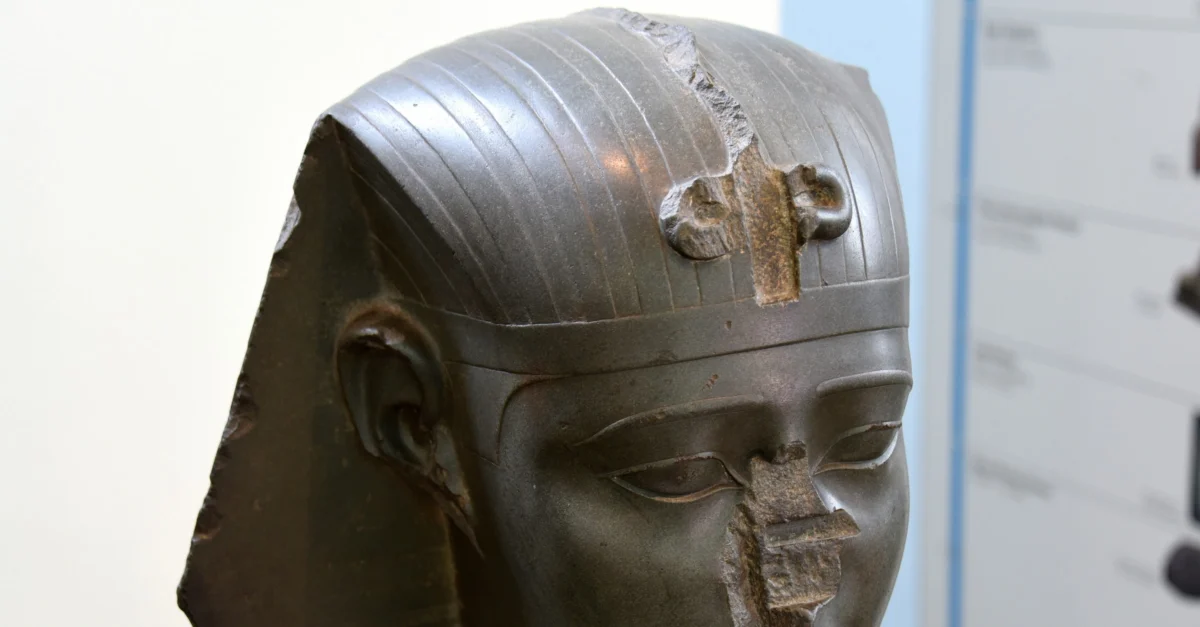
The Late Period of ancient Egypt (525-332 BCE) is an era frequently overshadowed by the more glamorous epochs of pharaonic power, often dismissed as a prolonged twilight preceding the final collapse of indigenous rule. Sandwiched between the fragmented Third Intermediate Period (1069-525 BCE) and the Hellenistic reign of Alexander the Great’s successors, this critical stretch of history is commonly perceived as a period of terminal decline, marked primarily by foreign domination. However, a closer examination reveals a vibrant narrative of cultural resilience, fervent nationalism, and significant artistic and architectural revival, challenging the conventional wisdom of a fading civilization.
Far from being a mere epilogue to a glorious past, the Late Period witnessed concerted efforts by Egyptian rulers to reclaim their sovereignty and rekindle the splendors of earlier dynasties. While the Persian Achaemenid Empire certainly exerted considerable influence, holding Egypt as a satrapy during the 27th and 31st Dynasties, Egyptian culture, religion, and identity were not only preserved but actively championed. The 30th Dynasty, in particular, stands out as a beacon of native Egyptian rule, ushering in a brief but brilliant resurgence that echoed the achievements of the Old and Middle Kingdoms before the final Persian reconquest and the subsequent arrival of Alexander the Great.
Defining the Epoch: Debates and Demarcations
The precise chronological boundaries of the Late Period are a subject of ongoing scholarly debate, reflecting the complexities of historical periodization. While conventionally encompassing the 27th through 31st Dynasties (525-332 BCE), some Egyptologists propose earlier starting points. One perspective suggests beginning the Late Period in the mid-25th Dynasty, citing perceived social and political similarities with the preceding Third Intermediate Period, an era characterized by disunity and a lack of centralized authority. Another viewpoint places the inception at the beginning of the 26th Dynasty, acknowledging the unifying reign of Psammeticus I after the Assyrian conquest. Proponents of this view argue that Psammeticus I’s consolidation of power effectively ended the fragmentation of the Third Intermediate Period, thereby initiating a new historical phase.
However, the more widely accepted and historically coherent demarcation aligns the start of the Late Period with the first Persian invasion under Cambyses II in 525 BCE. This date provides a clear and decisive political rupture, marking the definitive end of the 26th Dynasty’s independence and the beginning of sustained foreign imperial rule. The established nomenclature of Egyptian history – with its distinct "Kingdoms" (periods of strong central government) and "Intermediate Periods" (times of decentralized rule and disunity) – was largely crafted by 19th and 20th-century Egyptologists to bring clarity to the country’s vast timeline. Adhering to this paradigm, the Persian conquest in 525 BCE represents a profound shift in political control and state identity, justifying its designation as the commencement of a new, distinct historical era. To date the Late Period earlier would dilute the significance of this pivotal event and obscure the unique characteristics that define it.
A Tapestry of Rule: The Chronology of the Late Period
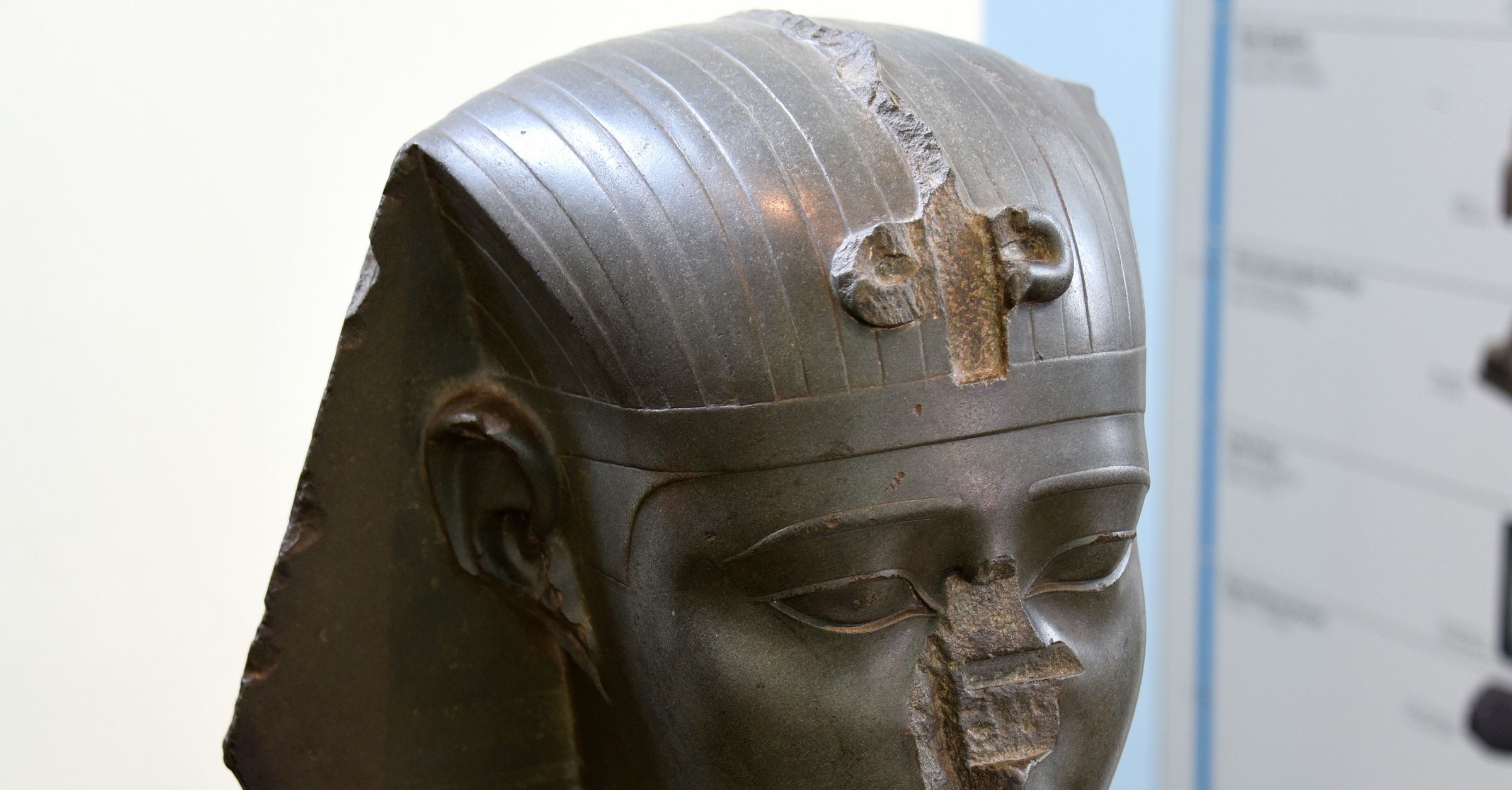
The Late Period unfolds as a dramatic saga of conquest, rebellion, and cultural perseverance, alternating between periods of Persian dominion and brief interludes of native Egyptian autonomy.
The Persian Shadow: The 27th Dynasty (First Achaemenid Period, 525-404 BCE)
The catalyst for the Late Period was the Persian invasion of 525 BCE, led by Cambyses II. According to the Greek historian Herodotus, the invasion was provoked by a diplomatic insult: Pharaoh Amasis of the 26th Dynasty allegedly sent the daughter of his predecessor, Apries, instead of his own, as a wife for Cambyses. This "fake wife" exposed the deception, fueling Cambyses’s fury. While this tale offers a colorful motive, the strategic expansion of the formidable Achaemenid Empire into resource-rich Egypt was likely inevitable, building upon earlier Assyrian conquests that had already demonstrated Egypt’s vulnerability to Mesopotamian military might.
The decisive Battle of Pelusium in 525 BCE, guarding the eastern gateway to Egypt, showcased Cambyses II’s cunning. Facing stiff resistance from Psammeticus III’s forces, Cambyses reportedly exploited the Egyptians’ deep reverence for animals, particularly cats (sacred to the goddess Bastet). He ordered his soldiers to paint Bastet’s image on their shields and drive live cats and other animals before their advancing lines. The Egyptians, unwilling to harm the sacred creatures or incur divine wrath, reportedly capitulated, allowing the Persians to seize Pelusium and ultimately conquer the country.
Herodotus often painted Cambyses II as a tyrannical, even mad, ruler who desecrated temples and killed the sacred Apis bull. However, contemporary Egyptian accounts, such as the autobiography of Admiral Wedjahor-Resne, who served Cambyses, offer a more nuanced picture. Wedjahor-Resne depicts Cambyses as respectful of Egyptian culture and religious traditions, even taking counsel on proper observance. While Wedjahor-Resne’s narrative acknowledges the suffering of Egyptians under Persian rule, including enslavement and conscription, it suggests a more pragmatic approach from the Persian king than Herodotus’s sensationalized portrayal. Cambyses’s campaign into Nubia, establishing a crucial trade center at the Nile’s first cataract, further demonstrates a strategic, rather than purely destructive, agenda.

Upon Cambyses’s death in 522 BCE, likely en route to quell a rebellion, Darius I the Great (522-486 BCE) ascended to the Persian throne. Unlike his predecessor, Darius I largely ruled Egypt in absentia, though he visited at least twice. He is generally regarded as a more benevolent ruler, demonstrating religious tolerance and directing funds for the restoration of damaged temples and the construction of new ones. This period of Persian administration saw Egypt integrated into the vast Achaemenid Empire, contributing resources and manpower, notably for Xerxes I’s (486-465 BCE) ambitious second invasion of Greece. Xerxes’s successor, Artaxerxes I (465-424 BCE), faced the first major Egyptian revolt (460-454 BCE), led by Inaros II with significant Athenian support, which nearly succeeded in expelling the Persians.
Seeds of Rebellion: The 28th and 29th Dynasties (404-380 BCE)
The spirit of resistance, kindled by Inaros II, flared again with Amyrtaeus (404-398 BCE) of Sais, who founded the 28th Dynasty. While often credited with driving the Persians out, Amyrtaeus’s control was largely confined to the Delta region of Lower Egypt, with Upper Egypt remaining under Persian sway. His brief reign marked the beginning of a period where native Egyptian pharaohs would once again hold the reins of power, however tenuously.
Amyrtaeus was succeeded by Nepherites I (398-393 BCE), who established the 29th Dynasty, ruling from Mendes. This dynasty, though short-lived, made earnest attempts to revive Egypt’s former grandeur. Nepherites I undertook building projects in Lower Egypt, laying the groundwork for more ambitious undertakings by his successors. Hakor (Achoris, 392-379 BCE), the most significant ruler of the 29th Dynasty, not only repelled a major Persian invasion in 385 BCE but also initiated notable construction, including additions to the Temple of Amun at Karnak. His efforts reflected a conscious emulation of Egypt’s great pharaohs, but the dynasty ultimately succumbed to internal strife, paving the way for the rise of a new power.
A Final Flourish: The 30th Dynasty (380-343 BCE)
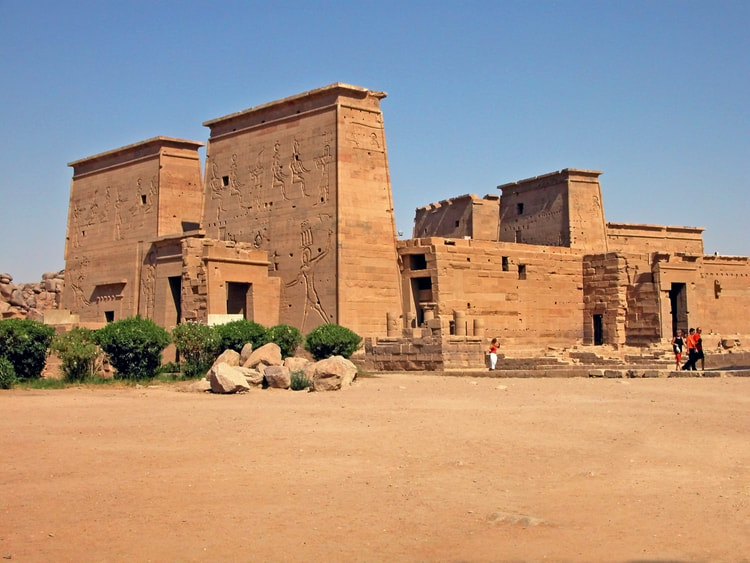
The 30th Dynasty represents the last true flowering of independent native Egyptian rule, producing pharaohs who rivaled their ancient predecessors in ambition, piety, and military prowess. Nectanebo I (380-362 BCE), a powerful general from Sebenytos, overthrew Nepherites II (son of Hakor) and established this new dynasty. He strategically moved the capital to Sebenytos and embarked on an impressive program of temple construction and renovation, including the renowned Temple of Isis at Philae and the First Pylon at the Temple of Amun at Karnak.
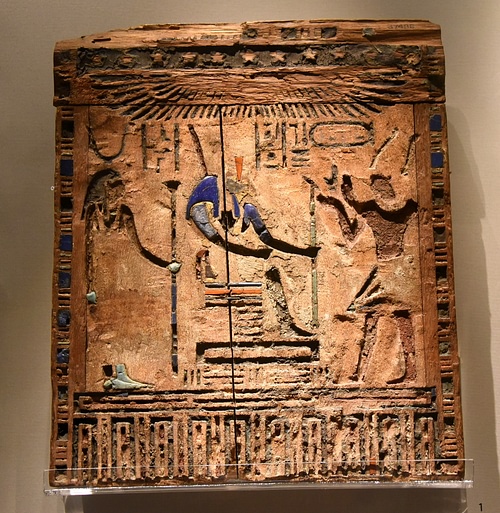
Nectanebo I proved to be a shrewd military leader. When the Persians launched another invasion in 374 BCE, he expertly fortified Pelusium and the Nile’s main branches. Crucially, he deliberately left the Mendesian branch unguarded, knowing that the Persians, commanded by the Greek general Iphicrates and the Persian Pharnabazus, would take this seemingly easier route. This longer journey exacerbated existing tensions between the commanders, leading to disunity. Meanwhile, Nectanebo I had fortified Memphis, their presumed target, and a timely flooding of the Nile sealed a decisive Egyptian victory, sending the Persian forces home in disarray.
To ensure a smooth succession, Nectanebo I adopted the ancient practice of co-regency with his son Djedhor, who ascended as Teos (362-360 BCE). Teos, aiming to punish the Persians, formed alliances with Athens and Sparta. However, his heavy taxation of the Egyptian people, particularly the priesthood and temples, proved deeply unpopular. This dissent was exploited by his brother Tjahapimu, who encouraged his own son, Nakhthorheb, to betray Teos. Nakhthorheb rallied popular support, proclaimed himself pharaoh Nectanebo II (360-343 BCE), and seized the throne. Teos fled to Susa, the Persian capital, where he was likely executed.
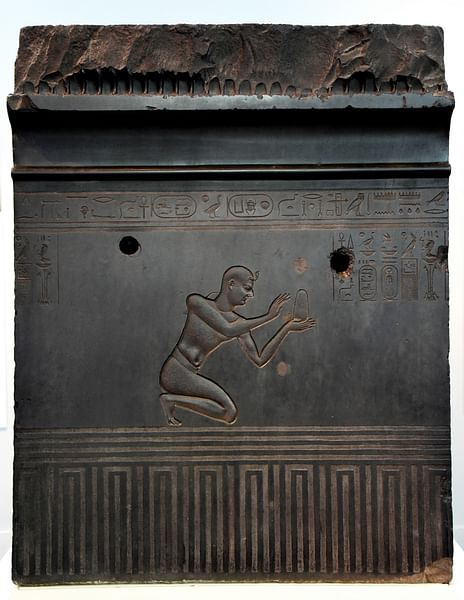
Nectanebo II, the last native Egyptian pharaoh, continued and even surpassed Nectanebo I’s legacy of monumental building projects, commissioning work at over 100 sites across Egypt. He strengthened the military, secured borders, and fostered economic prosperity through trade and alliances with Greek city-states. Under different circumstances, Nectanebo II might have been remembered as one of Egypt’s greatest rulers. However, in 343 BCE, Artaxerxes III (358-338 BCE) launched a formidable invasion, defeating Nectanebo II’s forces. The pharaoh fled south to Nubia, and Egypt once again fell under Persian dominion. Nectanebo II later became a figure of legend, even being incorporated into the "Alexander Romance" as the secret father of Alexander the Great – a testament to his enduring symbolic importance for Egyptian identity.
Second Persian Occupation: The 31st Dynasty (343-332 BCE)
The re-established Persian rule, encompassing Artaxerxes III, Artaxerxes IV (338-336 BCE), and Darius III (336-332 BCE), marked the 31st Dynasty. Like their predecessors, these Persian kings generally encouraged Egyptian culture and traditions, respecting local religious practices. The persistent Egyptian resistance, therefore, prompts questions beyond simple xenophobia. Scholars like Marc van de Mieroop suggest that revolts were often instigated by the Egyptian upper classes, who were dispossessed of their offices and influence by the Persian administration. These elites, sometimes with Libyan ancestry and regional connections, found fertile ground for rebellion among an populace burdened by Persian duties. Crucially, Greek city-states, particularly Athens, and Greek communities within Egypt (like the significant trade hub of Naucratis) actively supported and sometimes even instigated these revolts, driven by their own geopolitical rivalries with Persia and economic interests in an independent Egypt.
Cultural Resilience and Architectural Echoes
Despite the political turmoil and foreign occupations, Egyptian culture during the Late Period exhibited remarkable resilience and vitality. Far from being a period of cultural stagnation, it was a time of conscious revival, drawing inspiration from the glories of the Old and Middle Kingdoms.
Art and Architecture: Egyptian architecture of the Late Period deliberately echoed the grandeur of the past. While perhaps not boasting the sheer volume of monuments from earlier eras, the quality and artistic intent were profound. Pharaohs of the 30th Dynasty, in particular, left impressive legacies, such as Nectanebo I’s work at Philae and Karnak. A notable characteristic was a renewed allowance for individual artistic expression and regional variations, a departure from the more rigidly state-mandated artistic visions of some earlier periods. This led to the creation of more realistic statuary and exquisite craftsmanship in metals like gold, silver, and bronze.
Religion and Beliefs: Egyptian religious beliefs and elaborate burial rituals continued largely undisturbed, even under Persian rule. Contrary to the sensationalized claims of Greek writers like Herodotus, the Persians, in fact, often encouraged and patronized Egyptian religion. The Persian shahs understood the importance of respecting local deities to maintain order and legitimacy, frequently dedicating funds to Egyptian temples and honoring local gods. This continuity of religious practice was a cornerstone of Egyptian identity and a powerful force for cultural preservation throughout the Late Period.
The Dawn of a New Era: Alexander and the Hellenistic Period
The second Persian occupation of Egypt proved short-lived. To the west, Philip II of Macedon had unified the Greek city-states and laid the groundwork for a massive campaign against the Persian Empire. Following his assassination in 336 BCE, his son, Alexander the Great, inherited this ambition and the formidable military machine to realize it.
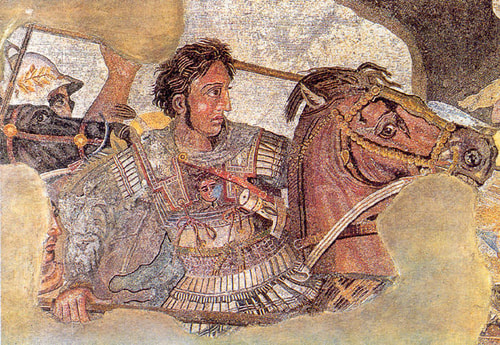
Alexander’s meteoric rise saw him defeat Darius III at the Battle of Issus in 333 BCE, conquer Syria, and then march into Egypt in 332 BCE. His arrival was largely welcomed by the Egyptians, who saw him as a liberator from Persian rule. Alexander established the iconic city of Alexandria at the ancient port of Rhakotis on the Mediterranean, meticulously laying out its plans before continuing his conquest of Persia. After being proclaimed a god at the Siwa Oasis, a significant act that legitimized his rule in Egyptian eyes, Alexander departed, leaving Egypt under the administration of his Macedonian officials.
Upon Alexander’s untimely death in 323 BCE, his vast empire was fractured among his generals, the Diadochi. Egypt fell to Ptolemy I Soter (323-285 BCE), who founded the Ptolemaic Dynasty. This dynasty, though Macedonian-Greek in origin, largely adopted the mantle of pharaohs, upholding ancient Egyptian rituals, traditions, and religious practices for nearly three centuries, until the coming of Rome.
Conclusion: The End of an Era, Not a Culture
The Late Period undeniably marks the end of indigenous Egyptian rule, a poignant conclusion to millennia of self-governance. However, it is a profound mischaracterization to view this era as simply a period of decline or a sad extension of a dying civilization. Instead, the Late Period emerges as a testament to the extraordinary resilience and enduring vitality of Egyptian culture.
The pharaohs of the 30th Dynasty, particularly Nectanebo I and Nectanebo II, stood as formidable leaders, defending their homeland with strategic brilliance and fostering a remarkable cultural revival. Their building projects, military successes, and commitment to Egyptian traditions demonstrated a powerful sense of nationalism and pride. Even under Persian rule, Egyptian cultural institutions, religious beliefs, and artistic expressions persisted and evolved, admired and often supported by the foreign overlords.
The Late Period served as a crucial bridge to the Hellenistic era, ensuring that the rich tapestry of Egyptian civilization, though now intertwined with Greek influences, remained intact. Its achievements and struggles laid the groundwork for the Ptolemaic period, where Egyptian culture continued to flourish and, through trade and intellectual exchange, diffused its enduring legacy across the ancient world. The Late Period, therefore, should be celebrated not as an ending, but as a vibrant chapter in Egypt’s long and illustrious history, a period of remarkable adaptation and steadfast identity that continues to inspire awe and fascination to this day.