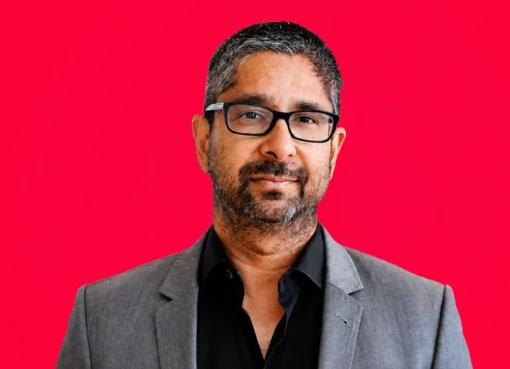
The Quiet Giant: Inside Insight Partners’ $90 Billion Strategy for the AI Era
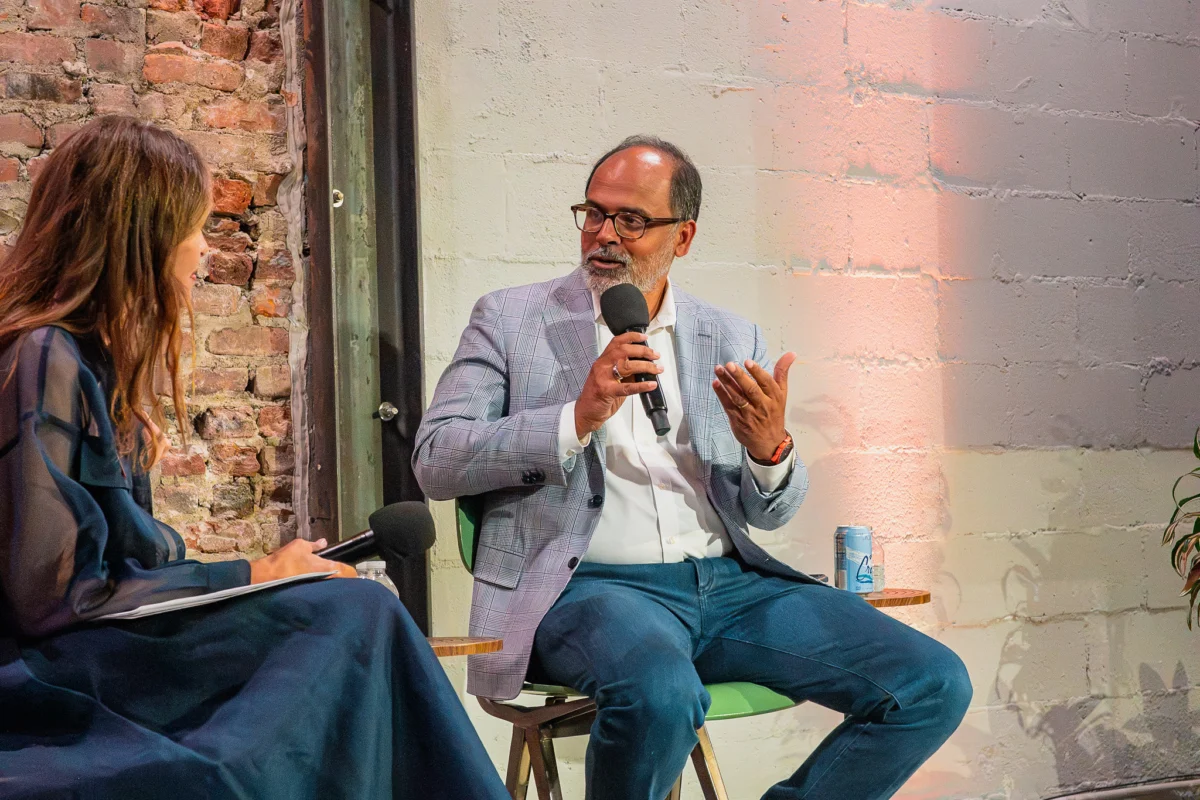
In an industry often defined by the "loudness" of its participants—venture capitalists who frequent podcasts, maintain provocative X (formerly Twitter) personas, and position themselves as geopolitical or epidemiological experts—Insight Partners remains a notable outlier. Managing Director Devin Parekh, who has co-helmed the firm for 26 years, prefers a different approach: letting a $90 billion portfolio do the talking.
During a recent appearance at TechCrunch’s StrictlyVC event in New York, Parekh provided a rare, candid glimpse into the inner workings of one of the world’s most powerful investment engines. From the firm’s stake in generative AI leaders like OpenAI and Anthropic to the mechanics of returning $20 billion to limited partners (LPs) in a frozen exit market, Parekh’s insights offer a blueprint for navigating the "frothy" second wave of the AI revolution.
Main Facts: The Insight Partners Profile
Insight Partners is currently operating out of its 13th flagship fund, managing approximately $90 billion in assets. Unlike "pure-play" venture firms, Insight operates across the entire corporate lifecycle, including early-stage venture, growth equity, buyouts, and secondaries.
The firm’s recent track record is dominated by high-stakes bets on the "Frontier AI" landscape. It holds significant positions in:
- Databricks: The data and AI powerhouse where Insight has led or co-led multiple rounds.
- OpenAI & Anthropic: The two primary rivals in the Large Language Model (LLM) race.
- Wiz: The cloud security unicorn that recently turned down a $23 billion acquisition offer from Google.
- Armis: A cybersecurity firm that Insight eventually acquired and later sold to ServiceNow for $7 billion.
Despite these "heavyweight" wins, Parekh notes that the firm is currently pivoting toward earlier-stage investments to hedge against rising valuations that mirror the unsustainable peaks of 2021.
Chronology: From Software Buyouts to the AI Gold Rush
To understand Insight’s current positioning, one must look at the firm’s temporal evolution. For over two decades, Insight was synonymous with the rise of SaaS (Software as a Service). However, the macroeconomic shifts of the last three years have forced a tactical realignment.
The 2021 Peak and the Hangover
In 2021, the venture market reached a fever pitch. Valuations were untethered from revenue multiples, and capital was cheap. Parekh acknowledges that while many firms—including Insight—deployed heavily during this window, the subsequent market correction in 2022 and 2023 served as a "reality check." Many investments from that era went "nowhere for three or four years," waiting for product-market fit or a more hospitable exit environment.
The 2024 Pivot: Going Early to Lower Risk
Currently, Parekh observes a "concerning" trend: valuations are rising at a pace reminiscent of 2021, but without the incremental data typically required to justify such hikes.
"Normally, a follow-on round means more data, so you pay a higher price for lower risk," Parekh explained. "Right now, rounds move so fast there’s almost no incremental data, so you’re paying more without reducing risk."
In response, Insight has shifted its focus to earlier stages. By writing $20 million to $25 million checks instead of $500 million checks, the firm can secure a seat at the table and "double down" as winners emerge, as they did with Wiz.
Supporting Data: The Metrics of Venture Success
Parekh emphasizes that in the current high-interest-rate environment, the most important metric for a VC firm isn’t "paper gains" (TVPI), but DPI (Distributed to Paid-In Capital)—the actual cash returned to investors.
Liquidity and Returns
- $20 Billion: The amount Insight Partners has returned to its LPs over the last two years through strategic sales and IPOs.
- $7 Billion: The exit value of Armis, a company where Insight initially took a small $5 million stake to maintain a relationship before buying out the entire cap table.
- The "Concentration" Warning: While some firms are pitching funds where 40% of the capital goes into a single AI lab (like Anthropic), Insight maintains a diversified strategy. Parekh argues that while concentration can lead to outsized wins (as seen with Founders Fund or Thrive), historical data over ten-fund cycles favors diversification.
The Cost of the "Frontier"
The capital requirements for AI labs are unprecedented. OpenAI and Anthropic raised roughly 50% of all venture dollars in the first half of 2024. These companies are now raising sums between $30 billion and $100 billion, a scale that has fundamentally changed the rules of VC exclusivity.
Official Responses: Insights from Devin Parekh
During the interview, Parekh addressed several of the most pressing debates in the technology sector today.
On AI Risk vs. Reward
The week was dominated by news of an Anthropic researcher resigning over fears of "self-improving AI." Parekh, however, remains a pragmatic optimist.
"Sure, there’s a risk some non-state actor gets access to an open-source model and creates a biological weapon," Parekh admitted. "But there’s an even higher probability we get a massive decrease in the time it takes to develop new drugs and cure diseases. I’ll take that bet."
He cited his work with NYU Langone, where AI is already analyzing 50 million patient records to predict heart attacks with 25% accuracy in patients who show no symptoms. For Parekh, the "net-net" of AI is overwhelmingly positive, especially as an aging global population faces a shortage of medical professionals.
On Investing in Competitors (OpenAI and Anthropic)
Historically, investing in direct rivals was a "taboo" in venture capital. Insight, however, holds stakes in both leading AI labs. Parekh explained that at the growth stage, the dynamics change.
"Once you’re at a later stage, off the board, not driving governance, you’re just buying a great stock," he said. He noted that as these companies require tens of billions of dollars, they can no longer dictate exclusivity to their investors. However, at the Series A and B stages, Insight still adheres to strict information-sharing restrictions and avoids investing in direct overlaps.
On Geographic Talent Density
While many argue that Silicon Valley has regained its total monopoly on tech talent due to AI, Parekh sees a more nuanced, "flat" world. While "AI infrastructure" talent is heavily concentrated in San Francisco, "Vertical AI" (AI applied to specific industries like law or finance) is more dispersed.
- New York: Remains the hub for Fintech AI (e.g., Ramp).
- Stockholm: The home of Legora, a buzzy legal-tech company Insight recently lost to General Catalyst.
Implications: The Road Ahead for the VC Ecosystem
Parekh’s commentary signals several shifts that will define the next 18 months of the technology economy.
1. The Looming "Trillion-Dollar" IPO Wave
The industry is bracing for a massive liquidity event. Parekh predicts that SpaceX, OpenAI, and Anthropic could all go public within a six-to-eight-month window, each potentially sporting a valuation north of $1 trillion.
However, he warns that these "mega-IPOs" may not solve the problems of the "middle class" of startups. Public market investors, accustomed to the "zero to $65 billion in four years" growth of AI labs, may find traditional 10x growth rates less exciting. This could create a "valuation bar" that is difficult for smaller SaaS companies to clear.
2. The Return of the "DPI" Mandate
LPs are increasingly frustrated with "locked-up" capital. Parekh’s advice to emerging managers is clear: "Take your basis out." Even if a company like Anthropic is expected to triple again, returning the initial investment to LPs is essential for raising the next fund. The era of "staying private longer" is being challenged by the fundamental need for cash distributions.
3. The "Physical AI" Skepticism
Despite the hype surrounding humanoid robots and physical intelligence, Insight remains cautious. Parekh views the sector as still being in the "science project" phase. Investing in physical AI requires two bets: one on the technology itself, and another on the timing of mass robotics adoption. For a firm focused on software-like scale, the "physical" world remains a watch-and-see territory.
4. The 2021 Echo Chamber
Perhaps the most significant implication of Parekh’s talk is the warning of a recurring bubble. With venture-growth funds of $6 billion to $10 billion now becoming common, the "boom-bust" cycle is accelerating. As valuations outpace data, the risk of a secondary correction looms.
Conclusion
Devin Parekh and Insight Partners represent the "institutional" side of venture capital—calculated, diversified, and focused on the long-term mechanics of fund management over the short-term noise of social media. As the AI era enters its most capital-intensive phase, Insight’s strategy of "going early" while "taking basis out" of late-stage winners may become the standard for surviving the next market correction. In Parekh’s view, the world will continue to raise its living standards through technology, but for the investors funding that progress, the math must eventually work.