The Shenzhen Unicorn in Silicon Valley: How Even Realities is Disrupting the Smart Glasses Market
The landscape of wearable technology is undergoing a seismic shift, marked by the emergence of a new titan from the East that is paradoxically finding its strongest footing in the West. Even Realities, a Shenzhen-based startup, has officially crossed the threshold into "unicorn" territory with a valuation exceeding $1 billion. While the financial milestone is significant, the most compelling aspect of the company’s rise is its strategic positioning: a Chinese-backed hardware firm that has successfully captured the attention of the American consumer and developer ecosystem, directly challenging Meta Platforms Inc. on its home turf.
As the smart glasses market transitions from a niche enthusiast category to a mainstream consumer necessity, Even Realities is carving out a unique identity. By eschewing the controversial "camera-first" approach favored by industry leaders, the company is betting on a privacy-centric, utility-focused future. This strategy has not only secured its billion-dollar valuation but has also ignited a high-stakes hardware race between Silicon Valley’s software-driven giants and Shenzhen’s agile manufacturing powerhouses.
Main Facts: A Transpacific Powerhouse
Even Realities represents a new breed of technology company—one that utilizes the unparalleled manufacturing speed of Shenzhen while tailoring its brand identity and user experience for a Western audience. Despite its roots and capital origin, the company’s footprint is decidedly global, with a focus that skips its domestic market in favor of more mature wearable ecosystems.
The $1 Billion Milestone
The recent funding rounds, led primarily by Chinese venture capital firms and industrial backers, have propelled Even Realities to a $1 billion valuation. This puts it in an elite group of augmented reality (AR) and smart glasses startups, alongside players like Rokid and RayNeo. However, unlike its peers, Even Realities has achieved this scale without a dominant presence in the Chinese consumer market.
The American Stronghold
In a surprising reversal of traditional tech expansion patterns, more than 50% of Even Realities’ active user base resides in the United States. Even more striking is the developer engagement: approximately 80% of the company’s developer community—the individuals building the apps and integrations that give the hardware value—is based in the U.S. This gives the company a "home-field advantage" in the very market Meta currently dominates.
Product Philosophy: The G2 Strategy
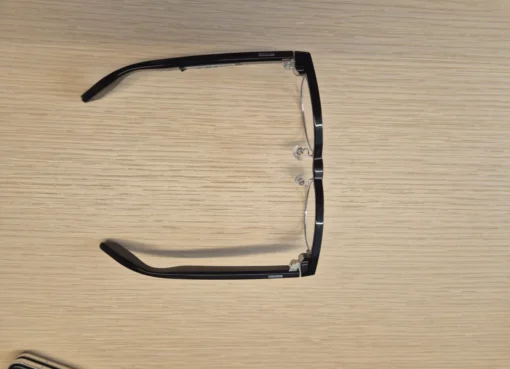
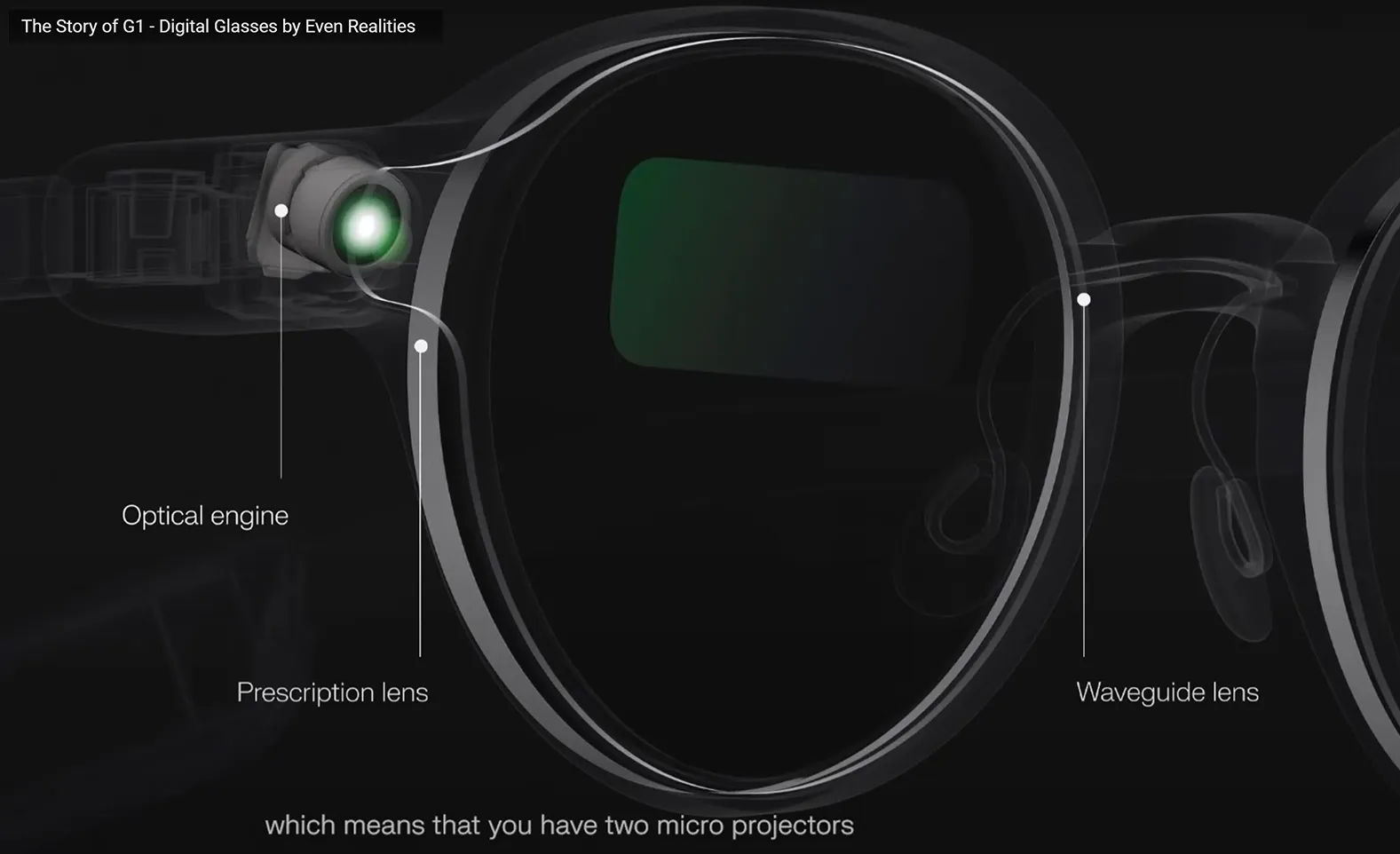
The flagship product, the G2 smart glasses, stands in stark contrast to the Ray-Ban Meta glasses. While Meta emphasizes content creation via integrated cameras, the G2 is strictly camera-free. It focuses on a sophisticated heads-up display (HUD) that delivers real-time notifications, turn-by-turn navigation, live translation, and AI-driven prompts directly to the user’s field of vision. This "privacy-first" hardware design is specifically tailored to professional and social environments where cameras are often viewed with suspicion.
Chronology: From Concept to Unicorn
The trajectory of Even Realities reflects the broader acceleration of the AI-wearable market over the last three years.

- 2023: The Foundation: Even Realities was established in Shenzhen, leveraging the city’s dense supply chain of micro-LED displays and optical waveguides. The founding team sought to solve the "creepiness factor" that had plagued smart glasses since the days of Google Glass.
- 2024: The Pivot to AI: As Large Language Models (LLMs) began to proliferate, the company integrated "Even AI," a proprietary interface that allows the glasses to act as a visual assistant. Unlike voice-only assistants, the G2 began testing visual overlays for data.
- 2025: Global Launch and Traction: The G2 was released in the U.S., Japan, and Europe. While initial expectations were modest, the "camera-free" marketing resonated with corporate users and privacy-conscious tech enthusiasts. By mid-2025, the developer SDK (Software Development Kit) saw a surge in American registrations.
- Q1 2026: The Market Explosion: According to IDC data, the global smart glasses market grew by 167% year-over-year in the first quarter of 2026. Even Realities capitalized on this momentum, securing the funding necessary to reach its $1 billion valuation just as shipments hit record highs.
- Present Day: Even Realities is now scaling production to meet demand in the Middle East and South Korea, while simultaneously preparing its next-generation "R1" input ring to complement the G2 glasses.
Supporting Data: The Smart Glasses Boom
The rise of Even Realities is not an isolated event but a symptom of a rapidly expanding market. As smartphones reach a plateau of innovation, "the face" has become the next frontier for computing.
Market Share and Shipments
According to IDC estimates for Q1 2026:
- Total Global Shipments: 2.25 million units (a 167% increase from Q1 2025).
- Meta’s Dominance: Meta Platforms holds approximately 70% of the global market share, largely driven by the Ray-Ban Meta collaboration.
- The Growth Gap: While Meta leads in volume, startups like Even Realities are seeing the highest percentage of growth in the "display-enabled" sub-segment, as opposed to "audio-only" or "camera-only" glasses.
Pricing and Positioning
The economics of Even Realities suggest a premium positioning:
- Base Price: The G2 starts at $599.
- Total Cost of Ownership: When factoring in prescription lens customization and the optional R1 navigation ring, the price often approaches or exceeds $1,000.
- Comparison: This is significantly higher than the $299 entry point for Ray-Ban Meta glasses, indicating that Even Realities is targeting a more professional or "prosumer" demographic that values utility and privacy over social media integration.
Official Responses and Strategic Vision
While Even Realities maintains a lean public relations profile, company leadership and industry analysts have provided insights into the firm’s long-term roadmap.
The Privacy Mandate
In previous communiqués, Even Realities executives have emphasized that the lack of a camera is a "feature, not a limitation." By removing the camera, they eliminate the social friction associated with wearables. "Our goal is to enhance the wearer’s reality, not to record the reality of everyone around them," a company spokesperson noted during a recent tech symposium. This stance has allowed them to enter offices, hospitals, and secure facilities where Meta’s glasses are often banned.
Investor Perspectives
Backers from the Shenzhen venture circuit have expressed that Even Realities serves as a "bridge" company. By using Chinese manufacturing efficiencies to build products for the American market, they are bypassing the saturated and hyper-competitive domestic Chinese market. Investors see the 80% U.S. developer base as a "moat" that prevents other Chinese startups from easily replicating Even’s success in the West.
Analyst Outlook
Market analysts at IDC and Canalys suggest that the "China vs. Meta" narrative will define the next three years. "Meta has the brand and the social graph, but the Chinese ecosystem—represented by Even Realities, Rokid, and RayNeo—has the hardware agility," says senior analyst Marcus Chen. "The fact that Even Realities is a unicorn with a majority-US user base proves that American consumers are willing to adopt Chinese hardware if the privacy and utility propositions are right."

Implications: The Future of Ambient Computing
The success of Even Realities carries profound implications for the tech industry, geopolitics, and the nature of human-computer interaction.
1. The Geopolitics of Hardware
Even Realities is navigating a complex geopolitical landscape. By maintaining a high-profile presence in the U.S. while being funded and manufactured in China, the company faces potential regulatory scrutiny. However, its "camera-free" design may actually serve as a shield against the data-collection concerns that have plagued companies like TikTok. If Even Realities can maintain its status as a "neutral" utility tool, it may avoid the brunt of tech-sector trade tensions.
2. The Death of the Screen?
The G2’s focus on navigation and translation points toward a future of "ambient computing." In this world, the smartphone remains in the pocket, and the "interface" exists only when needed. If Even Realities continues to attract developers, we may see a shift where the most important apps are no longer icons on a screen, but "layers" on the world.
3. The Challenge of Scale
Despite its unicorn status, Even Realities faces a monumental challenge: Meta’s sheer scale. Meta has the capital to subsidize its hardware, a massive distribution network through EssilorLuxottica (Ray-Ban), and a direct line to billions of users via Instagram and WhatsApp. For Even Realities to survive, it must transform from a hardware startup into a platform. This requires the $1 billion valuation to be converted into a robust software ecosystem that makes the $1,000 price tag feel like an investment rather than a luxury.
4. The "Social Acceptability" Benchmark
Even Realities is conducting a massive social experiment. Can smart glasses become as common as wristwatches? By making their glasses look indistinguishable from standard eyewear and removing the "record" light, they are betting that "invisibility" is the key to mass adoption. If they succeed, they will have provided the blueprint for the next generation of consumer electronics.
Conclusion
Even Realities has achieved what few startups manage: it has become a billion-dollar entity by solving a problem the industry giants ignored. By prioritizing the privacy of the bystander and the utility of the wearer, it has found a home in the American market that transcends its geographical origins. As 2026 progresses, the battle for the "prime real estate" of the human face will only intensify. Whether Even Realities remains a dominant force or is eventually eclipsed by the combined might of Meta, Samsung, and Apple, its rise marks the definitive start of the AR era—an era where Shenzhen’s factories and Silicon Valley’s developers are inextricably linked.