The Shifting Sands of Service: Military Recruitment, Culture, and the Evolving American Psyche
Introduction: A New Era for Military Storytelling
In a candid and insightful discussion, veterans Jonathan and Bryan delve into the complex and evolving landscape of American military culture, recruitment trends, and the profound impact these shifts have on storytelling and public perception. Their conversation, framed by recent geopolitical events and significant changes within the U.S. military, offers a nuanced perspective for authors seeking to portray military characters and themes with authenticity and depth. This article expands upon their insights, providing a comprehensive overview of the current state of military recruitment, its historical context, and the implications for both service members and those who seek to represent them in fiction.
The State of U.S. Military Recruitment: A Resurgent Force
Recent years have witnessed a remarkable turnaround in U.S. military recruitment, a stark contrast to the challenges faced in the early to mid-2020s. Following significant shortfalls, particularly within the Army, which missed its FY2022 and FY2023 goals by substantial margins, all branches have since met or exceeded their targets. This resurgence, which began in the later years of the Biden administration and has continued under the Trump administration, is attributed to a confluence of factors, including enhanced recruitment strategies, improved compensation and bonuses, and a renewed sense of national purpose, potentially amplified by recent geopolitical tensions.
Biden Administration Context (FY2022-FY2024): Navigating the Downturn
The period between Fiscal Year 2022 and FY2024 presented a challenging recruitment environment. The Army, in particular, struggled to meet its accession goals, falling short by approximately 15,000 recruits in one year. The Navy and Air Force also experienced difficulties, with overall recruitment numbers reaching multi-year lows. This decline was largely attributed to the lingering perceptions following the withdrawal from Afghanistan, prevailing economic conditions, and a shrinking pool of eligible recruits.
However, FY2024 marked a significant turning point. Defense Department data indicates a robust rebound, with total accessions increasing by roughly 12.5% from approximately 200,000 in the prior year to around 225,000. This upswing, predating the 2024 election, was bolstered by improvements in preparatory programs, strategic adjustments to recruitment incentives, and a foundational shift in outreach efforts that commenced prior to the transition.
Trump Administration (FY2025-FY2026): A Golden Age of Enlistment
The Trump administration has overseen what is described as the best recruiting period in over 15 years. FY2025 saw all branches surpassing their targets: the Army achieved 101.72% of its goal, the Navy 108.61%, the Air Force 100.22%, and the Space Force 102.89%. The Marines met their goal precisely. This success has continued into FY2026, with branches meeting and even exceeding newly raised targets. The Navy, for instance, reached its goal three months ahead of schedule, with a 10% increase in its target.
Key drivers behind this exceptional performance include foundational improvements in pay and bonuses, the effectiveness of the Future Soldier Prep Course, and a renewed emphasis on a "warrior ethos." Additionally, a reduced focus on diversity initiatives, leadership changes, and a perceived surge in patriotism, coupled with favorable economic indicators, have all contributed to the strong recruitment numbers.
Impact of the 2026 Iran War: A Catalyst for Patriotism?
While direct, quantifiable data linking the early 2026 Iran War to recruitment spikes remains limited, the conflict’s emergence amidst heightened U.S.-Iran tensions has coincided with sustained recruitment strength. There has been no evidence of a significant negative impact on enlistment numbers; in fact, some analyses suggest that demonstrated military action and a messaging emphasis on "strength" may have contributed to the robust figures observed through July 2026.
Implications for Authors: Geopolitical events of this nature can significantly influence the market for defense-related literature. Thriller genres, policy analysis books, and historical accounts of conflict often see increased demand. Monitoring official Department of Defense reports can provide authors with timely data and insights into the evolving national security landscape.
The Fading Echo of "Thank You for Your Service": Shifting Public Perceptions
Jonathan’s observation that the ubiquitous "Thank You for Your Service" sentiment may be waning reflects a subtle but significant shift in how the American public views military personnel. While once a universal expression of gratitude, this phrase has become more complex and, at times, politically charged.
The once-unquestioned appreciation for service is now, according to Jonathan, subject to an individual’s political leanings and perceptions of current military engagements and leadership. This segmentation means that the simple act of saying "thank you" can be awkward, as the speaker may have no understanding of the service member’s specific role or the context of their service. The backlash against certain military actions, such as the deployment of the National Guard or the association of the military with a controversial commander-in-chief, has contributed to this fragmentation.
The distinction between genuine appreciation and a performative gesture is increasingly apparent. Jonathan notes that the phrase is sometimes used indiscriminately, even towards individuals not in uniform, highlighting a dilution of its original intent. This suggests a departure from a unified national sentiment towards a more nuanced and divided public discourse regarding military service.
Deconstructing Military Cultures: The Branch Divide
A core tenet of Jonathan and Bryan’s discussion is the profound cultural divide that exists between civilian American society and the distinct warrior cultures within each branch of the military. This divergence is not merely superficial; it shapes the very identity, ethos, and operational priorities of service members.
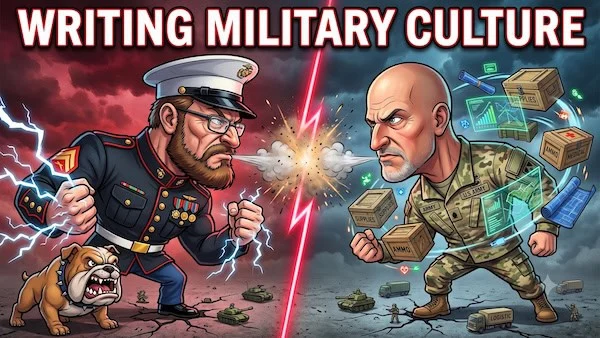
The Marine Corps: Aggression and Elite Forerunners
Jonathan, a former Marine, characterizes the Marine Corps culture as one of hyper-aggression, a willingness to make difficult decisions, and an unparalleled capacity for destruction. This culture, he asserts, is forged by the demanding nature of their mission: to be the initial shock force, to "eat stuff" – a euphemism for confronting and neutralizing threats – and then to withdraw, leaving the stabilization and rebuilding efforts to other branches.
Bryan humorously, yet pointedly, refers to Marines as "cannon fodder," the vanguard designed to absorb initial enemy fire before the Army advances. Jonathan embraces this descriptor, likening Marines to "rocks they load into catapults" or "meat shields," emphasizing their role as the tip of the spear, designed to break enemy defenses. He cites Okinawa as an example of the enduring impact of Marine Corps presence and culture.
Jonathan’s personal commitment to his Marine identity is evident in his purchase of a boot camp graduation ring over a high school class ring, symbolizing the profound formative impact of military service. His analogy of being a "man of two rings" – one for his wedding and one for his boot camp – illustrates the deeply ingrained duality of his life: a devoted protector of his loved ones and a formidable adversary to those who threaten them. This fierce protectiveness, he notes, can even unnerve fellow Marines when directed towards his wife.
The Army: Infrastructure, Logistics, and Strategic Sustainment
In contrast, Jonathan describes the Army’s culture as focused on infrastructure, maintenance, and protection, often leaving him questioning their perceived lack of aggressive forward momentum. His brother-in-law, an Army Explosive Ordnance Disposal (EOD) technician, corroborates this, noting the Army’s role in observing and supporting Marine operations.
Bryan, an Army veteran and former acquisition officer, elaborates on the Army’s crucial role in logistics – the "beans and bullets" that sustain prolonged combat operations. He recounts the development and widespread deployment of MRAP (Mine-Resistant Ambush Protected) vehicles in Iraq. While Marines initially pioneered the use of these vehicles, the Army, through its acquisition programs, scaled up production exponentially, demonstrating its capacity for systematic implementation and large-scale logistical feats. This highlights a symbiotic relationship where Marines test and prove concepts, and the Army refines and implements them on a grander scale.
The Air Force: A Culture of Precision and Support
While not detailed in extensive anecdotes, Jonathan and Bryan acknowledge the Air Force as possessing its own distinct culture, yet sharing common elements with other branches, particularly a core value on leadership. The nuances of how this leadership is expressed across branches can significantly influence the portrayal of characters in military narratives.
A Historical Arc: From Vietnam’s Shadow to GWOT’s Embrace
The perception and role of the U.S. military in American society have undergone significant transformations over the decades, influencing recruitment, public sentiment, and the very definition of service.
The Vietnam Era: A Nation Divided
The Vietnam War cast a long shadow over the military, leading to a period of public distrust and alienation. Service members returning from the conflict faced widespread disapproval, with many experiencing ostracism and disrespect. This era marked a low point in public perception, deeply impacting the military’s standing.
The Gulf War Resurgence: A Swift Victory and Renewed Pride
The decisive victory in the Gulf War, often referred to as Operation Desert Storm, marked a significant resurgence in national pride and support for the military. The swift and overwhelming defeat of Iraq’s military fostered a sense of national accomplishment and reinvigorated public admiration for service members. Recruitment numbers saw a corresponding increase during this period.
The Global War on Terror (GWOT): The Rise of "Thank You for Your Service" Culture
The post-9/11 era and the subsequent Global War on Terror ushered in a profound shift in public sentiment. The widespread acts of terrorism and the nation’s response led to an unprecedented outpouring of gratitude and support for military personnel. The "Thank You for Your Service" culture became deeply embedded in American society, fostering a period of increased benefits, improved disability programs, and the implementation of the Post-9/11 GI Bill, which significantly enhanced post-service career opportunities.
Pre-COVID Era: Adventure and Opportunity
Prior to the COVID-19 pandemic, the military attracted a demographic seeking adventure and opportunity. In a geographically secure nation, insulated from direct invasion, the military offered a unique avenue for young men to experience challenging environments and test their mettle. The GWOT era also provided service members with tangible benefits that improved their families’ economic standing, including access to home loans and higher education, making military service a pathway for upward mobility for many from working-class backgrounds.
The COVID-19 Pandemic and Its Fallout: Principle, Mandates, and "Woke" Culture
The COVID-19 pandemic introduced a new set of challenges and cultural shifts within the military. Mandatory vaccination policies led to the separation of many principled service members who refused the vaccine, impacting the quality and ethos of recruits. Jonathan highlights the case of a friend ejected from the Air Force for refusing vaccination, underscoring the principle of individual conscience clashing with military directives. This, he argues, reduced the number of principled individuals within the ranks.
Bryan adds that the vaccine mandate not only pushed out existing service members but also deterred potential recruits who were unwilling to accept mandated medical interventions. He cites his stepson, a Marine hopeful, who, disillusioned by the vaccine mandate and what he perceived as a "woke culture," ultimately abandoned his aspirations, representing a loss of potentially dedicated and capable individuals.
Furthermore, the perception of a weak commander-in-chief during the Biden administration, Jonathan suggests, deterred adventurous young men seeking strength and leadership, leading to an influx of recruits primarily motivated by benefits rather than a commitment to service.
Bryan expresses strong disapproval of military policies that he views as misaligned with core military values, such as gender affirmation surgeries being covered by military healthcare. He argues that these elective procedures, costing tens of thousands of dollars, were accessible through enlistment, drawing individuals seeking such procedures rather than those committed to national defense. Jonathan echoes this sentiment, recounting his own struggle to obtain elective LASIK surgery due to mission-critical duties, while a less effective colleague was approved, highlighting a perceived distortion of priorities.
The Erosion of "Be All You Can Be": Shifting Slogans and Values
The evolution of Army recruitment slogans reflects a broader cultural shift away from collective identity and towards individualism, and a subsequent, sometimes awkward, re-emphasis on traditional values.
From Collective Identity to Individualism
Jonathan recalls the iconic Army slogan "Be All That You Can Be," which resonated for decades, embodying a promise of personal growth and fulfillment through service. This was followed by "An Army of One," a slogan Jonathan critiques for its emphasis on individualism, arguing that military service is fundamentally a team endeavor. The proliferation of subsequent slogans, including "Army Strong," further illustrates this trend towards more abstract and potentially less impactful messaging.
Bryan points to a similar ideological shift at West Point, where the mission statement was altered from preparing leaders to "lead people into combat and defend our country" to the more generalized "Producing leaders for our country." He argues that this dilution of focus dilutes the purpose of military academies, suggesting that institutions like Harvard or Yale are more appropriate for general leadership training.
The Rebranding of War: "Department of War" and the Return to Winning
Jonathan notes the strategic rebranding of the Department of Defense to the "Department of War" under Secretary Pete Hegseth as a significant factor in revitalizing recruitment. This shift, he suggests, appeals to individuals drawn to the concept of actively engaging in and winning conflicts, aligning with a more traditional and assertive national security posture. Bryan adds that this change represents a return to the original nomenclature, emphasizing a renewed focus on combat readiness.
The Corrosive Influence of "Zero-Defect" Culture
A critical element discussed is the pervasive "zero-defect culture" that has infiltrated military leadership, profoundly impacting decision-making, risk assessment, and the very essence of effective command.
The Culture of Blame Avoidance
Bryan, a former Army officer, explains that the constant pressure to receive "top block" ratings on Officer Evaluation Reports (OERs) has created an environment where mistakes are perceived as career-ending. This leads to a culture of deflection and blame-shifting, where officers avoid accountability by attributing failures to subordinates. Jonathan succinctly summarizes this as "take the credit, pass the blame," a stark antithesis of true leadership.
This culture incentivizes risk aversion, discouraging the bold decision-making essential for military success. Jonathan illustrates this with the example of a machine gun nest hindering supply lines. A risk-averse lieutenant, prioritizing a clean OER, might hesitate to engage, thereby jeopardizing critical missions.
The "Up or Out" Dilemma and Risk Aversion
The "up or out" policy, which mandates promotion or separation, further exacerbates this issue. It pressures individuals into leadership roles, even if their strengths lie elsewhere, and discourages the calculated risk-taking inherent in military operations. Bryan highlights that in the past, service members could remain in roles aligned with their expertise without the imperative to ascend into leadership, fostering a more diverse and skilled force.
The Officer’s Crucible: Learning from Loss
Jonathan introduces the concept of an officer’s "crucible" – the moment of losing a subordinate. He argues that true leadership is forged not through academic success or aggressive self-promotion, but through the painful experience of commanding and, inevitably, losing service members. This experience, he contends, forces officers to temper their ambition with a profound understanding of the human cost of war.
He contrasts the competitive "shark tank" environment of military academies, where early success is paramount, with the sobering reality of command. This realization can either lead to a zero-defect mentality, driven by ego and fear of reprisal, or foster genuine leadership, characterized by a nuanced assessment of risk and a deep commitment to troop welfare.
Bryan recommends the film Young Washington as a compelling portrayal of this transformative leadership journey, where initial ambition gives way to a profound sense of responsibility for one’s men.
The Dichotomy of Mission and Career
The conflict between mission accomplishment and career advancement is a central theme. Jonathan shares an anecdote about a captain who, to enhance his OER, mandated a mental health seminar for exhausted Marines who had just completed an overnight shift. This prioritization of personal gain over troop welfare exemplifies the destructive impact of a zero-defect culture.
Bryan further illustrates this by describing how a single incident, like someone tripping, can lead to mandatory, often redundant, training for everyone, driven by a need to mitigate any potential risk, however minor. This compliance-driven approach stifles initiative and creates an environment of constant, often meaningless, activity.
The Path to Cultural Change: Reinstilling Patriotism and Purpose
Changing military culture is a long and complex process, requiring sustained effort and a fundamental shift in priorities.
The Role of Leadership and Rebranding
Bryan argues that significant cultural shifts are driven by leadership at the highest levels. He points to the eight years of the Obama administration as a period where individuals shaped by a particular cultural ethos ascended into senior leadership positions. The Trump administration, in his view, took decisive action to remove this cadre and reorient the military towards a more traditional sense of patriotism and national purpose. This involves fostering a belief in the inherent goodness of the country, founded on principles of honesty and freedom.
Disillusionment and the Soldier’s Psyche
Disillusionment is identified as a potent tool for character development in military narratives. Jonathan explains that many service members, despite contributing to positive outcomes like educating girls in Afghanistan, become disillusioned by the perceived futility of their efforts, particularly when interventions are undone by subsequent political decisions. This sense of meaninglessness can have a devastating impact on morale and mental well-being.
Bryan highlights the abandonment of Afghan allies as a particularly egregious example of this disillusionment, where promises of support were broken, leading to tragic consequences for those who had aided the U.S. military. This sense of betrayal, coupled with the perceived pointlessness of their sacrifices, can lead to anger, despair, and a decline in mental health.
Reclaiming the Narrative: Inspiring Hope and Resilience
Jonathan advocates for authors to counter this narrative of disillusionment by creating characters who embody courage, resilience, and a commitment to core values. He emphasizes the importance of vindicating the ideals of young service members, rather than crushing them under the weight of bureaucratic indifference or flawed leadership.
He posits that military culture is, in part, shaped by popular culture. The language, attitudes, and even the perceived acceptance of swearing within the military have been influenced by portrayals in film and television. Therefore, authentic and responsible storytelling is crucial in shaping both internal military culture and public perception.
Crafting Authentic Military Characters: Lessons for Authors
The insights gleaned from Jonathan and Bryan’s discussion offer invaluable guidance for authors seeking to portray military characters with accuracy and nuance.
Beyond the "Mwah-Ha-Ha" Villain
Jonathan stresses that military antagonists are rarely motivated by pure malice. Instead, their "bad guy" actions often stem from a complex interplay of ambition, flawed reasoning, and compromises made within a system that prioritizes career advancement over ethical conduct. The "zero-defect culture" and the pursuit of a clean OER can lead individuals to make decisions that are detrimental to the mission and the well-being of their troops.
The Power of Direct Experience
Bryan strongly advises authors to seek out and interview veterans. He notes that while individuals may filter their experiences in one-on-one conversations, placing them in a group setting with fellow veterans often leads to more candid and unvarnished accounts. This direct engagement is crucial for capturing the authentic voice and lived experience of military personnel.
Preserving the Legacy of Past Generations
Both Jonathan and Bryan emphasize the urgency of documenting the stories of veterans, particularly those from World War II, who are rapidly disappearing. These personal narratives are not only vital historical records but also invaluable resources for understanding the enduring impact of military service and the evolution of American culture.
Conclusion: The Enduring Importance of Authentic Storytelling
The landscape of American military culture is dynamic and complex, shaped by historical events, geopolitical realities, and evolving societal values. Jonathan and Bryan’s candid exchange underscores the critical role that authentic storytelling plays in shaping public perception and informing the experiences of those who serve. By delving into the intricacies of military recruitment, the distinct cultures of each branch, the corrosive effects of flawed leadership, and the profound psychological impact of service, authors can create characters and narratives that resonate with truth, offering both a mirror to the present and a guide for the future. The stories we tell about our military not only reflect our nation’s values but also have the power to inspire, to educate, and to preserve the legacies of those who have answered the call to duty.