The Silence of the Satluj: The Turbulent Journey of Honey Trehan’s Forbidden Masterpiece
The struggle to document history is often as fraught with peril as the history itself. In the case of Honey Trehan’s latest cinematic endeavor, Satluj—originally titled Punjab ’95—the narrative of the film has become inextricably linked with its own suppression. A poignant, hagiographic exploration of the life of Sikh human rights activist Jaswant Singh Khalra, the film has emerged as a lightning rod for controversy, navigating a labyrinth of state censorship, international festival withdrawals, and a disappearing digital release.
As it stands, Satluj is more than a biographical drama; it is a testament to the enduring sensitivity surrounding the events in Punjab during the 1980s and 90s. By chronicling Khalra’s investigation into extrajudicial killings and the "disappeared" youth of the state, Trehan has created a work that the Indian establishment appears remarkably hesitant to let the public see.
Main Facts: A Story of Truth and its Suppression
At its core, Satluj is a 164-minute biographical drama centered on Jaswant Singh Khalra, a bank manager turned activist who uncovered a systematic state-sponsored machinery of violence. In the early 1990s, Khalra discovered that the Punjab Police had been abducted, murdered, and illegally cremated thousands of Sikh men, labeling them as "unidentified" or "terrorists" to bypass legal scrutiny.
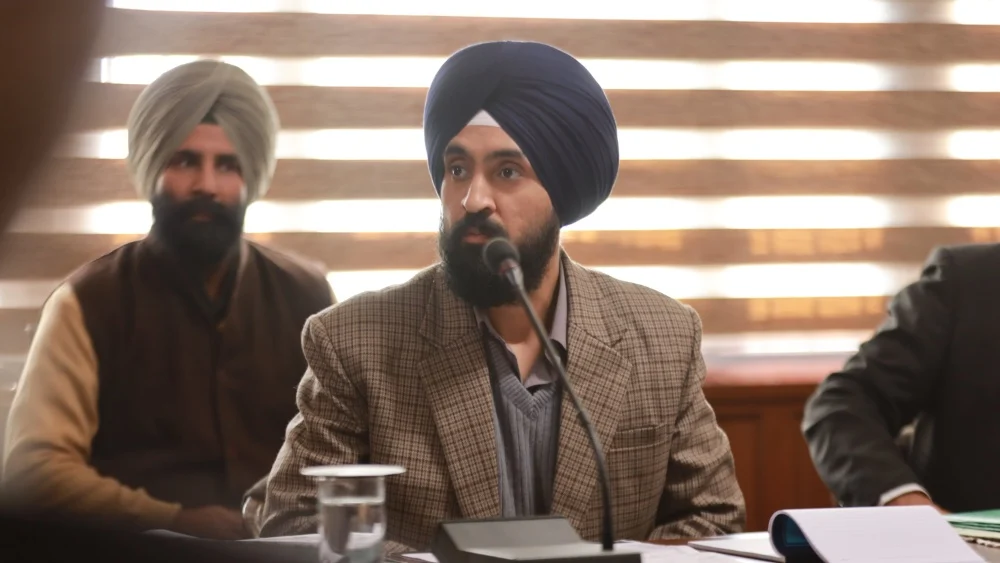
The film stars global Punjabi icon Diljit Dosanjh in the lead role. Dosanjh, primarily known for his exuberant pop persona and comedic timing, delivers a transformative performance as Khalra, portraying him as a quiet, "ego-less saint" driven by a sense of Sikh spiritual duty.
The production’s journey has been defined by three major hurdles:
- Censorship: The Central Board of Film Certification (CBFC) initially demanded over 120 cuts to the film, citing concerns over national security and communal harmony.
- Renaming: The title was forcibly changed from Punjab ’95—a direct reference to the year of Khalra’s own disappearance and presumed murder—to Satluj, the name of the river where many bodies were allegedly disposed of.
- Digital Erasure: After a brief, unannounced release on the streaming platform Zee5 on July 3, 2024, the film was pulled within 48 hours for Indian viewers and within a week for international audiences, leaving viewers in a state of confusion.
Chronology: The Timeline of a "Disappearing" Film
The timeline of Satluj reflects the very "disappearances" the film seeks to expose.
- September 2023: The film, then titled Punjab ’95, was slated for its world premiere at the prestigious Toronto International Film Festival (TIFF). However, in a move that shocked the industry, the film was abruptly removed from the lineup. While TIFF cited "unforeseen circumstances," insiders pointed toward pressure regarding the film’s sensitive subject matter.
- Late 2023 – Early 2024: Director Honey Trehan and the producers engaged in a protracted legal and bureaucratic battle with the CBFC. The board’s demands were extensive, targeting scenes that depicted police brutality and references to specific political figures.
- July 3, 2024: Under the new title Satluj, the film appeared on Zee5’s global digital platform. There was no major marketing blitz, a rarity for a film starring a bankable star like Dosanjh.
- July 5, 2024: Indian subscribers reported that the film was no longer searchable or playable on the Zee5 app.
- July 10, 2024: The film was removed from Zee5’s international servers (UK, US, Canada), effectively scrubbing it from the legal digital market.
- Present Day: Despite the official blackout, "rogue" community screenings have been reported across India and the diaspora, as activists and cinema enthusiasts seek to bypass traditional distribution channels to view the uncompromised vision of the film.
Supporting Data: The Scale of the Tragedy
The power of Satluj lies in its grounding in harrowing data. The real-life Jaswant Singh Khalra began his journey by investigating the disappearance of a colleague’s relative. His research eventually led him to the municipal records of three cremation grounds in the Amritsar district: Durgiana Mandir, Patti, and Tarn Taran.
The data Khalra unearthed was staggering:
- 6,017 Bodies: Khalra documented over 6,000 "unidentified" bodies cremated by the police in just one district.
- 25,000 Disappearances: His wider estimates suggested that upwards of 25,000 young Sikh men had been abducted and killed across Punjab during the counter-insurgency operations.
- The 120 Cuts: The CBFC’s insistence on 120+ edits reportedly targeted the film’s "didactic" mentions of these statistics, as well as scenes that humanized the victims by showing their families’ grief.
The film’s 164-minute runtime is intentionally dense, utilizing a "courtroom testimony" style of dialogue. While critics have noted that this can lead to "speed bumps" in the narrative, the length serves to emphasize the sheer volume of the evidence Khalra was attempting to present to the world.
Official Responses: A Wall of Silence
The official response to the film’s disappearance has been characterized by a notable lack of transparency.
- Zee5: The streaming giant has issued no formal statement explaining why the film was pulled so shortly after its debut. Industry analysts suggest that "informal" pressure from government agencies often leads platforms to self-censor to avoid licensing issues or legal repercussions.
- The CBFC: The board maintained that the cuts were necessary to prevent "incitement to violence" and to maintain the "sovereignty and integrity of India." They argued that the film’s depiction of the police force was overly generalized and could damage public trust in law enforcement.
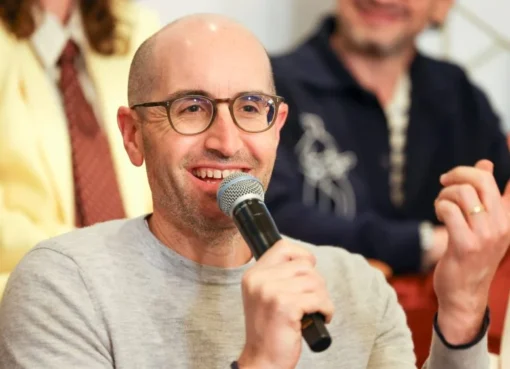
- The Filmmakers: Honey Trehan has remained largely steadfast, describing the version of the film that briefly reached the public as his "uncompromised vision" despite the forced name change. Trehan has framed the film’s spiritual approach—emphasizing Sikh duty and the concept of Seva (selfless service)—as a visceral response to injustice.
- Diljit Dosanjh: While Dosanjh has not engaged in overt political commentary regarding the censorship, his choice to take the role is seen as a major statement. As a global ambassador for Punjabi culture, his involvement ensured that the film could not be easily ignored by the mainstream.
Implications: Cinema as a Battleground for Memory
The saga of Satluj has profound implications for the future of artistic expression and historical memory in India.
1. The Erosion of the "Safe Space" for Streaming
For years, Over-The-Top (OTT) platforms like Netflix, Amazon Prime, and Zee5 were seen as havens for bold storytelling that could bypass the rigid censorship of theatrical releases. The removal of Satluj signals a closing of this window. It suggests that digital platforms are now subject to the same—if not more—stringent "invisible" pressures as traditional cinemas.
2. The Dehumanization of Dissent
The film highlights a disturbing linguistic trend where labels like "terrorist" and "insurgent" are used as de facto death sentences. By showing how ordinary citizens like Khalra are branded as enemies of the state for simply asking for records, Satluj speaks to a contemporary global climate where the "national security" narrative is often used to shield the state from accountability.
3. The Internationalization of Punjabi Narrative
The controversy has only served to increase interest in the film within the global Sikh diaspora. By attempting to bury the film, the authorities have inadvertently turned it into a "must-watch" piece of resistance cinema. This mirrors the "Streisand Effect," where the attempt to hide information results in its wider propagation.
4. A New Standard for Biopics
Trehan’s film avoids the typical Bollywood tropes of high-octane action. Instead, it formalizes a "spiritual approach" through the cinematography of K.U. Mohanan and the haunting score by Marc Marder. The film’s success (in its brief window) proves there is a massive audience for "liturgical" cinema—films that treat their subjects not just as heroes, but as moral compasses for a grieving community.
Conclusion
Satluj is a film about a man who was killed because he refused to stop counting the dead. In a chilling irony, the film itself is now being subjected to a similar attempt at erasure. However, as the "rogue" screenings and the fervent online discourse suggest, truth—much like the river the film is named after—has a way of carving its own path, no matter how many dams are built to stop it. For Trehan, Dosanjh, and the legacy of Jaswant Singh Khalra, the medium has indeed become the message: the act of watching the film is, in itself, an act of remembering what others wish to be forgotten.