The Sound of Vision: Legato Emerges from Stealth with $12M to Redefine Hearing Care Through AI Eyewear
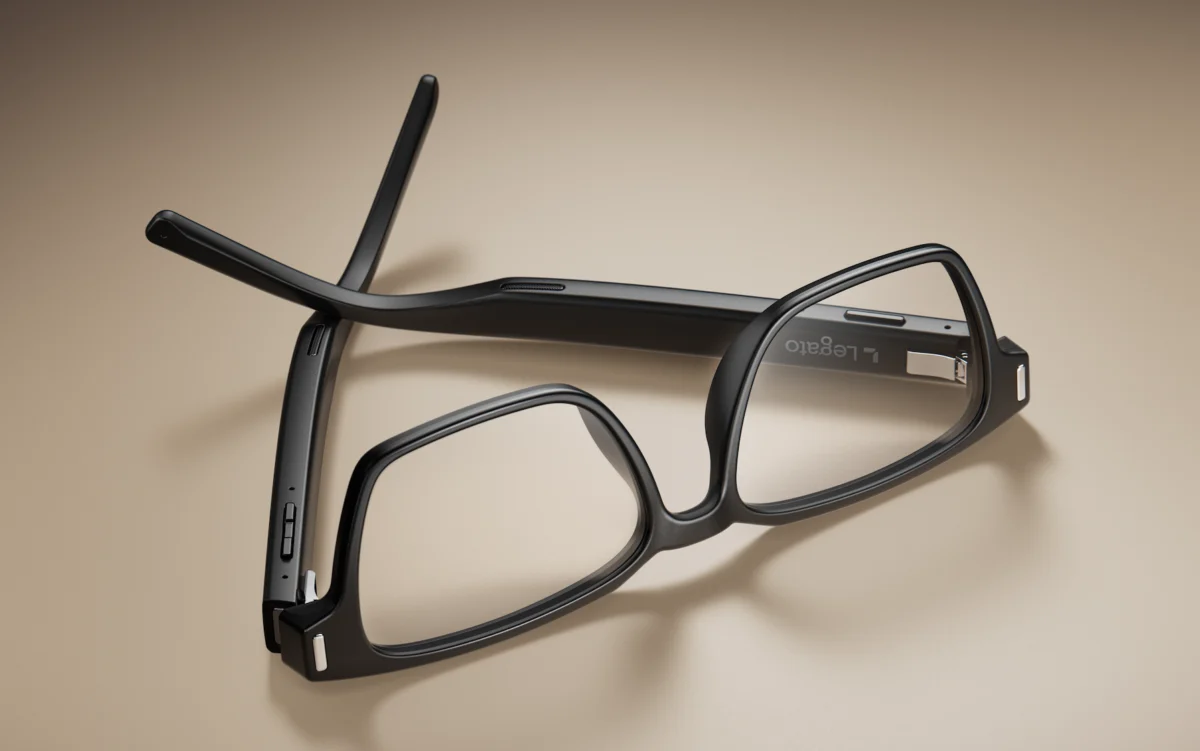
The intersection of medical technology and consumer electronics is witnessing a significant shift as Legato, a new hearing technology startup, officially emerges from stealth. Backed by $12 million in funding and led by a team of industry veterans from Bose and Meta, the company is preparing to launch "Legato Frames"—AI-powered eyewear designed to bridge the massive gap between those who need hearing assistance and those who actually seek it.
Main Facts: A New Contender in the "Hearable" Market
Legato’s entry into the market comes at a pivotal moment for the audiology industry. For decades, hearing aids have been defined by high costs, clinical aesthetics, and a persistent social stigma. Legato aims to dismantle these barriers by integrating sophisticated hearing-assistance technology directly into the arms of stylish eyewear.
The Product: Legato Frames
Scheduled for a release in the fall of 2024, Legato Frames are not merely smart glasses with speakers; they are a proprietary acoustic platform. Unlike traditional hearing aids that often sit behind or inside the ear, Legato’s technology is housed within the temples of the frames. The glasses utilize a patented AI-driven signal-processing stack that differentiates between ambient background noise and human speech, specifically amplifying voices to improve clarity in challenging environments like crowded restaurants or busy streets.
The Financials and Leadership
The company’s $12 million funding round was led by Neotribe Ventures, with participation from Listen and Village Global. This capital is being deployed toward final product development, manufacturing scaling, and a multi-channel marketing strategy.
The leadership team provides Legato with immediate credibility. Co-founders Mehul Trivedi and Steve Romine bring a combined several decades of experience in high-end audio and hearing health. Trivedi is a former Bose executive who led the development of Bose Frames and later spearheaded smart eyewear initiatives at EssilorLuxottica, including work on the high-profile Meta Ray-Bans. Romine previously ran the hearing aid division at Bose and served as the Chief Operating Officer of Audicus, a leading direct-to-consumer hearing care company.

Chronology: From Bose to the Birth of Legato
The journey toward Legato Frames began long before the company was formally incorporated. The founders’ shared history at Bose provided the foundational realization that the consumer’s relationship with hearing technology was fundamentally broken.
- The Bose Era: During their tenure at Bose, Trivedi and Romine worked on the front lines of "hearables"—a category of devices that combine the features of headphones with hearing-aid-like functionality. While Bose Frames proved that consumers were willing to wear audio-enabled glasses, the technology for true medical-grade hearing assistance in a slim frame was still evolving.
- The Divergent Paths: After Bose, the founders moved into specialized sectors. Trivedi’s time at EssilorLuxottica gave him deep insight into the fashion and optics industry, learning how to scale eyewear that people want to wear. Meanwhile, Romine’s role at Audicus gave him a masterclass in the operational and regulatory hurdles of the hearing aid market.
- The Intersection (Late 2024): Following a period of independent research into the "intersection of hearing technology and smart eyewear," Trivedi identified a technological breakthrough in AI-based sound isolation. He reached out to Romine, and the two founded Legato in late 2024 with the mission of making hearing assistance as socially acceptable and effortless as wearing prescription glasses.
- Stealth and Development: For the past year, the team has worked in stealth to miniaturize their proprietary acoustic system, ensuring the frames remain lightweight and indistinguishable from standard high-end eyewear.
Supporting Data: Addressing the "Treatment Gap"
Legato’s business model is built on a stark reality in American healthcare: the "treatment gap." According to data from the Hearing Loss Association of America, an estimated 50 million adults in the United States suffer from some degree of hearing loss. However, statistics from Stanford Medicine indicate that only about 20% of those diagnosed actually seek treatment.
The "Mild-to-Moderate" Segment
Legato is strategically targeting the "mild-to-moderate" hearing loss demographic. This segment is the largest in the population but also the most likely to avoid traditional hearing aids. The reasons for this avoidance are three-fold:
- Stigma: Traditional devices are often associated with aging and infirmity.
- Complexity: Many users find the "fiddling" required for traditional aids to be cognitively exhausting.
- Cost: Clinical hearing aids can cost between $3,000 and $7,000, often without insurance coverage.
Technical Performance Data
To address these issues, Legato’s engineering team focused on "discreet performance." Their dual-speaker system is designed to create a private "audio bubble." While the design is open-ear (leaving the ear canal unobstructed for natural comfort), Legato claims their technology cancels 99% of sound leakage just a few inches away from the wearer’s ear. This ensures that the user’s amplified conversation remains private, a common concern with previous iterations of audio glasses.
Official Responses: A Vision for Ubiquitous Hearing
In an exclusive interview with TechCrunch, Mehul Trivedi articulated a philosophy that moves hearing care away from the medical clinic and into the lifestyle space.

“Our goal is to make hearing as ubiquitous as vision,” Trivedi stated. “It’s kind of a no-brainer that you go to an eye exam, you get your glasses, you wear your glasses, and you’re happy… the idea of it being blurry again where you would just stop wearing them is not a consideration. I think that’s what we want to do with hearing: just make it something that people address and almost forget about.”
Trivedi also emphasized the "cognitive load" factor. Traditional hearing aids often use directional microphones—essentially "beaming" toward whatever the wearer is facing. While effective in some scenarios, this can feel unnatural in social settings. Legato’s AI approach focuses on voice isolation rather than just directionality.
“We wanted to deliver an experience that was unique,” Trivedi explained. “A form factor that’s really discreet and looks normal… effortless, easy to use, with no controls that you need to fiddle with, works everywhere, and just delivers you better hearing.”
Beyond the convenience, the founders are quick to point out the clinical importance of their mission. Untreated hearing loss has been linked in numerous studies to an increased risk of social isolation, depression, and even accelerated cognitive decline or dementia. By making the solution "invisible" (disguised as glasses), Legato hopes to encourage earlier intervention.
Implications: Disrupting the Audiology Landscape
The emergence of Legato signifies a broader trend: the "consumerization" of healthcare. Following the 2022 FDA ruling that allowed for the sale of over-the-counter (OTC) hearing aids, the market has been ripe for disruption.

Convergence with the Optical Industry
Perhaps the most significant implication of Legato’s strategy is its distribution model. Rather than focusing solely on audiologists, Legato plans to launch through select eye-care providers nationwide. This aligns with their "hearing as vision" philosophy. By integrating the purchase of Legato Frames into a standard eye exam, the company bypasses the specialized hearing clinic, making the technology accessible to a wider audience. Furthermore, the company has indicated that the frames will be eligible for vision insurance when purchased through these clinics, significantly lowering the out-of-pocket cost for the consumer.
Competition and Market Positioning
Legato enters a field that is becoming increasingly crowded. Tech giants like Apple have recently introduced hearing aid features to the AirPods Pro 2, and EssilorLuxottica (Trivedi’s former employer) is also exploring the Nuance Audio glasses. However, Legato’s advantage may lie in its singular focus. Unlike AirPods, which have limited battery life for all-day wear, Legato Frames are designed to be worn for 16 hours a day. Unlike other smart glasses that prioritize cameras or "AI assistants," Legato is prioritizing the acoustic experience for those with hearing impairment.
The Future of Smart Wearables
If Legato succeeds, it could set a new standard for what we expect from our eyewear. The "Smart Glasses" category has struggled for years to find a "killer app" beyond taking photos or showing notifications. By solving a legitimate medical and social problem—hearing loss—Legato may have found the utility that finally makes smart eyewear a mainstream necessity.
As the company prepares for its Fall launch, the tech and medical communities will be watching closely. If Legato can indeed make hearing assistance "something people address and almost forget about," they won’t just have a successful product; they will have changed the social fabric of aging and communication.