Revolutionizing 3D Modeling: AutoRemesher 1.0 Ushers in Era of Effortless Retopology with MIT License
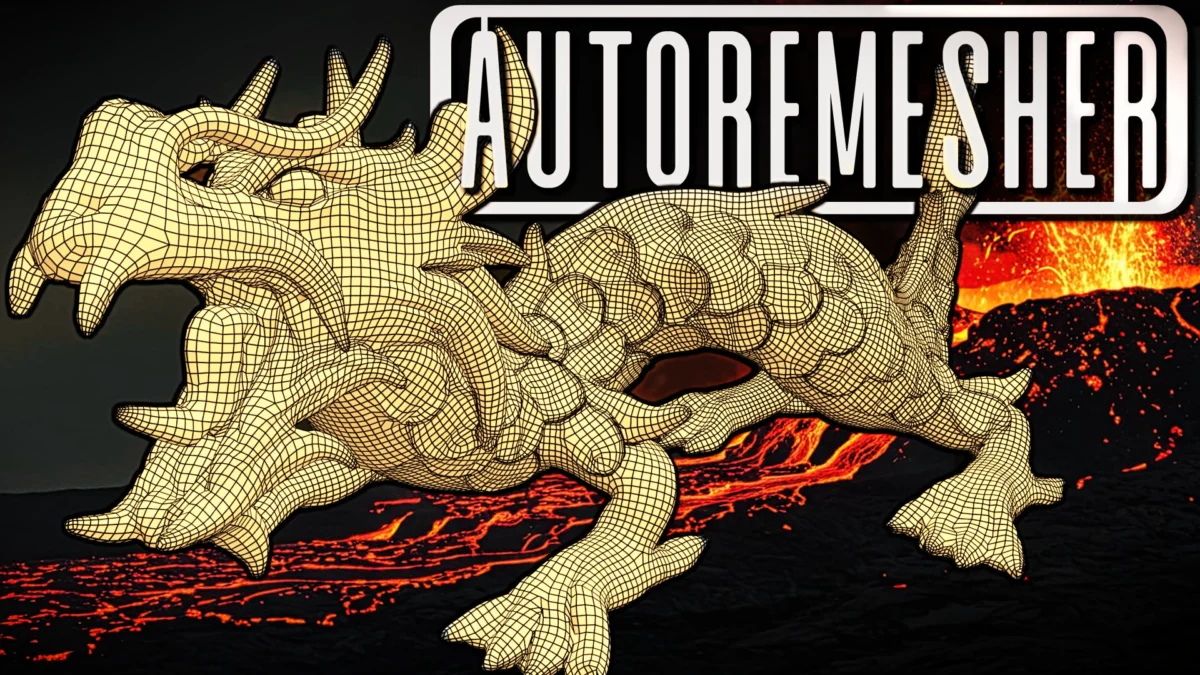
GameFromScratch.com, [Date of Publication] – The landscape of 3D modeling has been significantly reshaped with the official release of AutoRemesher 1.0, a groundbreaking free and open-source tool designed to automate the complex and often time-consuming process of retopology. Developed by the visionary behind the acclaimed Dust3D 3D modeling application, AutoRemesher promises to transform how 3D artists approach mesh optimization, converting dense triangle meshes into clean, edge-loop-friendly quad topology with remarkable speed and ease. This latest version not only signifies a major milestone in the tool’s development but also a pivotal shift in its accessibility, moving from the restrictive GPLv3 license to the more permissive MIT license, a decision poised to foster broader adoption and innovation within the 3D community.
AutoRemesher’s core functionality addresses a persistent bottleneck in 3D asset creation. High-polygon models, often generated through sculpting or 3D scanning, are typically a "triangle soup" – a dense collection of triangular faces. While suitable for rendering, these meshes are notoriously difficult to animate, rig, or further refine due to their irregular topology. Retopology, the process of manually reconstructing these meshes with clean, quad-based geometry, is crucial for efficient workflows. However, it is a labor-intensive and technically demanding task that requires significant skill and time. AutoRemesher aims to democratize this process, offering a one-click solution that dramatically reduces the manual effort involved.
The Genesis of AutoRemesher: From Dust3D to Automated Optimization
The creator, whose identity is closely tied to the innovative Dust3D application, has a proven track record of developing user-friendly yet powerful tools for 3D artists. Dust3D itself gained recognition for its unique approach to 3D modeling, allowing users to quickly generate 3D models from sketches. This experience in streamlining creative workflows appears to have directly informed the development of AutoRemesher. The need for efficient mesh optimization became apparent as artists using tools like Dust3D, or those importing scanned data, required a robust and accessible method to prepare their models for downstream applications.
While the exact timeline of AutoRemesher’s development is not publicly detailed, its emergence as a free and open-source project signals a commitment to community-driven advancement. The initial stages likely involved extensive research and development, leveraging existing powerful libraries to build a sophisticated algorithm. The decision to open-source the project from its early stages allowed for community feedback and contributions, a hallmark of successful open-source endeavors. The transition to the MIT license with version 1.0 represents a strategic move to broaden the tool’s reach and encourage its integration into various commercial and open-source pipelines without the constraints of copyleft provisions.
AutoRemesher: A Technical Deep Dive into Automated Quad Retopology
AutoRemesher’s power lies in its sophisticated algorithmic approach to mesh reconstruction. The tool is built upon a robust foundation of cutting-edge libraries, each contributing essential functionalities:
- Geogram: This library, developed by INRIA, provides a comprehensive framework for geometric processing and computational geometry. It likely offers fundamental data structures and algorithms for handling mesh data, geometric queries, and transformations.
- libigl: A C++ library for geometric processing, libigl is renowned for its extensive collection of algorithms for mesh editing, analysis, and processing. Its capabilities in mesh parameterization, discrete differential geometry, and optimization are likely leveraged by AutoRemesher for generating smooth and well-behaved quad meshes.
- isotropicremesher: This library is specifically designed for isotropic remeshing, a technique that aims to produce a mesh with uniformly sized and shaped elements, which is crucial for achieving high-quality quad topology. It likely implements algorithms that adaptively refine the mesh based on curvature and other geometric features.
- Other Contributing Libraries: The acknowledgment of "others" suggests that AutoRemesher’s architecture might incorporate additional specialized libraries or custom-developed components to achieve its specific retopology goals.
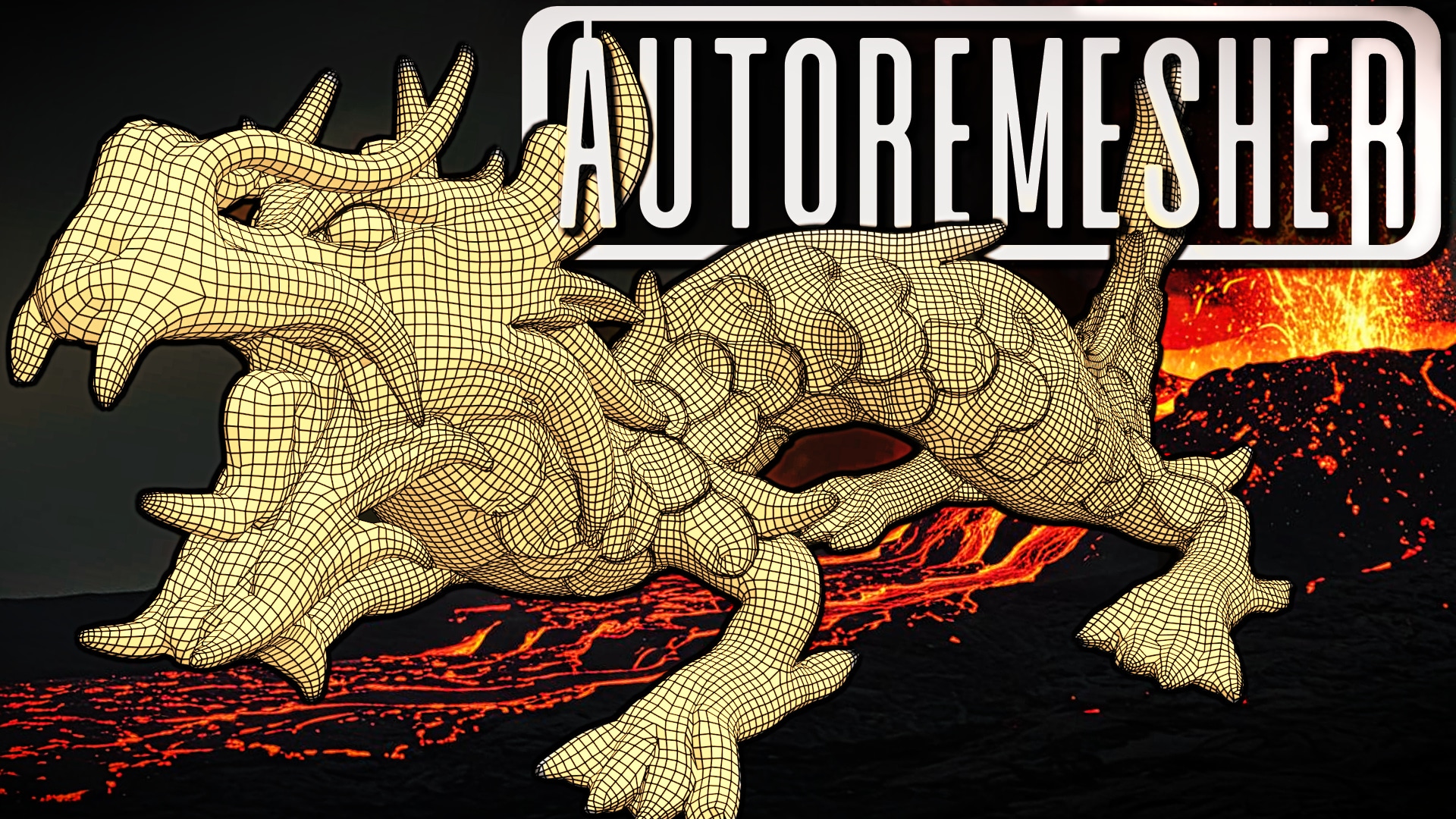
The process, as described by the developers, involves taking a high-polygon, triangle-heavy mesh and intelligently converting it into a quad-based topology. This conversion is not merely a geometric simplification but a restructuring that prioritizes edge flow and clean vertex connectivity. The desired outcome is a mesh that is significantly easier to work with in standard 3D software for tasks such as:
- Animation and Rigging: Clean edge loops are essential for creating predictable deformations when characters are animated.
- UV Unwrapping: Well-structured quads facilitate easier and more efficient UV unwrapping for texturing.
- Sculpting and Detailing: A quad-based mesh provides a better foundation for adding further detail and refinement through sculpting.
- Game Engine Integration: Optimized quad meshes often translate to better performance and compatibility in real-time rendering environments.
The "one-click" nature of AutoRemesher, while a simplification, highlights the tool’s ambition to abstract away the technical complexities. Users are expected to feed their input mesh into the application, and AutoRemesher will handle the intricate algorithmic steps to produce the optimized output. The availability of versions for Windows, Mac, and Linux ensures broad accessibility across different operating system environments.
The Significance of the MIT License Shift
The transition from the GNU General Public License version 3 (GPLv3) to the MIT License is a significant development for AutoRemesher. Understanding the implications requires a brief overview of these licenses:
- GPLv3: This is a strong "copyleft" license. It requires that any derivative works distributed under the GPLv3 must also be licensed under the GPLv3. This ensures that the software and its modifications remain free and open-source. While promoting freedom, it can sometimes be restrictive for commercial use, as it might necessitate open-sourcing proprietary code that incorporates GPLv3-licensed components.
- MIT License: This is a permissive free software license. It is very lenient and allows users to do almost anything with the software, including using it in proprietary software, distributing it, modifying it, and selling it, provided they include the original copyright and license notice.
The move to the MIT license has several key advantages for AutoRemesher:
- Broader Commercial Adoption: Developers and studios can now integrate AutoRemesher’s technology into their proprietary pipelines without the obligation to release their own source code. This significantly lowers the barrier to entry for commercial users.
- Increased Integration Potential: The flexibility of the MIT license makes it easier for AutoRemesher to be incorporated into other open-source projects or used as a component in various software ecosystems.
- Wider Community Engagement: A more permissive license can encourage a larger and more diverse community of developers to contribute to the project, leading to faster development and a wider range of applications.
- Focus on Core Technology: The developers can now focus on refining the core retopology engine, knowing that its widespread adoption is less likely to be hindered by licensing concerns.
This strategic licensing decision demonstrates a clear understanding of the needs of the 3D industry, where proprietary software and commercial pipelines are prevalent. By embracing the MIT license, the creator of AutoRemesher is signaling a desire for their tool to become a ubiquitous and indispensable part of the 3D asset creation workflow.
Looking Ahead: Implications for the 3D Industry and Artists
The release of AutoRemesher 1.0, coupled with its shift to the MIT license, carries profound implications for the 3D modeling industry and artists at all levels:
- Democratization of Advanced Techniques: Retopology, once a specialized skill requiring significant expertise, is now accessible to a much wider audience. This empowers hobbyists, independent game developers, and artists in smaller studios to achieve professional-quality results without investing heavily in manual retopology workflows or expensive proprietary software.
- Accelerated Production Pipelines: The ability to rapidly retopologize meshes can dramatically speed up the production of 3D assets. This is particularly impactful in game development, animation, and virtual reality content creation, where the demand for optimized assets is constantly growing.
- Enhanced Workflow Efficiency: By automating a tedious process, AutoRemesher frees up artists’ time and creative energy to focus on more critical aspects of 3D art, such as sculpting, texturing, and scene composition.
- Potential for Innovation: The open-source nature and permissive license of AutoRemesher invite further development and integration. We can anticipate seeing this technology embedded within other 3D software packages, specialized plugins, or even used as a foundation for entirely new 3D tools.
- Competition and Evolution of Existing Tools: The emergence of a powerful, free, and open-source retopology solution is likely to put pressure on commercial retopology software. This could drive innovation and potentially lead to more competitive pricing or feature enhancements from existing players.
The accompanying video, which demonstrates AutoRemesher in action, serves as a compelling testament to its capabilities. Viewers can witness firsthand the transformation of complex, dense meshes into clean, usable quad topology, highlighting the tool’s efficiency and effectiveness. This visual evidence is crucial for building confidence and encouraging adoption within the community.
In conclusion, AutoRemesher 1.0 represents a significant leap forward in 3D modeling technology. By providing an accessible, automated solution for retopology and embracing the permissive MIT license, its creator has not only delivered a powerful tool but has also fostered an environment ripe for community collaboration and widespread integration. This development is set to empower a new generation of 3D artists and streamline workflows across the entire industry, marking a new era of efficiency and creative freedom in the world of 3D asset creation.