
The Terror Returns: Unpacking the Chilling Premiere of The Devil in Silver
AMC’s critically acclaimed horror anthology series, The Terror, has returned to plunge audiences into a new nightmare. This season, subtitled The Devil in Silver, adapts Victor LaValle’s profound and disturbing 2016 novel of the same name. Shifting from the frozen wastes of the Arctic or the Japanese internment camps of previous iterations, the series now confronts a different kind of chilling reality: the labyrinthine corridors of a modern mental institution, where the lines between psychological torment and supernatural evil blur into a terrifying whole.
At its core, The Terror: The Devil in Silver introduces us to Pepper (played with captivating intensity by Dan Stevens), a man unjustly committed to a New York City mental hospital. The initial premise is deceptively simple: a guy finds himself imprisoned in a facility that may or may not be haunted by a monstrous entity. However, as the premiere episode masterfully demonstrates, the true horror lies not just in the potential presence of a creature, but in the insidious machinery of a system designed to exploit and incarcerate, trapping both patients and staff in its unforgiving gears.
Co-showrunners Christopher Cantwell and Victor LaValle, with the keen directorial eye of Karyn Kusama for the opening episode, embark on a journey that promises to dissect the very fabric of institutional neglect and the human capacity for cruelty, all while hinting at a malevolent force lurking just beyond comprehension. This season of The Terror is poised to be a visceral and intellectually stimulating exploration of modern horror, deeply rooted in social commentary.
Main Facts: A Descent into New Hyde
The premiere episode of The Terror: The Devil in Silver wastes no time establishing its bleak and unsettling world. Our protagonist, Pepper, a man whose "joie de dirtbag" charm masks a volatile recklessness, finds himself involuntarily committed to New Hyde Hospital. This isn’t a facility designed for healing; it’s a decaying brick edifice that more closely resembles a derelict factory, casting an immediate pall of despair over its inhabitants.
The central conflict quickly emerges: Pepper, despite his flaws, appears to be mentally sound, yet he is subjected to the same dehumanizing procedures and medication as genuinely ill patients. The narrative hinges on the ambiguity of his situation: is he truly experiencing drug-induced hallucinations, or is the hospital indeed a locus for supernatural terror? This central mystery is intertwined with a searing critique of the mental health system, portraying it as a punitive, under-resourced entity that often compounds suffering rather than alleviating it.
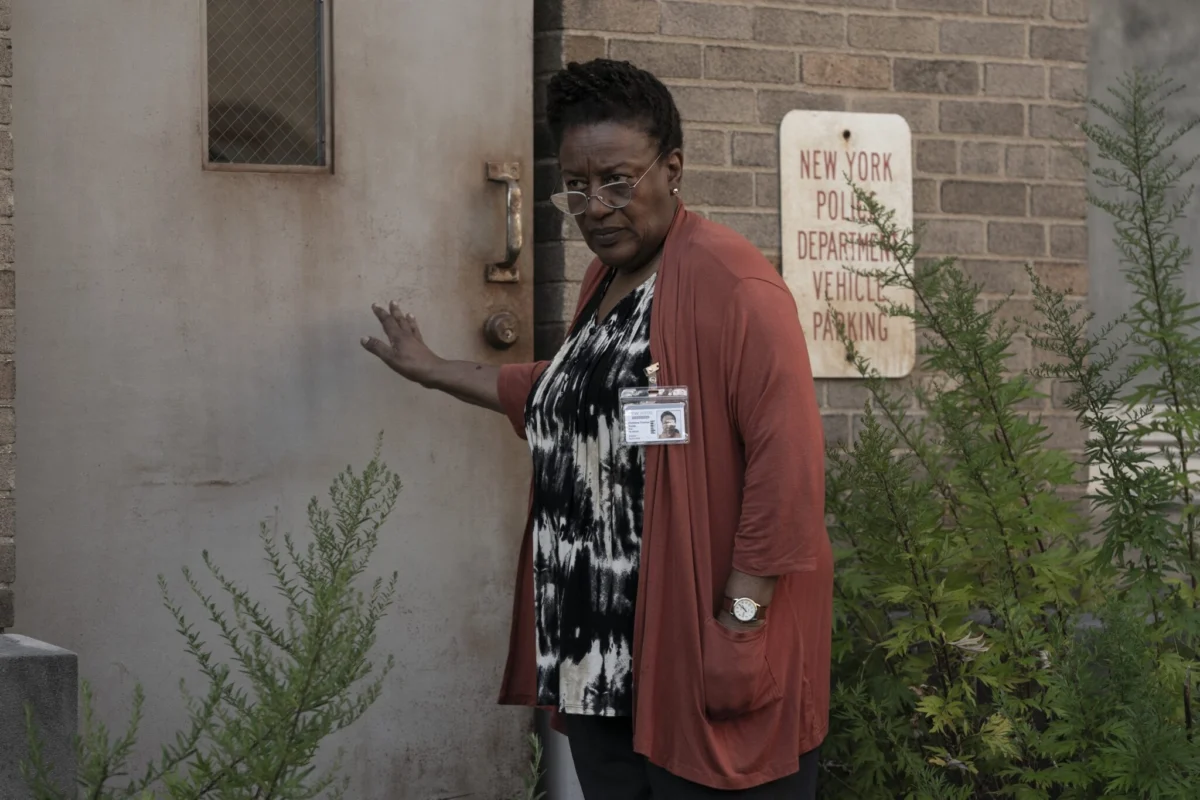
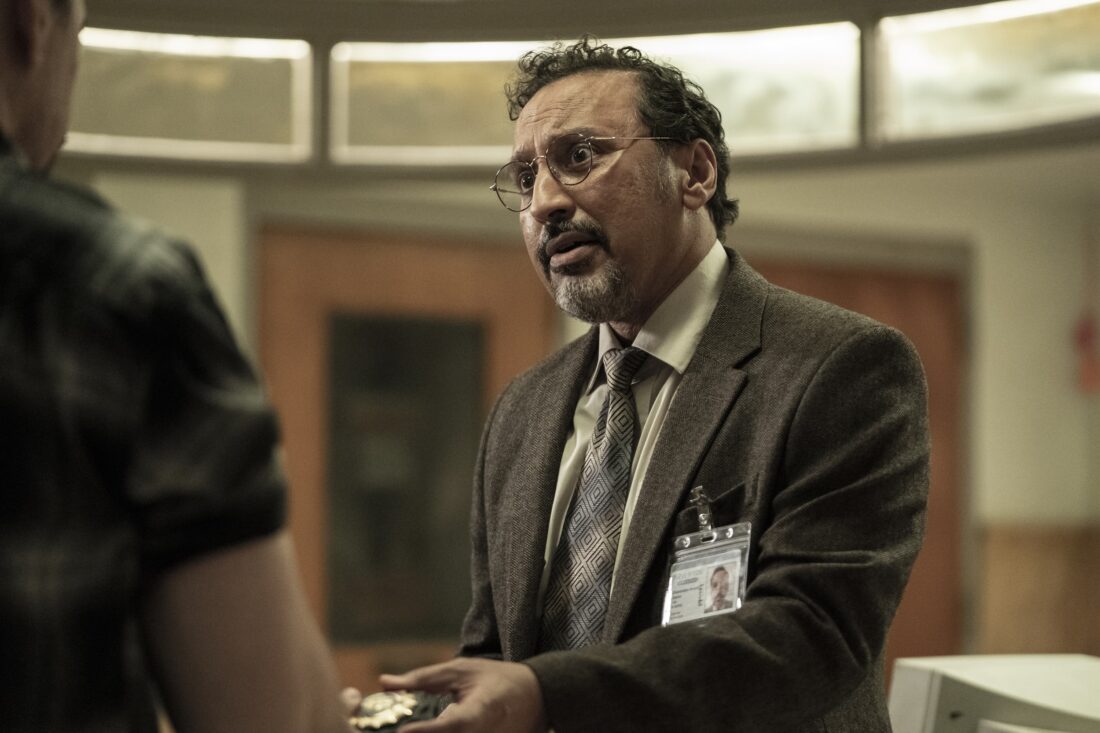
A stellar ensemble cast anchors the series. Dan Stevens delivers a nuanced performance as Pepper, navigating the character’s abrasive edges and underlying vulnerability. CCH Pounder as Miss Chris, a seasoned nurse, embodies the weary competence and complex moral compromises demanded by the system. Judith Light, in her role as the enigmatic Dorry, serves as an unsettling guide, while Aasif Mandvi’s Dr. Anand represents the detached adherence to procedure that can be as damaging as outright malice. Together, they create a tapestry of human experience within a dehumanizing environment, setting the stage for a season that promises both psychological and supernatural dread.
Chronology: The First Hours of Confinement
The premiere episode, with its unsettling visuals and palpable tension, meticulously charts Pepper’s horrifying introduction to New Hyde Hospital.
An Ominous Beginning: The Fate of Mr. Bromden
The episode opens not with our protagonist, but with a stark and brutal scene that immediately sets the tone. As dusk falls over New Hyde, nurses Josephine (Maureen Sebastian), Miss Chris (CCH Pounder), and Scotch Tape (Hampton Fluker) discover the lifeless body of Mr. Bromden. Rigor mortis has already set in, contorting his body into a grotesque tableau, suggesting a death born of pure terror. More disturbing than the death itself is the staff’s handling of the body: with chilling detachment, Miss Chris instructs Scotch Tape to break Mr. Bromden’s limbs to facilitate removal, a moment that underscores the complete disregard for human dignity within these walls. A pool of blood staining the blanket over his face adds a gruesome detail, leaving the cause of death—suicide or murder—ambiguous but undeniably sinister. This opening serves as a potent indictment, signaling that the systemic dehumanization is as horrifying as any spectral presence.
Pepper’s Reckless Path to Confinement
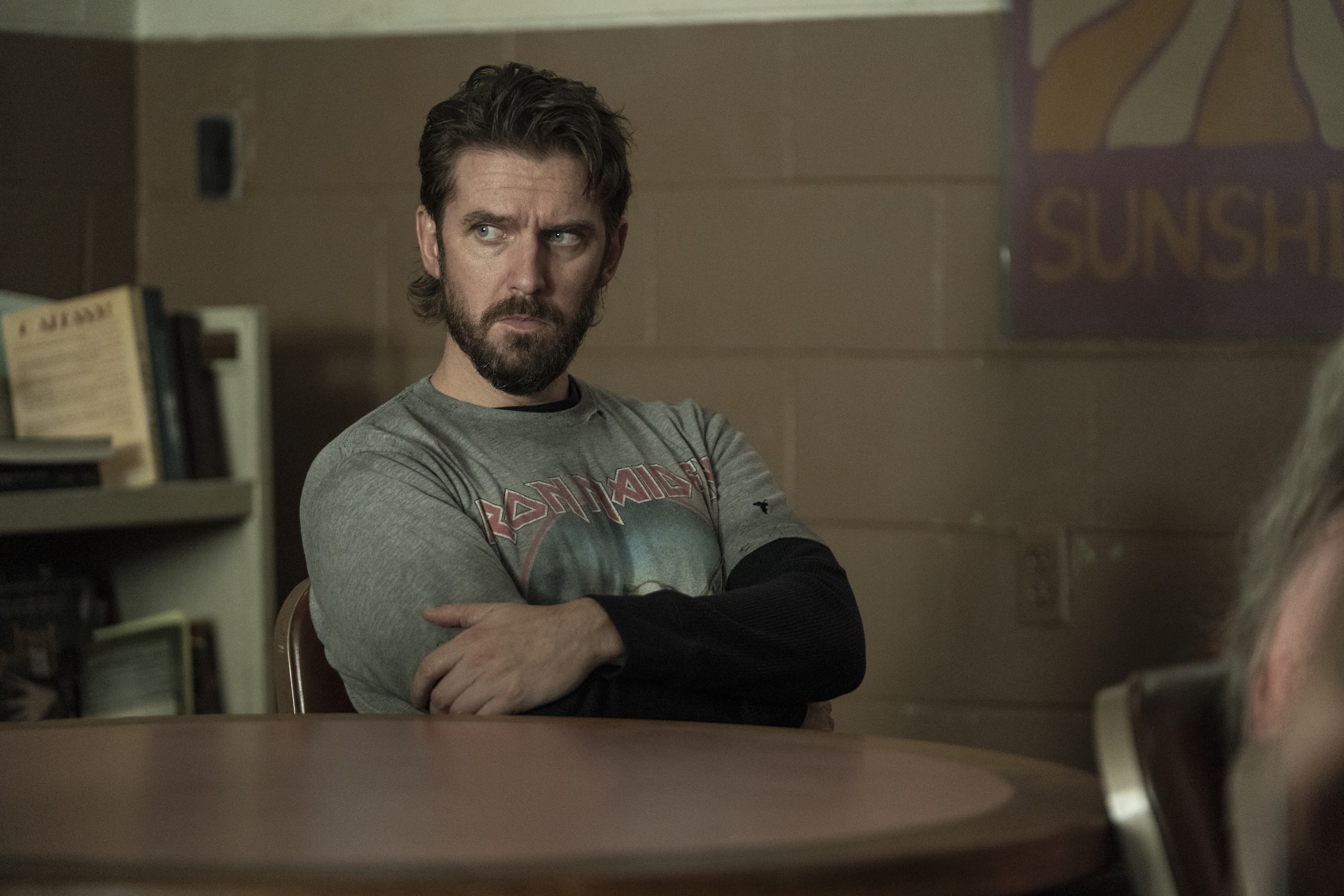
We are then introduced to Pepper, a character defined by his rough charm and a penchant for self-sabotage. Dan Stevens imbues Pepper with a "joie de dirtbag" quality—a blend of endearing roguishness and frustrating impulsivity. His relationship with his girlfriend, Marisol (Juani Feliz), is already strained by his inability to respect financial boundaries. The precipitating event for his incarceration is a moment of misplaced vigilantism: Pepper intervenes violently to protect Marisol from her abusive ex, leading to his arrest. The arresting officers, disregarding proper procedure, whisk him away to New Hyde, seemingly arbitrary in their decision but firmly establishing the corrupt and unchecked power of the system.
A Hostile Welcome to New Hyde
Pepper’s intake process is a masterclass in institutional alienation. He is stripped, questioned, and immediately categorized. Here, he encounters Dorry (Judith Light), a long-term patient who acts as an unsettling "tour guide," offering cryptic warnings and a chilling preview of his fate. Pepper is ultimately assigned Mr. Bromden’s recently vacated room, a symbolic passing of the torch into the hospital’s oppressive embrace. The initial 72-hour hold becomes a blur under a haze of antipsychotics, primarily haldol, administered despite Pepper exhibiting none of the symptoms it’s meant to treat. His subsequent assault on Dr. Anand, fueled by the drug-induced disorientation and growing frustration, provides the pretext for extending his unofficial sentence indefinitely.
The System’s Agents: Staff and Their Compromises
The episode meticulously portrays the various roles within New Hyde. Miss Chris, while exhibiting moments of weary compassion (gently covering Bromden’s face), is ultimately an enforcer of the system, capable of instructing the breaking of bones with practiced ease. Dr. Anand (Aasif Mandvi) embodies the bureaucratic indifference, rationalizing the drugging of Pepper as mere "procedure" and dismissing his subsequent hallucinations as signs of mental illness, rather than considering the drug’s effects or a potential supernatural cause. Even the "good apple" cop, Louie (Philip Ettinger), who briefly believes Pepper’s story and tries to leak information to journalists, ultimately succumbs to the system’s overwhelming inertia. His encounter with what appears to be a hallucination or ghost in the hospital’s lower levels further blurs the lines, suggesting the haunting is not confined to Pepper’s mind.
Throughout the premiere, the oppressive atmosphere is amplified by the show’s aesthetic choices. The music, a warped and dissonant score, mirrors Pepper’s deteriorating mental state. Cinematographer Julie Kirkwood and director Karyn Kusama employ harsh angles and a sickly yellow hue, visually reinforcing the hospital’s decaying and toxic environment. The production design perfectly captures the rundown, outdated nature of the facility, making it feel less like a place of healing and more like a relic of a bygone, barbaric era of institutionalization.
Supporting Data: The System as the Monster
Victor LaValle’s original novel, and this adaptation, brilliantly subvert conventional horror tropes by positing the systemic failures of institutions as a more terrifying "Big Bad" than any literal monster. As LaValle himself noted in an interview with Reactor magazine, the opening scene, with its brutal depiction of Mr. Bromden’s death and the staff’s dehumanizing response, carries significant weight. He drew a parallel to a story from Hurricane Katrina, where elderly patients were left to die, and one body became so rigid it couldn’t be removed. This real-world horror informs the show’s central thesis: "If the Big Bad is a monster in the walls, that’s scary. If the Big Bad is a system that has beaten everyone, patients and staff, down so much that they can rip open their own throat or break the legs of a dead person without complaint, that’s worse."
This systemic critique is multi-layered. The demographic composition of New Hyde is deliberately highlighted: most patients are women or people of color, while the dominant white presence among the staff is primarily in positions of power (doctors, with the exception of the head doctor). Pepper, a white man, initially attempts to leverage his perceived privilege with the arresting officers, only to find it useless in the face of their own procedural abuses. This nuanced portrayal suggests that while white privilege often offers societal advantages, it can be nullified when one becomes a victim of an equally pervasive system—be it an indifferent police force or a carceral mental health institution. As the article states, "Being white offers privileges the rest of us don’t get, but in some situations, like being disabled or a cop deciding they want to take time out of their day to personally fuck up your life, those privileges are few and far between." Even in his vulnerability, Pepper still occupies a position of relative privilege compared to many BIPOC patients, a subtle but crucial observation.
The concept of "following the doctor’s orders" becomes a chilling tool of control. Pepper is administered haldol, an antipsychotic typically used for schizophrenia or Tourette’s, despite his lack of these symptoms. Predictably, it incapacitates him, causing him to miss subsequent doses. The overworked nurses, rather than providing adequate oversight, simply mark him as "noncompliant," extending his involuntary stay. This illustrates how rules, ostensibly designed for order and care, are weaponized against the vulnerable, exacerbated by understaffing and a lack of resources. The system, far from being broken, is "working exactly as designed, because the system was designed to exploit the vulnerable… and both the patients and staff count as vulnerable."
The show brilliantly captures the insidious nature of this exploitation. Coffee (Chinaza Uche), Pepper’s roommate, articulates it plainly: the system exists to "profit off our bodies." While direct financial profit might be minimal, the board ensures every last dime is squeezed from individuals like Pepper and Coffee. The historical parallel to 19th-century "insane asylums" using the term "inmates" for patients is a stark reminder of the carceral nature embedded within these institutions, suggesting that their primary function is often incarceration rather than genuine help. This thematic depth elevates The Devil in Silver beyond mere jump scares, forcing viewers to confront uncomfortable truths about societal failures.
Official Responses: Crafting a Modern Horror Masterpiece
The collaborative vision of Christopher Cantwell and Victor LaValle, serving as co-showrunners, is palpable throughout the premiere episode. Their seamless adaptation of LaValle’s novel has been widely praised for its ability to capture the book’s complex themes and unique blend of social commentary and supernatural dread. The choice to adapt The Devil in Silver for The Terror anthology is particularly apt, given the series’ history of grounding its horror in real-world historical contexts and human failings.
LaValle’s personal insights into the genesis of the opening scene, connecting it to the real-life tragedy of Hurricane Katrina, underscore the intentionality behind the systemic critique. This isn’t just a story about a haunted building; it’s a story about the ghosts of institutional neglect and the very real monsters that emerge when humanity is stripped away by bureaucracy and indifference.
Karyn Kusama’s direction for the first episode is instrumental in establishing the show’s unsettling aesthetic. Known for her distinctive work in horror and thrillers (e.g., The Invitation, Jennifer’s Body, Destroyer), Kusama brings a precise visual language to New Hyde. Her use of harsh camera angles, the pervasive sickly yellow tint, and the evocative production design—making the hospital feel dilapidated and anachronistic—all contribute to an atmosphere of pervasive dread. The visual and aural elements work in concert, from the wobbling, warped record-like music to the deliberate framing, creating a sense of unease that permeates every scene.
The performances, too, are a testament to the creative team’s vision. Dan Stevens, moving beyond his more traditional roles, embodies Pepper with a raw, unpredictable energy that makes him both frustrating and compelling. However, it is CCH Pounder’s portrayal of Miss Chris that truly shines as a highlight of the premiere. Pounder, an "actor actor" with a storied career, brings a profound depth to a character who, in the book, felt more purely cruel. Here, Miss Chris is painted with strokes of competence and bone-deep exhaustion. Her small, almost imperceptible smile at "the new girl" crying hints at a complex enjoyment of power, yet her ability to gently cover Mr. Bromden’s face even as she instructs the breaking of his limbs speaks to a nuanced morality shaped by years within a broken system. Her performance elevates the character from a stock antagonist to a tragic figure, trapped in the very system she helps enforce.
Implications: A Timely Reflection on Modern Horrors
The Terror: The Devil in Silver arrives at a particularly poignant moment, offering a chilling reflection on contemporary societal anxieties. The show’s exploration of systemic injustice, particularly within mental health and carceral systems, resonates deeply in a world grappling with issues of police brutality, inadequate social safety nets, and the ongoing debate surrounding mental healthcare access and quality. By portraying the institution itself as the primary antagonist, the series forces viewers to confront the uncomfortable truth that some of the greatest horrors are not supernatural, but man-made.
Looking ahead, the implications for the rest of the season are tantalizing. Will the monster in the walls fully manifest, or will its presence remain an ambiguous symbol of Pepper’s deteriorating mental state and the hospital’s inherent evil? The narrative tension lies in this very uncertainty, keeping the audience, like Pepper, questioning the nature of reality within New Hyde. The show promises to escalate the psychological torment, forcing Pepper to fight not only for his freedom but for his very sanity.
Furthermore, The Devil in Silver seamlessly integrates into The Terror‘s established legacy as an anthology that leverages historical or culturally significant settings to explore profound human fears. While previous seasons delved into the literal cold of the Arctic or the historical trauma of Japanese internment, this season brings the horror home, into the familiar yet often unseen confines of a mental institution. It grounds its terror in a reality that, for many, is all too plausible—the fear of being unheard, disbelieved, and stripped of autonomy by a system meant to protect.
The series is not just entertainment; it’s a mirror reflecting societal vulnerabilities. It challenges viewers to consider the real-world implications of unchecked power, underfunded institutions, and the dehumanization of those deemed "other." By framing these issues within a compelling horror narrative, The Terror: The Devil in Silver doesn’t just scare its audience; it provokes thought, sparking an implicit call to examine and question the systems that shape our world. As the season unfolds, it promises to be a powerful and unforgettable exploration of the monsters, both real and imagined, that lurk in the shadows of our society.
Quotes from the Premiere:
- “You get rid of everything, it’s like throwing away a whole person. You don’t want to do that.” – A chilling line that underscores the casual dehumanization within the hospital.
- “It is meant to help,” said in the least convincing way possible. – Highlighting the performative nature of care in a broken system.
- Pepper: “What is that?” he says pointing to the silver door. Dorry: “You’ll find out soon enough.” – An ominous tease of the supernatural element.
- “You were summoned. But who summoned you?” – Suggesting a deeper, perhaps mystical, reason for Pepper’s presence.
- “Do bad things happen in a place because the place is evil, or were so many bad things done there, it invited evil in? I don’t know the answer. I only know what it’s like now.” – A profound philosophical question about the nature of evil, both inherent and created by human actions.




Leave a Comment