The Transformative Power of Gratitude and Authenticity: A Journey Culminating on Day 7
[City, State] – [Date] – In an increasingly complex world, the pursuit of inner peace and genuine connection has led many to explore practices that foster well-being. Among these, gratitude and authenticity stand out as cornerstones of a fulfilling life. A unique initiative, the "7 Days of Gratitude" program, recently concluded its intensive week-long journey, culminating in a powerful Day 7 focused on the profound interplay between gratitude and authenticity. This final day encouraged participants not only to acknowledge their blessings but also to embrace their true selves, fostering a deeper sense of self-worth and connection.
The Main Facts: Unveiling Day 7’s Core Message
Day 7 of the "7 Days of Gratitude" program served as a synthesis of the week’s introspective work, challenging participants to translate internal reflection into outward action and profound self-acceptance. The central theme for this concluding day was the dual exploration of "Gratitude & Authenticity," positing that one cannot fully experience genuine gratitude without first embracing one’s true self.
The day’s primary directive offered a tangible exercise in altruism: "Give an anonymous gift to someone. Leave a gift for someone where they will find it, with their name on it. Discover how good that feels!" This act of selfless giving was designed to demonstrate the immediate, uplifting feedback loop inherent in generosity, a direct expression of gratitude for one’s own capacity to give.
Beyond this external act, the program emphasized an internal cultivation of gratitude through continuous self-inquiry: "Ask yourself, ‘What am I grateful for right now?’" This daily practice, coupled with journaling, encouraged participants to maintain an ongoing dialogue with their inner landscape, documenting discoveries about their feelings and surroundings.
A structured "Ten Minute Meditation" guided participants through a deliberate process of identifying multiple sources of gratitude. Beginning with three deep breaths to center oneself, the meditation progressively invited individuals to pinpoint one, then a second, and finally a third genuine source of gratitude, emphasizing that the capacity to find one blessing opens the door to recognizing countless more. The meditation concluded by urging participants to observe the "frequency and vibrations of gratitude" moving through their being, fostering a holistic experience of thankfulness.
Crucially, Day 7’s deep dive into authenticity revealed a fundamental truth: "So gratitude becomes this invitation to be open to feeling what’s here and available to feel. Even if it’s sad, or mad, or anything it turns out." This statement underscored the program’s holistic approach, acknowledging that true gratitude is not about superficial positivity but about embracing the full spectrum of human emotion with an open heart, a concept inextricably linked to authentic living.
A Chronology of Cultivating Gratitude: The Seven-Day Journey
While Day 7 offered a profound culmination, it was built upon a deliberate progression throughout the preceding six days. The "7 Days of Gratitude" program was meticulously designed to gradually deepen participants’ understanding and practice of thankfulness, moving from simple recognition to complex emotional integration.
Day 1: Awakening to Simple Blessings. The initial day likely focused on foundational gratitude, encouraging participants to acknowledge the most basic aspects of their lives – the sunrise, a warm cup of coffee, the comfort of shelter. The aim was to shift perception towards recognizing readily available blessings often taken for granted.
Day 2: Gratitude for Relationships and Connections. Building on individual awareness, Day 2 would have expanded the focus to interpersonal connections. Participants might have been encouraged to express appreciation for family, friends, colleagues, or even chance encounters, highlighting the richness that human connection brings to life.
Day 3: Appreciating Nature and Environment. This day likely turned attention outwards, fostering gratitude for the natural world – the beauty of a landscape, the sustenance provided by the earth, the simple pleasure of fresh air. This helped ground participants in their physical environment and its inherent gifts.
Day 4: Gratitude for Challenges and Growth. A pivotal point in the journey, Day 4 would have introduced the more challenging aspect of gratitude: finding appreciation even in difficulties, setbacks, or lessons learned. This stage encouraged a reframing of adversity as opportunities for growth and resilience.
Day 5: Embracing Personal Strengths and Talents. Moving back to the self, Day 5 would have guided participants to acknowledge and celebrate their unique qualities, skills, and achievements. This was crucial for building self-esteem and recognizing one’s inherent worth, laying groundwork for authenticity.
Day 6: Forgiveness and Letting Go. Leading into the final day, Day 6 might have focused on the liberating power of forgiveness – both for oneself and others. Releasing grudges and past hurts is essential for creating space for genuine gratitude and an unburdened authentic self.
Day 7: Gratitude as a Gateway to Authenticity and Action. The culminating day synthesized all previous learnings. The anonymous gift-giving exercise served as an active demonstration of gratitude, transforming internal feelings into external acts of kindness. The deep meditation and journaling on authenticity connected the dots: to truly feel grateful, one must first be attuned to what genuinely resonates with them, what they truly value, and be willing to express that truth. This day underscored that authentic living is not about conforming but about celebrating one’s unique essence, a profound gift in itself.
Supporting Data: The Science Behind Gratitude and Authenticity
The principles espoused by the "7 Days of Gratitude" program are firmly rooted in contemporary psychological research and ancient wisdom traditions. The scientific community has extensively documented the myriad benefits of cultivating both gratitude and authenticity, revealing their profound impact on mental, emotional, and even physical health.

The Power of Gratitude:
Numerous studies in positive psychology have demonstrated that practicing gratitude can significantly enhance overall well-being. Researchers like Dr. Robert Emmons, a leading expert on gratitude, have shown that grateful individuals tend to experience higher levels of positive emotions, increased happiness, and greater life satisfaction. They also report lower levels of stress, anxiety, and depression. Gratitude practices are associated with improved sleep quality, stronger immune systems, and more robust social relationships, as expressing thanks often strengthens bonds and fosters a sense of connection. The act of noticing and appreciating good things helps to rewire the brain, shifting focus from lack to abundance, thereby enhancing resilience in the face of adversity.
The Imperative of Authenticity:
Authenticity, defined as living in alignment with one’s true self, values, and beliefs, is equally critical for well-being. Psychologists have found that individuals who live authentically report higher self-esteem, greater self-acceptance, and a stronger sense of purpose. Conversely, suppressing one’s true self, often due to societal pressures or a fear of "rocking the boat," can lead to chronic stress, anxiety, depression, and a pervasive sense of emptiness or dissatisfaction. The original article’s reflection on past conditioning – "keep it on the down low… don’t make eye contact… find out what is wanted and conform to that" – perfectly encapsulates the challenges many face in embracing authenticity. Overcoming these conditioned responses is vital for psychological freedom.
The Symbiotic Link:
The program’s assertion that "to really feel gratitude, you have to know what you’re grateful for, know what you like, and know what you value," highlights the inextricable link between the two. Authenticity provides the inner clarity required to identify genuine sources of gratitude. If one is constantly conforming or pretending, their sense of what truly brings them joy or value becomes clouded. Furthermore, the vulnerability inherent in true gratitude – acknowledging not just the joy of having but also "the pain of losing, the grief of losing something" – mirrors the vulnerability required to be authentic. To genuinely appreciate life, one must be open to its full spectrum, including its transient nature and potential for sorrow, a testament to courage and honesty.
The Benefits of Altruism:
The Day 7 directive to give an anonymous gift aligns with research on prosocial behavior and altruism. Studies indicate that acts of giving trigger the release of "feel-good" neurochemicals like oxytocin and dopamine, leading to a phenomenon often called the "helper’s high." This intrinsic reward system reinforces benevolent behavior, creating a positive feedback loop that benefits both the giver and the receiver, further cementing the link between gratitude (for one’s capacity to give) and positive emotional states.
Official Responses and Guiding Philosophies
While the original text does not feature "official responses" in a traditional sense, the content itself serves as a profound philosophical statement from the program’s creators, presumably from "Uplift Love" or a similar organization dedicated to fostering positive human values. The insights shared resonate deeply with humanistic and positive psychology tenets, guiding participants toward a more integrated and fulfilling existence.
The core philosophy seems to stem from the belief that profound personal transformation is accessible through simple, consistent practices. The emphasis on daily inquiry, meditation, and journaling suggests a commitment to introspection as the primary vehicle for change. The program’s design, moving from basic recognition of blessings to the complex interplay of gratitude and authenticity, reflects a carefully considered pedagogical approach.
The poignant reflection on authenticity – the quest for "communion and connection and authenticity" against a backdrop of societal conditioning to "keep your thoughts to yourself… find out what is wanted and conform to that" – represents a powerful "official response" to the pervasive pressures of modern life. It serves as an affirmation that these struggles are universal and that the journey to shed these "layers of conditioning" is a path toward profound liberation. The realization of "deep and powerful gratitude to just be here, how I am, without trying to do it any different inside or outside" is presented as the ultimate treasure, a state of being that the program aims to facilitate.
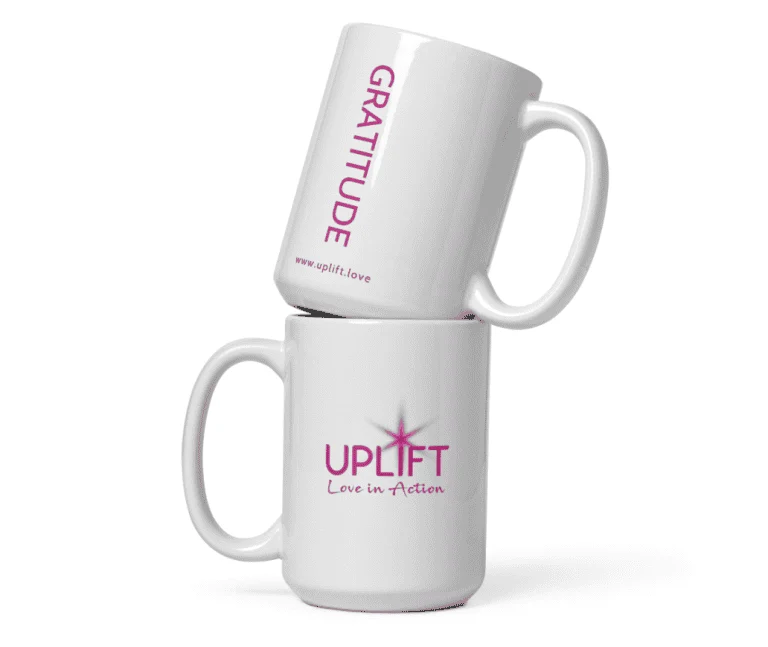
The inclusion of the "UPLIFT Mugs" with their various "intentions" can be seen as an extension of this philosophy. These tangible items are not merely merchandise but tools designed to serve as daily reminders and anchors for the practices of gratitude and mindful living. They embody the program’s intention to integrate these profound concepts into everyday life, offering a physical prompt for continued reflection and positive affirmation. The "Special Offer" for participants underscores a desire to make these tools accessible, further promoting the message of gratitude.
Furthermore, the broader "Uplift" ecosystem, indicated by calls to action like "Take 5 Deep Breaths," "Financial Contribution" (supporting "Love in Action projects"), and "Send a Blessing," suggests a holistic mission. This mission extends beyond individual transformation to collective well-being, implying that personal gratitude and authenticity are foundational to creating a more compassionate and connected world. The "Love in Action projects" signify that the internal work fostered by the program is intended to inspire external, community-focused endeavors.
Implications: A Blueprint for a Transformed Life
The "7 Days of Gratitude" program, particularly its culminating Day 7, offers significant implications for individual well-being and societal flourishing. It provides a blueprint for a life lived with greater intention, joy, and genuine connection.
Individual Transformation: For participants, the journey promises a profound shift in perspective. By consistently asking "What am I grateful for right now?" and engaging in mindful reflection, individuals can rewire their brains to prioritize positive experiences and resilience. The integration of authenticity means shedding the burdens of pretense and conformity, leading to a lighter, more genuine existence. The ability to "just be myself" becomes not just a comforting thought but a powerful baseline, enabling deeper self-acceptance and fostering an unshakeable inner peace. This journey empowers individuals to navigate life’s inevitable ups and downs with a more grounded and open heart, understanding that gratitude can encompass the full spectrum of human experience.
Ripple Effect in Relationships: When individuals cultivate gratitude and authenticity, their relationships naturally improve. Expressing genuine appreciation strengthens bonds, while authentic self-expression fosters deeper, more meaningful connections built on trust and mutual respect. The practice of anonymous giving, as encouraged on Day 7, exemplifies how small acts of kindness can create a ripple effect, spreading positivity and warmth throughout communities.
Fostering a Culture of Compassion: On a broader societal level, a collective embrace of gratitude and authenticity can contribute to a more compassionate and understanding world. When people are secure in their authentic selves and appreciative of their lives, they are often more empathetic and generous towards others. The "Love in Action projects" supported by contributions from the "Uplift" community underscore this vision – demonstrating that individual spiritual growth can fuel collective humanitarian efforts, turning personal insights into tangible positive change.
A Lifelong Practice, Not a Quick Fix: The program implicitly communicates that while a week can initiate significant change, gratitude and authenticity are lifelong practices. The emphasis on continuous self-inquiry and the availability of tools like the "UPLIFT Mugs" suggest that this is merely the beginning of an ongoing journey. The invitation to "dance to it" – to embrace this newfound baseline of self-acceptance and gratitude with lightness and joy – is a powerful metaphor for sustaining this transformative mindset.
In conclusion, the "7 Days of Gratitude" program culminates not just in a list of blessings, but in a profound invitation to live fully, authentically, and with an open heart. By intertwining the practice of gratitude with the courage of authenticity, the program offers a powerful pathway to unlocking greater personal happiness, fostering stronger communities, and contributing to a more loving and uplifted world.