The Unsung Architect of Pulp: A Reappraisal of Edwin K. Sloat’s Diverse Literary Legacy
Introduction
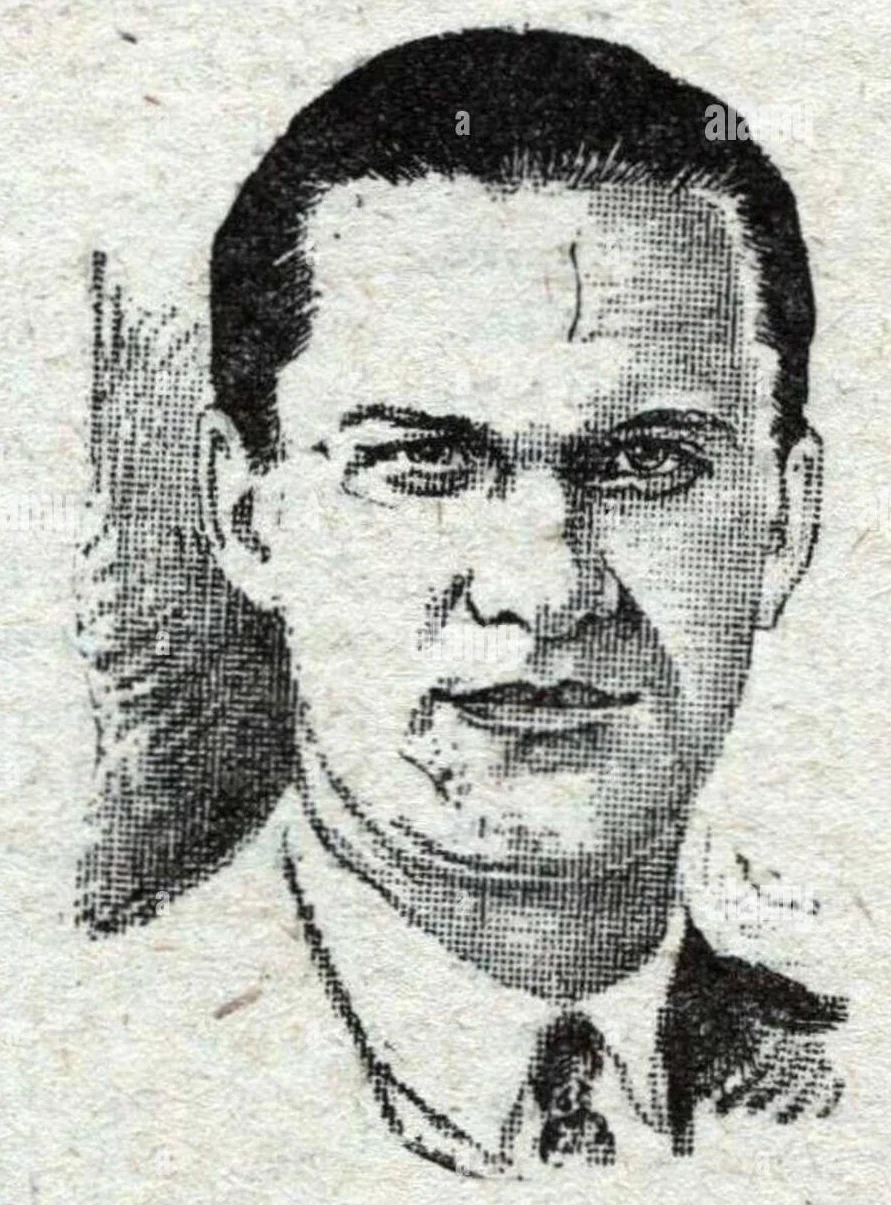
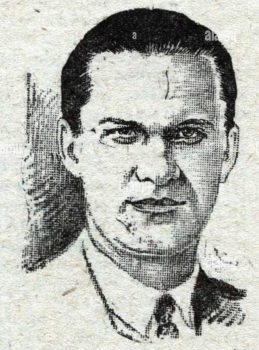
In the vast, star-swept firmament of early 20th-century genre fiction, certain names shine with enduring brilliance, while others, equally integral to the era’s vibrant tapestry, recede into the cosmic dust of history. Edwin K. Sloat, a multi-faceted writer born in Denmark, Iowa, in 1895, stands as a compelling example of the latter. Though his science fiction output was modest compared to the towering careers of contemporaries like Jack Williamson, Sloat’s contributions across science fiction, Westerns, and even detective stories paint the portrait of a dedicated, professional wordsmith who navigated the dynamic, often challenging, landscape of the American pulp magazines. This article seeks to illuminate Sloat’s journey, from his formative years and diverse early career to his significant, albeit less celebrated, role in shaping the nascent genres that captivated millions.
Main Facts: A Life Woven Through Words and Music
Edwin K. Sloat’s life spanned nearly a century, from his birth on March 1, 1895, in the small town of Denmark, Iowa, to his passing on August 9, 1986. His journey was characterized by a remarkable blend of practical pursuits and creative endeavors. A graduate of State Normal College in Edmond, Oklahoma (now the University of Central Oklahoma) in 1916, Sloat’s early career was notably varied, encompassing roles as a newspaperman and a post office employee. Perhaps most uniquely, he served as a Musician 1st Class Petty Officer and band leader during World War I, a testament to his artistic sensibilities even before his literary career blossomed.
Following the war, Sloat settled into family life, marrying Corinne Evelyn Lake in 1922 and raising two sons, Jerry and Donald. It was against this backdrop of domesticity and diverse professional experience that Sloat embarked on his writing career, contributing to the burgeoning world of pulp fiction.
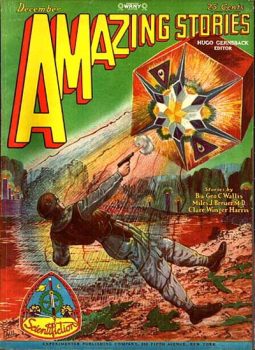
His entry into the science fiction arena was significant, marked by the publication of "Flight to Venus" in the December 1928 issue of Amazing Stories. This issue is historically notable for also featuring the debut of Jack Williamson, a writer whose career would eclipse Sloat’s in both length and renown. Over a period of approximately twelve years, Sloat penned eleven science fiction stories, with a notable six-year hiatus between 1933 and 1939. His final foray into the genre, "The Deadly Swarm," appeared in the August 1940 issue of Astonishing Stories, edited by Frederik Pohl.
While his science fiction work, characterized by critic Everett Bleiler as "routine" yet occasionally "intelligent," remains a curious footnote in genre history, Sloat found greater prolificacy and perhaps commercial success in the Western genre. He authored around fifty Western stories for prominent pulp magazines such as Top-Notch, Cowboy Stories, and Western Story. His first Western, "Gift Guns," was published in March 1936, notably during his break from science fiction. Beyond these two primary genres, Sloat also ventured into detective fiction, contributing at least one story to that popular field.
Edwin K. Sloat’s legacy is one of a versatile craftsman who contributed broadly to the foundational narratives of early American popular fiction, even if his name doesn’t resonate with the same immediate recognition as some of his more celebrated peers. He is interred in Gethsemane Cemetery in Fort Madison, Iowa, his life’s chapters now quietly resting.
Chronology: A Trajectory Through American History and Pulp Fiction
Early Life and Education in the American Heartland (1895-1916)
Born at the close of the 19th century, Edwin K. Sloat’s formative years in Denmark, Iowa, placed him squarely within the heartland of America, a region steeped in agricultural traditions and nascent industrialization. This era was a crucible of change, as the nation transitioned from its agrarian roots to an increasingly urbanized and interconnected society. His decision to pursue higher education at State Normal College in Edmond, Oklahoma, starting around the mid-1910s, was a significant step. Then known as the Central State Normal School, it was a pivotal institution dedicated to training teachers for the rapidly developing territories and states of the American West. The curriculum would have emphasized not only academic rigor but also practical skills, likely including strong foundations in language, history, and the arts, all of which would prove invaluable to a future writer. His graduation in 1916 positioned him at the precipice of a world about to be irrevocably altered by global conflict.
World War I and the Interwar Years: Service, Civics, and Starting a Family (1917-1927)
The outbreak of World War I saw Sloat serving his country, not on the front lines with a rifle, but with a musical instrument. His role as a Musician 1st Class Petty Officer and band leader in the military speaks to a unique talent and an early inclination towards the arts. Military bands during WWI played a crucial role in troop morale, public relations, and ceremonial duties, providing a backdrop of culture and normalcy amidst the chaos of war. This experience likely exposed Sloat to diverse individuals and environments, broadening his perspective and potentially fueling his imaginative spirit.
Upon his return to civilian life, Sloat engaged in a series of practical professions that often served as a proving ground for aspiring writers. His work as a newspaperman would have honed his writing skills, taught him to craft concise narratives, and familiarized him with the demands of deadlines and audience engagement. Similarly, his tenure as a post office employee, while seemingly mundane, would have provided a steady income and perhaps a quiet space for reflection, allowing his creative impulses to simmer.
The year 1922 marked a significant personal milestone with his marriage to Corinne Evelyn Lake, followed by the arrival of their two sons, Jerry and Donald. This period of establishing a family provided a stable personal foundation, allowing him to embark on his literary career with a degree of financial security and domestic contentment.
The Pulp Era Beckons: Science Fiction and Westerns (1928-1940)
Sloat’s professional writing career commenced during the golden age of pulp magazines, a period characterized by inexpensive, sensation-filled publications that offered thrilling escapism to a mass audience. His debut science fiction story, "Flight to Venus," in the December 1928 issue of Hugo Gernsback’s Amazing Stories, was a significant entry point. Appearing alongside Jack Williamson’s "The Metal Man," Sloat was part of a cohort of writers who were literally inventing the genre as they went along. Amazing Stories, launched just two years prior, was the pioneering voice for scientific romance and speculative fiction, and to be published within its pages was to be at the forefront of a burgeoning literary movement.
However, Sloat’s science fiction career, spanning roughly twelve years, was marked by an intriguing pause. Between 1933 and 1939, his output in the genre ceased entirely. This hiatus coincided with the peak of the Great Depression, a period when economic pressures were intense for many Americans, including professional writers. It’s plausible that Sloat, like many authors, diversified his efforts to secure more reliable income streams.
Indeed, it was during this very period, in March 1936, that his first Western story, "Gift Guns," appeared in Cowboy Stories. This shift highlights the economic realities of the pulp market, where a writer’s versatility could be key to survival. The Western genre, with its enduring appeal to themes of rugged individualism, frontier justice, and the American spirit, offered a robust market for freelance writers. Sloat’s prolificacy in this genre, ultimately producing around fifty Western tales, suggests a strong affinity and commercial success that perhaps eluded his science fiction endeavors.
Sloat’s brief return to science fiction culminated with "The Deadly Swarm" in the August 1940 issue of Astonishing Stories, a relatively new pulp magazine edited by the visionary Frederik Pohl. This final science fiction story marked the end of one chapter of his career, as the world braced for another global conflict, and the landscape of genre fiction continued its rapid evolution.
Post-War Years and Later Life (1940-1986)
While Sloat’s science fiction and Western output appears to have primarily concentrated in the pulp era, his life extended well beyond this period. He lived for over four decades after his last known genre publication, passing away at the age of 91 in 1986. Details of his post-1940 professional life are less documented, but it is clear that he lived a long and full life, witnessing profound changes in American society and the literary world. His burial in Gethsemane Cemetery in Fort Madison, Iowa, marks the final resting place of a man whose pen contributed to the escapist entertainment of millions during a transformative era.
Supporting Data: Contextualizing Sloat’s Literary World
The Pulp Ecosystem: A Writer’s Workshop
Edwin K. Sloat’s career unfolded entirely within the ecosystem of the pulp magazines. These publications, named for the cheap wood pulp paper they were printed on, were the primary medium for popular fiction in the early 20th century. They operated on a high-volume, low-cost model, demanding a constant stream of new material from authors. For writers like Sloat, this meant the ability to craft compelling narratives quickly and efficiently across various genres was paramount. The financial compensation, though modest by today’s standards, was enough to sustain a professional writer, particularly one with a diverse portfolio.
Amazing Stories, founded by Hugo Gernsback, was revolutionary. Gernsback not only published "scientifiction" but actively promoted it as a distinct genre, laying the groundwork for what would become modern science fiction. To appear in its pages, as Sloat did with "Flight to Venus," was to be part of a pioneering venture. The magazine’s covers, often by artists like Frank R. Paul, became iconic, visually defining the nascent genre’s aesthetics.
Astonishing Stories, where Sloat’s final SF story appeared, represented a later wave of pulp science fiction, often with a slightly more sophisticated approach under editors like Frederik Pohl, who would become a legendary figure in SF. The transition from Amazing to Astonishing reflects the genre’s rapid development and the increasing number of specialized magazines catering to its growing readership.
Conversely, the Western pulps—Top-Notch, Cowboy Stories, Western Story—were bastions of adventure and escapism. They catered to an audience fascinated by the romance of the American frontier, even as the real frontier had long since closed. Sloat’s ability to seamlessly transition and thrive in this market underscores his versatility and commercial acumen. The demands of writing Westerns—understanding frontier tropes, character archetypes, and action sequences—were distinct from science fiction, yet Sloat mastered both.
Critical Lenses: Everett Bleiler’s Assessment
The primary critical assessment of Edwin K. Sloat’s science fiction comes from Everett F. Bleiler, a foundational figure in science fiction bibliography and criticism. Bleiler’s monumental Science-Fiction: The Early Years (1990) provides an exhaustive catalog and analysis of pre-1930s SF. His evaluation of Sloat’s work as generally "routine" and "uneven" is crucial for understanding Sloat’s standing within the genre.
Bleiler’s description of "Flight to Venus" as "intelligent with amusing touches" suggests that Sloat possessed moments of wit and thoughtful construction, perhaps indicative of the era’s lighter approach to scientific speculation. However, his counterpoint, that "Loot of the Void" was "skimpy and unconvincing," highlights the variability in quality that was common among pulp writers. Such unevenness could stem from various factors: tight deadlines, the need to produce large volumes of content, or perhaps simply varying levels of personal engagement with different story ideas.
Bleiler’s authoritative assessment, while not universally damning, firmly positions Sloat as a secondary figure in the pantheon of early science fiction. His stories contributed to the genre’s volume and thematic exploration but did not, by this critical account, consistently push its boundaries or achieve lasting literary distinction. This critical perspective is vital, as it offers one of the few formal literary analyses available for an author of Sloat’s stature.
The Economics of Authorship: Why the Genre Switch?
The shift from science fiction to Westerns, and the greater prolificacy in the latter, was likely influenced by a combination of economic necessity and creative preference. During the Great Depression, the pulp market was fiercely competitive, and writers often followed where the money was. Westerns were incredibly popular and consistently sold well, providing a more stable income stream than the still-nascent and somewhat niche science fiction genre. Sloat’s concurrent rise in the Western market with his SF hiatus strongly suggests this economic motivation.
Furthermore, a writer might simply find a better fit for their voice, style, or thematic interests in one genre over another. While his SF output was intermittent, his consistent production of Westerns suggests he found a comfortable and productive groove in the tales of the frontier. This adaptability was a hallmark of the successful pulp writer, who often operated as a literary chameleon, capable of donning different genre masks to meet market demands.
Official Responses: Echoes in Literary History
For an author like Edwin K. Sloat, who did not achieve mainstream literary fame or widespread critical acclaim, "official responses" primarily manifest through the lens of genre historians and bibliographers. The most significant "official response" to Sloat’s work comes from the aforementioned Everett F. Bleiler.
Bleiler, in his capacity as a meticulous chronicler of early science fiction, provided an invaluable, albeit often blunt, critical appraisal. His work serves as an "official" record and evaluation from a respected authority within the field. By categorizing Sloat’s stories as "routine" and "uneven," Bleiler essentially offered the prevailing academic consensus on Sloat’s place in early science fiction—that of a competent journeyman rather than an innovator or a master stylist.
The implicit "official response" from the broader literary world and academic institutions is largely one of silence. Unlike Jack Williamson, whose career was long and celebrated enough to warrant retrospectives, academic studies, and reprint collections, Sloat’s work has not garnered similar attention. This lack of sustained critical discourse or re-evaluation speaks volumes about how he has been historically positioned within the literary canon. He is remembered primarily by dedicated genre historians and collectors, rather than forming part of the common curriculum of science fiction studies.
However, this lack of widespread recognition does not diminish his historical importance. The existence of his stories within the pages of Amazing Stories and Astonishing Stories is itself a form of official acknowledgment – a validation by the editors and publishers of the time that his work met the standards and captured the imagination of their readership. His persistent presence in the Western pulps further underscores his professional standing in that genre. These publishing credits, while not critical accolades, are a testament to his professional authorship.
In essence, the "official responses" to Edwin K. Sloat are a mix of measured critical assessment from a specialist historian and a broader historical silence, characteristic of many talented but ultimately less celebrated figures of the pulp era.
Implications: The Enduring Shadow of a Pulp Professional
Edwin K. Sloat’s life and literary career carry several profound implications for understanding the history of popular fiction and the nature of literary legacy.
The Unsung Pillars of Genre
Firstly, Sloat’s story highlights the crucial role played by the "routine" or "uneven" writers in the development of genre fiction. While innovators like H.G. Wells or groundbreaking talents like Jack Williamson (in his later career) pushed boundaries, it was the steady output of authors like Sloat that filled the pages of the pulps, provided continuous entertainment, and built the foundational readership necessary for the genres to flourish. These writers were the unsung architects, constructing the vast narrative landscapes one story at a time, allowing more famous names to build their grand cathedrals upon this sturdy base. Without a broad base of contributing writers, the pulp industry, and by extension, the entire edifice of popular genre fiction, could not have sustained itself.
The Economics of Authorship and Versatility
Secondly, Sloat’s career underscores the economic realities faced by professional writers in the early 20th century. The necessity of writing across genres, and finding greater success in the more commercially robust Western market, illustrates the pragmatic decisions authors often had to make to earn a living. His trajectory serves as a case study in literary adaptability, demonstrating that artistic integrity often had to be balanced with the demands of the market. This versatility, though perhaps contributing to a lack of singular focus in one genre, was a survival skill for many during the tumultuous years of the Depression.
The Capricious Nature of Literary Fame
Perhaps the most poignant implication of Sloat’s legacy is the capricious nature of literary fame. Appearing in the same issue as Jack Williamson’s debut, Sloat had an equally auspicious start. Yet, while Williamson ascended to become a Grand Master of Science Fiction, Sloat’s name largely faded from popular memory. This divergence highlights that a successful debut is merely a beginning; sustained innovation, prolific output within a single genre, critical champions, and perhaps a touch of luck are all factors that contribute to an author’s lasting recognition. Sloat’s story reminds us that many talented writers, even those who were successful in their time, become footnotes, their contributions absorbed into the broader historical narrative without individual distinction.
A Glimpse into the Past
Finally, Edwin K. Sloat offers us a valuable glimpse into the life of a true pulp professional. His diverse background—musician, newspaperman, post office worker—prior to becoming a writer, paints a picture of a well-rounded individual whose varied experiences likely informed his storytelling. His life, spanning momentous historical events from two World Wars to the Great Depression, provides a human connection to the social and cultural backdrop against which these fantastical and adventurous tales were created.
In conclusion, Edwin K. Sloat may not be a household name, but his journey from an Iowa farm to the pages of Amazing Stories and countless Western pulps is a testament to the dedication, versatility, and quiet professionalism that characterized so many writers of the early genre era. His career, though "routine" by some critical measures, was nonetheless an essential thread in the vibrant tapestry of American popular fiction, deserving of remembrance and a renewed appreciation for its unassuming yet significant contributions.