The Unsung Virtue of "Bad" Entertainment: A Deep Dive into Pulp’s Enduring Appeal
In an era often dominated by calls for profound narratives and critically acclaimed masterpieces, a curious phenomenon persists: the widespread, unironic enjoyment of entertainment widely categorized as "bad." From cinematic spectacles rich in explosive action but light on plot, to pulpy novels featuring heroes with alliterative names and a penchant for cheesy one-liners, and video games celebrated more for mechanics than story, a significant segment of audiences actively seeks out and champions these perceived flaws. This article explores the nuanced appeal of "bad" entertainment, examining its value, its evolution, and its surprising implications for creators and consumers alike.
The Core Argument: Celebrating the Imperfect
At its heart, the defense of "bad" entertainment posits that not all artistic value resides in depth, complexity, or critical prestige. Instead, there exists a legitimate and often profound appreciation for works that prioritize pure, unadulterated fun, escapism, and the sheer joy of spectacle. These pieces, often characterized by exaggerated tropes, intentional or unintentional camp, and a cheerful disregard for conventional narrative sophistication, offer a unique form of engagement. They provide a welcome antidote to the intellectual demands of more serious fare, proving that entertainment does not always need to be deep to be deeply satisfying.
The term "bad" in this context is often a misnomer, or at least a highly subjective one. It rarely implies truly incompetent filmmaking, writing, or game design. Rather, it points to a deviation from mainstream critical expectations: a story that embraces silliness over gravitas, a plot that prioritizes spectacle over realism, or characters that embody archetypes rather than psychological complexity. When executed with a degree of self-awareness or, paradoxically, with absolute earnestness, these elements transform what might otherwise be dismissed as flaws into defining features that resonate powerfully with an audience hungry for unpretentious enjoyment. The true genius of "good-bad" entertainment often lies in its unapologetic embrace of its own identity, refusing to feign intellectual ambition where none is intended.
The Evolving Appreciation: A Chronology of "Good-Bad"
The appreciation for what is deemed "bad" entertainment is far from a modern fad; it is a cultural thread woven throughout the history of media. Its lineage can be traced back to the early 20th century with pulp magazines – inexpensive fiction periodicals known for their sensational stories, melodramatic plots, and often two-dimensional characters. These publications, though often derided by literary critics, captivated millions with tales of daring adventurers, cosmic horrors, and gritty detectives, proving that accessibility and thrilling narrative often trumped highbrow literary aspirations.
The B-movie era of the mid-20th century further cemented this tradition in cinema. Low budgets, tight schedules, and often outlandish premises led to films that were technically imperfect but often bursting with creative energy and memorable moments. Many of these, initially dismissed, later gained cult status, celebrated precisely for their quirks and perceived flaws. Films like Plan 9 from Outer Space (often cited as "the worst film ever made") became iconic, not despite their technical shortcomings, but because audiences found charm and entertainment in their earnest, if misguided, ambition.

In more contemporary times, this phenomenon has evolved to encompass a wider array of media and has become more self-aware. The 1980s and 90s saw the rise of action films that prioritized over-the-top choreography and one-liners, laying groundwork for modern blockbusters that continue this tradition. Video games, too, have often leaned into absurd premises or relied heavily on engaging mechanics even when their narratives fell short.
Consider the Transformers film franchise. These movies, frequently lambasted by critics for their convoluted plots, excessive explosions, and often juvenile humor, consistently draw massive audiences. Their appeal lies not in intricate storytelling but in the spectacle of giant robots fighting, a primal fantasy brought to life with cutting-edge visual effects. The experience is visceral, loud, and unashamedly silly, catering directly to a desire for pure, unadulterated action.
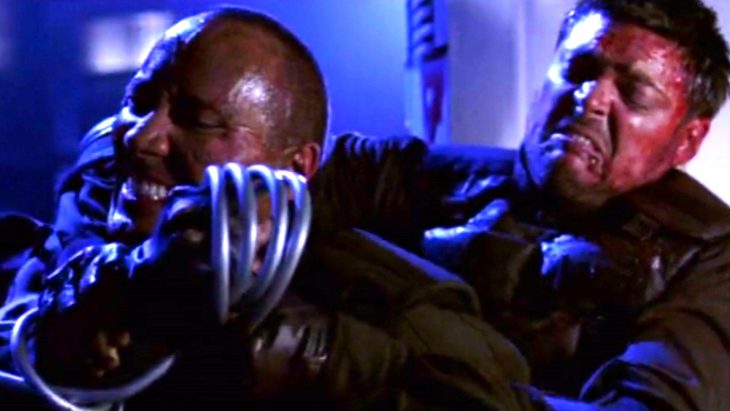
Similarly, the Doom film adaptation (2005) serves as a potent example. While deviating significantly from the game’s established lore and receiving a largely negative critical reception, it has garnered a loyal following. Its appeal stems from its relentless pacing, gratuitous violence, and a willingness to embrace its pulpy sci-fi horror roots without apology. The film’s climactic hand-to-hand combat sequence, which sees a protagonist deliberately discard his weapon to engage in a seemingly nonsensical brawl, exemplifies the kind of absurd bravado that defines "good-bad" entertainment. It’s a moment so ludicrous that it transcends poor writing to become memorable and, for many, genuinely entertaining.
The trajectory of the recent Mortal Kombat film series further illustrates the importance of self-awareness. The initial film attempted to ground its fantastical premise in a serious, almost grim, narrative, even introducing an entirely new character and a somewhat convoluted justification for its iconic tournament. This attempt at gravitas often fell flat, earning criticism for diluting the franchise’s inherent campiness. However, the subsequent sequel reportedly course-corrected, leaning heavily into the inherent hokiness and outrageousness of its source material. By embracing the absurdity of its world and characters, it aimed to deliver a more faithful and enjoyable experience for fans, highlighting that sometimes, less seriousness equates to more genuine fun. This demonstrates a crucial lesson: the "bad" becomes "good" when it understands and plays to its strengths, rather than attempting to be something it is not.
Deconstructing the Appeal: Supporting Data and Psychological Underpinnings
The enduring popularity of "bad" entertainment is not accidental; it is rooted in a complex interplay of psychological, sociological, and artistic factors. Understanding why these works resonate reveals a great deal about human needs for escapism, catharsis, and connection.
1. The Power of Intentionality vs. Accidental Camp: A critical distinction lies between truly incompetent work and that which deliberately embraces its silliness or achieves "camp" status. Intentional camp, as theorized by Susan Sontag, often involves an aesthetic sensibility that delights in exaggeration, artifice, and a certain theatricality. When creators craft a story knowing its premise is absurd, and then commit to it with earnestness or a knowing wink, the audience is invited into a shared experience of amusement. The writer of Dungeon Crawler Carl, for instance, takes an insane premise – a former coast guard and his talking cat fighting through a televised, Dungeons and Dragons-style galactic competition – and makes it work. This success isn’t despite the premise, but because the author, Matt Dinniman, is a competent writer who allows his characters to acknowledge the sheer insanity of their situation without reducing the genuine peril. This earnestness in the face of the ridiculous creates a compelling narrative, building strong attachment to characters like Princess Donut and her pet dinosaur, Mongo. It demonstrates that strong writing can transform even the most outlandish concepts into engaging and beloved stories.
2. Escapism and Cognitive Load Reduction: In an increasingly complex world, entertainment that doesn’t demand deep intellectual engagement serves a vital function. "Bad" movies, books, and games often offer pure escapism, allowing audiences to disengage from real-world stresses and immerse themselves in fantastical, often simplistic, narratives. There’s a profound psychological relief in consuming content that doesn’t require critical analysis, emotional processing of complex themes, or moral dilemmas. It’s a mental vacation, a space where the brain can simply enjoy spectacle, action, or humor without effort.
3. Nostalgia and Shared Experience: Many "bad" films or games gain traction through nostalgia, particularly those from formative years. The emotional connection to past experiences can override critical judgment, transforming flaws into cherished memories. Furthermore, sharing the enjoyment of a "bad" film or game with friends can create a powerful communal experience. Laughing with (or sometimes at) a movie together fosters bonding and reinforces its place in collective memory. This social aspect elevates the entertainment beyond its individual merits.
4. Technical Prowess Despite Narrative Flaws: It’s important to note that "bad" does not always equate to entirely poor production. Many films, while narratively weak, excel in specific areas. The original article highlights "epic fight choreography" in some "bad" movies. Similarly, video games may have stunning visuals or highly addictive mechanics, even if their stories are forgettable. This partial excellence can be enough to carry the entertainment value, proving that specific strengths can compensate for broader weaknesses. The final showdown in Doom, despite its narrative absurdity, featured well-executed action, showcasing the skills of actors like Karl Urban and Dwayne Johnson.
Critical Reception and "Official Responses"
The academic and critical establishment has historically maintained a complex relationship with "bad" entertainment. Traditional film criticism, literary analysis, and game reviews often prioritize artistic intention, narrative coherence, thematic depth, and technical mastery. From this perspective, works that deviate significantly from these benchmarks are often dismissed or panned. The phrase "guilty pleasure" itself encapsulates this tension, acknowledging enjoyment while simultaneously implying a transgression against conventional taste.
However, a growing body of academic work, particularly within cult film studies and popular culture analysis, has begun to deconstruct and legitimize the appeal of "bad" entertainment. Scholars explore phenomena like "camp," "midnight movie" culture, and fan reception, recognizing that audience engagement is a crucial metric often overlooked by traditional critiques. These studies argue that the value of a piece of art is not solely determined by its adherence to established aesthetic principles but also by its capacity to evoke strong responses, build communities, and provide unique forms of pleasure.
The subjectivity of "bad" is also a crucial point. What one viewer finds utterly inane – like the author’s stated aversion to "stoner comedies" – another might find profoundly hilarious or insightful. This divergence in taste underscores that "badness" is not an objective quality but a culturally and individually constructed judgment. The line between "silly but fun" and "just plain idiotic" is fluid and highly personal. While many can agree on the merits of a truly well-crafted piece, the parameters for enjoying something precisely because it is not conventionally "good" are far more diverse. This makes "official responses" from a singular critical perspective often incomplete or even irrelevant to the actual audience experience.
Implications for Creators and the Future of Entertainment
The enduring and evolving appreciation for "bad" entertainment carries significant implications for creators, offering a powerful validation of diverse storytelling approaches and a broader definition of artistic success.
1. Liberating Creative Freedom: For writers, filmmakers, and game designers, the embrace of "bad" offers a liberating perspective. It challenges the notion that every creation must be a profound, intellectually rigorous work destined for scholarly dissection. Instead, it validates the pursuit of pure fun, allowing creators to explore outlandish premises, indulge in genre tropes, and prioritize entertainment value without the pressure of critical gravitas. This freedom can foster greater creativity and a willingness to experiment with unconventional ideas. The author of the original piece, S.M. Carrière, exemplifies this, describing her own "very dumb story," The Timbercreek Incident, as a joyous writing experience. Embracing a premise as absurd as "zombies, but make them fairies," allowed her to "giggle like a maniacal gremlin," demonstrating the intrinsic value and pleasure for the creator in crafting something simply fun.
2. Fostering Unique Audience Connections: Stories that embrace their silliness often forge a strong, often passionate, connection with their audience. This connection is built on shared laughter, mutual understanding of the work’s inherent absurdity, and a collective sense of joy that transcends traditional critical appreciation. These communities often celebrate the very aspects that mainstream critics might decry, turning perceived weaknesses into rallying points for fandom.

3. Redefining Value in Storytelling: The phenomenon of "good-bad" entertainment forces a re-evaluation of what constitutes "value" in creative works. It posits that value can be found in catharsis, escapism, sheer enjoyment, and the fostering of community, not solely in artistic profundity or technical perfection. This expanded definition encourages a more inclusive critical discourse that acknowledges the diverse reasons why people consume and cherish entertainment.
4. Commercial Viability and Cultural Resonance: Far from being niche curiosities, many "good-bad" works achieve significant commercial success and cultural resonance. Their ability to tap into primal desires for spectacle, humor, or simple fun ensures their longevity and market appeal. They remind us that entertainment, in its most fundamental form, is about engaging an audience, and sometimes the most direct path to engagement is through embracing the ridiculous.
In conclusion, the defense of "bad" entertainment is not an apology for incompetence, but a celebration of artistic diversity and audience agency. It underscores that there is immense value in stories that are silly, pulpy, and unashamedly fun. Creators are encouraged to embrace their "bad" ideas, for within them lies the potential for unique joy, profound escapism, and a powerful connection with an audience eager to leave intellectual pretension at the door and simply have a good time. The truly great "bad" stories are those that understand their identity, lean into their quirks, and deliver an experience that, paradoxically, is very, very good.