The Visual Architects of Modern Mythology: Concept Art World Showcases Industry Titans and the Future of Visual Development

The digital entertainment industry is currently undergoing a transformative era, where the line between cinematic realism and interactive gameplay continues to blur. At the heart of this evolution lies the concept artist—the visual architect responsible for dreaming up the worlds, characters, and technologies that define modern culture. Recently, Concept Art World (CAW), a premier global resource for the industry, highlighted a series of high-profile updates featuring legendary contributors like Vance Kovacs, Wes Louie, and Zen Wang. These showcases, paired with a firm institutional stance against AI-driven data harvesting, signal a pivotal moment for the professional art community as it seeks to balance rapid technological advancement with the preservation of human creativity.
Main Facts: A Convergence of Talent and Industry Standards
The recent updates from Concept Art World underscore three primary pillars of the contemporary visual development landscape: the celebration of veteran mastery, the education of the next generation, and the protection of intellectual property.
The highlight of the recent showcase is the extensive look into the pre-production of God of War, featuring the work of Vance Kovacs. Kovacs, whose career spans decades and includes some of the most iconic films and games in history, provided the foundational "look and feel" for Sony Santa Monica’s Norse epic. Alongside Kovacs, CAW has spotlighted the portfolios of Wes Louie and Zen Wang—two artists whose distinct styles represent the breadth of the field, from character-driven narrative art to high-precision industrial design.
Beyond the galleries, the platform is emphasizing professional development through the promotion of The Big Bad World of Concept Art for Video Games: How to Start Your Career as a Concept Artist. This resource serves as a roadmap for aspiring creators entering a market that is more competitive—and more complex—than ever before. Perhaps most significantly, the platform has issued a definitive legal stance: a strict prohibition on the training of Artificial Intelligence (AI) systems using the content hosted on their site, reflecting a growing movement within the creative industries to safeguard human-authored work.
Chronology: The Evolution of Visual Development
To understand the significance of these artists and the resources provided by Concept Art World, one must look at the trajectory of the industry over the last two decades.
- The Early 2000s: The Rise of Digital Painting: As software like Adobe Photoshop and Corel Painter became industry standards, the role of the "concept artist" shifted from traditional markers and paper to digital tablets. Artists like Vance Kovacs were at the forefront of this transition, blending classical painting techniques with digital efficiency.
- 2010–2018: The Cinematic Game Era: The release of titles like the God of War soft reboot (2018) marked a shift toward "cinematic realism." Concept art was no longer just a blueprint for 3D models; it became a tool for establishing emotional tone and narrative weight. Kovacs’ work during this period was instrumental in moving away from the "hack-and-slash" aesthetic of early gaming toward a more grounded, mythological realism.
- 2020–Present: The Professionalization and Education Boom: With the explosion of the "creator economy," the demand for structured education grew. Books like those highlighted by CAW became essential as the barrier to entry for AAA studios rose.
- 2023–2024: The AI Conflict: The emergence of generative AI created a rift in the industry. Platforms like Concept Art World, which serve as galleries for professional portfolios, became the front lines for debates regarding copyright, "scraping," and the ethical sourcing of training data.
Supporting Data: Profiles in Excellence
Vance Kovacs and the Norse Reimagining
Vance Kovacs’ contribution to God of War is a masterclass in visual storytelling. Unlike many artists who focus on high-detail "polish," Kovacs is known for his ability to capture the "soul" of a scene. His work on the Norse saga involved reimagining Kratos not as a static warrior, but as a father weathered by time. Data from the gaming industry suggests that the visual consistency established in the concept phase is a primary driver of a game’s critical and commercial success; God of War (2018) sold over 23 million copies, a feat largely attributed to its immersive world-building.
Wes Louie: The Versatile Storyteller
Wes Louie represents the "Senior Concept Artist" archetype—a professional whose versatility allows them to jump between character design, environment art, and keyframe illustration. His portfolio, often characterized by a blend of cinematic lighting and strong silhouettes, highlights the "Visual Development" aspect of the craft. In modern production pipelines, artists like Louie are essential for ensuring that the art direction remains cohesive across thousands of individual assets.
Zen Wang: The Precision of Industrial Design
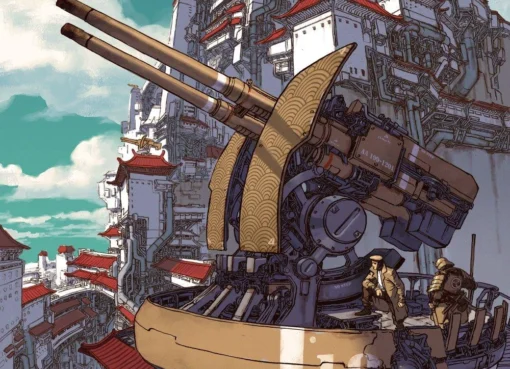
Zen Wang brings a different flavor to the CAW showcase. His work often leans toward the "hard surface" design category—mechs, vehicles, and futuristic architecture. In an era where sci-fi titles (like the Halo or Starfield franchises) demand functional realism, Wang’s background in industrial design principles provides the necessary "logic" to fantastic designs. This level of technical proficiency is what separates hobbyist art from professional-grade concept work.
Official Responses: Protecting the Creative Ecosystem
The creative industry is currently embroiled in a legal and ethical battle over the use of generative AI. Concept Art World’s updated terms of service and footer disclosures provide a clear "official response" to these challenges.
The Non-AI Mandate:
The platform explicitly states: "Any training of AI systems using this content is strictly prohibited." This is not merely a suggestion but a legal stake in the ground. As major AI companies face lawsuits from artists regarding the unauthorized use of their intellectual property, CAW is aligning itself with the "Human Art" movement. This stance is echoed by other industry leaders, such as Procreate and certain factions within the ArtStation community, who argue that AI models built on scraped data represent a form of "digital plagiarism."
The Educational Directive:
The endorsement of The Big Bad World of Concept Art for Video Games serves as an official recommendation for the "right way" to enter the industry. The book, authored by veteran Eliott Lilly, focuses on the reality of the job: the long hours, the necessity of taking feedback, and the importance of business acumen. By promoting this, CAW is signaling that the path to success in the industry is through rigorous training and foundational knowledge, rather than the shortcuts offered by automated tools.
Implications: The Future of Human-Led Design
The convergence of these elements—high-tier artist features, educational resources, and anti-AI policies—has profound implications for the future of the entertainment industry.
1. The "Human Premium"
As AI-generated imagery becomes more ubiquitous, there is an expected "flight to quality." Studios are beginning to place a "human premium" on artists like Kovacs and Louie. The ability to iterate based on specific narrative nuances—something AI currently struggles with—will remain the domain of the professional concept artist. The showcase on CAW suggests that the future of the industry will value the process and the intent behind the art as much as the final image.
2. The Evolution of Art Education
The inclusion of career guides indicates that the "Concept Artist" role is becoming more specialized. Aspiring artists are being encouraged to move beyond "fan art" and toward "production-ready" designs. This involves understanding 3D pipelines, VR sculpting, and the psychological impact of color and composition. The implication is that the next generation of artists will need to be "polymaths"—part-painter, part-engineer, and part-storyteller.
3. Legal Precedents and IP Protection
CAW’s stance on AI training is part of a broader trend that may eventually lead to new copyright laws specifically tailored to the digital age. If platforms that host the world’s best concept art successfully block AI scraping, the "data hunger" of these models may force AI developers to seek licensed, ethical datasets. This would create a new revenue stream for artists but also ensure that the "Visual Architects" of the future are compensated for their contributions to the technological landscape.
4. The Enduring Power of World-Building
Ultimately, the work of Vance Kovacs on God of War proves that great art is the foundation of great brands. The "Norse Era" of the franchise transformed a fading IP into a cultural juggernaut. This reinforces the fact that concept art is not a secondary "marketing" tool, but the primary engine of intellectual property value.
As Concept Art World continues to archive and celebrate these creators, it serves as more than just a gallery; it is a fortress for human imagination in an increasingly automated world. The message to the industry is clear: the future is built by those who can draw the invisible, and that is a skill that remains—for now—uniquely human.