The Digital Renaissance: Concept Art World and the Preservation of Visual Development in the Entertainment Industry

Introduction
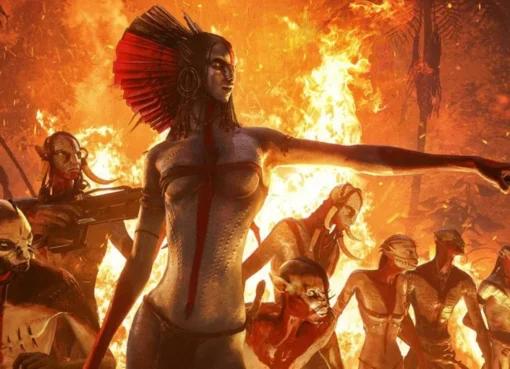
In the rapidly evolving landscape of digital media, the role of visual development stands as the cornerstone of modern storytelling. Concept Art World (CAW), a premier online repository for the creative arts, continues to solidify its position as an essential hub for professionals and enthusiasts alike. By showcasing a diverse range of projects—from the collaborative "Substrata" dark fantasy initiative to the high-stakes world-building of Bungie’s Destiny 2—the platform serves as both a gallery and a fortress for artistic integrity. As the industry faces unprecedented challenges from generative technologies, the recent updates and policy stances from Concept Art World highlight a critical juncture in the preservation of human-led design.
I. Main Facts: A Convergence of Industry Excellence
Concept Art World has recently spotlighted several key pillars of contemporary visual design, spanning independent publishing, AAA gaming, and cinematic production. These features represent the pinnacle of "concept art"—a discipline focused on conveying ideas for use in films, video games, animation, or comic books before the final product is realized.
The core of the recent updates revolves around four major features:
- Substrata: Open World Dark Fantasy: A landmark collaborative art book project that redefines how artists interact outside of corporate structures.
- Destiny 2 Concept Art by Adrian Majkrzak: A deep dive into the "Science Fantasy" aesthetic of one of the world’s most successful live-service games.
- Chang Woo Lee Portfolio Spotlight: A showcase of individual mastery in character and environment design.
- The LEGO Batman Movie: The Making of the Movie: An exploration of the stylized, texture-heavy visual development required for high-end feature animation.
Beyond the art itself, the organization has issued a definitive stance regarding the use of its hosted content. In an era where data scraping is rampant, Concept Art World has officially prohibited the training of Artificial Intelligence (AI) systems using any content hosted on its platform, asserting a protective stance over the intellectual property of the artists it features.
II. Chronology: From Sketch to Screen
The evolution of these featured projects demonstrates the long-tail nature of visual development. To understand the significance of these works, one must look at the timeline of their creation and their subsequent impact on the industry.
The Genesis of Substrata (2014–Present)
The "Substrata" project began as a "world-building jam" initiated by Paul Richards. Unlike traditional studio-led projects, it was a grassroots effort where over 80 top-tier industry artists collaborated to build a dark fantasy universe from scratch. The project’s inclusion in Concept Art World’s recent highlights serves as a reminder of the project’s enduring influence. It paved the way for independent art books that serve as portfolios for "blue-sky" thinking—ideas that are not yet tethered to a specific commercial budget or engine constraint.
The Destiny Era (2014–2024+)
Adrian Majkrzak’s work on Destiny 2 represents a decade of visual evolution. Since the original Destiny launched in 2014, Bungie has relied on a specific "mythic science fiction" aesthetic. Majkrzak’s contributions have been pivotal in transitioning the game from its early terrestrial roots to the more abstract, paracausal environments seen in recent expansions like The Witch Queen and Lightfall. His work, showcased on CAW, tracks the chronological shift from utilitarian military design to cosmic horror.
Cinematic Stylization: The LEGO Batman Movie (2017–Present)
While released several years ago, the visual development of The LEGO Batman Movie remains a gold standard for "stylized realism." The chronology of this project involves a meticulous translation of physical LEGO bricks into a digital medium, ensuring that every thumbprint, seam line, and plastic texture was represented. Concept Art World’s retrospective on this work highlights the enduring relevance of "The Making of" books as educational tools for the next generation of animators.
III. Supporting Data: The Economic and Creative Impact of Concept Art
The importance of the work featured on Concept Art World is not merely aesthetic; it is deeply rooted in the economics of the $200 billion global entertainment industry.
The Cost of Pre-Visualization
In AAA game development (such as Destiny 2), the pre-production phase—where concept artists like Adrian Majkrzak operate—can last between 12 to 24 months. According to industry benchmarks, effective concept art can reduce production costs by up to 20%. By resolving visual puzzles (such as character silhouettes or lighting schemes) in 2D before they are modeled in 3D, studios avoid "re-work," which is the most expensive part of the pipeline.
The Growth of the Art Book Market
The "Substrata" project and The LEGO Batman Movie art book point to a booming secondary market for visual development. The "Art of" book industry has seen a 15% year-over-year growth in collector interest. For artists like Chang Woo Lee, being featured on a platform like CAW isn’t just about visibility; it is a gateway to high-value commissions and book deals that sustain the independent creative economy.
Digital Traffic and Professional Reach
Concept Art World serves as a "who’s who" for recruiters. Internal data suggests that featured artists often see a significant spike in LinkedIn engagement and portfolio views following a CAW spotlight. This ecosystem bridges the gap between the isolated artist and the massive production houses of Hollywood and Silicon Valley.
IV. Official Responses: Defending the Human Element
The most significant "official" component of Concept Art World’s current manifesto is its proactive defense against the unauthorized use of digital assets.
The Anti-AI Training Mandate
The platform’s official statement is clear: "Any training of AI systems using this content is strictly prohibited." This response comes at a time when the concept art community is in a state of upheaval regarding Generative AI.
Industry leaders and artists featured on the site have expressed concerns that AI models trained on their unique styles are being used to automate the very jobs they spent decades mastering. By explicitly forbidding AI training in its terms of service and footer metadata, Concept Art World is taking a legal and ethical stand. This move aligns with a broader industry trend where platforms like ArtStation and DeviantArt have faced scrutiny over their handling of "Opt-out" vs. "Opt-in" systems. CAW’s stance is one of total prohibition, signaling to AI developers that the site is a "No-Fly Zone" for scrapers.
Artist Advocacy
While individual artists like Chang Woo Lee have not issued a collective statement, their continued alignment with Concept Art World speaks volumes. The platform acts as an unofficial union or guild representative, curating content that emphasizes the process of creation—the sketches, the failed iterations, and the final polish—which AI currently cannot replicate with intentionality.
V. Implications: The Future of Visual Development
The convergence of high-end art showcases and strict intellectual property (IP) protection on Concept Art World has several long-term implications for the creative industry.
1. The "Human-Made" Premium
As AI-generated imagery becomes more ubiquitous, there will likely be a "premium" placed on human-led visual development. Studios may soon require "Human-Made" certifications for their concept art to avoid the legal gray areas of AI-generated IP. Concept Art World is positioning itself as the primary archive for this certified human talent.
2. The Rise of the Collaborative Independent
The success of projects like Substrata suggests a shift in how world-building occurs. We may see more "artist-owned" IPs where creators bypass traditional publishers to build worlds directly for their fans. This decentralization of the creative process allows for more experimental and "dark" themes that might be deemed too risky for a Disney or a Warner Bros.
3. Education and Mentorship
By providing detailed looks into the "Making of" projects like The LEGO Batman Movie, CAW serves as a digital university. The implication is that the future of the industry depends on transparency. When artists share their workflows, they raise the collective floor of the industry, forcing every studio to innovate further.
4. The Legal Battlefront of the 2020s
The prohibition of AI training on CAW is a precursor to what will likely be a decade of litigation. As copyright laws struggle to catch up with technology, platforms that host high-quality, high-value IP will become the front lines of the battle for digital rights. CAW’s clear-cut policy provides a template for how other niche creative communities can protect their members.
Conclusion
Concept Art World remains more than just a gallery; it is a vital organ in the body of the entertainment industry. From the cosmic vistas of Destiny 2 to the tactical bricks of LEGO Batman, the art showcased on the platform represents the height of human imagination. However, its most important role in 2026 and beyond may be its function as a sanctuary. By championing the artist and drawing a hard line against the automated exploitation of creative labor, Concept Art World ensures that the "visual" in visual development remains a uniquely human endeavor. As we look toward the future, the platform stands as a testament to the fact that while technology may change the tools, it can never replace the vision.