The Winds of Change: Games Workshop Unleashes "March of Chaos" for Warhammer: The Old World
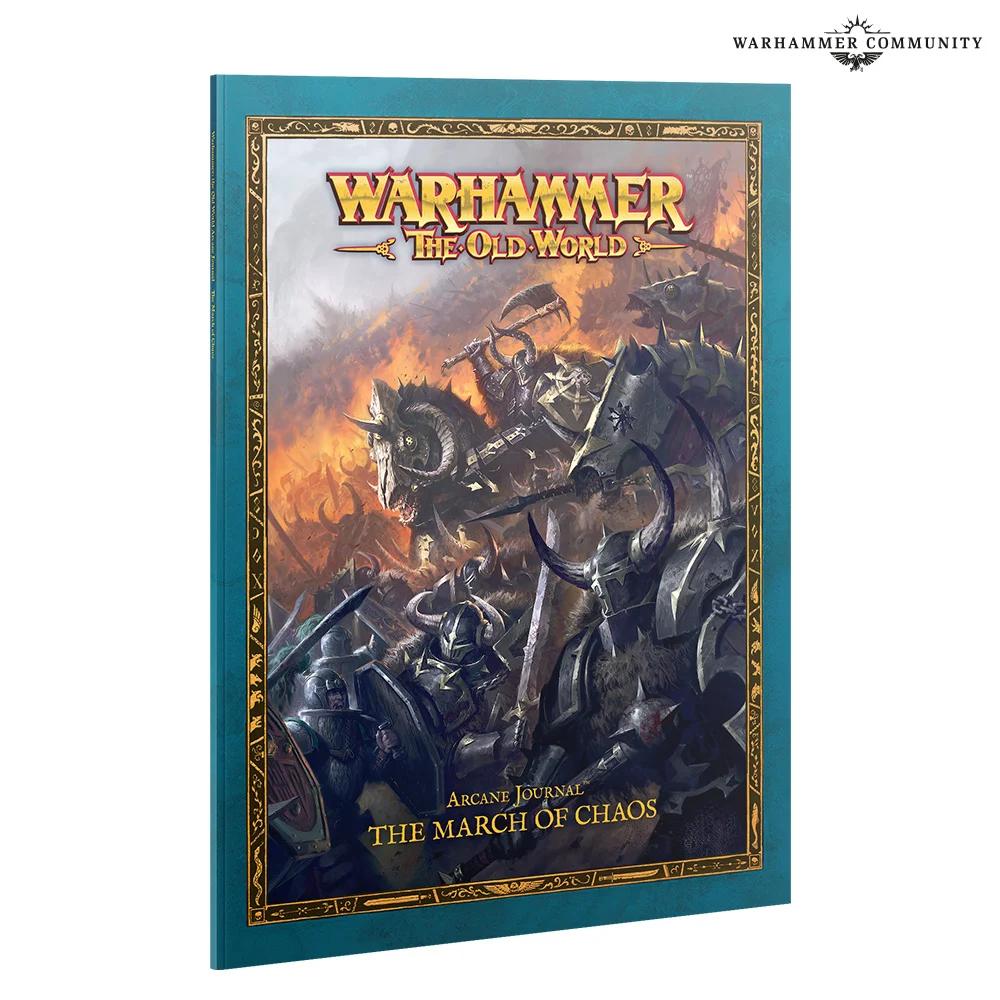
In a significant development for enthusiasts of Warhammer: The Old World, Games Workshop has unveiled its latest Arcane Journal, "March of Chaos." This eagerly anticipated release arrives swiftly on the heels of a new Core Rulebook and an extensive FAQ, promising to inject fresh strategic depth and thematic richness into the burgeoning tabletop wargame. Designed to offer optional, yet impactful, enhancements, "March of Chaos" introduces a revitalized magic system, a collection of ‘corrupted’ core magic items accessible to most factions, and an exciting new Army of Infamy for the Forces of Chaos, allowing players to forge unified legions from their Warriors of Chaos and Beastmen collections.
As the narrative of the Old World intensifies, with the dark gods’ influence spreading across the lands of elves and men, both sides are compelled to harness every available advantage. This journal serves as a testament to that escalating conflict, providing players with new tools to shape the destiny of their forces. From arcane stratagems to cursed artifacts and unholy alliances, "March of Chaos" invites generals to delve deeper into the grim and perilous battlefields of a world teetering on the brink.
A Renewed Focus on Arcane Mastery: The Winds of Magic Return
The most prominent feature of "March of Chaos" is the reintroduction of the Winds of Magic, a system that many veteran players fondly remember from earlier editions of Warhammer Fantasy Battle. In those "before times," the Winds of Magic functioned as a dynamic dice pool, generated by each player every turn, which dictated the ebb and flow of spellcasting and dispelling. While the initial iteration of magic in The Old World diverged from this approach, its partial return has been met with considerable enthusiasm, promising to add a crucial layer of interactivity and strategic nuance to games.
The "March of Chaos" journal offers two distinct methods for integrating the Winds of Magic: Arcane Magic or Channeling. These options provide players with flexibility, allowing them to choose the style of magical engagement that best suits their preferences and desired level of complexity.
Arcane Magic: The Ploy Deck and Tactical Surprises
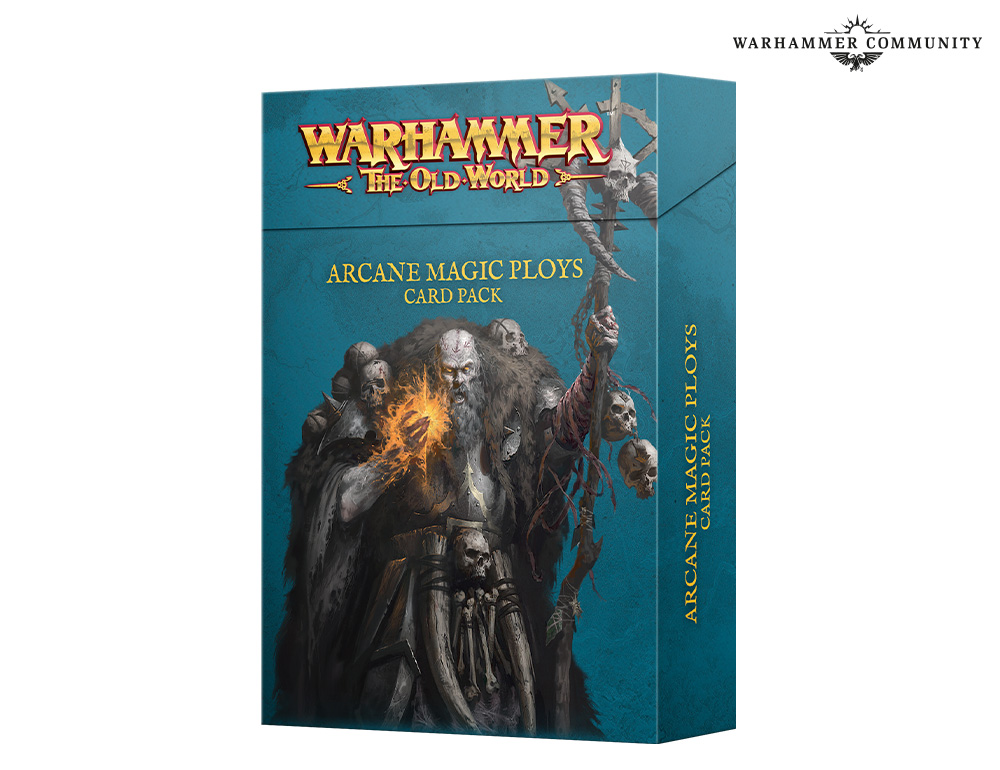
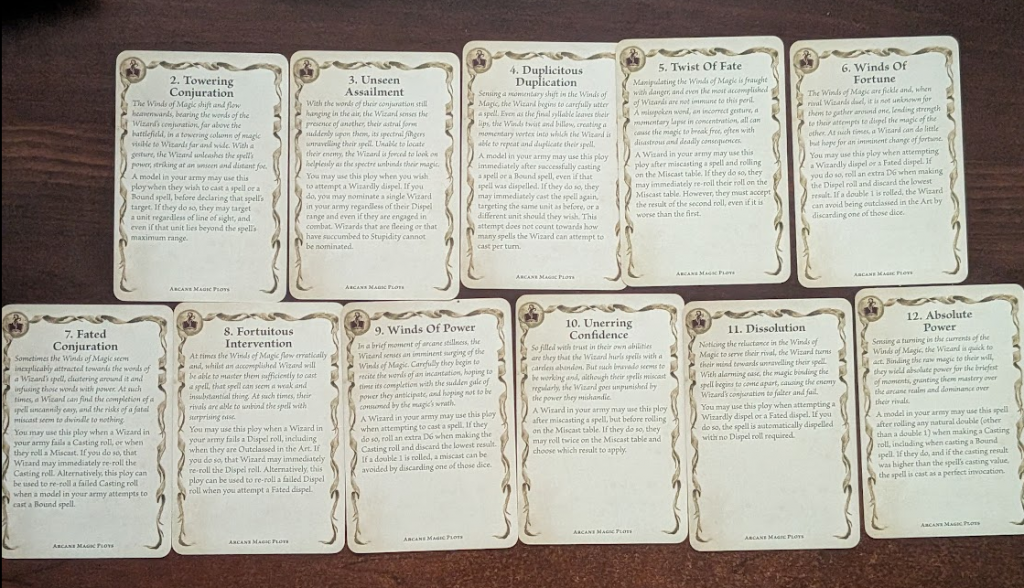
Players opting for Arcane Magic gain access to the all-new Arcane Ploy deck. This physical deck, available for purchase from local game stores or directly from Games Workshop, introduces a suite of tactical cards. During pre-game setup, each player draws six Arcane Ploy cards. For those without the physical deck, a corresponding chart within the Arcane Journal allows for random generation of these ploys. These powerful, single-use cards can be utilized by any unit capable of casting or dispelling spells, or using bound spells, making them potent additions to a player’s magical arsenal.
The Arcane Ploy deck comprises eleven distinct cards, offering a range of effects. To maintain balance and prevent early game dominance, the most powerful ploys are limited to one or two per player. Notable examples include Towering Conjuration, which permits a wizard to target any unit on the board irrespective of line of sight or range, and Absolute Power, which guarantees a perfect invocation for the next spell cast on any double roll, provided the casting cost is met. Other ploys grant free re-rolls for casting and dispelling attempts, allow players to add extra dice to their magic rolls, or even automatically dispel an enemy spell without a roll. While these ploys introduce interesting tactical considerations, some players note that the fundamental power level of magic in the current edition means these additions, while welcome, serve more as ‘enhancers’ rather than radical game-changers. The inherent randomness of the deck might also deter players seeking absolute control over their magical phase in competitive settings.
Channeling: Controlled Power and Strategic Resource Management
For players who prefer a more deterministic approach, Channeling offers an appealing alternative. This method grants each player a pool of channeled dice, generated based on the level of their wizards and rune priests. A Level 1 wizard contributes 1D3 dice, a Level 2 adds 1D3+1, Level 3 grants 2D3, and Level 4 wizards provide 2D3+1 dice. These channeled dice are a versatile resource, usable for five different effects throughout the game: re-rolling a generated spell at the start of the game, adding an additional die to casting and dispelling rolls (discarding the lowest), extending the range of a spell or dispel attempt, or, at the cost of two dice, completely re-rolling a casting or dispel roll (excluding miscasts). There are no limits to how many channeled dice can be used per turn, beyond the remaining pool of the respective casters.
This Channeling system is particularly lauded for its ability to introduce meaningful strategic choices. Players must carefully manage their dice pools, deciding when to commit resources to ensure a critical spell is cast, or a dangerous enemy enchantment is nullified. The controlled nature of this system, coupled with its distinct tactical applications, has been highlighted as a refreshing and interactive addition to the game’s magic phase.
The Perilous Price of Power: Disastrous Miscasts
Crucially, the decision to incorporate the Winds of Magic – whether through Arcane Magic or Channeling – comes with a significant caveat: the mandatory adoption of the new, extremely punishing Disastrous Miscast table. This new table replaces the existing, comparatively mild, ‘Kinda Meh Miscast’ table, and harks back to the brutal unpredictability of 8th edition miscasts, amplified to an unprecedented degree. Outcomes range from devastating Str 10 AP 4 flame templates erupting from the wizard, followed by immediate absorption into the void, to permanent reductions in wizard level or penalties to casting and dispelling rolls for the remainder of the game.
This radical shift in miscast severity introduces a thrilling, albeit terrifying, risk-reward dynamic. Even the most trivial spell attempt now carries the potential for catastrophic failure, affecting not only the casting wizard but potentially friendly units nearby. This element of extreme peril ensures that every spell cast, especially those with high casting values, becomes a moment of heightened tension and strategic calculation, adding dramatic narrative flair to the tabletop experience. The reviewer’s anecdote of a spellweaver "vomit[ing] pure unadulterated violence onto the offending unit before being deleted by the gods" perfectly encapsulates the thrilling unpredictability these rules bring.
Sorcerous Ruses: Tactical Gambits and Lottery Effects
Beyond the main Winds of Magic systems, "March of Chaos" also introduces Sorcerous Ruses. These are 25-point, single-use ‘special abilities’ that do not count towards a wizard’s magic item allotment. They offer potentially powerful effects, albeit with a significant element of randomness. For each wizard a player chooses to equip with a Sorcerous Ruse, a D6 roll at the start of the game determines the specific ability gained.
Examples include Escapology, which offers a 4+ chance to revive a recently deceased wizard with one wound remaining, and several specialized dispel effects. Daemonic Assailants, for instance, involves a contested roll between the wizard’s level plus a D6 and the opponent’s wizard’s toughness plus a D6; success not only dispels the spell but can inflict a wound with no saves allowed. The most potent appears to be Spell Eater, which can automatically dispel an opponent’s spell (even a perfect invocation) and allow the wizard to cast the ‘eaten’ spell later with an extra D6 to the roll. While these Ruses offer intriguing tactical options and moments of dramatic swing, their random nature might limit their uptake in highly competitive play where predictability is often prized. Nonetheless, they represent a welcome addition of thematic flavor and potential for memorable gameplay moments.
Relics of Ruin: Corrupted Magic Items
In addition to enhancing the magical phase, "March of Chaos" introduces seventeen new ‘corrupted’ core magic items. These items are distinct in that they can be utilized by virtually any faction in the game, with the notable exception of Dwarves, a thematic restriction reflecting their inherent resistance to chaotic influences. While many of these items possess a strong narrative focus and come with inherent negative effects, several stand out for their potential to significantly impact competitive play and reshape existing army builds.
Here are some items poised to make a considerable splash:
- Daemon-Blooded Steed: This potent Enchanted Item is a prime candidate for Warriors of Chaos and Wood Elf players. For a minor cost, it grants a cavalry mount +1 Movement, Strength, and Attacks. This is a significant buff for units such as Daemonic Mounts and Great Stags, allowing them to become even more aggressive and impactful on the charge. The drawback of gaining the Impetuous rule is a small price to pay for such a substantial boost to combat effectiveness.
- The Amulet of Spell Attraction: A 25-point Talisman, this item offers savvy players a novel way to exert control over their opponent’s magic phase. Once per turn, if a friendly unit within the wielder’s command range is targeted by a Magic Missile or Hex, the wielder may attempt a Leadership test. A successful test redirects the spell to the wielder instead. This allows for highly strategic plays, such as forcing a devastating hex onto a unit with high Magic Resistance or diverting a critical magic missile onto a less impactful or hidden target, severely disrupting an opponent’s turn.
- The Flail of Wrecks: At 45 points, this is arguably one of the strongest weapons introduced to date. As a flail, it grants the user Strength +2 and Armourbane(1) on any turn they charge, and consistently boasts an AP value of -2. Crucially, it also possesses the Multiple Wounds (2) special rule. The only downside – a reduction of the wielder’s Initiative by 1 on a wound roll of 1 – is a minor inconvenience for many powerful characters, especially those who already possess high Initiative or abilities that reduce enemy Initiative. This weapon is expected to be ubiquitous in armies capable of taking it, drastically increasing the combat output of character models.
- Mantle of Drifting Shadow: This 20-point piece of Light Armour, restricted to infantry, bestows a unique and powerful defensive ability: its wielder becomes untargettable by shooting or spells beyond 6 inches. The trade-off is gaining the Loner special rule. While being untargettable is a strong effect on its own, the Loner rule, surprisingly, presents an advantage for specific factions. Chaos players can attach a Sorcerer Lord or Battle Standard Bearer (BSB) to units like Forsaken of Khorne, enhancing an already formidable unit with powerful character abilities without the typical restrictions. Similarly, Wood Elf players could embed a Spellweaver or Glade Lord within a unit of Wardancers. This item encourages unconventional but highly effective tactical synergies, rewarding creative list building.
These corrupted items exemplify Games Workshop’s design philosophy of introducing potent effects balanced by thematic drawbacks, encouraging players to weigh risks against rewards and fostering diverse strategic approaches.
The Confluence of Damnation: Hordes of Chaos Army of Infamy
"March of Chaos" also introduces The Hordes of Chaos, a brand-new Army of Infamy (AoI) designed to allow Chaos players to seamlessly integrate units from their Warriors of Chaos and Beastmen collections into a cohesive force. This AoI offers a compelling narrative opportunity for generals to command mixed legions vying for the favour of the Dark Gods, though some of its unique rules and restrictions primarily cater to narrative play, as is often the case with such specialized army lists. The "Champions of Ruin" option, allowing for individual character progression, is explicitly earmarked for narrative campaigns.
Compositional Structure and Limitations
The compositional list for The Hordes of Chaos allows for a single Daemon Prince, Beastlord, or Chaos Lord as a general, regardless of points. Players may then take one Exalted Champion, Great Bray Shaman, or Sorcerer Lord per 1000 points, alongside other character options from the Ravening Hordes army book, with the notable exception of the Doombull, who is replaced by the new Cult Magister.
Core units must constitute at least 33% of the army, requiring at least one unit of Warriors of Chaos or Marauders, and one unit of Gors or Ungors. Chaos Warhounds and the new Chaos Cultists can also be taken in any number. Should a Chaos Lord, Exalted Champion, or Daemon Prince serve as the General, a single unit of Chosen Chaos Warriors may be taken as Core. Conversely, if a Beastlord is the General, a unit of Bestigors gains the Core slot.
In the Special category, Marauder Horsemen, Chaos Knights, and Chaos Chariots become available. Generals with a Chaos Lord, Daemon Prince, or Exalted Champion can also include a unit of Chosen Knights here. The Rare slot is expanded to 33% (up from the usual 25%), allowing for Shaggoths, Chaos Spawn, Minotaurs, Dragon Ogres, Chimeras, Chaos Giants, Cygors, or Ghorgons.
However, a significant point of contention for many players is the absence of several faction favorites from this list, including Razorgors, Harpies, and Forsaken. The reclassification of all standard core cavalry units to the Special slot also poses a challenge for list building, particularly in scenarios focused on objective control. While the option to field Chosen Warriors in Core is tempting, the overall restrictions and omissions limit some of the more obvious synergistic builds one might expect from a mixed Chaos force.
Special Rules: Unholy Union and The Dark Gods’ Favour
The Hordes of Chaos AoI comes with four distinct special rules that define its playstyle:
-
Unholy Union: This is the most potentially impactful rule, though it carries specific riders. Within 6 inches of a friendly Beastmen unit, Warriors of Chaos units gain re-rolls of 1 to hit. Conversely, Beastmen units gain re-rolls of 1 to wound when within 6 inches of any Warriors of Chaos unit. Additionally, both factions may apply a -1 modifier to their Flee rolls when within 6 inches of each other. A crucial limitation is that these effects do not apply to characters or units shared by both factions (e.g., Dragon Ogres, Chaos Spawn), explicitly preventing the "juicing up" of these already powerful models. This lack of character synergy is a notable drawback, given the limited army options. Despite these restrictions, the consistent re-rolls provide a welcome boost to combat phases for expensive units like Knights or Warriors, by simply positioning supporting units nearby.
-
For the Dark Gods!: This flavorful rule triggers when a character in the army kills an enemy model in a challenge. The character must immediately roll on the Gaze of the Gods table, and the army general gains a free re-roll when using the Gaze. This incentivizes character challenges, offering the potential for combat veterans to gain powerful, game-changing boons as the battle progresses, transforming them into increasingly potent threats.
-
Untrusting Allies: This restrictive rule states that Chaos Characters cannot join Beastmen units, and vice versa. Furthermore, neither faction can utilize the Leadership characteristic of a character from the other. This significantly curtails direct character synergy and necessitates careful planning regarding unit leadership and character placement.
-
The Shadow Grows: A re-iteration of a rule seen in other Armies of Infamy (like Heralds of Darkness), this forces players to include a rank-and-file unit with a specific Mark of Chaos for every character in their list that possesses one. While it adds a layer of list customization constraint, its impact is generally less severe here, as most Hordes of Chaos lists are unlikely to feature more than two characters with specific marks.
These rules collectively define The Hordes of Chaos as an army that encourages thematic, inter-faction cooperation, albeit with explicit limitations designed to prevent overly dominant combinations. The design appears to prioritize the visual and narrative appeal of a mixed force over outright competitive optimization.
New Units for the Pantheon: Chaos Cultists and Cult Magister
The Hordes of Chaos AoI introduces two new units exclusive to this army, both of which offer solid tactical contributions:
-
Chaos Cultists: Costing 6 points per model, these units come in squads of 5-20 and feature a standard human stat-line (WS 3, S 3, T 3, Ld 6, M 4, Ld 7 with an Apostle champion). They are equipped with extra hand weapons and throwing weapons, with a free option to swap for short bows. Their special rules include Open Order, Skirmishers, Warband, Mark of Chaos Undivided, and Ambushers. Two unique rules set them apart: Dark Pawns ensures that friendly units do not panic if a unit of Cultists breaks, runs through them, or explodes nearby. Unseen Threat is their true tactical advantage, granting a +1/-1 modifier to their Ambush rolls and, crucially, allowing them to deploy within 4 inches of enemy units upon ambushing, rather than the standard 8. This makes them exceptionally potent for threatening baggage trains, overwhelming smaller backfield units, or seizing objectives with surprising speed.
-
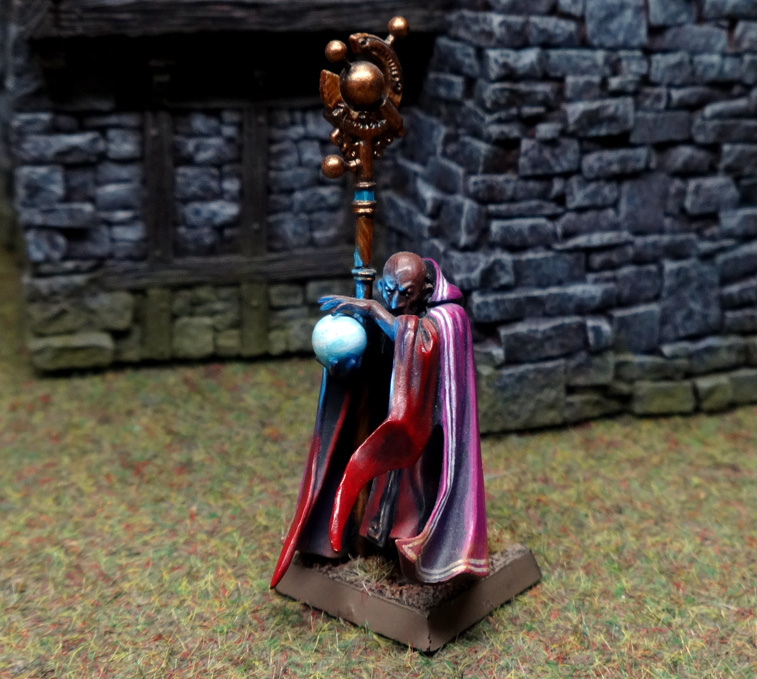
Cult Magister: This 55-point Level 1 wizard boasts an impressive stat-line for its cost (WS 5, S 4, T 4, 2 attacks, Ld 8), mirroring the combat prowess of a Sorcerer Lord. For an additional 3 points, it can be equipped with a flail, further enhancing its melee capabilities. Cult Magisters may take a spell from the Lore of Dark or Daemonology but cannot upgrade to Level 2. They can gain Ambushers for 5 points and take up to 25 points in magic items. They possess the Mark of Chaos Undivided and two unique special rules: Thralls of Chaos locks Magisters to units with the Dark Pawns special rule (currently only Cultists). Sacrifice provides every Magister with a free Jagged Dagger, allowing them to kill a model in their unit when casting a spell to gain a bonus equal to the dead model’s Wounds characteristic. This ability allows Cult Magisters, especially when embedded in Cultist units, to sling more potent spells from afar, providing a much-needed ranged magical threat for Warriors of Chaos players. The journal even suggests using an intimidating Amethyst Wizard model to represent this character, adding a touch of dark aesthetic.
These new units effectively fill tactical niches within the Hordes of Chaos, providing affordable skirmishing elements and a unique wizard option that combines combat ability with a distinctive casting mechanic.
Strategic Application: A Sample Hordes of Chaos List Analysis
To illustrate the potential of the Hordes of Chaos, let’s dissect a sample list provided by the journal:
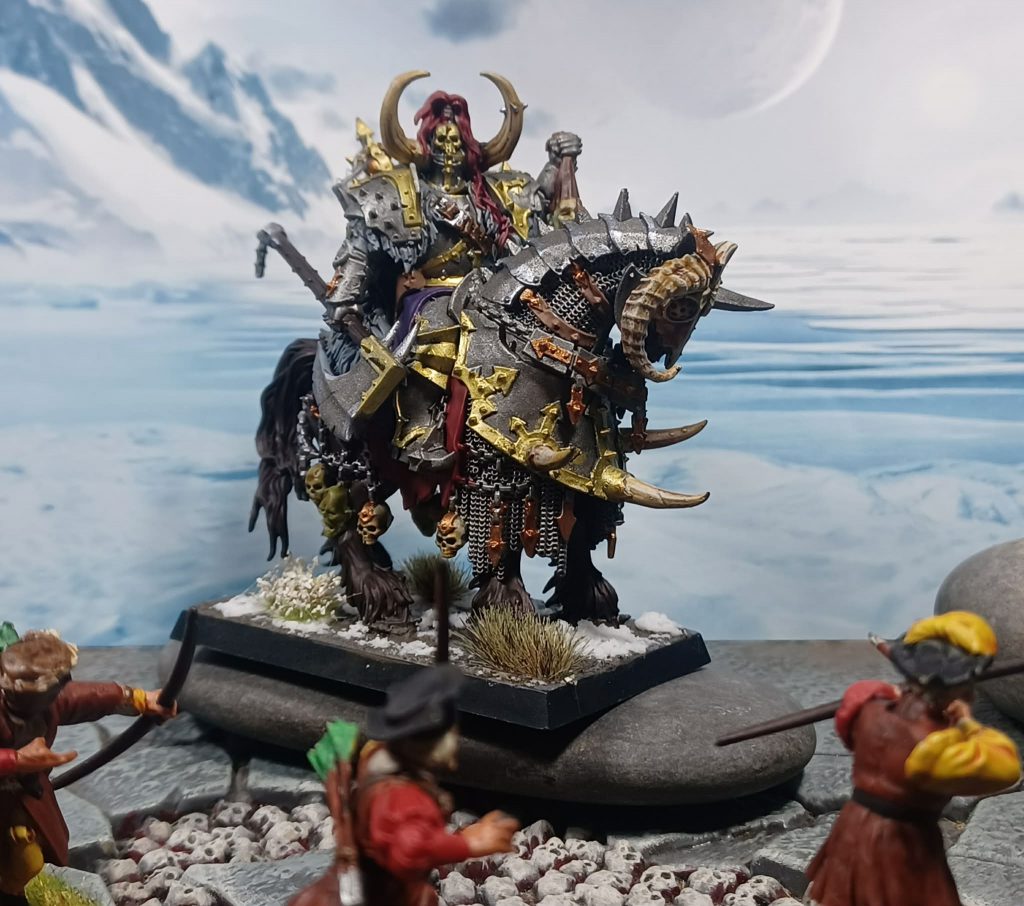
- 382 – Chaos Lord: Shield, Mark of Nurgle, Extra Arm, General, Daemonic Mount, Flail of Wrecks, Daemon-Blooded Steed, Crown of Everlasting Conquest.
- Role: This character is designed as a devastating individual combatant. The combination of the Daemon-Blooded Steed and Flail of Wrecks makes him a potent threat, capable of delivering immense damage on the charge. The Mark of Nurgle enhances his durability, while the Crown provides crucial leadership buffs.
- 175 – Aspiring Champion: Flail, Shield, Mark of Chaos Undivided, Battle Standard Bearer, Monster Hunter’s Tapestry, Talisman of the Carrion Crow.
- Role: The essential BSB, providing crucial re-rolls to combat resolution and rallying. The Monster Hunter’s Tapestry offers protection against large threats, and the Flail gives him some personal combat punch. He is intended to bolster the Chosen Warriors.
- 300 – Sorcerer Lord: Mark of Chaos Undivided, Wizard Level 4, Daemonology, Taskmaster’s Scourge, Spell Familiar, Tome of the Dark Gods.
- Role: The primary magical offensive and defensive asset. Daemonology provides powerful offensive spells, and Level 4 ensures a large dice pool for Channeling or Arcane Ploys. The Taskmaster’s Scourge offers unit buffs, while the Spell Familiar and Tome enhance his magical capabilities. He is designed to join the Chosen Warriors.
- 58 – Cult Magister: Flail
- Role: A cheap, potent Level 1 wizard for supporting Cultists and contributing focused magical attacks. The flail gives him surprising melee punch for his points.
- 58 – Cult Magister: Flail
- Role: Similar to the above, providing redundancy and additional magical output.
- 498 – 18 Chosen Chaos Warriors: Full Plate Armour, Shield, Drilled, Mark of Nurgle, Enhanced Reflexes, Champion, Brazen Collar, Standard Bearer, War Banner, Musician.
- Role: The core "deathstar" unit of the army. Mark of Nurgle and Enhanced Reflexes make them incredibly durable. Drilled ensures they perform well in combat, especially when supported by the Sorcerer Lord and BSB. The War Banner enhances their combat resolution. The strategy aims to make them a mobile, heavily armored wall.
- 72 – 12 Chaos Cultists
- Role: Cheap skirmishers with throwing weapons and extra hand weapons. Intended to hunt war machines and threaten baggage trains, utilizing their Unseen Threat for disruptive ambushes.
- 72 – 12 Chaos Cultists: Shortbow
- Role: Ranged support, using shortbows to pick off lighter targets. One of the Cult Magisters would likely join this unit to enhance its ranged magical output via Sacrifice.
- 77 – 12 Ungor Herds: Shortbow, Ambushers, Musician
- Role: Cheap, mobile ambushers for objective play or harassment. Their "Unholy Union" synergy with the Chosen Warriors provides them with re-rolls to wound if positioned correctly.
- 65 – 10 Ungor Herds: Shortbow, Musician
- Role: Additional cheap skirmishers, providing numbers and flexible deployment.
- 65 – 10 Ungor Herds: Shortbow, Musician
- Role: Further supporting element.
- 198 – 3 Dragon Ogres: Heavy Armour, Great Weapon
- Role: A potent flanking threat or counter-charge unit. Their raw combat power keeps opponents honest and prevents them from easily bypassing the Chosen Warriors.
The overarching strategy of this list revolves around a highly durable and hard-hitting Chosen Warrior block, supported by powerful characters and flexible skirmishing elements. The Ambushing Ungors and Cultists provide tactical flexibility, threatening flanks and objectives, while the Chaos Lord acts as a potent individual hammer. The Magisters offer cheap, targeted magical support, enhancing the overall offensive capabilities. While this list is acknowledged as "far from optimized," it showcases the unique blend of units and synergies available within The Hordes of Chaos, aiming to create a dynamic and challenging force on the tabletop.
Concluding Assessments and Future Outlook
"March of Chaos" stands out as a genuinely interesting and impactful Arcane Journal for Warhammer: The Old World. The revitalized Winds of Magic system, particularly the Channeling option and the dramatic Disastrous Miscast table, represents a welcome addition that significantly enhances the game’s magical phase, offering both strategic depth and narrative excitement. These changes are likely to be embraced by players seeking more interactive and perilous magical duels.
Furthermore, the introduction of ‘corrupted’ core magic items is a clear highlight. Several of these artifacts, such as the Flail of Wrecks and the Mantle of Drifting Shadow, possess the potential to genuinely shake up the existing meta, encouraging innovative list building and strategic adaptations across various factions. This injection of new options is a positive sign for the game’s long-term health and diversity.
The Hordes of Chaos Army of Infamy, while conceptually appealing, presents a more nuanced picture. While it offers a unique avenue for players to combine their Warriors of Chaos and Beastmen collections, the numerous restrictions, omissions of popular units, and the somewhat reined-in synergy rules prevent it from reaching its full competitive potential. The lack of stronger character integration within the "Unholy Union" rule is a particular disappointment, especially given the already limited army options. This might be a conscious design choice by Games Workshop to prevent unforeseen, overpowered combinations, but it can lead to frustration for players seeking optimal builds. The recent adjustments to popular Beastmen options like Hagtree and Viletide also diminish the appeal of Great Bray Shamans within this AoI. For many, the inclusion of units like Razorgors and Harpies would have provided much-needed versatility and punch.
Despite these reservations regarding the Hordes of Chaos AoI, the overall package delivered in "March of Chaos" is robust and engaging. The innovations in magic and the compelling new magic items provide substantial value for Old World players, promising to reinvigorate gameplay and foster new strategies. This Arcane Journal is a testament to Games Workshop’s ongoing commitment to evolving and enriching the Warhammer: The Old World experience, earning a solid B+ for its impactful additions and continued development of a beloved fantasy setting.