"Bughunters": A Retrospective on TSR’s Flawed Gem and the Enduring Appeal of Sci-Fi Horror
Originally Published: March 16th, 2002
Updated Perspective: While initially reviewed with optimism for its utility, a retrospective glance at Bughunters reveals its true enduring value lies primarily in its exceptional star map and its rich, albeit underexplored, conceptual framework.
Main Facts
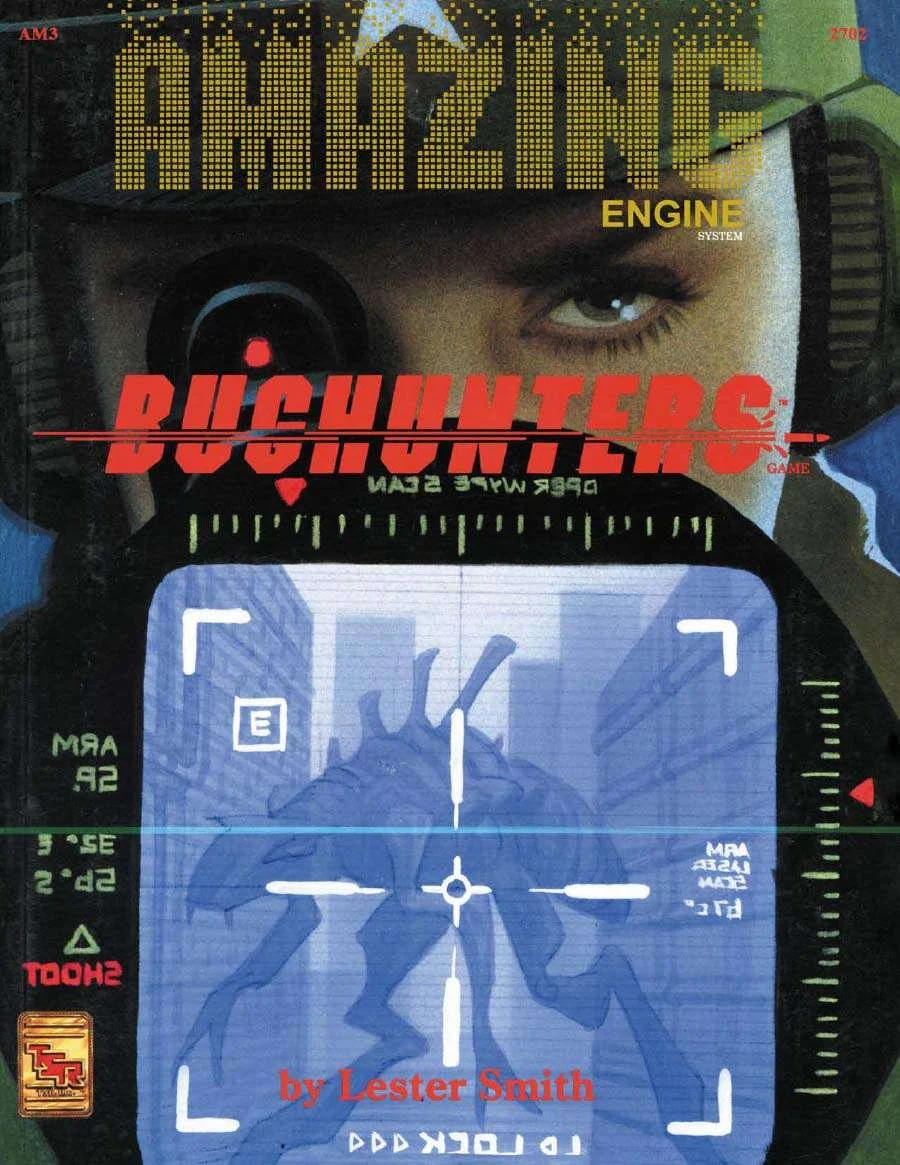
In the annals of tabletop role-playing games, TSR, Inc. holds a legendary, if sometimes controversial, place. Among its ambitious, yet often underappreciated, ventures of the early 1990s was the Amazing Engine system, a bold attempt to create a generic, multi-genre RPG platform. One of its early universe supplements, released in 1993, was Bughunters – a title that immediately conjured images of desperate, pulse-pounding sci-fi action, unmistakably echoing the visceral horror and military grit of classic franchises like Aliens.
Bughunters thrusts players into a grim future as "Synners," synthetic humans engineered for perpetual military service within the United Terra Reconnaissance and Peacekeeping Force (UTRPF). These aren’t just any soldiers; they are clones imbued with the braintaped personalities of deceased or consenting civilians, creating a profound and unsettling identity crisis at the heart of the game. Their mission: to safeguard Mother Earth from an unceasing onslaught of hostile alien species, a mandate born from a galactic history steeped in ancient, unending warfare.
However, as an original review from March 16th, 2002, highlighted, Bughunters arrived with significant baggage. Despite its compelling premise and innovative character concept, the supplement was criticized for its lack of content depth, a perceived consequence of TSR’s publishing practices during that era, characterized by excessive whitespace and sparse actual "meat." While its physical copies might have long since vanished from store shelves into remainder bins, its digital presence on platforms like DriveThruRPG ensures its continued, albeit niche, accessibility. Yet, even with its structural shortcomings, Bughunters retains a distinct charm, offering a rich repository of adaptable ideas and a truly unique take on the "bug hunt" genre that continues to intrigue GMs and players seeking inspiration for their own cosmic horrors.
Chronology: The Life and Times of "Bughunters"
The journey of Bughunters is intrinsically linked to the broader narrative of TSR in the early to mid-1990s, a period marked by both ambitious innovation and operational challenges.
The Early 1990s: TSR’s Search for Diversification
As the 1990s dawned, TSR, Inc., the undisputed titan of the RPG industry thanks to Dungeons & Dragons, faced a strategic imperative: diversification. While D&D remained its cash cow, the company sought to broaden its portfolio beyond fantasy and explore other lucrative genres. This era saw a surge in generic role-playing systems from various publishers, aiming to provide a universal framework for any conceivable setting. TSR recognized this trend and sought to create its own contender.
1993: The Launch of "Amazing Engine"
The culmination of this strategic push was the Amazing Engine system, launched in 1993. Conceived as a modular, adaptable core rulebook, Amazing Engine promised to be TSR’s answer to GURPS or Hero System. The core system guide was designed to be paired with various "universe books," each detailing a distinct setting – from fantasy to cyberpunk, and of course, science fiction. The ambition was considerable: a single, robust engine capable of powering an entire library of diverse gaming experiences. Initial reception was mixed; while the system demonstrated some mechanical strengths, the execution of its modularity, particularly the frequent reprinting of core rules within each supplement, would become a recurring point of contention.
1993: "Bughunters" Enters the Fray
Among the first wave of Amazing Engine universe books was Bughunters. Released the same year as the core system, it was designed to showcase the engine’s capability for gritty, action-oriented science fiction. It promised players a universe of high-stakes combat against terrifying alien threats, infused with a dark, existential premise for its player characters. Positioned as a direct spiritual successor to the intense sci-fi action popularized by films like Aliens, it aimed to capture that same blend of military discipline, visceral horror, and desperate survival. Its release was an attempt to carve out a niche in the burgeoning sci-fi RPG market, alongside established titles and new competitors.
Mid-1990s: TSR’s Decline and Acquisition
The mid-1990s proved to be a turbulent period for TSR. Despite continued D&D sales, the company grappled with financial difficulties, strategic missteps, and a perceived decline in the overall quality and content density of many of its non-D&D product lines. Amazing Engine, with its often-criticized publishing model for supplements, struggled to gain significant traction or build a dedicated player base. Many of its universe books, including Bughunters, saw limited print runs and eventually faded from retail shelves. By 1997, TSR’s financial woes led to its acquisition by Wizards of the Coast, effectively ending many of its non-D&D product lines and marking the sunset for Amazing Engine.
Post-1990s: From Print to Digital Remainder
With TSR’s acquisition, Bughunters and other Amazing Engine supplements went out of print, becoming relics of a bygone era. For years, they were primarily found in the "remainder bin" sections of game stores or at clearance sales, sparking curiosity among bargain-hunting RPG enthusiasts. This context directly informed the original 2002 review, which sought to answer the question: was this obscure, out-of-print book worth the meager asking price?
2002: The Original Review’s Perspective
The original review, published in March 2002, offered a contemporary (at the time) look back at Bughunters. It analyzed the book not as a new release, but as a historical artifact, evaluating its potential for adaptation and its enduring strengths despite its age and publishing flaws. It acknowledged the book’s availability as a bargain item and aimed to guide potential purchasers.
Present Day: Digital Legacy and Enduring Concepts
Today, Bughunters enjoys a second life in digital format, available on platforms like DriveThruRPG, often bundled with the Amazing Engine core rules. While it never achieved widespread fame, its unique "Synner" concept, its compelling ancient alien lore, and its practical ship design system continue to be cited by enthusiasts as valuable pieces of game design. It stands as a testament to the creative sparks that often emerged even from products constrained by the publishing realities of their time, proving that good ideas can always find an audience, regardless of their initial packaging.
Supporting Data: Deconstructing the "Bughunters" Universe
To fully appreciate Bughunters, one must delve into its intricate concepts and understand the context of its creation.
The "Amazing Engine" Framework: A Double-Edged Sword
The Amazing Engine itself was a laudable attempt at a universal RPG system. Its design aimed for modularity, allowing different genres to plug into a core rule set. However, this ambition often stumbled in execution, particularly regarding its supplements. As noted in the original review, a major flaw was the requirement for each "universe book" to "redesign and reprint" significant portions of character creation and combat rules. This redundancy bloated the page count with information already present in the core rulebook, directly contributing to the "fluff problem" and diminishing the space available for unique setting content. While intended to make each supplement somewhat stand-alone, it paradoxically made them less efficient and less appealing as additions to a core system.
The "Synner" Concept: A Masterclass in Existential Horror
Perhaps the most compelling aspect of Bughunters is its profound "Synner" concept, which serves as both a solid premise for gameplay and a rich source of characterization and drama. The narrative unfolds with chilling logic:
- The Isler Jump Dilemma: Early FTL travel via "Isler jumps" causes debilitating illness in normal humans unless they are in cryogenic sleep. This creates an initial need for synthetic humans – Synners – who are immune to these effects.
- Military Necessity and Expansion: Once Synners proved viable, the UTRPF recognized their potential. Legal frameworks were quickly established to permit their use in the military. Genetic modifications followed, leading to the creation of advanced "super-soldiers."
- Societal Rejection and Perpetual Service: The creation of super-soldiers, however, led to societal unease and fear. Public pressure resulted in laws preventing Synners from ever mustering out of the UTRPF. Once created, they were military property for life. This trapped existence adds a layer of bleakness and fatalism to every Synner’s story.
- Braintaping and Identity Theft: The constant pressure from alien threats pushed the military to accelerate Synner production. A horrifying technological innovation, "braintaping," allowed civilian personalities to be duplicated and inserted into rapid-growth clones. Civilians might find morbid comfort that a "part" of them was having adventures in space, but for the Synner, it meant their entire identity, their memories, and their very self were borrowed, secondhand.
This layered origin creates an immediate and potent source of player drama. PCs are not just fighting aliens; they are grappling with their own stolen identities, their pre-programmed loyalties, and the knowledge that their lives are not truly their own. This premise invites deep role-playing, exploring themes of free will, personhood, and the nature of humanity, elevating the game beyond mere bug-hunting.
The UTRPF: Humanity’s Last Line
The United Terra Reconnaissance and Peacekeeping Force is depicted as humanity’s desperate shield against an overwhelmingly hostile galaxy. Its very existence is a testament to the brutal reality that "every single alien in existence is hostile." This grim outlook permeates the setting, fostering a sense of constant vigilance, paranoia, and the grim necessity of extreme measures, such as the creation and exploitation of Synners. The UTRPF is not a glorious, shining beacon of hope, but a hardened, morally compromised military machine, reflecting the existential threat it faces.
Ancient Alien Lore: The Shapers and the Artificers
Bughunters provides a compelling cosmological backdrop for the universal hostility. The majority of intelligent life in the known galaxy was either created, modified, or enslaved by two ancient, warring races: the Shapers and the Artificers.
- The Shapers: A psychic race characterized by biological technology, manipulating life itself to create their fleets and servants.
- The Artificers: An insectoid race focused on advanced "hard" technology, constructing intricate machines and cybernetic thralls.
These two titans have been locked in a "centuries-old war," a conflict that has utterly exhausted both sides. However, the lingering hostility they instilled in their various client races persists. This ancient grudge is the fundamental reason why humanity encounters immediate threats from nearly every alien species: they’ve been conditioned over millennia to assume any unknown race is an agent of the opposing faction. This lore provides a potent explanation for the game’s premise, transforming simple alien encounters into reflections of a grand, cosmic tragedy.
Content Breakdown and Structural Deficiencies
Bughunters provides the expected elements of an RPG supplement:
- Player’s Section: Future history, character generation rules specific to Synners, details on Synner life, combat rules (often re-printed from Amazing Engine), military equipment, ship details, and a mini-sourcebook on Stargate (an L-5 space station serving as a primary starting point).
- GM’s Section: Additional background, stats for various "vicious aliens," and the lore of the Shapers and Artificers.
However, the core criticism remains: "it falls down by not going far enough." The military equipment, while present, is sparse. The alien threats, while intriguing, are insufficient to sustain a long-running "hunt the new bug this week" campaign without significant GM improvisation. The universe, despite its strong foundational concepts, lacks the granular detail and expanded content necessary to feel fully fleshed out.
This paucity of "meat" is largely attributed to TSR’s publishing practices circa 1993. The review explicitly mentions "excessive whitespace, large fonts, and text with too much leading between lines" – design choices that minimized actual word count while artificially inflating page numbers. This was a common industry practice, often driven by print costs and the desire to make books appear more substantial than their content warranted. In Bughunters, this corporate mandate, coupled with the necessity to reprint core rules, resulted in a book that felt underdeveloped, despite its compelling ideas.
The Ship Design System and Stellar Map
Two particular elements stand out as robust and highly adaptable:
- Modular Ship Design: The system allows for quick, customized ship creation by "slamming together various modules." This intuitive, system-independent approach provides a solid foundation for any sci-fi campaign, though more modules and detailed floorplans would have enhanced its utility.
- Full-Color Pull-Out Map: A high-quality map of the local Milky Way, complete with a table of stellar distances, is highlighted as an exceptionally useful, system-independent resource for any science fiction campaign set near Earth. This practical utility alone makes the physical product a valuable find for many GMs.
Official Responses: Silence and Implied Corporate Influence
Given that Bughunters was published in 1993 and the original review appeared in 2002, long after the product went out of print and TSR itself was acquired, there were no direct "official responses" to the review from the original publishers. However, the review implicitly addresses the corporate environment that shaped the book.
The critique that much of the "fluff" and lack of depth was "probably also caused by corporate guidelines" points to a common tension in game development: the balance between creative vision and business directives. In the 1990s, TSR’s internal policies, such as the decision to reprint core rules in every Amazing Engine supplement or mandates for including introductory adventures regardless of their integration, likely prioritized perceived marketability and standalone capability over content density and efficient design. This approach, while perhaps intended to broaden the appeal of each supplement, ultimately diluted their unique content and contributed to the sense of wasted space.
This period in TSR’s history is often viewed through the lens of financial pressures and a struggle to maintain market dominance. The company’s publishing decisions for lines like Amazing Engine can be seen as attempts to maximize perceived value while minimizing development costs, leading to products that, while conceptually strong, often felt under-realized in their execution. The Bughunters review, therefore, serves as a retrospective commentary not just on a single product, but on the broader publishing philosophy of a major industry player during a specific era.
Implications: Legacy, Adaptation, and Industry Evolution
The story of Bughunters offers several key implications for game designers, hobbyists, and the broader RPG industry.
Lessons for Game Design and Content Density
Bughunters serves as a poignant case study in balancing compelling conceptual design with practical execution. Its core premise is undeniably brilliant, but its failure to fully flesh out the universe and provide sufficient playable content highlights the critical importance of content density in RPG supplements. Designers learn that a strong concept alone is not enough; it must be supported by rich, usable material. The pitfalls of reprinting core rules and using excessive whitespace underscore the need for efficient page usage and a clear understanding of what players and GMs truly value in a sourcebook. Modern RPG design tends to prioritize actionable content, scenario hooks, and deep lore over generic rules repetition, a shift that Bughunters‘s critiques foreshadowed.
Enduring Value for Hobbyists and GMs
Despite its flaws, Bughunters embodies the enduring spirit of "idea mining" within the RPG community. For creative GMs, a product like Bughunters is not a complete game, but a treasure trove of concepts waiting to be liberated and repurposed. The Synner concept, the ancient alien war lore, and the modular ship design are all robust frameworks that can be easily "ripped out, turned around, and slammed into another game," as the review suggests. A GM could effortlessly integrate elements into a Transhuman Space campaign, a Traveller game, or even a homebrew setting. This adaptability is its true strength, appealing to hobbyists who enjoy crafting bespoke experiences from diverse sources. The exceptional stellar map, in particular, remains a universally useful asset for any sci-fi campaign, underscoring that even a flawed product can contain elements of undeniable, timeless utility.
The "Bargain Bin" Phenomenon and Rediscovery
The journey of Bughunters from new release to remainder bin, and now to digital availability, reflects a common trajectory for many older, niche RPG products. The "bargain bin" phenomenon allowed many players to discover games they might have otherwise overlooked, fostering a subculture of collectors and appreciative readers who value these historical artifacts. Digital platforms have further amplified this, making once-obscure titles accessible to a new generation of players and scholars of game design, ensuring that even games like Bughunters, which didn’t achieve mainstream success, can continue to inspire and inform.
Evolution of RPG Publishing and Design Philosophies
The challenges faced by Bughunters and the Amazing Engine line offer a valuable perspective on the evolution of RPG publishing. The industry has largely moved away from the 1990s practice of "pumping up the margins" and now often embraces more transparent and content-rich design. Digital distribution has also removed many of the page-count constraints of physical printing, allowing for more expansive and detailed supplements. The community-driven nature of modern RPGs, with an emphasis on user-generated content and open licenses, further empowers GMs to "build upon" a solid foundation, much as the review suggested for Bughunters. This shift highlights a maturation in the industry, where quality of content often outweighs perceived physical bulk.
The Timeless Appeal of Sci-Fi Tropes
Ultimately, Bughunters taps into a set of timeless science fiction tropes that continue to resonate deeply with audiences: the existential dread of cosmic horror, the grit of military sci-fi, the corporate/military dystopia, the identity crisis of artificial beings, and the epic scope of ancient alien wars. These enduring themes ensure that, regardless of its original packaging flaws, the core ideas within Bughunters remain compelling and ripe for exploration. It stands as a testament to the fact that while publishing trends and game mechanics may evolve, the power of a good story and a captivating concept remains eternal. Its legacy is not as a perfectly executed product, but as a rich source of inspiration, a reminder that true value often lies in the ideas themselves, waiting to be rediscovered and reimagined.