
The Witcher 4: A Colossal Endeavor Driven by a Record-Breaking Development Team
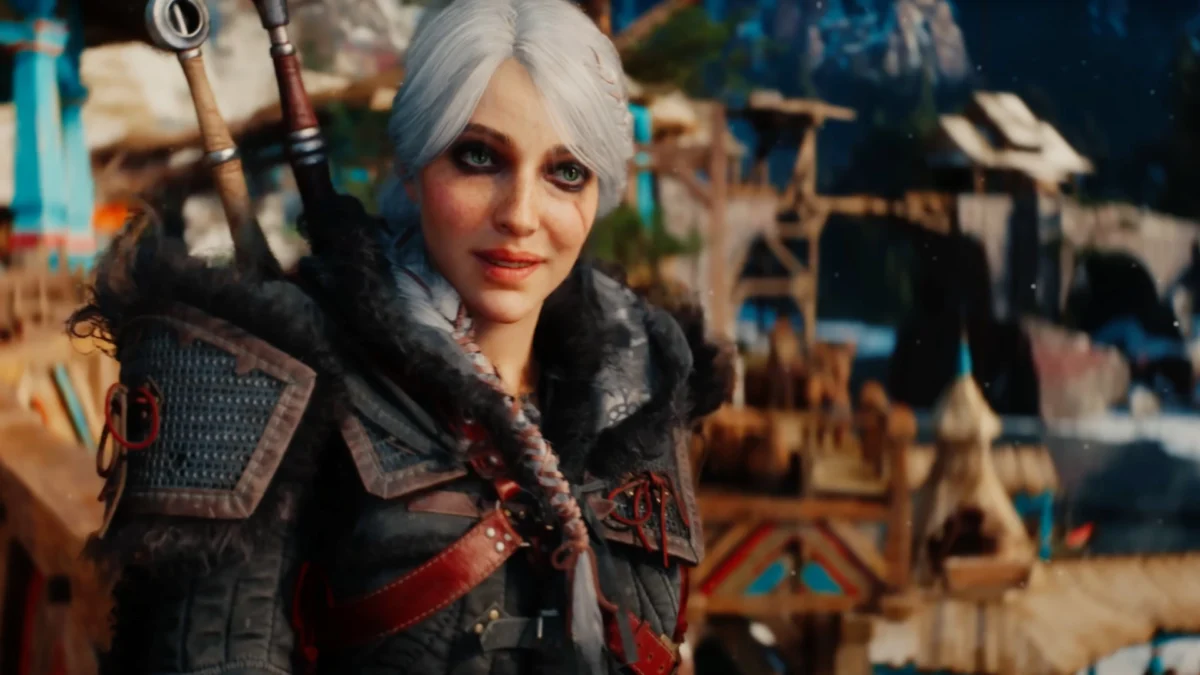
Warsaw, Poland – [Insert Date] – CD Projekt Red, the acclaimed Polish game developer behind the critically lauded Witcher saga and the ambitious Cyberpunk 2077, has revealed unprecedented scale in its current development efforts for the next installment in the beloved monster-slaying franchise, tentatively known as The Witcher 4. The studio’s joint CEO, Michał Nowakowski, disclosed in the company’s latest financial earnings call that the development team dedicated to The Witcher 4 has ballooned to an astounding 513 individuals. This figure significantly dwarfs the core team size of its predecessor, The Witcher 3: Wild Hunt, and places it on par with the internal development roster for Cyberpunk 2077. This monumental undertaking signals a strategic shift and an investment in scale that reflects the ever-increasing complexity and ambition of modern AAA game development.
The Evolution of a Franchise: From Humble Beginnings to Epic Proportions
The journey of The Witcher series from its inception to its current status as a global gaming phenomenon is a testament to CD Projekt Red’s growth and evolving capabilities. The original Witcher RPG, released in 2007, was the product of a relatively modest team of around 15 developers. This nascent studio, fueled by passion and a deep understanding of Andrzej Sapkowski’s rich fantasy novels, laid the groundwork for a franchise that would redefine expectations for narrative-driven RPGs.
The subsequent release of The Witcher 3: Wild Hunt in 2015 marked a significant leap forward. While the core development team for The Witcher 3 comprised approximately 240 individuals, the broader project involved around 1500 people at various stages of its extensive development cycle. This increase in scale was crucial in realizing the expansive open world, intricate questlines, and sophisticated character development that garnered widespread critical acclaim and commercial success, ultimately winning numerous Game of the Year awards.
Now, with The Witcher 4 in its "most intensive phase of development," CD Projekt Red has escalated its internal resources to an even greater degree. The revelation that 513 developers are currently engaged solely on The Witcher 4 underscores the ambition and scope of this next chapter. This figure, as noted by Nowakowski, reflects a "stable organizational setup that has the right capabilities and expertise in place." Crucially, this number primarily accounts for in-house development staff, excluding external contributors such as voice actors, localization specialists, and other freelance professionals who contribute to the final product.
A Testament to Scale: Comparing Development Resources
To fully appreciate the magnitude of the team dedicated to The Witcher 4, it is essential to contextualize it against other major CD Projekt Red projects and industry benchmarks. The number of developers working on The Witcher 4 (513) is remarkably close to the reported internal headcount for Cyberpunk 2077, which stood at 530 in-house developers. However, it is important to acknowledge that Cyberpunk 2077‘s overall development, including external contractors and support staff, involved an estimated 5200 individuals. This highlights the sheer scale of operations required for large-scale, open-world projects in the modern era.
Furthermore, the current team size for The Witcher 4 is more than double the core development team of The Witcher 3. This substantial increase suggests a significant expansion in the game’s scope, technical ambition, or both. Whether this translates to a larger game world, more complex mechanics, or a more intricate narrative remains to be seen, but the investment in human resources is undeniably a strong indicator of the developers’ intentions.
The figures also provide a stark contrast when compared to the early days of the studio. The transition from a team of around 15 on the first Witcher game to over 500 dedicated to its successor illustrates the exponential growth of CD Projekt Red and the increasing demands of the AAA gaming industry. This growth has not been without its challenges, as the company has previously acknowledged past missteps in documentation and project management, learning from decades of experience to refine its development processes.
Beyond "The Witcher 4": A Broader Studio Effort
The development of The Witcher 4 is not happening in isolation. CD Projekt Red is simultaneously managing other ambitious projects, including the follow-up to Cyberpunk 2077, currently codenamed Cyberpunk 2, and an unannounced Witcher multiplayer spin-off known as Sirius. Nowakowski’s statement also indicated that the Cyberpunk 2 and Sirius teams have seen an expansion of "a dozen or so" individuals, suggesting a continuous effort to bolster resources across the studio’s key initiatives.
This multi-project development pipeline necessitates a robust and flexible organizational structure. The company’s commitment to maintaining a "stable organizational setup" implies a strategic approach to resource allocation and talent management. While the precise breakdown of roles and responsibilities within these large teams is not public, the sheer number of developers involved suggests a deep specialization of tasks, from narrative design and world-building to engine development and character modeling.
Official Responses and Future Outlook
When questioned during the Q&A session about the possibility of further team expansion, Karolina Gnaś, VP of Investor Relations, offered a nuanced perspective. She stated, "we believe that right now we have the right mix of expertise and skills, but of course we may slightly adjust the team size depending on our needs." This indicates a data-driven and adaptable approach to team management, suggesting that while the current size is deemed optimal, CD Projekt Red remains prepared to scale up or down as project requirements evolve.
The sheer scale of development teams in the modern gaming landscape has become a recurring topic of discussion. While companies like CD Projekt Red are investing heavily in internal talent, other major studios, such as Ubisoft with its Assassin’s Creed franchise, employ even larger, globally distributed teams. Assassin’s Creed Shadows, for instance, is reported to have involved over 7000 individuals across 15 studios, including significant external contributions. This comparison fuels ongoing conversations about sustainable team sizes, the efficiency of large-scale development, and the extent to which outsourcing is used to manage the complexity and cost of AAA game production.
Implications for the Future of The Witcher
The unprecedented size of the development team dedicated to The Witcher 4 carries significant implications for the game itself and for the future direction of CD Projekt Red. A larger team generally allows for greater ambition in terms of world-building, gameplay mechanics, narrative depth, and visual fidelity. It suggests that CD Projekt Red is aiming to deliver an experience that not only meets but exceeds the high expectations set by The Witcher 3.
This investment also signals a long-term commitment to the Witcher universe. By dedicating such a substantial portion of its internal workforce to a single project within the franchise, CD Projekt Red is emphasizing its importance to the studio’s identity and future profitability. The decision to move forward with a new installment in the Witcher saga, especially after the immense success of Cyberpunk 2077, is a clear indication of the studio’s confidence in its ability to revisit and reimagine the world of Geralt of Rivia, or potentially a new protagonist, with cutting-edge technology and refined storytelling techniques.
However, the challenges associated with managing such large teams cannot be understated. Effective communication, streamlined workflows, and robust project management are paramount to prevent delays and ensure the efficient utilization of resources. The studio’s past experiences, including the rocky launch of Cyberpunk 2077, have undoubtedly informed their current strategies, with a focus on internal documentation and knowledge sharing highlighted as a key learning from past projects.
In conclusion, the revelation of 513 developers working on The Witcher 4 is a powerful statement about CD Projekt Red’s commitment to its flagship franchise and the evolving nature of AAA game development. It signifies a significant escalation in scope and ambition, promising an experience that will likely push the boundaries of what fans have come to expect from the Continent. As development progresses, all eyes will be on CD Projekt Red to see how this colossal undertaking translates into the next chapter of one of gaming’s most cherished sagas.



Leave a Comment