
The Architecture of Modern Malaise: Joana Mosi’s ‘Physical Education’ and the Crisis of the Portuguese Precariat
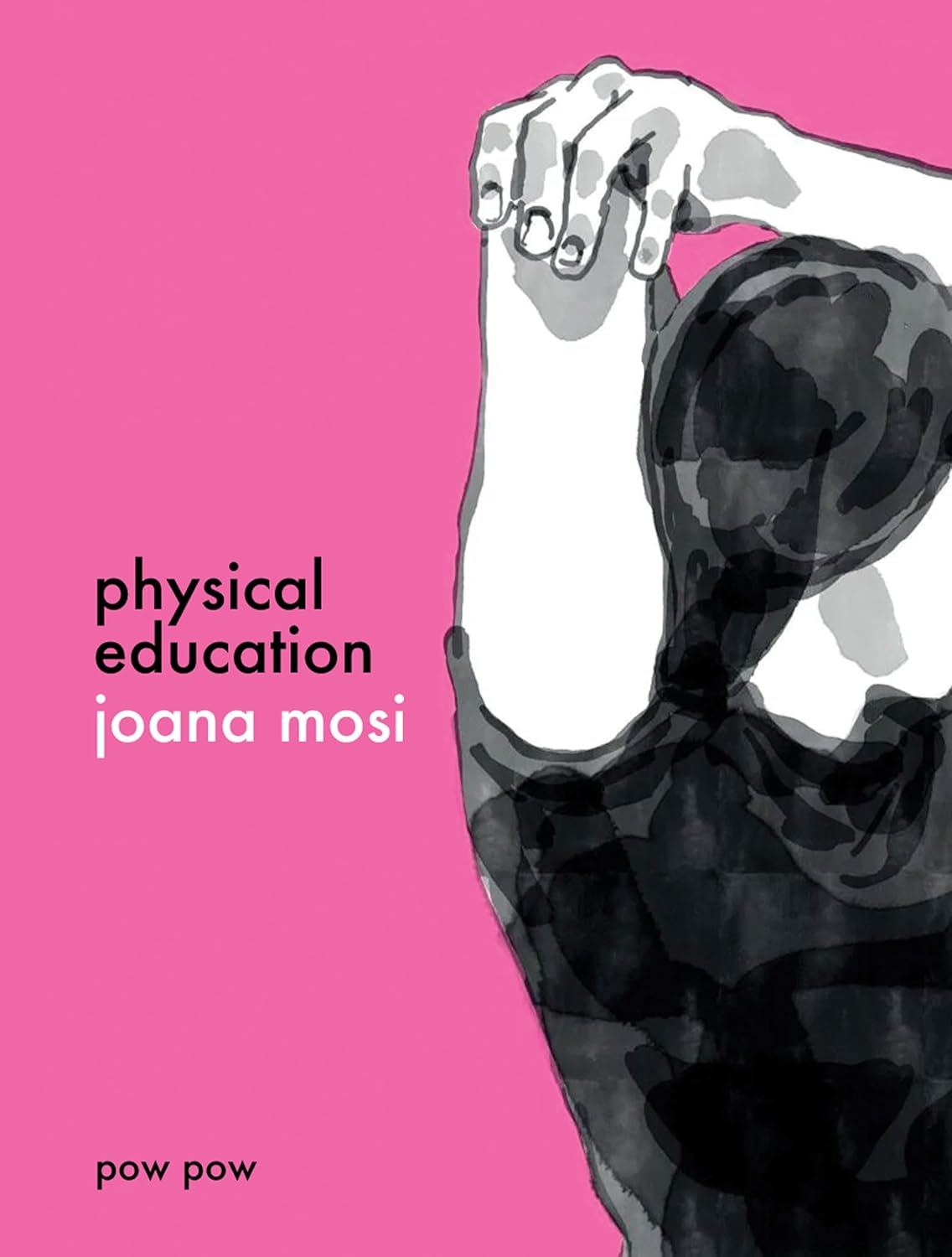
The contemporary graphic novel has increasingly become a vessel for the "elliptical story"—narratives that eschew traditional heroics in favor of the quiet, crushing weight of existence. In her latest work, Physical Education, Portuguese creator Joana Mosi captures this zeitgeist with surgical precision. Published internationally by Pow Pow Press in May 2026, the book serves as both a character study of a woman adrift and a scathing indictment of the socio-economic conditions paralyzing a generation of young Europeans.
Main Facts: The Narrative of Stagnation
At the heart of Physical Education is Laura, a woman in her early 30s who embodies the "waithood" of the modern era. Despite receiving a prestigious grant to write her debut novel, Laura finds herself trapped in a cycle of inertia. She lives in Odivelas, a lackluster suburb on the outskirts of Lisbon, residing with a mother from whom she feels profoundly disconnected. While her mother spends her days submerged in a stream of movies, Laura exists in a state of perpetual "drifting," unable to bridge the gap between her potential and her reality.
The graphic novel explores several core themes that define the millennial experience:
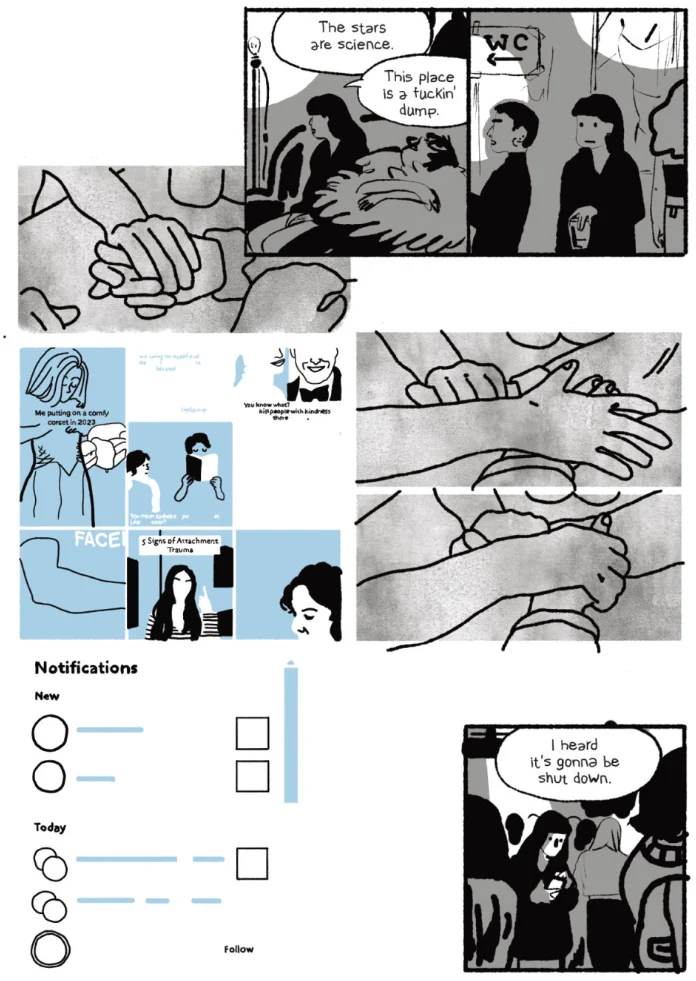
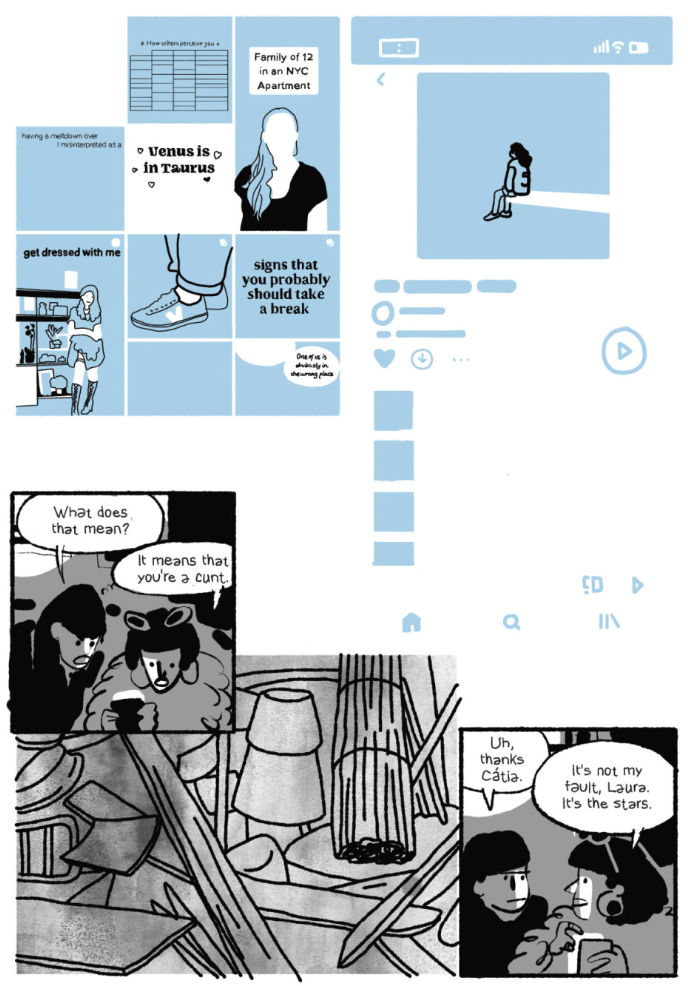
- Digital Saturation: Laura is besieged by a never-ending barrage of social media notifications, horoscopes, and trivial listicles. This "digital overload" functions as an emotional anchor, leaving her too exhausted to maintain real-world connections.
- The Housing Crisis: Set against the backdrop of Lisbon—one of the most expensive and gentrified cities in Europe—the story highlights the impossibility of independence for young professionals.
- Creative Paralysis: The "guilt of the grant" serves as a central conflict; the financial support that should have liberated Laura’s voice instead becomes a source of shame as she fails to produce work.
- Physical Detachment: The title, Physical Education, is an ironic nod to Laura’s alienation from her own body. Despite regular visits to a gym with friends, she remains a passenger in her own skin, viewing physical activity as a chore rather than a release.
Chronology: From a Portfolio Review to International Acclaim
The journey of Physical Education from a Portuguese concept to an international release is a testament to the changing landscape of the global comics industry.
The story began several years ago at the Toronto Comic Arts Festival (TCAF). Joana Mosi, already a prolific creator in her native Portugal, engaged in a spontaneous portfolio review with Pow Pow Press, a publisher known for its discerning eye for unique, postmodern voices. The editorial team was reportedly "blown away" by Mosi’s singular style—a blend of wiry, expressive lines and a sophisticated understanding of pacing.
Following this encounter, Mosi began the arduous process of crafting Physical Education. The development phase was marked by a rigorous experimental approach to digital art. Influenced by the structural innovations of creators like Chester Brown and the emotional resonance of Jillian Tamaki’s Boundless, Mosi sought to create a visual language that mirrored the fragmented nature of her protagonist’s mind.
The book’s English-language debut in May 2026 marks a significant milestone for Mosi, positioning her as a leading voice in the "New Wave" of European comics that prioritize psychological depth over traditional narrative tropes.
Supporting Data: Lisbon as a Hostile Landscape
To understand Physical Education, one must understand the environment that birthed it. Mosi uses Lisbon not just as a setting, but as an antagonist. Once a city of affordable charm, Lisbon has undergone a radical transformation over the last decade.
The Gentrification Factor
The book features "hipster" dance clubs and brunch spots with trendy English names like "Dear Brunch"—symbols of a city catering to tourists and digital nomads while pricing out its own citizens. For the young Portuguese population, the city has become a "hostile" space. The contrast between the "trendy" Lisbon shown to the world and the "uncool" Odivelas where Laura resides highlights the geographic and social displacement of the working class.
The Precariat Reality
Laura’s situation—living at home in her 30s—is not an anomaly but a statistical reality in Southern Europe. High unemployment rates combined with a housing market inflated by short-term rentals have created a "generation of the basement." Mosi captures the psychological toll of this precarity: a loss of self-esteem, a feeling of being a "temporary" adult, and the crushing realization that childhood dreams are increasingly incompatible with economic reality.
Artistic Technique and "Official" Creative Process
One of the most striking aspects of Physical Education is its visual construction. Mosi employed a complex digital collage process to build her pages, a method that allowed for a fluid, non-linear layout.
The Digital Paradox
In a move that mirrors the themes of the book, Physical Education was created entirely digitally. Mosi worked with multiple layers simultaneously, rearranging panels and images to create a "stream of consciousness" effect. This technique allows the narrative to feel untethered to a consistent grid, echoing Laura’s own tenuous connection to her environment.
However, this process came with a significant cost. In an effort to save memory space on her hardware, Mosi frequently deleted her sketch files, replacing them with finished illustrations. This has resulted in a total lack of a physical or digital archive of the book’s evolution. Mosi has since expressed regret over this decision, noting that she now struggles to remember the specific creative evolution of certain segments. This "erasure of history" serves as a meta-commentary on the ephemeral nature of digital existence.
Visual Cues and Emotional Connection
Mosi uses the level of detail in her characters’ faces as a narrative device.
- High Detail: Characters from Laura’s memories or those with whom she feels a genuine connection are rendered with recognizable features.
- Silhouettes: Strangers, or people from whom Laura is emotionally detached, appear as faceless voids.
A poignant example occurs when a gym employee examines Laura’s injured ankle. Despite the physical intimacy of the act, the employee is depicted as a faceless voice, emphasizing Laura’s complete dissociation from the moment.
Implications: The Burden of Choice and the Future of the Medium
Physical Education poses a profound question: Does the modern obsession with "choice" satisfy a need for reassurance, or does it reduce life to a trivial level?
The Nostalgia for the Analog
The book vibrates with a quiet nostalgia for a pre-internet era—a time before the "never-ending choices" of playlists and dating apps. Mosi suggests that the ability to choose everything, from the cake one bakes to the person one dates via an online quiz, has stripped away the weight of consequence. When every decision is guided by an algorithm or a social media trend, the individual loses their sense of agency.
The "Slow Reading" Movement
Critics and the publisher alike suggest that Physical Education is not meant for a quick, casual read. The sparse dialogue and "dissonant" visual rhythms require the reader to pay attention to the silences. In an era of rapid content consumption, Mosi’s work demands a "twice-read" approach to fully grasp the narrative arcs hidden within the interruptions.
A Shift in Creative Philosophy
The most significant implication for Mosi’s own career is her reaction to the creation of this book. Haunted by the lack of a physical record for Physical Education, Mosi has announced that her next graphic novel is being produced entirely by hand, on paper. This shift back to the analog reflects a growing movement among creators to reclaim the "physical" in an increasingly virtual world.
Conclusion
Joana Mosi’s Physical Education is more than a graphic novel; it is a cultural artifact of the 2020s. By weaving together the threads of the Portuguese housing crisis, digital burnout, and the personal stagnation of its protagonist, Mosi has created a work that is as challenging as it is beautiful. As Laura stares at a painting—seeing a cliff where her mother sees a pond—the reader is reminded that perception is governed by one’s internal landscape. For a generation standing at the edge of an economic and digital precipice, Mosi provides a mirror that is as uncomfortable as it is necessary.


Leave a Comment