Through a Glass, Darkly: The Aestheticization of Atrocity in ‘Only Beautiful Things to Look At’
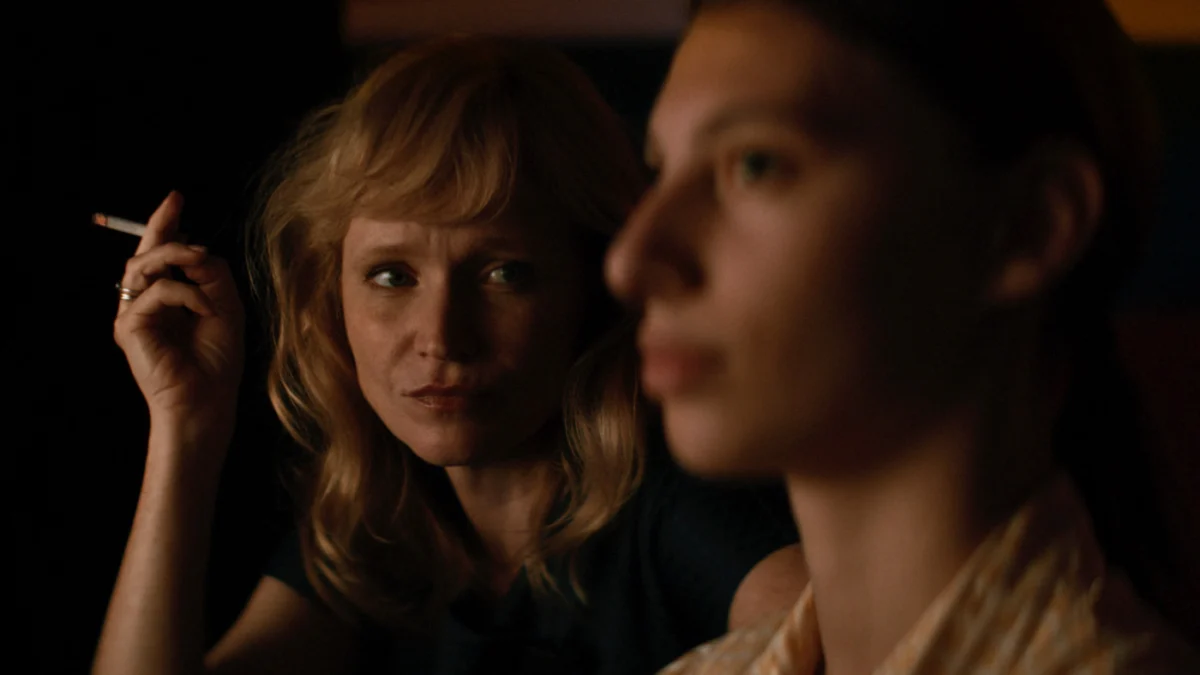
The 1980s in Czechoslovakia were a period of stark contradictions. While the surface of society was often characterized by a specific socialist chic—distinctive fashions, Brutalist architecture, and a quiet, domestic refinement—the state was simultaneously engaged in a brutal, systemic campaign of racial engineering. At the heart of this was a program of coerced sterilization aimed at suppressing the Romani population, a dark chapter of European history that filmmaker Ivan Ostrochovský attempts to navigate in his latest feature, Only Beautiful Things to Look At.
However, as the film makes its way through the international festival circuit, it has sparked a profound debate regarding the ethics of representation. By framing a state-sponsored atrocity through a lens of "loveliness" and centering the moral awakening of a white protagonist, the film risks turning a living nightmare into a static museum piece.
Main Facts: A Story of Complicity and Conscience
Only Beautiful Things to Look At centers on Ingrid (played by Anna Geislerová), a successful gynecologist living a life of enviable comfort in 1980s Czechoslovakia. Ingrid’s world is one of soft light, classical music, and intellectual pursuits. She lives in a glass-walled house on the edge of a lush forest with her husband, Maros (Vlad Ivanov), a music teacher. Their existence is a "fairytale princess’ lair," an intentional aesthetic choice by cinematographer Juraj Chlpík that emphasizes the insulation of the ruling class from the consequences of their actions.
The central conflict of the film is not initially the sterilization program, but Ingrid’s professional frustration. She is passed over for the position of head doctor in favor of a male colleague, highlighting the patriarchal structures of the era. However, her professional duties involve a much darker task: assessing and performing sterilizations on Romani women. These procedures, often performed under duress or through deception, leave the victims with a small abdominal scar—a mark nicknamed "the bow."
The narrative shift begins through Ingrid’s relationship with Agata (Simona Boledovičová), a Romani orderly at the hospital who attempts to distance herself from her heritage to survive in a hostile society. As Ingrid becomes more aware of Agata’s personal history and the plight of her sister, Jula (Eva Mores), the doctor begins to experience the first stirrings of a conscience. Yet, the film remains stubbornly focused on Ingrid’s internal journey, using the suffering of the Romani women as a backdrop for a white woman’s moral "awakening."
Chronology: The Long Shadow of State-Sponsored Sterilization
To understand the weight of the subject matter, one must look beyond the 1980s setting of the film. The policy of sterilizing Romani women was not a brief aberration of the late Communist era; it was a decades-long program that persisted across different political regimes.
- 1966–1972: The Czechoslovak government begins implementing policies aimed at "regulating" the Romani population. Early efforts focus on social integration, but soon pivot toward more aggressive population control measures.
- 1971: A formal decree is passed in the Czech Socialist Republic (and later the Slovak Socialist Republic) that allows for the sterilization of women if it is deemed in the interest of "healthy generations" or if the woman has "social problems."
- The 1980s: This period represents the height of the state’s racist program. Romani women are offered financial incentives to undergo sterilization, or more frequently, are coerced into the procedure during cesarean sections or under the guise of life-saving surgery.
- 1989–1990: Following the Velvet Revolution and the fall of Communism, the formal state decrees are abolished. However, the practice does not stop.
- 1990s–2004: Despite the transition to democracy and the eventual split into the Czech and Slovak Republics, reports of coerced sterilizations continue. Human rights organizations document cases where Romani women are still being sterilized without informed consent in state-run hospitals.
- 2003: The "Body and Soul" report by the Center for Reproductive Rights and the Poradňa pre občianske a ľudské práva (Centre for Civil and Human Rights) brings international attention to the continued practice in Slovakia.
- 2021–2022: The Czech Republic finally passes a law to compensate victims, and the Slovak government issues an official apology for the decades of abuse.
Supporting Data: The Mechanism of "The Bow"
The film uses the term "the bow" to describe the physical mark of the sterilization, but the data behind that mark is staggering. While exact numbers are difficult to verify due to the destruction of medical records and the silence of victims, historians and human rights advocates estimate that thousands of Romani women were affected.
The coercion was multi-faceted. In many cases, social workers visited Romani settlements, threatening to take away the women’s existing children or withhold social benefits unless they agreed to the procedure. In other instances, women were presented with consent forms while in the throes of labor or under heavy sedation. Because many of these women spoke Romani as their first language and had limited literacy in Czech or Slovak, they were often unaware of what they were signing.
A 2005 report by the Czech Public Defender of Rights (Ombudsman) Otakar Motejl confirmed that the state had a "clear interest" in limiting the birth rate of the Romani population. The report found that the "social" motivation for these surgeries was a violation of human rights and that the medical necessity was frequently fabricated to meet government-recommended quotas.
Official Responses: Recognition and Reparations
For decades, the governments of both the Czech and Slovak Republics remained silent or dismissive of the allegations. It was only through the tireless work of activists and the victims themselves that the tide began to turn.
In 2009, the Czech government under Prime Minister Jan Fischer expressed "regret" for the illegal sterilizations, but stopped short of offering financial compensation. It took another twelve years of legal battles for the Czech Compensation Act of 2021 to be signed into law. This legislation allows women sterilized between 1966 and 2012 to claim a one-time payment of 300,000 CZK (approximately $13,000). While the amount is considered modest by many, the recognition of the state’s culpability was a landmark victory.
In Slovakia, the response has been slower. In November 2021, the Slovak government issued a formal apology for the "wrongful sterilizations." Prime Minister Eduard Heger’s cabinet acknowledged that the state had failed to protect the bodily integrity of its citizens. However, unlike the Czech Republic, Slovakia has faced ongoing criticism for failing to establish a clear, accessible mechanism for financial reparations, leaving many elderly victims without justice.
International bodies, including the United Nations and the Council of Europe, have repeatedly called on both nations to ensure that all victims are identified and compensated, and that the history of these practices is taught in schools to prevent future recurrences.
Implications: The Ethics of the "Beautiful" Gaze
The primary critique of Only Beautiful Things to Look At lies in its aesthetic choices. By filming an atrocity with "soft-focus" and "limpid" cinematography, Ostrochovský risks creating a distance that allows the audience to view these events as a relic of the "imaginary distant past."
The decision to center Ingrid—a white woman who is both a victim of the patriarchy and a perpetrator of racial violence—is a contentious one. This "white savior" or "white awakening" narrative structure often prioritizes the moral growth of the oppressor over the lived experience and agency of the oppressed. In the film, the Romani women are largely silent, their faces captured in dignified but mute portraits. The most interesting narrative thread—that of Agata and her sister Jula—is sidelined in favor of watching Ingrid lounge in "rumpled white bedsheets" contemplating her conscience.
Furthermore, the film’s "glib miracle" of a finale has been criticized for providing a sense of resolution that the real-world victims never received. By wrapping the story in a veneer of beauty and narrative closure, the film may inadvertently sanitize a history that is still raw and unresolved.
As cinema continues to tackle historical traumas, Only Beautiful Things to Look At serves as a cautionary tale. It raises the vital question: When we are confronted with "ugly" history, is it enough to look at "beautiful things," or does the beauty itself become a form of erasure? For the women who still carry "the bow," the reality of the 1980s was never a fairytale; it was a systematic theft of their future, a crime that requires more than a beautiful lens to truly see.