
Through Snow and Sleet and Dark of Night: The Epistolary Legacy of S. Clay Wilson
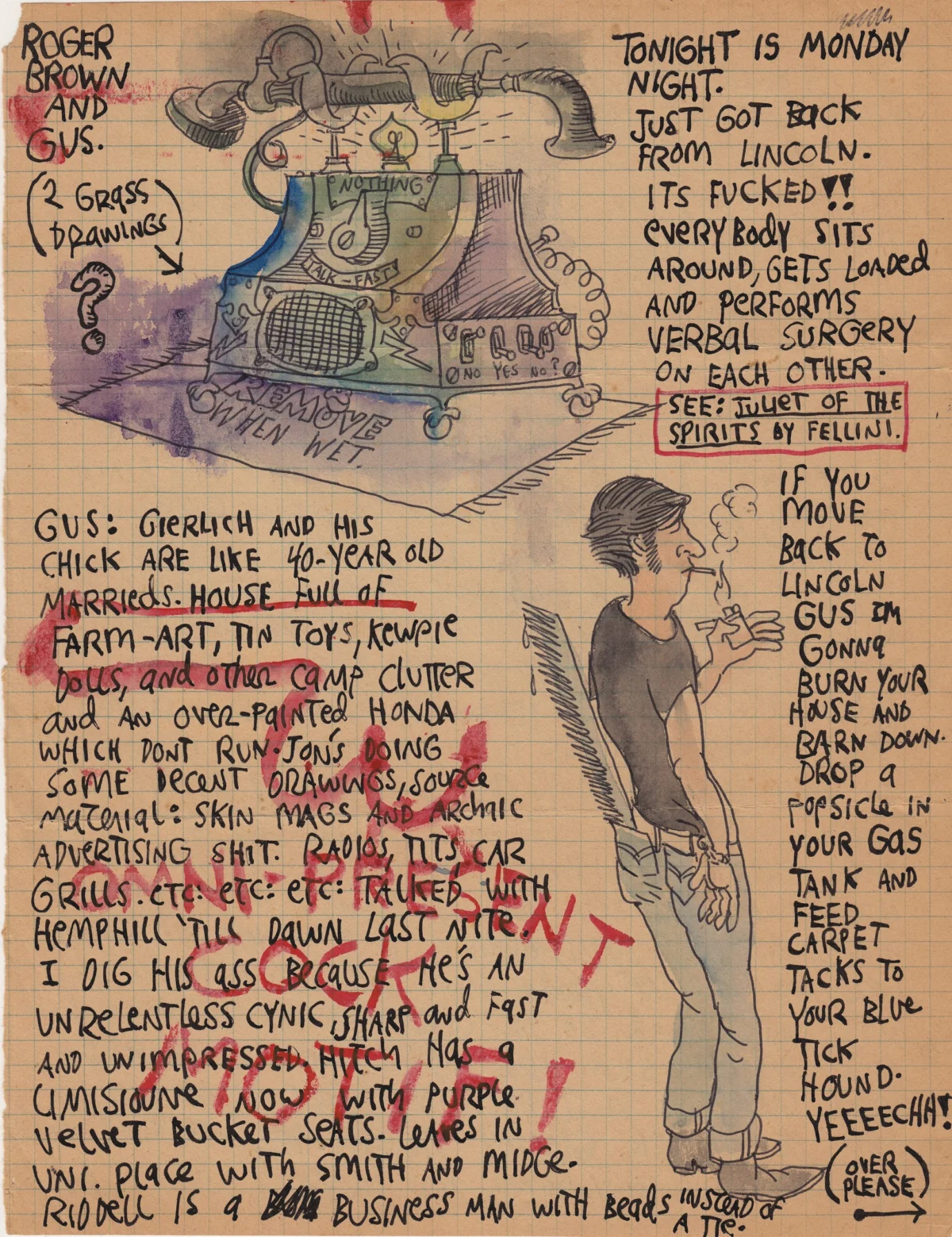
In an era defined by the ephemeral nature of digital communication—where sentiments are distilled into emojis and signatures are reduced to encrypted clicks—the late cartoonist S. Clay Wilson stands as a defiant monument to the tactile, the visceral, and the permanent. Wilson, a foundational titan of the underground comix movement and creator of the infamous Checkered Demon, viewed the act of correspondence not merely as a means of information exchange, but as an extension of his uncompromising artistic practice.
For Wilson, the mailbox was a gallery, and the envelope was a canvas. His lifelong commitment to handwritten, lavishly decorated mail provides a rare, unvarnished window into the psyche of an artist who spent decades pushing the boundaries of taste and propriety. This exploration into Wilson’s personal archives reveals a man who was as warm and diligent in his friendships as he was shocking in his published illustrations.
Main Facts: The "Full Wilson" Treatment
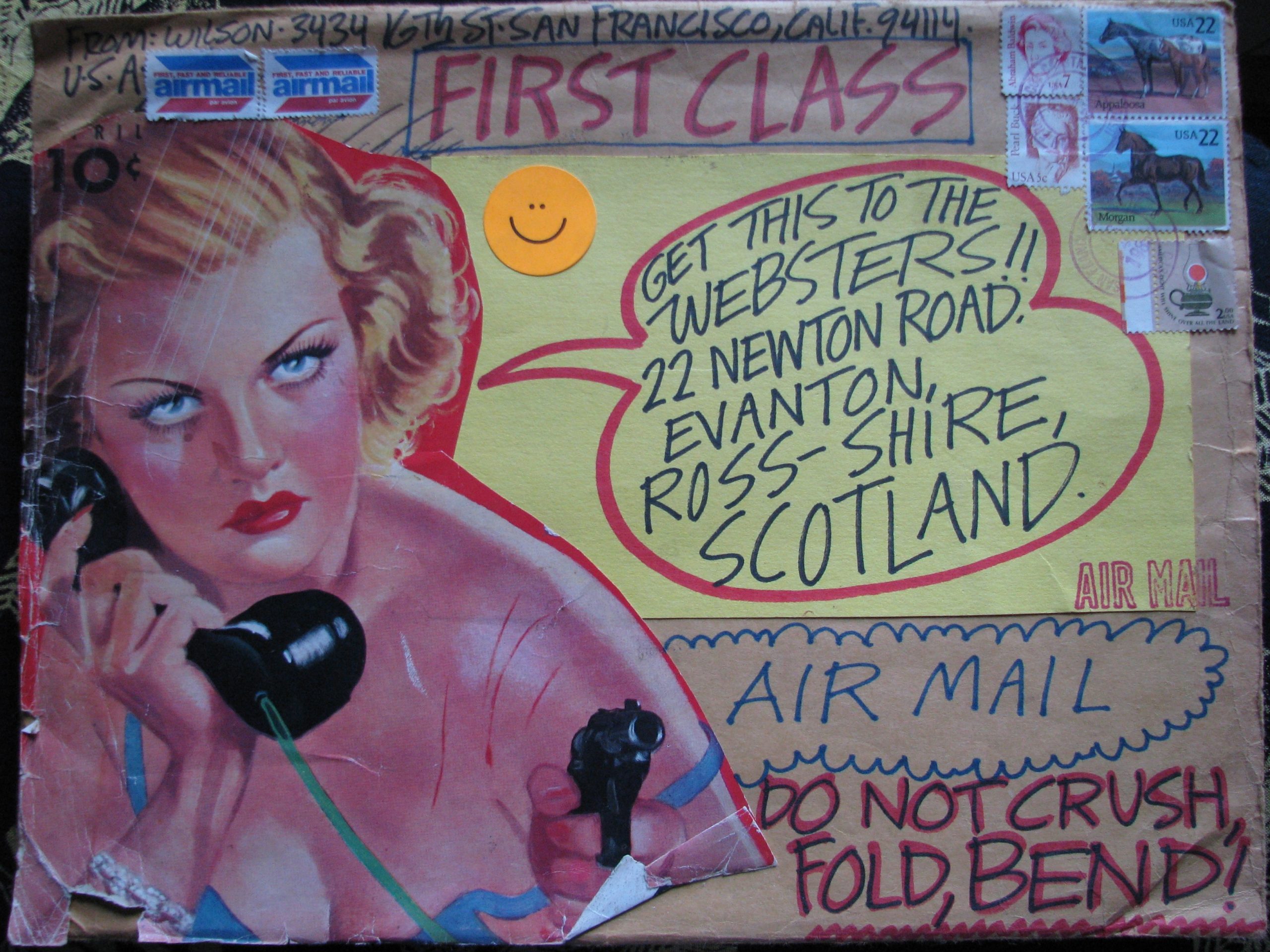
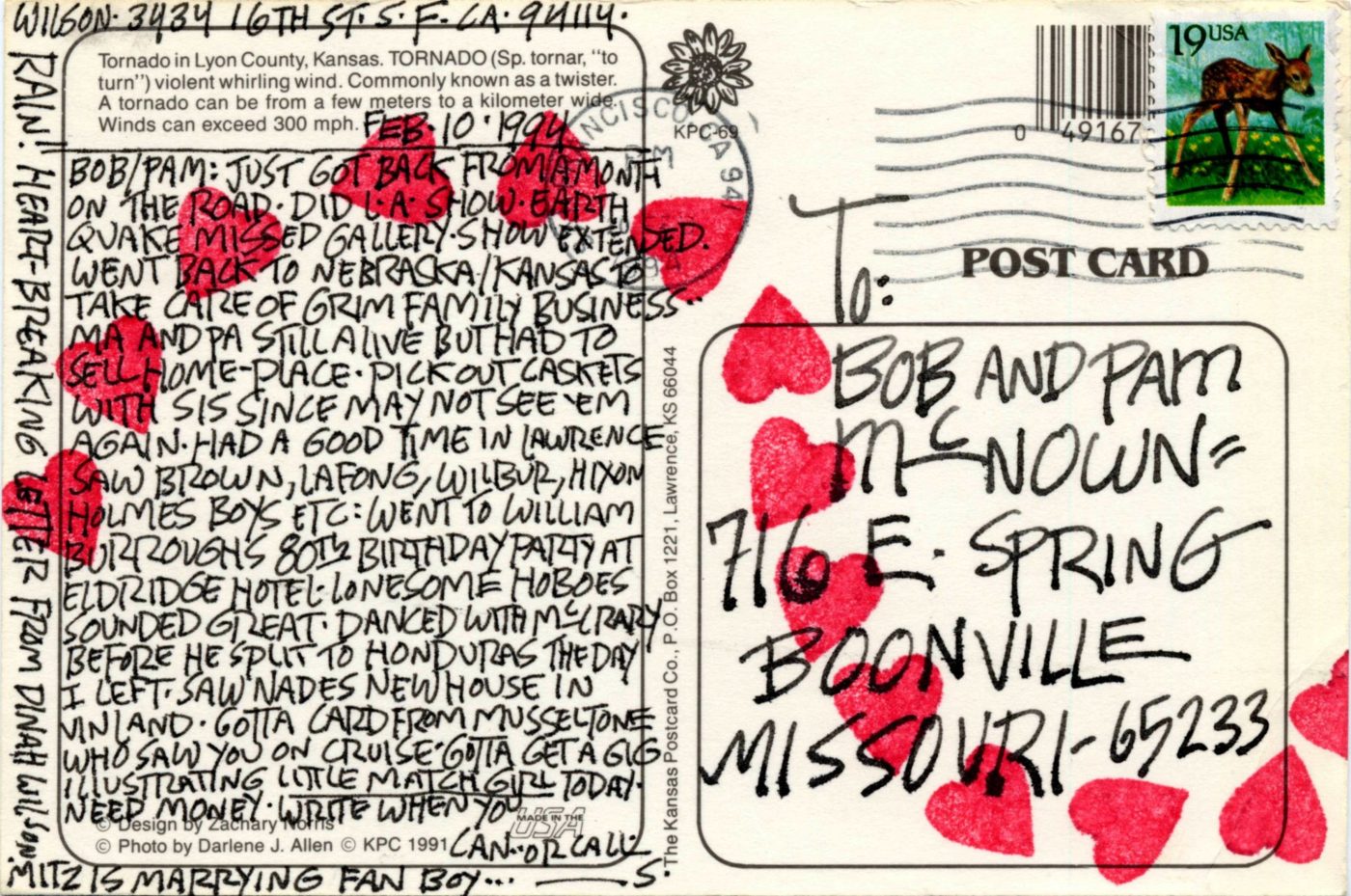
S. Clay Wilson’s approach to correspondence was a ritualistic daily performance. Eschewing the convenience of the 21st century, Wilson never learned to use a computer and maintained a lifelong disdain for electronic communication. His morning routine remained largely unchanged for decades: a cup of tea, a puff of kief, and a seat at the drawing table.
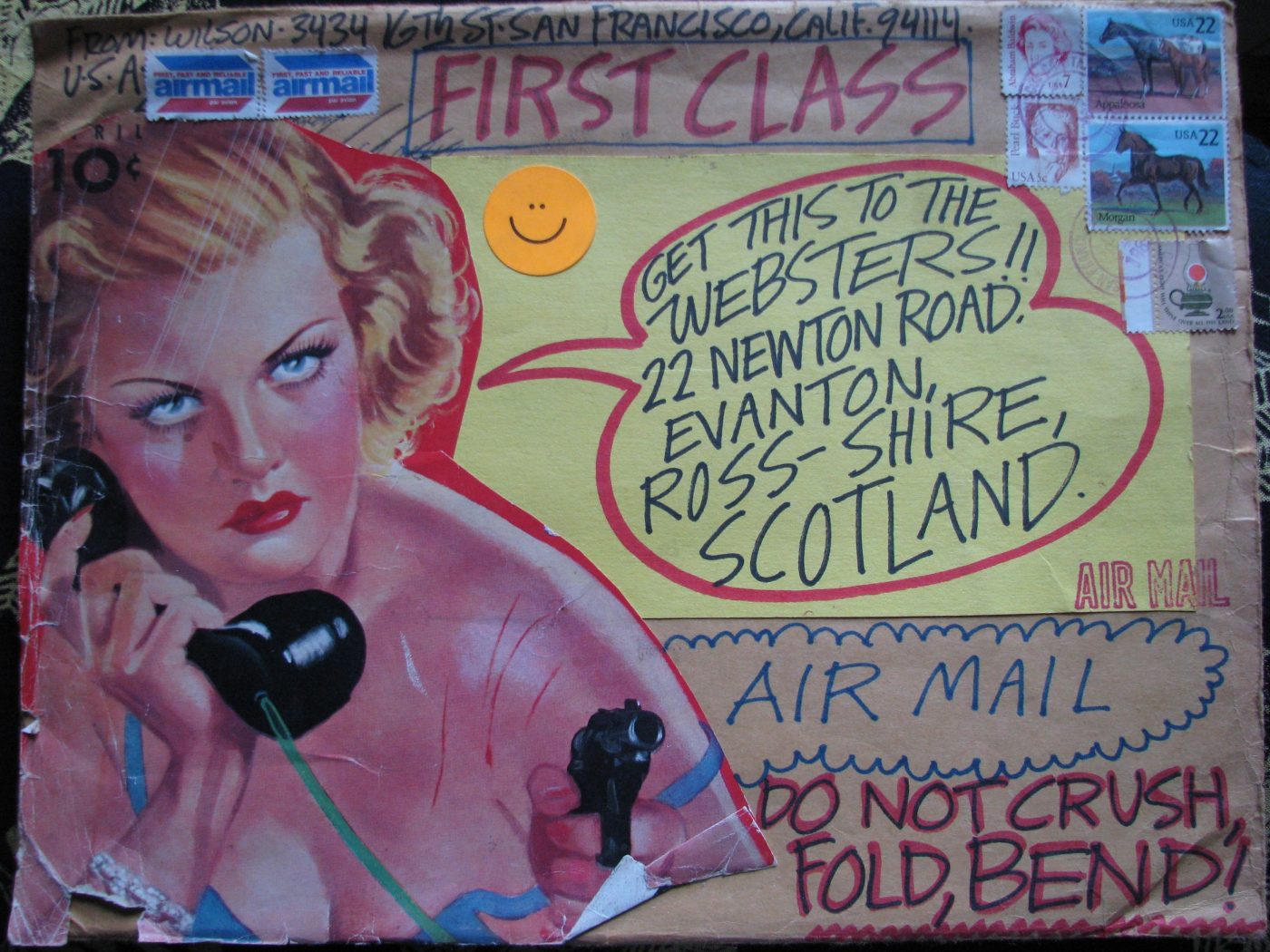
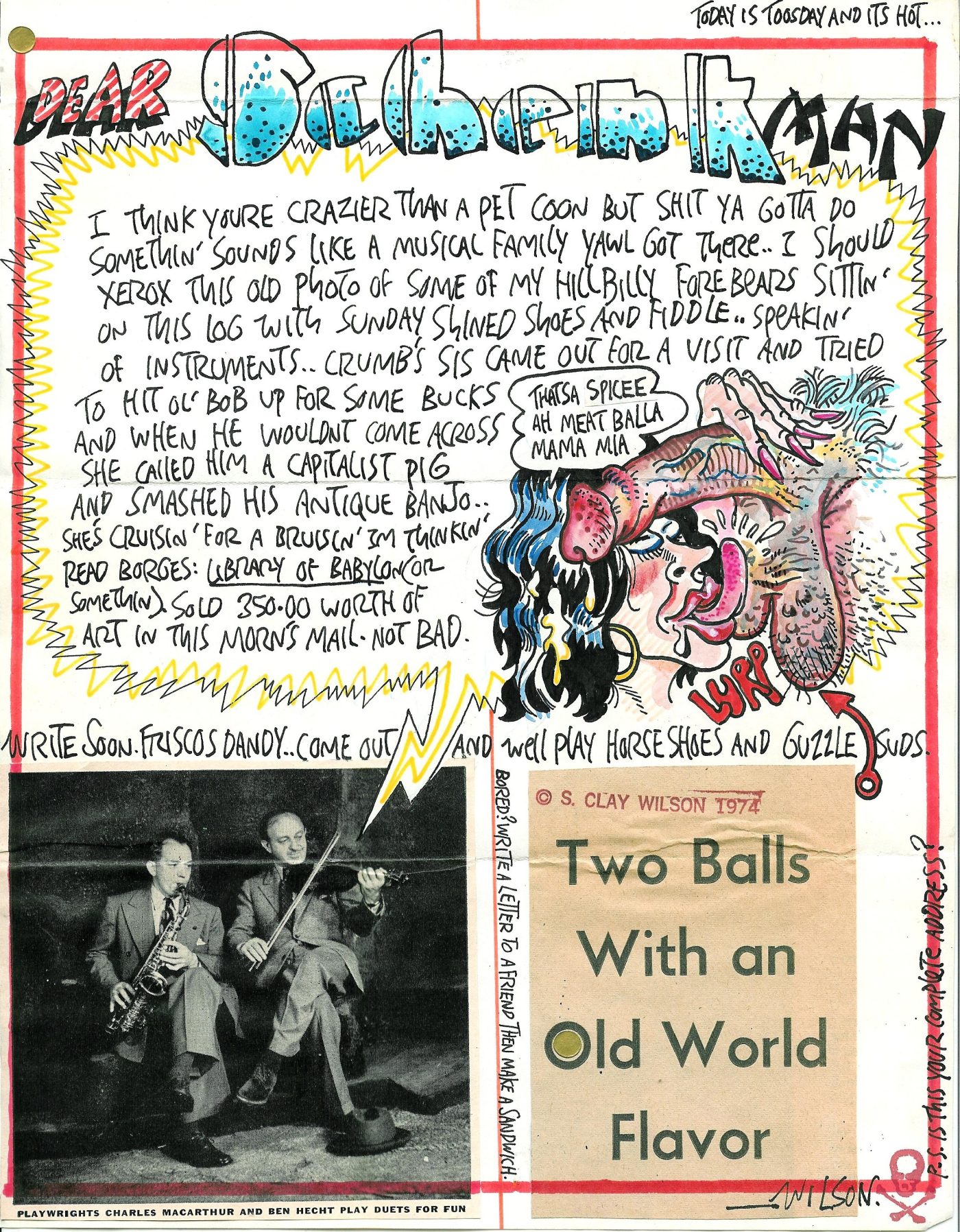
What followed was what friends called the "Full Wilson" treatment. Every postcard, envelope, and letterhead was subjected to a chaotic yet deliberate layering of media. Wilson utilized a vast arsenal of tools:
- Technical Instruments: Fine-line pens, India ink, and felt-tip markers.
- The "Suitcase of Stamps": A legendary collection of rubber stamps featuring devils, pinup girls, Jolly Rogers, UFOs, alligators, and his signature "Polliwogs."
- Mixed Media: Watercolors, magazine clippings from Playboy and Hustler, and vintage stickers.
- Linguistic Style: His letters were often adorned with "Wild Style" lettering and speech balloons, blending the aesthetics of 1940s pulp with 1970s graffiti.
This was "art with a small ‘a,’" as colleague Joe Schenkman described it—a one-on-one exchange that bypassed the gatekeepers of the art world. However, this artistic fervor often ran afoul of the authorities. His packages to overseas friends were frequently intercepted by customs officials, who were forced to navigate a gauntlet of lurid collages and "obscene" stamps to verify the contents.
Chronology: From Lincoln to the Bay Area Trauma
The Early Years and the National Guard (1950s–1964)
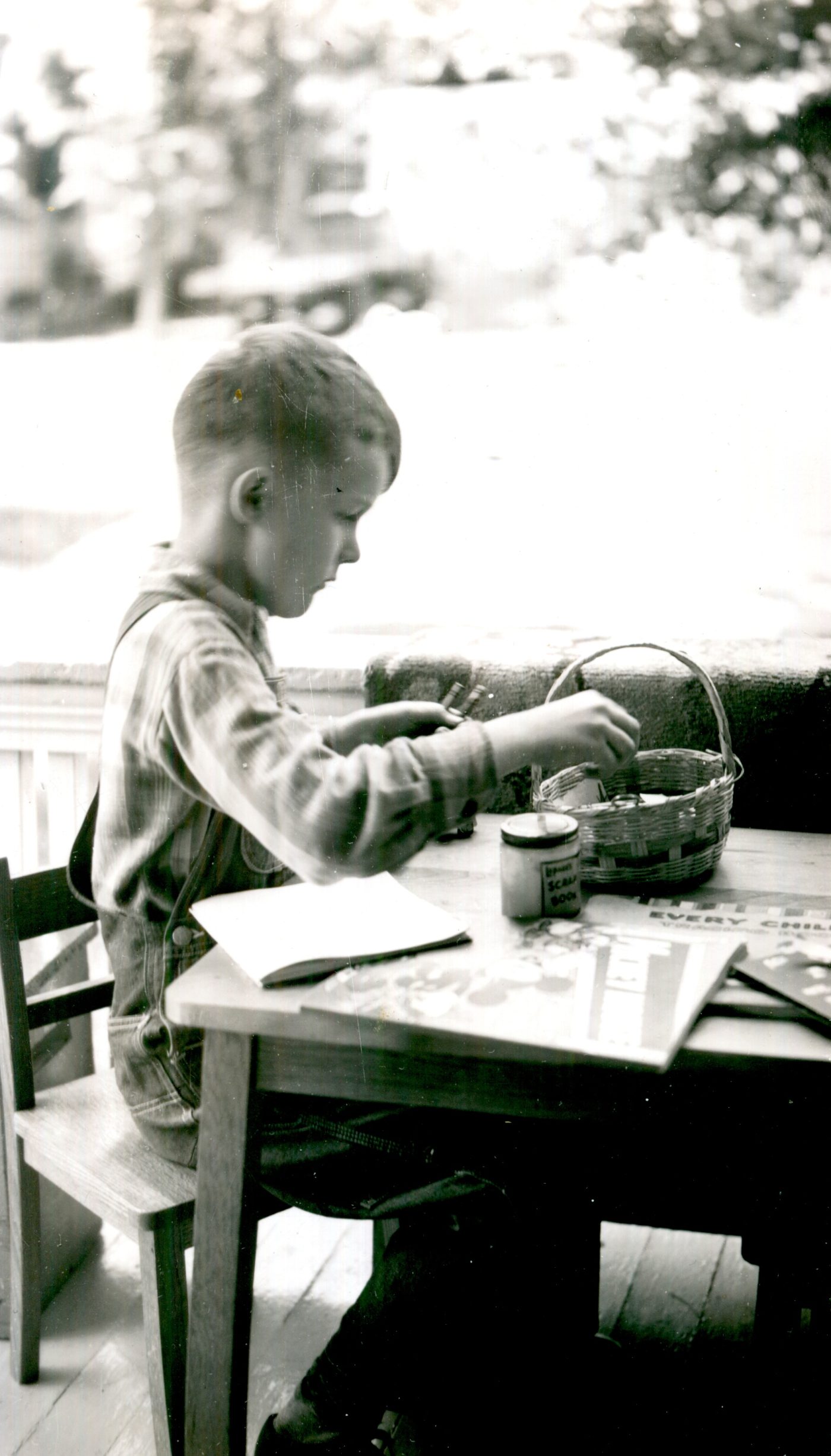
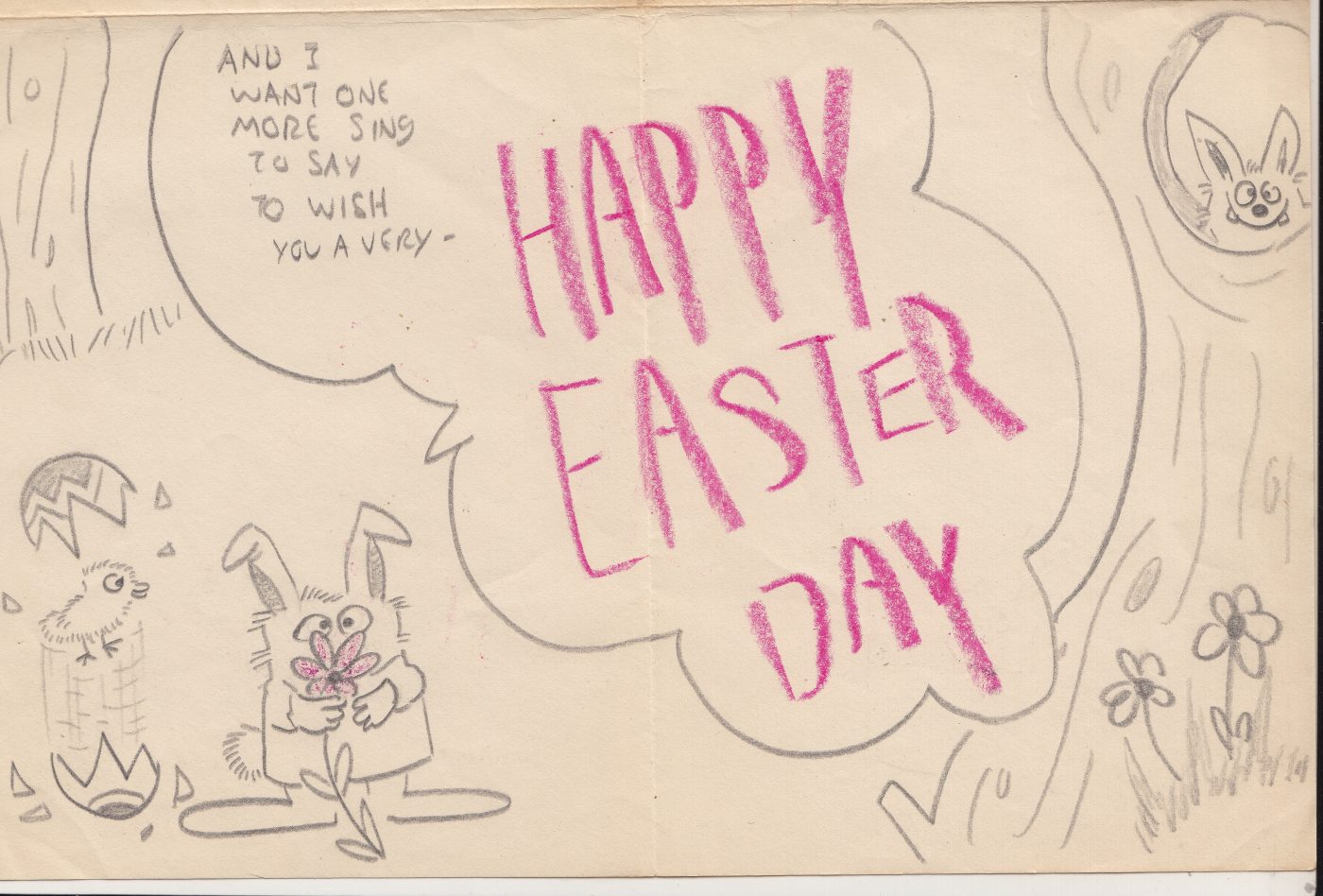
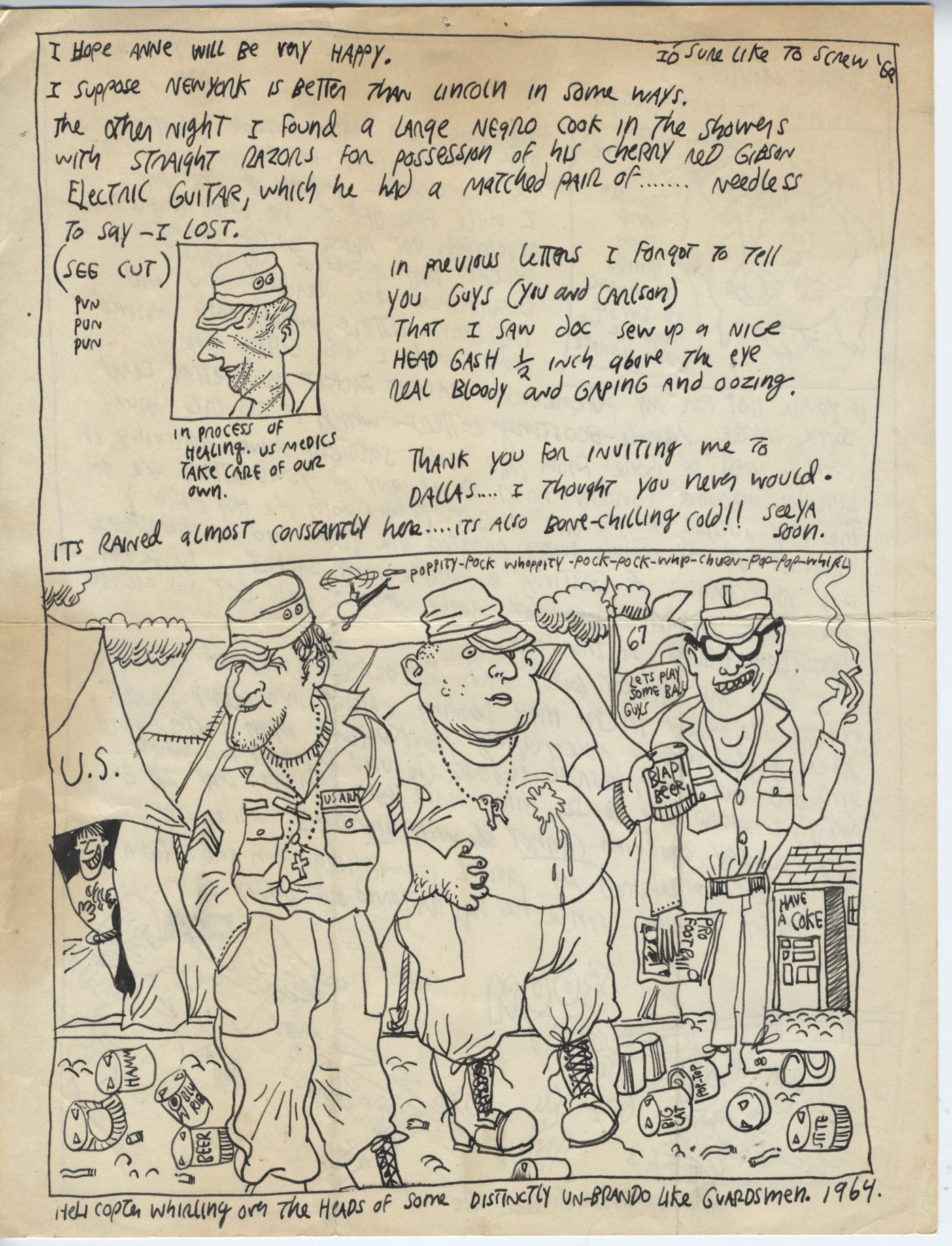
Wilson’s dedication to the hand-drawn note began in his childhood in Lincoln, Nebraska, where he preferred creating his own holiday cards over purchasing commercial alternatives. By the time he reached the University of Nebraska in 1960, his style began to ferment.
His letters to college friend David Fowler during his stint in the National Guard (following a brief dismissal from medic boot camp) capture a young artist in the throes of existential dread. Writing from a "stark desolate message center" under "naked bulbs," Wilson’s early correspondence was already cinematic, describing his military service as a "nightmare" punctuated by the buzzing of helicopters.
The "Roller Rink" Epiphany (1964)
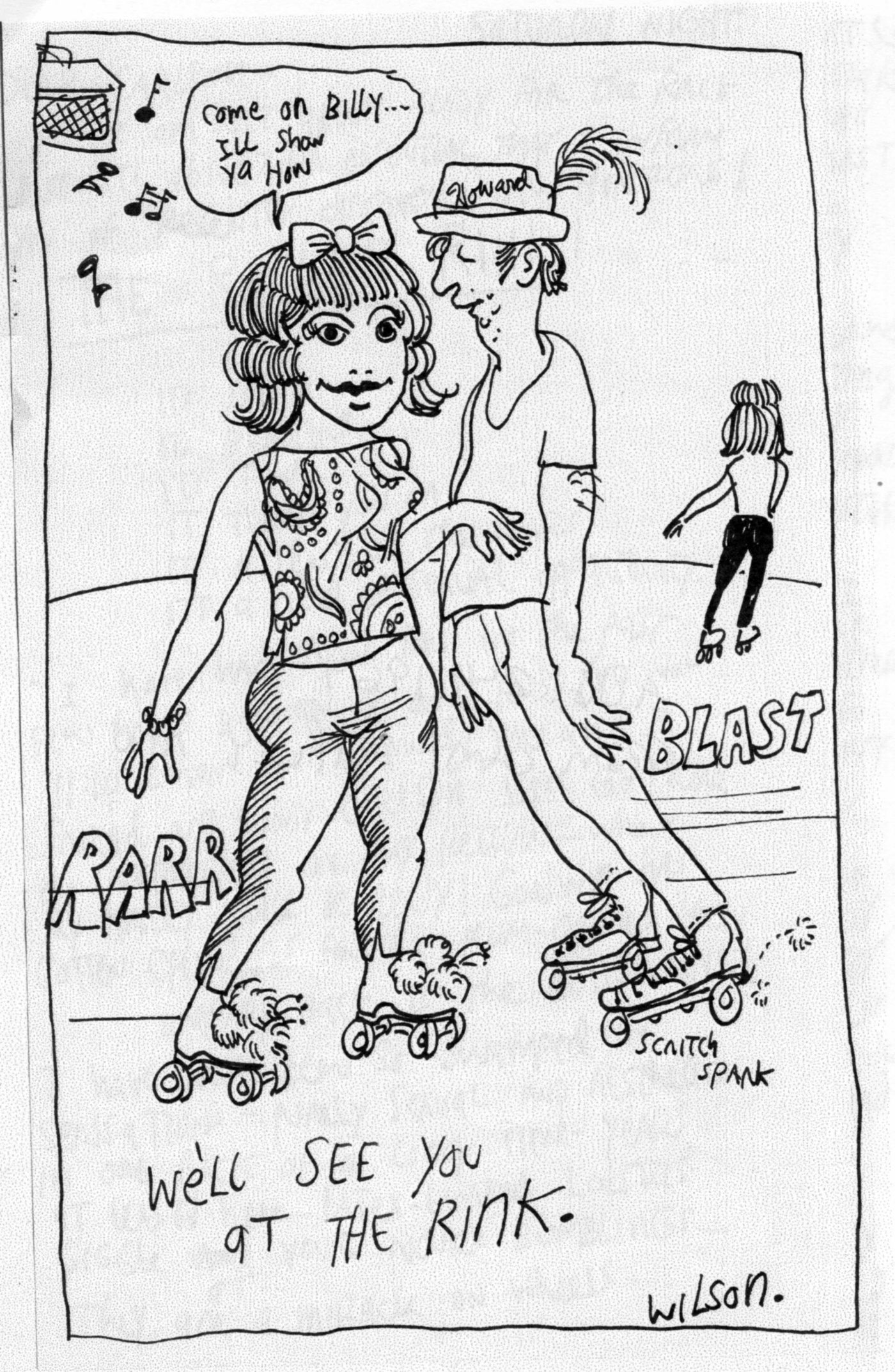
A pivotal moment in Wilson’s development is captured in a six-page letter to Bill Carlson in 1964. In it, Wilson describes the Little Falls, Minnesota roller rink as a "hypnotic vortex" of sex and violence. This letter is crucial for biographers, as it marks the emergence of the themes that would define his professional career: the raw energy of subcultures and the "cleansing" nature of visceral experience.
The San Francisco Underground (1968–2008)
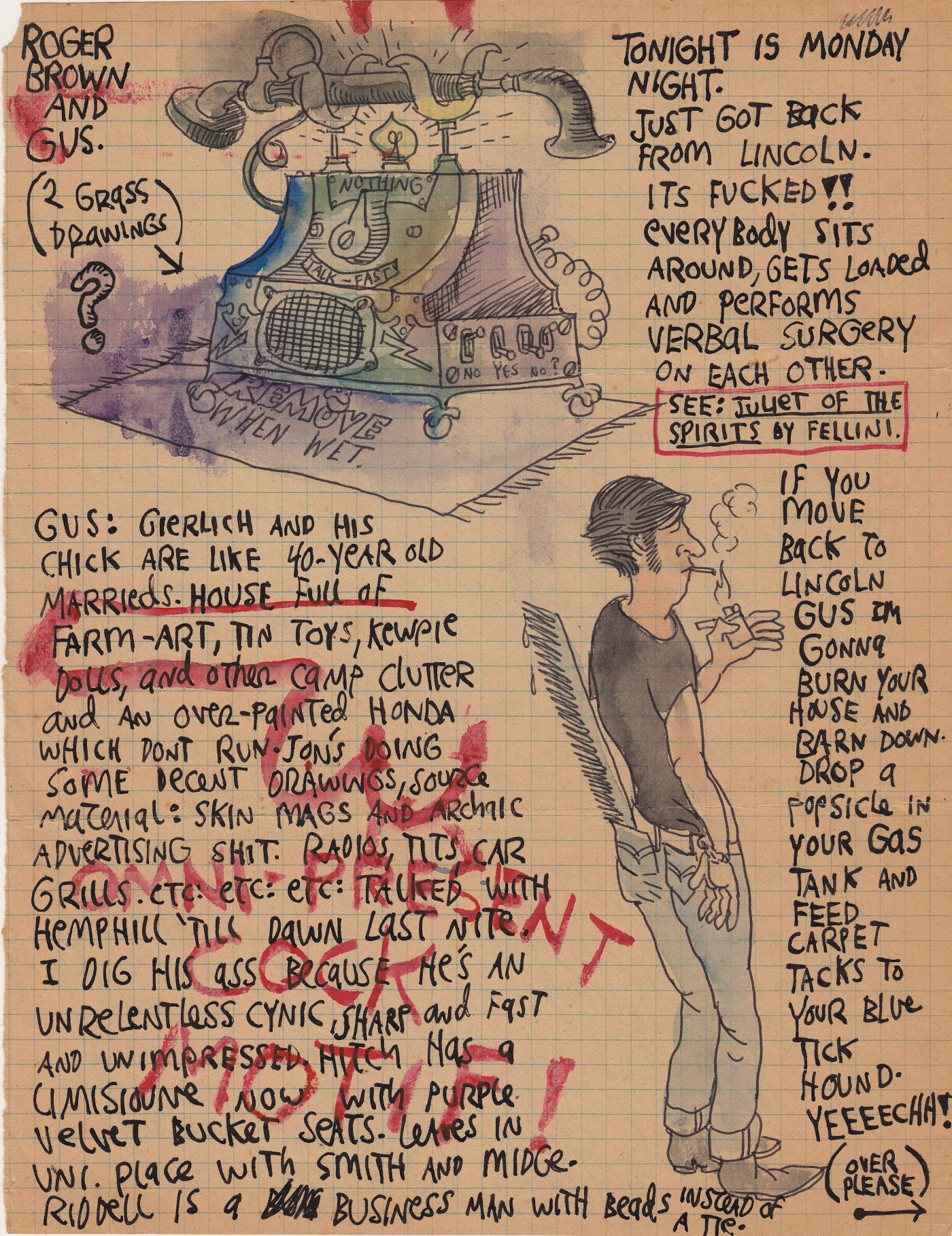
When Wilson moved to San Francisco in 1968, joining the Zap Comix collective alongside Robert Crumb and Rick Griffin, his correspondence became a primary historical record of the underground scene. For forty years, he maintained a "letter-for-letter" contract with friends like Joe Schenkman. He was a master self-promoter, sending out hand-drawn price lists for his original art and keeping his inner circle informed of every gallery exhibit and "excessive" Thanksgiving celebration.
The Tragic Silence (2008–2021)
The prolific output came to a violent halt in November 2008. Wilson suffered a traumatic brain injury after a fall on a rainy San Francisco street. Though he emerged from a coma, the injury resulted in severe aphasia and a loss of motor skills. The man who had spent every morning at the drawing table for fifty years could no longer compose a logical sentence or steady his hand for a sketch.
Supporting Data: Testimonials from the Inner Circle
The depth of Wilson’s character is best understood through those who received his mail. These archives serve as a counter-narrative to his public persona as a "taboo-busting iconoclast."
- Joe Schenkman: The underground cartoonist noted that Wilson’s letters were "complete art experiences." Schenkman observed that while Wilson was aware of his "shock value," his letters revealed a "predator instinct" for human psychology and a deep education in art history.
- Sabeth Ireland: Wilson’s partner through the 1980s, Ireland kept a collection of "cute notes"—sketches Wilson would surreptitiously slip into her purse or coat pocket. To her, these notes represented a "Sun" of energy that crackled with the joy of living, despite the "horrors and foibles" of the world.
- Robert McNown: A former art school model, McNown maintained a rapid-fire correspondence with Wilson. "If I put a postcard in the mail on Tuesday and didn’t have one back by Friday, I thought he’d died," McNown recalled, highlighting Wilson’s extraordinary diligence as a pen pal.
- Lorraine Chamberlain: Wilson’s wife and "go-between with the 21st century," Chamberlain documented the heartbreaking final attempts Wilson made to write. Her accounts of him spending hours trying to compose a simple note to Charles Plymell in 2010 offer a poignant look at the decline of a master communicator.
Official Responses: The Biographer’s Perspective
Patrick Rosenkranz, the preeminent biographer of the underground comix movement and author of The Mythology of S. Clay Wilson, posits that these letters are more than mere memorabilia; they are essential primary sources.
According to Rosenkranz, the correspondence allowed for a "hitherto unseen" look at the artist. While Wilson’s public persona was often "bluff and blunt," his private writings revealed "open-hearted affection" and candid confessions regarding his "boneheaded blunders" and regrets over drunken antics.
From a historical standpoint, the letters allowed biographers to:
- Trace Movements: Pinpoint Wilson’s exact locations during the formative years of the 1960s.
- Date Milestones: Establish a timeline for the creation of iconic characters like the Checkered Demon.
- Analyze Evolution: Observe the shift from traditional illustration to the dense, "Full Wilson" style that would influence generations of "lowbrow" and "outlaw" artists.
The preservation of these letters in scrapbooks and plastic sleeves by his friends has ensured that the "subculture and mass culture alike" can be studied through the lens of one of its most authentic participants.
Implications: The Death of the Physical Mark
The story of S. Clay Wilson’s correspondence serves as a broader commentary on the evolution of human connection. Wilson’s disdain for the computer was not merely luddite stubbornness; it was a defense of the "human dimension."
The Loss of Tactile History
In the digital age, the "paper trail" of an artist’s life is often stored on failing hard drives or in ephemeral cloud accounts. Wilson’s legacy, by contrast, is scattered across the globe in physical form—ink that can be touched, paper that has aged, and collages that retain the DNA of their creator. The end of his writing habit in 2008 was not just a personal tragedy, but a symbolic end to a specific era of artistic communication.
The "Aphasia of the Archive"
The frustration Wilson felt in 2010, trying to write to Charles Plymell, mirrors the difficulty modern historians face when trying to reconstruct the lives of digital-native artists. When the ability to leave a physical mark is lost—whether through injury or technological shift—the "mythology" of the artist becomes harder to verify.
Final Legacy
S. Clay Wilson remains a polarizing figure in American art, known for his depictions of marauding pirates, biker gangs, and demonic entities. However, his epistolary record reveals a man who valued the "good manners" taught by his parents, who never missed a thank-you note, and who viewed every friend as a worthy recipient of a masterpiece. As Rosenkranz concludes, these thousands of pages add a "warm and charming" dimension to a man the world largely knew as a provocateur. In the end, Wilson’s most enduring work may not be found in the pages of Zap, but in the mailboxes of those he loved.



Leave a Comment