
The State of the Sequential Arts: Corporate Censorship, Award Season, and the Preservation of Graphic History
Reported May 15, 2026
The global comics landscape finds itself at a precarious crossroads this week, characterized by a sharp dichotomy between prestigious institutional recognition and increasing systemic barriers to creative distribution. While the "award season" for graphic literature has reached a fever pitch with the announcement of the Eisner nominations and the historic Stella Prize win, the industry is simultaneously grappling with a renewed wave of digital censorship.
The primary catalyst for concern involves the crowdfunding giant Kickstarter, which has recently implemented strict prohibitions on "adult-only or sexually explicit content." This move, mirroring a similar de-listing and demonetization strategy enacted by Itch.io a year ago, is reportedly the result of pressure from payment processors—specifically Stripe—and conservative activist groups. As the industry celebrates its artistic milestones, many creators, particularly those in the LGBTQ* and independent adult comics space, are finding the gates of the digital marketplace swinging shut.
Main Facts: The Financial Chokehold and the Pedestal of Prestige
The most pressing development this week is the "pattern recognition" of corporate gatekeeping. Just as Itch.io previously restricted adult content to satisfy financial intermediaries, Kickstarter is now following a nearly identical playbook. Payment processors like Stripe and Mastercard have increasingly dictated the boundaries of "acceptable" content, often conflating consensual adult art and sex work with illicit material. This policy shift has profound implications for independent creators who rely on crowdfunding to bypass traditional publishing hurdles.
In stark contrast to these restrictive measures, the industry’s elite institutions are currently bestowing high honors upon the medium. The 50th annual Kodansha Manga Awards in Japan have highlighted the global dominance of the form, while the Will Eisner Comic Industry Awards nominations showcase a diverse field led by DC, Image Comics, and Fantagraphics. Perhaps most significantly, Lee Lai’s Cannon has become the first graphic novel to win the Stella Prize, signaling a landmark shift in how literary circles perceive sequential art.
Chronology of the Week: A Timeline of Triumphs and Tribulations
The events of the second week of May 2026 unfolded with a rapid-fire series of announcements and cultural shifts:
- May 10–11: The week began with a focus on the East. The Kodansha Manga Awards celebrated their golden jubilee. Kei Urana and Hideyoshi Ando’s Gachiakuta secured the Best Shōnen Manga title, while Shun Umezawa’s The Darwin Incident took home the Best General Manga award. This period also saw the release of the Will Eisner Comic Industry Awards nominees, setting the stage for the San Diego Comic-Con ceremony in July.
- May 12–13: The narrative shifted to literary recognition and activism. Lee Lai’s Cannon was announced as the Stella Prize winner, a moment described by critics as a "glass ceiling shattering" event for non-binary creators and the medium at large. Simultaneously, reports from the Gran Fest in Kosovo highlighted the "limits of freedom," as Iranian cartoonist Kianoush Ramezani was barred from attending by border authorities in North Macedonia.
- May 14: The focus turned to history and preservation. Remembrances were published for Frank Stack (aka Foolbert Sturgeon), the underground comix pioneer who passed away at 88. In New York, the Domino Books collective launched a crowdfunding campaign for the "New York Working Cartoon Library," aiming to create a physical space for the preservation of comic craft.
- May 15: The week concluded with a sober analysis of the Kickstarter/Stripe policy changes, contrasting the "moral urgency" of independent works like Amanda Baeza’s Wisps with the corporate sanitization of the platforms meant to support them.
Supporting Data: The Critical Landscape
The critical reception of this week’s releases provides a deeper look into the thematic preoccupations of 2026.
Independent and Experimental Highlights
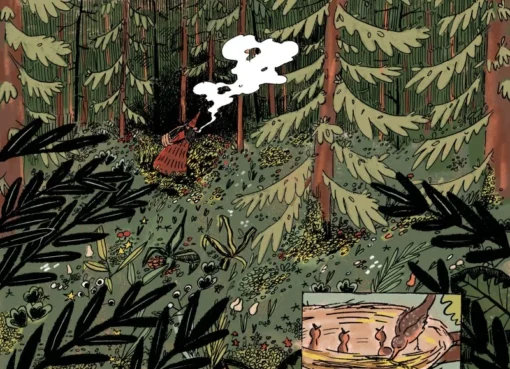
Amanda Baeza’s Wisps has emerged as a critical darling, with reviewers praising its textile-like compositions and abstract beauty. Conversely, the corporate history Super Visible: The Story of the Women of Marvel Comics faced scrutiny for its perceived "corporate spin." Critics noted that while the book celebrates milestones, it largely "glosses over" the systemic harassment and alt-right hate campaigns that have historically targeted female creators.
The Rise of Graphic Medicine
In the academic and social sphere, the release of Arizona O’Neill’s Opioids and Organs has sparked a conversation on "Graphic Medicine." A paper published in the journal Societies this week highlights how graphic narratives are being used as design tools for harm reduction, addressing the stigma of opioid overdose—a theme central to O’Neill’s personal and harrowing memoir.
Mainstream Expansions
Mainstream publishers continue to lean into high-concept crossovers and "Absolute" editions. The launch of Sonic the Hedgehog x Godzilla #1 was noted for its surprising synergy, while DC’s Absolute Martian Manhunter continues to push the boundaries of the "prestige" format. However, the shadow of payment processor restrictions looms even over these giants, as the infrastructure for digital sales remains fragile.
Official Responses and Creator Perspectives
The industry’s response to the current climate is one of both resistance and community-building.
James Tynion IV, speaking on behalf of the Brooklyn Organization Dedicated to the Endurance of Graphic Arts (BODEGA), emphasized the need for regional autonomy. "We want to be the voice of Brooklyn cartoonists in that larger conversation around arts philanthropy," Tynion stated. BODEGA’s goal is to provide a resource for creators that is independent of the whims of Silicon Valley payment processors.
Lee Lai, reflecting on the Stella Prize win, noted that while the award is a triumph, the "breaking of reader expectations" remains a constant struggle for non-binary and queer artists. The win for Cannon is seen not just as a personal victory, but as a defensive bulwark against the "censuring of creative rights" currently seen on platforms like Kickstarter.
In the world of archival research, Patrick Rosenkranz published a definitive look at the correspondence of S. Clay Wilson. His research into Wilson’s letters reveals a "prodigious" creative output that was only silenced by physical tragedy, serving as a reminder of the fragility of the artist’s voice in the face of both health and institutional silencing.
Implications: The Long-Term Forecast for Sequential Art
The events of this week suggest three primary implications for the future of the comics industry:
1. The Balkanization of Distribution
As major platforms like Kickstarter and Itch.io tighten their content policies to satisfy conservative financial entities, we are likely to see a "Balkanization" of comic distribution. Creators are already moving toward localized cooperatives (like BODEGA) or specialized, decentralized platforms that are less susceptible to the "payment processor playbook." The "New York Working Cartoon Library" and the "Comics Advocacy Group" (which launched new mini-grants this week) represent a move toward self-sustaining ecosystems.
2. The Institutionalization of the Graphic Novel
The Stella Prize and the continued prestige of the Eisners indicate that the graphic novel has fully transitioned from a "subculture" to a "literary pillar." However, this institutionalization brings its own risks—specifically the "sanitization" of history, as seen in the critiques of Marvel’s Super Visible. There is a growing tension between the "respectable" face of comics and the medium’s subversive, underground roots.
3. The Crisis of Digital Freedom
The prevention of Kianoush Ramezani from attending Gran Fest, coupled with the digital de-platforming of adult content, underscores a global crisis of artistic mobility and expression. The "limits of freedom" (the theme of this year’s Gran Fest) are being tested not just by physical borders, but by the digital algorithms and financial policies of the Western tech sector.
In summary, the week of May 15, 2026, is a microcosm of the modern comics industry: a brilliant display of artistic achievement and historical reverence, currently under siege by a sanitized corporate infrastructure. As creators don their "utility kilts" and head into the summer festival season, the struggle to maintain a truly open and diverse marketplace for sequential art remains the most pressing narrative in the industry.

Leave a Comment