"To Be Extra is to Be Human": Netflix’s ‘Best of the Best’ Redefines the Collegiate Coming-of-Age Comedy
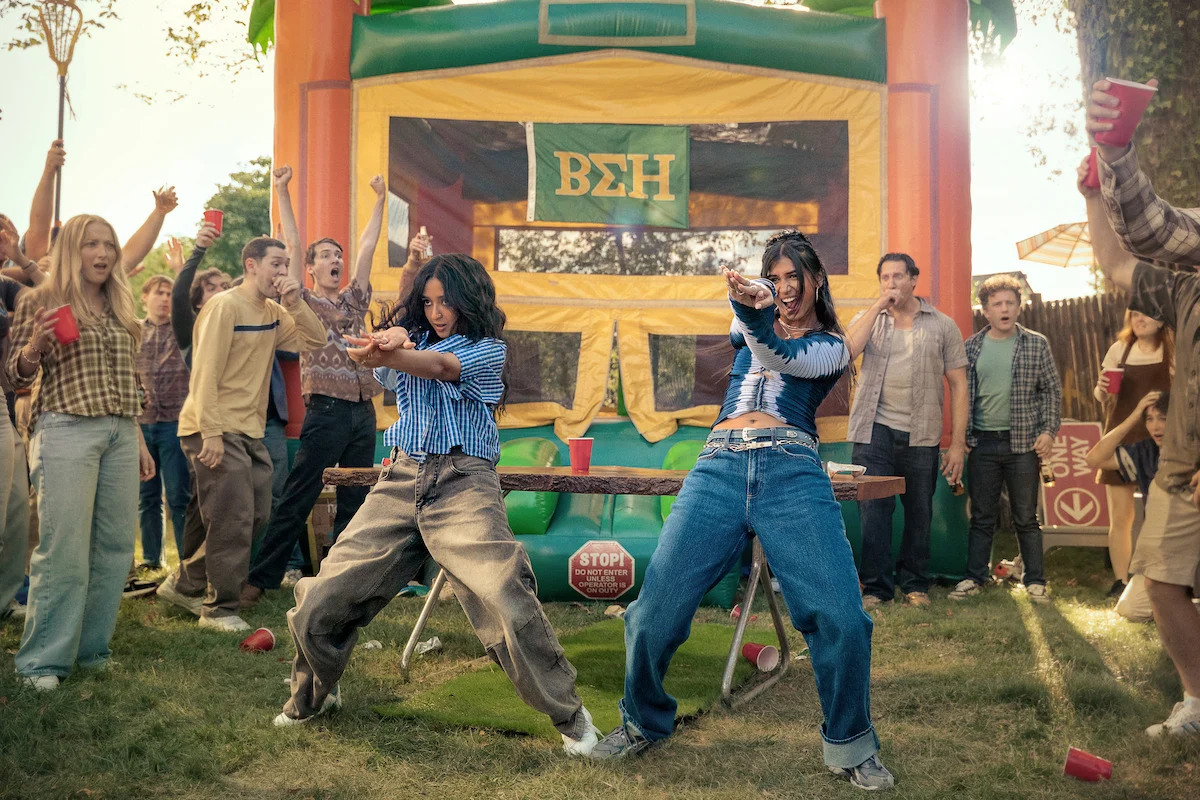
The landscape of the collegiate comedy is undergoing a vibrant, rhythm-heavy transformation. On September 18, Netflix is set to release Best of the Best, a film that seeks to marry the high-octane energy of competitive dance with the nuanced anxieties of the Gen Z experience. Directed by Lena Khan and penned by the sharp-witted duo of Hasan Minhaj and Prashanth Venkataramanujam, the film arrives as a "soul-affirming" exploration of friendship, ambition, and the cultural tapestry of the South Asian diaspora in America.
Anchored by a standout performance from Maitreyi Ramakrishnan (Never Have I Ever), the film navigates the treacherous waters of freshman year at UCLA, where childhood bonds are tested against the backdrop of competitive Bollywood-fusion dance. With a critical grade of B+, Best of the Best is being hailed as a "giddy and exhilarating" addition to the streaming giant’s portfolio, signaling a shift toward more specific, culturally grounded narratives that maintain universal appeal.
Main Facts: A Convergence of Talent and Topical Satire
At its core, Best of the Best is the story of Maya (Ramakrishnan) and Anjali (Priyanka Kedia), two lifelong friends and budding computer science majors who find themselves at a crossroads upon entering the high-stakes environment of the University of California, Los Angeles (UCLA). While their academic pursuits involve the rigors of coding and the looming shadow of Artificial Intelligence, their true passions lie on the dance floor.
The film serves as a significant milestone for director Lena Khan. Having moved from the intimate immigrant narrative of The Tiger Hunter to the big-budget Disney+ feature Flora & Ulysses, Khan utilizes Best of the Best to demonstrate a matured, expansive cinematic eye. The script, written by former Patriot Act collaborators Hasan Minhaj and Prashanth Venkataramanujam, infuses the traditional "coming-of-age" tropes with modern political satire and a biting commentary on the current state of higher education.

Key production elements include:
- Director: Lena Khan
- Writers: Hasan Minhaj and Prashanth Venkataramanujam
- Lead Cast: Maitreyi Ramakrishnan, Priyanka Kedia, Ankur Rathee, Chaneil Kular, and Janina Gavankar.
- Platform: Netflix (Streaming worldwide)
- Release Date: September 18
- Genre: Collegiate Comedy / Musical Drama
Chronology: From Viral Disasters to National Championships
The narrative arc of Best of the Best is structured around the evolution of its protagonists’ identities, both as individuals and as a unit. The story begins not in the hallowed halls of UCLA, but at a high school dance competition that sets the stage for the film’s central conflict.
The "Drone Strike" Incident
The film opens with a sequence that captures the modern nightmare of the "viral failure." Maya, driven by an overconfident desire to innovate, executes a risky stunt involving a drone during a performance. The result is a catastrophic malfunction that injures Anjali and is captured on dozens of smartphones. This "Drone Strike" incident follows the pair into their college years, haunting their reputations in the tight-knit community of competitive South Asian dance.
The UCLA Transition
As Maya and Anjali transition to UCLA, the film captures the "comforting familiarity" of the California campus—sun-drenched quads, overcrowded dorms, and the chaotic energy of student orientation. It is here they encounter Ronak (Ankur Rathee), a graduating senior and captain of the UCLA dance team. Ronak is a character defined by a desperate need for legacy; he refuses to graduate without defeating his ex-girlfriend’s rival squad in a national competition.

The Conflict of Ingenuity vs. Tradition
Mirroring the dynamics seen in collegiate classics like Pitch Perfect, the middle act of the film focuses on the friction between Maya’s "fiery ingenuity" and Ronak’s "play-it-safe" traditionalism. Maya’s refusal to "dim her shine" leads to internal team strife and personal isolation. During this period, Maya finds solace in a budding romance with a character played by Chaneil Kular (Sex Education), while Anjali begins to find her own voice, stepping out from Maya’s shadow and gaining the attention of Ronak, who sees her as the potential new lead for the squad.
The Living Museum Finale
The film culminates in a national competition featuring a "genius finale number." The performance is described as a "living museum," a sophisticated blend of choreography and production design that moves beyond mere entertainment into the realm of institutional art. This finale serves as the resolution for the girls’ friendship, proving that their bond is stronger than the competitive pressures that sought to divide them.
Supporting Data: Craft, Representation, and the "Dual-Screen" Aesthetic
The technical execution of Best of the Best is a critical component of its success. The film’s "craft is as specific as its script," utilizing a team of seasoned professionals to create an authentic collegiate ecosystem.
Visual and Production Design
Cinematographer Adam Carboni employs a "glowing daytime warmth" to capture the optimism of college life, punctuated by "starry nights" that give the film a music-video-like pulse. This visual language is complemented by production designer Henry Dunn and costume designer Elisabeth Vastola. Vastola’s work is particularly noted for avoiding "costume-pageant shorthand," instead opting for a blend of exquisite streetwear and culturally resonant competition designs that reflect a modern South Asian identity.

The Satirical Edge
The script’s inclusion of modern anxieties—AI-driven job displacement, the housing crisis, and the "worthlessness" of degrees—provides a grounded counterpoint to the film’s "bubbly" exterior. Lines like "AI is here, your degrees are worthless, you’ll never own a home—back to practice!" encapsulate the "quicksilver political comedy" that Minhaj and Venkataramanujam are known for.
The Digital Lifestyle
Unlike many films that struggle to depict technology naturally, Best of the Best seamlessly incorporates the "dual-screen lifestyle." Smartphones and online displays are treated as extensions of the characters’ identities rather than mere props. The viral afterlife of the "Drone Strike" is a constant narrative engine, reflecting how Gen Z navigates the permanent record of the internet.
Official Responses: Artistic Vision and Cultural Authenticity
While official press junket statements often lean toward promotion, the creators of Best of the Best have been vocal about the film’s underlying philosophy.
Lena Khan on Directorial Evolution:
Khan has noted in various industry discussions that her goal with this third feature was to maintain the "intimate point of view" of her earlier work while embracing the "bigger and brighter" canvas provided by a major streaming platform. Her direction is praised for knowing when to "pull back and let the performers wholly occupy the screen," ensuring the emotional beats aren’t lost in the spectacle.

Hasan Minhaj on the Script’s Ethos:
Minhaj, who also appears in the film as a faculty sponsor, has emphasized the "timeless ethos" of the project: "To be extra is to be human." This phrase serves as the film’s mantra, defending the idea of being "too much" in a world that often demands conformity. Minhaj’s involvement ensures that the film’s humor is "topical" and "of the moment," bridging the gap between traditional Bollywood influences and modern American satire.
Industry Reception:
Early reviews from outlets like IndieWire highlight the film’s "soul-affirming" nature. Critics have pointed out that while the film occasionally "wraps things up a little too conveniently," its "rhythmically satisfying" construction and "generous scale" make it a highly rewatchable piece of media.
Implications: A New Era for the "Streaming-First" Musical
The release of Best of the Best has broader implications for the film industry and the future of diverse storytelling on streaming platforms.
1. The Evolution of South Asian Representation
By centering a story on the specific subculture of Bollywood-fusion dance in American universities, the film moves away from monolithic portrayals of the South Asian experience. It acknowledges "pretty privilege," the pressure of the "model minority" myth in STEM, and the internal politics of the diaspora. It sets a precedent for "specificity as a bridge to universality."

2. The Netflix YA Strategy
Netflix continues to dominate the Young Adult (YA) space by pairing established stars (like Ramakrishnan) with creators who have a distinct comedic voice (like Minhaj). Best of the Best follows the successful blueprint of Never Have I Ever, proving that there is a massive, underserved audience for stories that blend collegiate drama with cultural specificity.
3. The "Bite-Size" vs. "Epic" Tradeoff
The film is described as being "optimized for streaming"—a "bite-size" experience compared to traditional three-hour Bollywood epics. This reflects a shift in consumption habits, where films are designed to be "watched on repeat." However, the film’s quality leaves some critics "wanting a movie more like a traditional three-hour affair," suggesting that there is still an appetite for longer-form, epic storytelling in this genre.
In conclusion, Best of the Best stands as a vibrant testament to the power of being "extra." By blending the familiar rhythms of the collegiate comedy with a uniquely cinematic look at South Asian excellence and friendship, Lena Khan and her team have created a film that is as "comforting and recognizable" as it is "exhilaratingly new." As it hits Netflix on September 18, it is poised to become a staple of the modern coming-of-age canon.