The Architecture of Dreams: Alfred De Angelo and the Persistence of the Surrealist Vision

In an era increasingly defined by the rapid-fire generation of digital imagery and the algorithmic democratization of art, the work of Alfred De Angelo stands as a profound testament to the enduring power of the human hand and the subconscious mind. A master of the surrealist tradition, De Angelo does not merely paint; he constructs doorways. His canvases are not static objects of contemplation but are, instead, invitations into a sensual world where provocative beauty and metaphysical inquiry collide.
De Angelo’s body of work represents a rare confluence of rigorous academic training and an uninhibited exploration of the "essential mystery of existence." By leveraging a "private vocabulary of images," he challenges the viewer to move beyond the superficial and confront the localized, subjective nature of human experience. In doing so, he has cemented his place as a pivotal figure in the modern surrealist landscape, bridging the gap between the classical mastery of the 20th century and the evolving aesthetic demands of the 21st.
Main Facts: The Aesthetic and Technical Foundations
Alfred De Angelo’s work is characterized by what critics describe as "remarkable fluency and expertise." Unlike many contemporary practitioners who rely on the "glitch" or the "random" to achieve a surreal effect, De Angelo’s surrealism is deeply intentional. His images are delineated with a precision that suggests a world governed by its own internal logic—a world that is as tactile as it is dreamlike.
The primary hallmarks of De Angelo’s work include:
- Sensual Provocation: His paintings often transport the viewer into realms of "provocative beauty," utilizing color, texture, and form to evoke visceral responses.
- Cognitive Disruption: The artist explicitly aims to lure viewers out of "well-worn patterns of thought," forcing a confrontation with the limits of human understanding.
- The Private Vocabulary: Central to his practice is the development of a unique symbolic language. These are not universal icons, but rather a "private vocabulary of images" used to express the nuances of personal experience.
- The Search for Essence: De Angelo’s stated goal is to look "through" outward appearances to embody the "essential mystery of existence," a mission that aligns him with the philosophical roots of the original Surrealist Manifesto.
Chronology: From the Academy to the Avant-Garde
The trajectory of Alfred De Angelo’s career is rooted in some of the most prestigious art institutions in the United States. His formal education provided the technical scaffolding upon which his later, more experimental work was built.
The Formative Years: Massachusetts College of Art
De Angelo earned his Bachelor of Fine Arts (BFA) from the Massachusetts College of Art (MassArt). It was here that he began to master the "fluency" mentioned by his contemporaries. MassArt, known for its rigorous approach to the fundamentals of composition and color theory, provided De Angelo with the tools to translate complex subconscious thoughts into coherent visual narratives.

Refinement and Mastery: Rhode Island School of Design (RISD)
Following his undergraduate success, De Angelo pursued his Master of Fine Arts (MFA) at the Rhode Island School of Design (RISD). As one of the world’s leading art and design schools, RISD pushed De Angelo to refine his conceptual framework. It was likely during this period that his "private vocabulary" began to coalesce, moving away from standard representation toward the surrealist explorations that would define his professional career.
The Contemporary Era: Navigating the New Surrealism
In recent years, De Angelo’s work has been positioned alongside a new wave of surrealist inquiry. As seen in the broader art world of 2026, surrealism has expanded to include puppetry (such as the Furry Puppet Studio in SoHo), AI-driven aesthetics (like the work of Jacob Holster), and digital environmental art (Infinidream.ai). Amidst this technological shift, De Angelo has maintained a focus on the "painterly" aspect of the genre, providing a human-centric counterpoint to the rise of machine-generated imagery.
Supporting Data: The Mechanics of "Beguilement"
What makes De Angelo’s work "never fail to impress" is the data of the visual experience itself. The effectiveness of his paintings can be analyzed through three distinct lenses: technical execution, psychological impact, and philosophical depth.
Technical Fluency
Surrealism fails when the viewer cannot suspend their disbelief. De Angelo’s expertise ensures that even his most bewildering compositions possess a physical "rightness." His use of light and shadow—reminiscent of the Dutch Masters but applied to impossible geometries—creates a sense of "surrealism you can hold." This technical grounding is what allows the viewer to feel "delighted" even when they are "confused."
Psychological Disruption
According to the artist, his paintings serve to "press against the limits of [the viewer’s] understanding." In psychological terms, this is known as cognitive dissonance, but in De Angelo’s hands, it becomes an aesthetic tool. By presenting images that are both familiar and alien, he triggers a state of "permission to be amazed." This is not a passive viewing experience; it is an active engagement with the boundaries of the self.
The Institutional Pedigree
The value of a BFA from MassArt and an MFA from RISD cannot be overstated in the context of De Angelo’s market and critical reception. These institutions represent a standard of excellence that validates the "fluency" of his work. In a market flooded with "outsider" surrealism, De Angelo’s academic background provides a structural integrity that appeals to collectors and curators alike.

Official Responses: The Artist’s Statement as Manifesto
Alfred De Angelo’s own words provide the most illuminating look into his creative process. His artist’s statement functions as a roadmap for those attempting to navigate his complex visual terrain.
"Our experiences in life are usually localized and subjective, creating a series of impressions on a personal scale," De Angelo notes. This acknowledgment of the "personal scale" is crucial. It suggests that his work is not an attempt to explain the world to others, but rather an attempt to map the internal landscape of the individual.
He further explains: "I am continually developing a private vocabulary of images with which I attempt to express different aspects of these experiences. With my surrealist paintings, I try to look ‘through’ outward appearances and somehow embody the essential mystery of existence."
This statement highlights a key distinction in De Angelo’s work: he is not interested in the surface of things. While his paintings are visually "sensual" and "provocative," their true purpose is to act as a lens. By looking "through" the physical world, he seeks to capture the "essential mystery"—that which remains when the noise of daily life is stripped away.
Implications: Surrealism in the Age of AI and Automation
The continued relevance of Alfred De Angelo’s work carries significant implications for the future of the fine arts. As we move further into the mid-2020s, the "Surrealism Today" movement finds itself at a crossroads.
The Human Element vs. Algorithmic Dreams
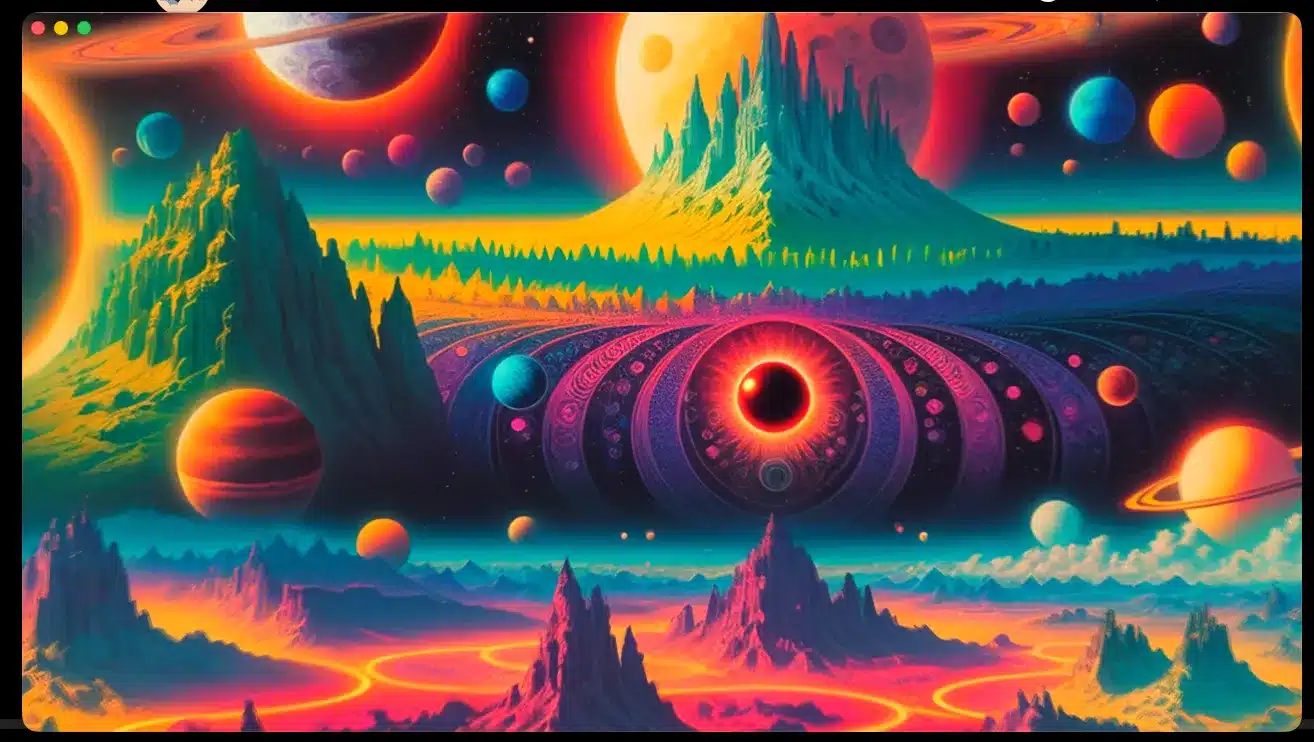
With the rise of tools like Infinidream.ai and the AI-generated aesthetics of artists like Jacob Holster, the definition of "the dream" is changing. AI can generate "bewildering" images at an infinite scale. However, De Angelo’s work suggests that the intention behind the image—the "private vocabulary" born of lived, subjective experience—is something that algorithms cannot yet replicate. De Angelo’s paintings imply that true surrealism requires a soul to experience the "mystery" before it can be painted.
The Return to Sensuality
In an increasingly digital world, the "sensual world" of De Angelo’s paintings offers a necessary return to the visceral. His work reminds the viewer that art is a physical experience. The "provocative beauty" he creates is a reminder of the power of the human perspective to transform the mundane into the miraculous.
Educational Legacy
De Angelo’s success also reinforces the importance of traditional art education. His journey through MassArt and RISD demonstrates that even for an artist dedicated to the "bewildering" and the "confusing," a foundation in technical expertise is the key to creating work that "never fails to impress."
Conclusion
Alfred De Angelo remains a master of the threshold. His paintings are more than just art; they are "doorways to a compelling visual world" that challenge us to reconsider our reality. By blending a sophisticated academic background with a deeply personal philosophical quest, he has created a body of work that is as intellectually stimulating as it is visually arresting.
In the face of a changing world, De Angelo’s commitment to embodying the "essential mystery of existence" ensures that his work will continue to beguile, bewilder, and—most importantly—delight generations of viewers to come. For those seeking to explore his world further, his digital presence at artistpainter.ws serves as a modern portal to an ancient, internal frontier.