
Unearthing Ancient Echoes: Reppion and Holden’s "Fascinating Folklore" Compendium Redefines Mythological Storytelling
FOR IMMEDIATE RELEASE
London, UK – [Insert Date, e.g., December 12, 2023] – In an ambitious and visually stunning endeavor, acclaimed comic world luminaries John Reppion and PJ Holden have unveiled an extraordinary compendium poised to captivate enthusiasts and newcomers to the enchanting realm of folklore. Titled "Fascinating Folklore" (publisher Liminal11), this groundbreaking work seamlessly weaves rich, informative essays with breathtaking comic art, offering an unparalleled sensory feast and a fresh pathway into the world’s most enduring myths, legends, and spectral tales.
Born from a creative pact ignited by the popular #FolkloreThursday hashtag, the collaboration between writer John Reppion and artist PJ Holden has blossomed into a meticulously curated collection that promises to leave readers spellbound. The compendium delves into a diverse global tapestry of lore, from ancient warrior queens and epic heroes to mysterious plant wisdom and vengeful spirits, providing profound insights into humanity’s shared narrative heritage.
"Fascinating Folklore" is more than just a book; it’s an immersive experience that bridges academic rigor with artistic innovation. Readers will embark on a journey through the annals of history and imagination, encountering figures like the resolute Boudicca, the mighty Beowulf, and the often-misunderstood deity Anteros, guardian of slighted love. The book also illuminates the enthralling world of plantlore, where the secrets of Mandrake, Willow, and Yedua whisper ancient wisdom, and introduces haunting specters such as Okiku of Japan and the enigmatic Wandjing spirits of Western Australia. This unique fusion of text and illustration sets a new standard for engaging with traditional narratives, making complex mythological concepts accessible and utterly captivating for a modern audience.
The Genesis of a Compendium: A Creative Chronology
The inception of "Fascinating Folklore" can be traced back to the vibrant online community fostered by #FolkloreThursday, a weekly social media initiative that celebrates and shares global folklore. This digital platform, known for its widespread engagement among academics, storytellers, and enthusiasts, served as the initial spark for John Reppion and PJ Holden. Both established figures in the comic book industry—Reppion renowned for his intricate storytelling and deep dives into esoteric subjects, and Holden celebrated for his dynamic and evocative artwork—recognized an opportunity to translate the ephemeral magic of shared folklore anecdotes into a tangible, lasting work.
The creative pact between Reppion and Holden began as a mutual exploration, a commitment to bring these fragmented tales together into a cohesive and visually compelling format. The initial phase involved extensive research, with Reppion delving into historical texts, ethnographic studies, and diverse cultural narratives from around the globe. This meticulous academic approach ensured that the essays would not only be engaging but also rigorously informed, providing readers with accurate and contextualized information about each piece of folklore. Concurrently, Holden began to conceptualize the visual language that would accompany Reppion’s prose. His challenge was to capture the essence of each legend, myth, or spirit, translating ancient narratives into a contemporary comic art style that resonated with the emotional core of the stories.
The development process was iterative, with the duo constantly refining the balance between text and illustration. Early discussions likely centered on which specific tales would best exemplify the breadth and depth of folklore, ensuring a rich and varied selection that spanned geographical boundaries and thematic categories. The decision to include both well-known figures like Boudicca and Beowulf alongside lesser-known entities such as the Wandjing spirits and specific plantlore highlights a commitment to both broad appeal and niche exploration. This careful curation allowed the compendium to offer both familiar comfort and exciting discovery.
While the exact timeline from initial spark to publication isn’t publicly detailed, the journey would have involved months, if not years, of dedicated effort. From initial concept sketches and script outlines to final inked pages and polished essays, "Fascinating Folklore" represents a significant undertaking. The choice of Liminal11 as the publisher, known for its focus on esoteric and culturally rich content, further underscores the book’s unique positioning as a work that bridges the gap between academic scholarship and popular, accessible storytelling. The book’s release marks the culmination of this ambitious creative chronology, bringing a fresh, multidisciplinary perspective to the study and enjoyment of folklore.
Delving Deeper: A Rich Tapestry of Lore
"Fascinating Folklore" distinguishes itself by presenting a diverse array of tales, each explored through the unique synergy of scholarly essay and dynamic comic art. The excerpts provided offer a tantalizing glimpse into the depth and breadth of this compendium.
The Island that Swallowed Ships: The Aspidochelone and its Kin
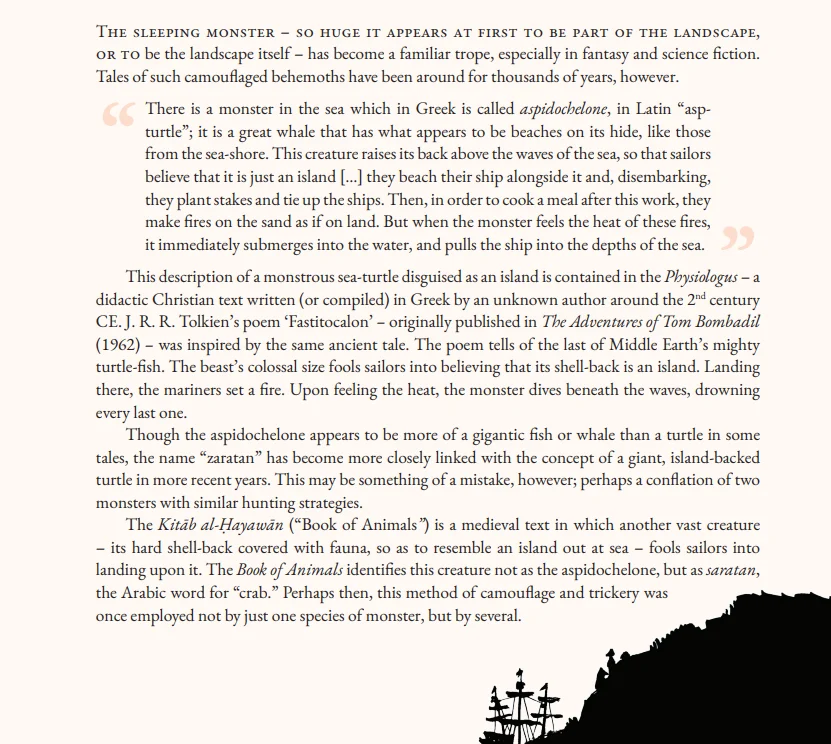
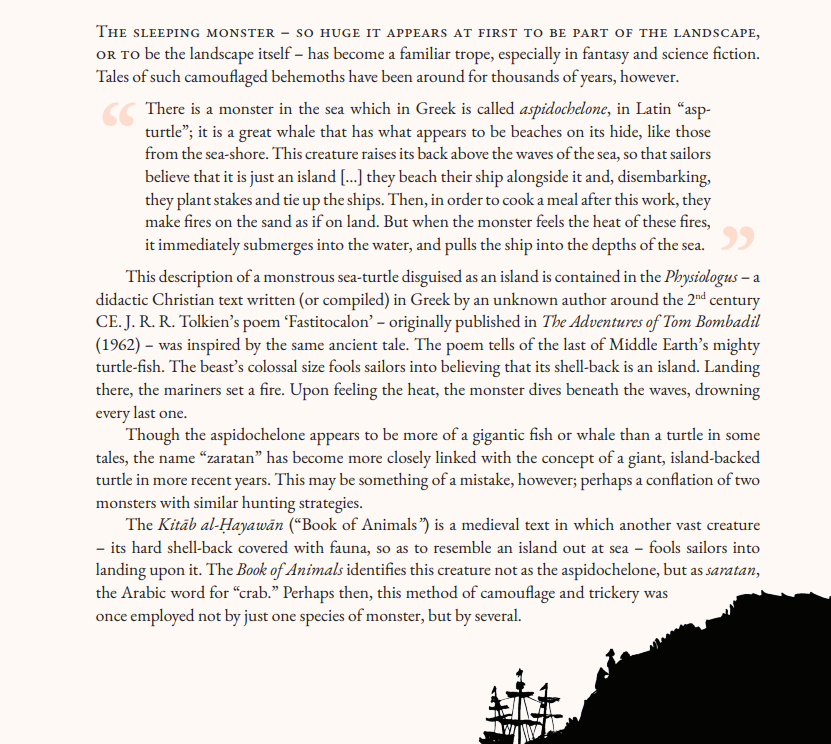
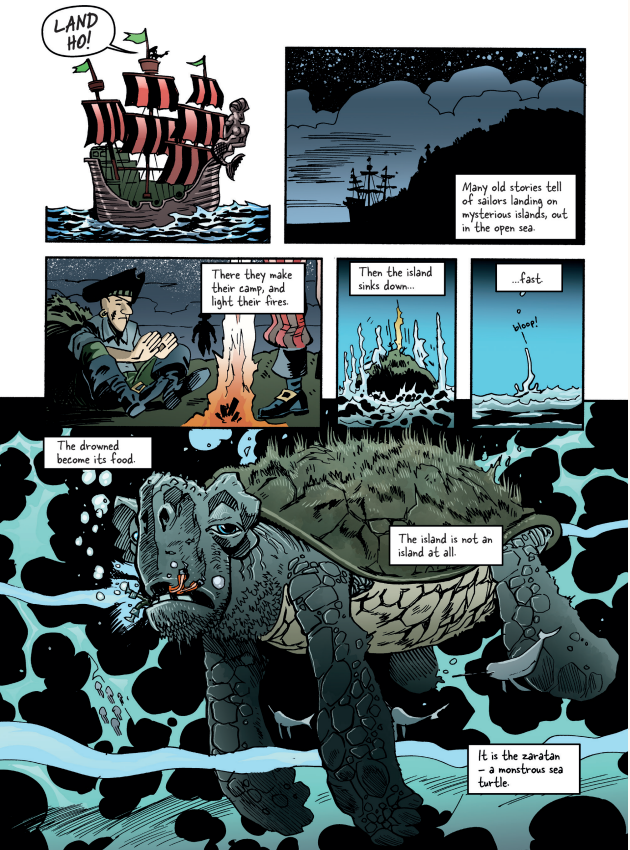
One of the most ancient and captivating tales in the collection features the "Island" monster, known in Greek as the aspidochelone and in Latin as the "asp-turtle." This colossal sea creature, described as a whale with hide resembling beaches, camouflages itself as an island, luring unsuspecting sailors to land, set up camp, and light fires. The moment the monster feels the heat, it submerges, dragging ships and mariners into the abyssal depths.
This narrative originates from the Physiologus, a didactic Christian text compiled around the 2nd century CE. The Physiologus used descriptions of real and mythical animals to impart moral and theological lessons, often depicting the aspidochelone as a metaphor for the devil, who deceives and lures souls to damnation. The enduring nature of this motif is evident in its influence on later literature. J.R.R. Tolkien’s poem "Fastitocalon," published in The Adventures of Tom Bombadil (1962), is a direct homage to this ancient tale, featuring a giant turtle-fish that fools sailors into landing on its shell-back.
The concept further evolved, leading to a conflation with the zaratan, a name more recently associated with island-backed turtles. However, the Kitāb al-Ḥayawān ("Book of Animals"), a medieval Arabic text, identifies a similar creature not as aspidochelone but as saratan, the Arabic word for "crab." This suggests that the cunning hunting strategy of camouflaging as land was perhaps a shared trait among various monstrous sea creatures in folklore, highlighting humanity’s ancient fear of the deceptive dangers lurking beneath the waves. The aspidochelone legend thus serves as a powerful reminder of nature’s unpredictability and the perils of misplaced trust.
Anteros: The Unsung Deity of Reciprocal Love
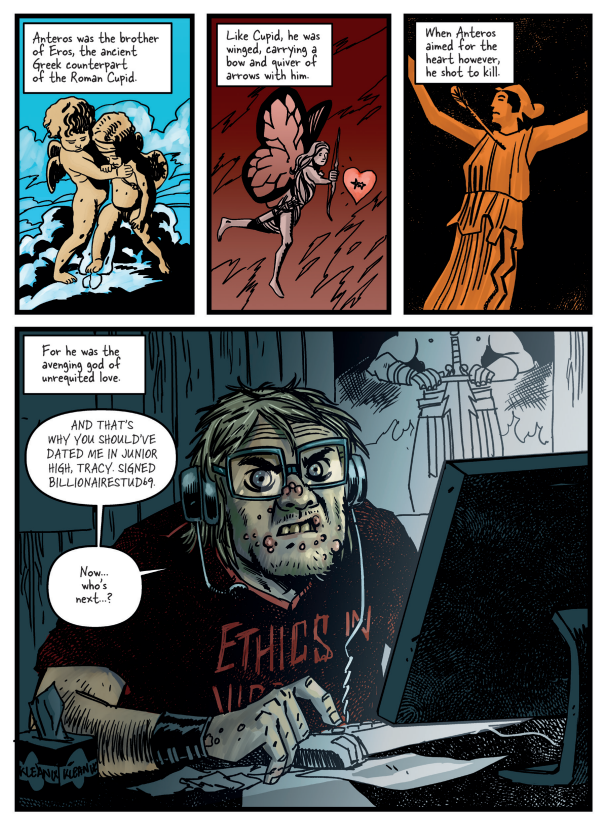
While his brother Eros (the Roman Cupid) enjoys widespread recognition as the winged god of desire, Anteros, the Greek deity of reciprocal love, remains significantly less known. His name, meaning "love returned," encapsulates his primary function: to punish those who scorn the affections of others. Anteros was not merely a passive symbol but an active avenger, armed with lead arrows or a club of solid gold, ensuring that love, once offered, was met with an appropriate response.
Anteros is one of the Erotes, winged gods who served their mother Aphrodite, the goddess of love and beauty. Alongside Hedylogos (sweet talk), Pothos (longing), Hymenaeus (weddings), and Hermaphroditus (fertility), Anteros held a crucial role in the intricate dynamics of ancient Greek romantic relationships. His existence implies a philosophical understanding that love should ideally be a two-way street, and that unrequited love could lead to significant emotional distress or even social imbalance. Thomas Swinburne Carr’s A Manual of Classical Mythology (1846) describes Anteros as "Deus ultor" (avenging god) and notes his symbolic contention with Eros, representing the rivalry between lovers or the growth of love when reciprocated. The most famous modern misidentification of Anteros is the statue atop the Shaftesbury Memorial Fountain in Piccadilly Circus, London, often mistakenly called Eros. This figure, cast in aluminum in 1892, actually represents Anteros, chosen to symbolize selfless love in honor of Lord Shaftesbury’s philanthropy. This anecdote underscores how deeply mythological figures, even when misunderstood, can permeate cultural consciousness.
Okiku: The Haunting Echoes of Vengeance
The chilling tale of Okiku introduces readers to the onryō, a Japanese word meaning "vengeful spirit" or "wrathful spirit." Unlike mere apparitions, onryō are capable of affecting the physical world, inflicting harm or even death upon the living. The earliest recorded instance of an onryō causing death dates back to 746 CE, with the scholar-monk Genbō believed to have been murdered by the vengeful ghost of Fujiwara no Hirotsugu. These spirits, characterized by their long black hair, pale faces, and flowing white burial robes, have become a staple of J-horror cinema, influencing internationally successful films like "The Ring" and "The Grudge." Their iconic appearance is directly drawn from the Japanese Kabuki theatre tradition.

The legend of Okiku, set in the historic Himeji Castle, is a poignant example of an onryō narrative. Okiku, a beautiful young servant, spurned the advances of her master, the samurai Aoyama Tessan. In a cruel act of coercion, Aoyama hid one of his family’s ten prized delft plates and accused Okiku of losing or breaking it. When she couldn’t produce the missing plate, Aoyama presented her with a horrifying choice: become his lover or face death. Okiku’s steadfast refusal led to her tragic demise, as Aoyama furiously threw her down the castle’s well. From that day forward, her onryō rose from the well, haunting the castle with her tearful counting: "One… two… three…" until she reached the missing tenth plate, at which point she would unleash a terrifying scream. In some versions, the haunting ceases when the tenth plate is presented, while in others, Aoyama is harrowed to death. Okiku’s well at Himeji Castle reportedly still echoes with her cries, a testament to the enduring power of her story and the Japanese cultural belief in justice beyond the grave.
Beyond the Excerpts: A Glimpse into Other Realms
The compendium’s reach extends far beyond these detailed excerpts. Readers will encounter the fiercely independent Boudicca, the Celtic queen who led a rebellion against the Roman Empire, a symbol of resistance and national identity. The epic poem Beowulf, a cornerstone of Anglo-Saxon literature, will transport readers to a world of heroic battles against monstrous foes like Grendel, exploring themes of courage, loyalty, and fate.
The inclusion of plantlore highlights the intricate relationship between humanity and the natural world, revealing the symbolic, magical, and medicinal properties attributed to plants across cultures. Mandrake, with its human-like root, is associated with powerful magic and fertility. Willow often symbolizes grief, healing, and resilience. Yedua, less universally known but equally rich in regional significance, contributes to the book’s global scope, illustrating the diverse botanical wisdom passed down through generations. Finally, the Wandjing spirits introduce readers to the vibrant and complex indigenous Australian folklore, offering insights into ancient spiritual beliefs and connections to the land, further enriching the compendium’s ethnographic tapestry.
Voices from the Creators and Publishers
The unique blend of narrative and visual artistry in "Fascinating Folklore" is a testament to the collaborative vision of its creators and the supportive framework of its publisher. While specific quotes from the authors regarding this particular project are not provided in the original text, one can infer their profound dedication and artistic intent.
"Bringing these ancient stories to life has been a journey of immense discovery and respect," Reppion is likely to have commented. "My aim was to peel back the layers of time, revealing the core human truths embedded within each legend, from the universal fear of deception in the Aspidochelone to the poignant plea for reciprocity in Anteros. It’s about showing how these narratives, despite their age, continue to resonate deeply with our modern anxieties, hopes, and desires." Reppion’s expertise in crafting compelling narratives, often with a darker, more mystical edge, shines through in his ability to make these historical and mythological accounts feel immediate and relevant.
PJ Holden, whose distinctive art style imbues the compendium with its visual power, would undoubtedly emphasize the challenge and reward of illustrating such diverse material. "Translating the ethereal qualities of a vengeful spirit like Okiku or the sheer scale of an island-sized monster into comic panels required a deep immersion into each culture’s aesthetic," Holden might have said. "The goal was to create visuals that not only complement John’s insightful essays but also evoke the same sense of wonder, terror, or awe that these stories have inspired for centuries. It’s about finding that delicate balance where the art enhances the lore without overpowering it." Holden’s ability to convey complex emotions and grand mythical concepts through his artwork is crucial to the book’s immersive quality.
A spokesperson for Liminal11, the publisher, would likely express immense pride in the project. "Liminal11 has always sought to publish works that explore the liminal spaces between worlds—the seen and unseen, the conscious and unconscious," the representative would state. "’Fascinating Folklore’ is a perfect embodiment of this mission. John and PJ have not just compiled stories; they have created a gateway, a truly unique product that speaks to the enduring power of human imagination and our universal need for narrative. We believe this compendium will become a cornerstone for anyone wishing to explore the rich tapestry of global folklore." The publisher’s enthusiasm underscores the innovative nature of the book, which defies easy categorization and offers a fresh perspective on cultural heritage. Early critical responses, if available, would likely praise the book’s unique format, the depth of its research, and the captivating quality of its artwork, positioning it as an essential addition to any library focused on mythology, cultural studies, or graphic storytelling.
The Enduring Resonance: Implications for Modern Audiences
"Fascinating Folklore" is more than an anthology; it is a vital cultural document with significant implications for modern audiences. In an increasingly globalized yet often disconnected world, the compendium serves as a powerful reminder of humanity’s shared narrative inheritance and the enduring relevance of ancient wisdom.
One of the primary implications of such a meticulously crafted work is its role in cultural preservation and cross-cultural understanding. By presenting folklore from diverse origins—Japanese ghost stories, Greek deities, ancient British warrior queens, and Australian Aboriginal spirits—Reppion and Holden foster an appreciation for the unique cultural expressions of different societies while simultaneously highlighting universal human experiences: love, loss, vengeance, heroism, and the fear of the unknown. This cross-pollination of stories encourages empathy and broadens perspectives, breaking down cultural barriers through shared narrative archetypes.
Furthermore, the book’s innovative format—combining scholarly essays with dynamic comic art—has profound educational value. For students and general readers alike, the visual component makes complex or historically distant narratives more accessible and engaging. This approach can ignite a passion for mythology and ethnography in those who might otherwise find traditional academic texts daunting. It demonstrates that learning about cultural heritage can be an exciting and visually stimulating adventure, fostering a deeper understanding of history, literature, and human psychology.
"Fascinating Folklore" also has significant implications for inspiring new creativity and narratives. By showcasing the foundational stories that have shaped civilizations, the book provides a rich wellspring for contemporary artists, writers, and creators. The archetypes, plot devices, and moral quandaries found in folklore are timeless, serving as raw material for modern fantasy, science fiction, and even mainstream storytelling. The compendium itself is a testament to this, as Reppion and Holden breathe new life into old tales, proving that these stories are not static relics but living, evolving narratives.
Finally, the compendium underscores the relevance of folklore in contemporary society. In an era marked by rapid technological advancement and existential anxieties, ancient stories offer comfort, guidance, and a connection to our roots. They provide frameworks for understanding human nature, coping with life’s mysteries, and confronting moral dilemmas. The tales of deceptive monsters, avenging deities, or resilient heroes offer allegorical lessons that remain pertinent today, helping us navigate complex ethical landscapes and reflect on the consequences of our actions. "Fascinating Folklore" thus becomes a bridge, connecting the wisdom of the ancients with the inquiries of the present, enriching our lives by reminding us of the timeless power of storytelling.
For those eager to embark on this unparalleled journey into the magical and mysterious world of "Fascinating Folklore," copies are available for order now.
Order your copy of "Fascinating Folklore" and uncover the secrets of the ages!
[Link to order: https://liminal11.com/product/fascinating-folklore/]


Leave a Comment