Unearthing Civilization’s Unseen Architects: A Deep Dive into Alice Roberts’ "Tamed"
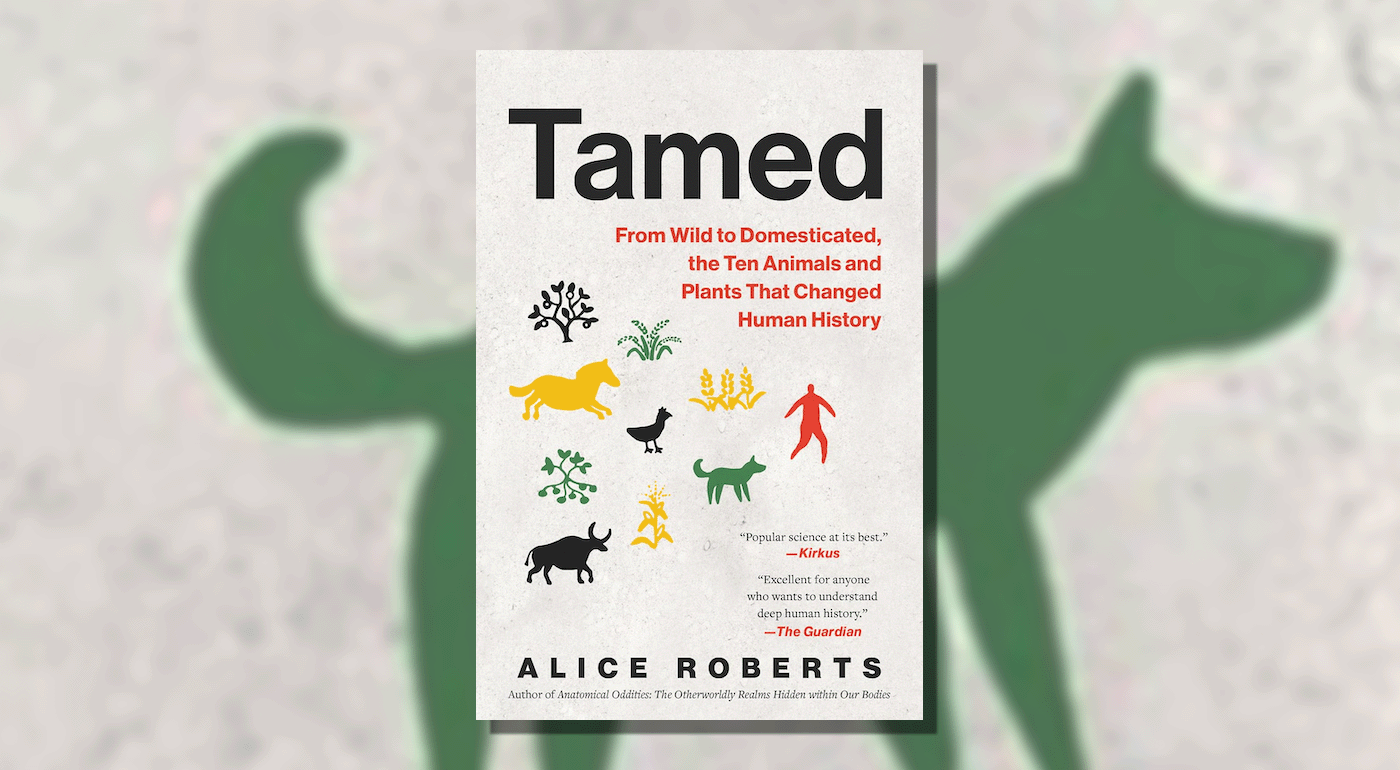
Welcome to "Seeds of Story," a regular exploration of non-fiction works that ignite the imagination of speculative fiction writers. In this installment, we delve into Professor Alice Roberts’ compelling book, Tamed: From Wild to Domesticated, the Ten Animals and Plants That Changed Human History. Roberts, a renowned anatomist and anthropologist, offers a panoramic view of how humanity’s destiny has been irrevocably intertwined with a select group of species, revealing the profound genetic, historical, and archaeological shifts that define our shared journey. This work not only illuminates our past but also sparks crucial questions about our present relationship with the natural world and the speculative futures we might yet forge.
The Unseen Architects of Civilization: Alice Roberts’ "Tamed"
Tamed delivers precisely what its title promises, meticulously tracing the domestication narratives of ten pivotal species. Through a multidisciplinary lens, Roberts navigates the intricate dance of co-evolution, demonstrating how our collaboration with other life forms has not only reshaped the planet but also fundamentally altered humanity itself. The book serves as a powerful reminder that while we often view ourselves as the primary agents of change, our existence is a product of ongoing, reciprocal evolutionary pressures.
The Dance of Mutual Evolution
All species exert selective pressure on their environment and co-inhabitants, often with dramatic consequences. The vibrant hues of a flower are a testament to the evolutionary imperative of attracting pollinators, while the agility of a deer is honed by the relentless pursuit of predators. However, Roberts argues, humans operate on an entirely different scale. Our species, Homo sapiens, has exerted an unparalleled evolutionary influence on a vast array of other species, across diverse geographies, and frequently with deliberate intent. The narrative of the Anthropocene, the current geological epoch characterized by dominant human impact, is, in essence, a chronicle of the species we deemed most useful – and, reciprocally, those whose evolutionary trajectories became most intimately linked with our own.
The mechanisms of this mutual utility are as varied as the species themselves. Consider the ancestors of the domestic dog: wolves, initially drawn to human refuse piles, found a reliable food source. Humans, in turn, discovered the utility of these adaptable canids for hunting, guarding, and companionship, fostering a bond based on mutual advantage. The selection pressure was subtle at first: wolves less wary of humans, or even exhibiting friendly traits, gained access to sustenance and protection. Over generations, this unwitting selection led to profound changes in behavior and physiology. Similarly, early hominids foraging for tubers and wild grasses inadvertently selected for larger, tastier, and easier-to-process variants by dropping their seeds near settlements, thereby planting the genetic foundation for future crops. The junglefowl, wild ancestor of the domestic chicken, laid a modest ten eggs a year; through millennia of human selection, this trait was transformed into the prolific egg-laying of modern hens, engineered to abandon eggs as soon as they are laid, ready to produce more.
From Wild Instinct to Deliberate Design
While initial domestication often arose from this unwitting co-evolution, the Neolithic revolution marked a pivotal shift. Farmers began to deliberately select and breed for desirable traits, accelerating the process exponentially. This intentional manipulation, however, was built upon the groundwork of earlier mutual advantages and generations of unconscious selection. At a genetic level, domestication proved most efficient where small genetic changes yielded significant "packages" of valuable traits. A prime example is the close linkage between an increased number of wheat seeds and the genetic trait preventing "shattering" – the natural tendency of wild grains to disperse their seeds, which would make harvesting incredibly inefficient. This genetic coupling ensured that early farmers could easily collect more abundant, intact grains, providing a powerful incentive for cultivation.
Roberts structures her exploration around several core questions for each domesticate: Where and when did its fate first entwine with humans? What was its original wild form, and how has it been transformed? And, critically, how has its domestication, in turn, reshaped human lives and societies?
Blurring the Lines: Genetics and the Definition of Species
The quest to pinpoint the origins of domestication often unveils fascinating interplay between anthropology and genetics. Historically, anthropologists tended to propose single, distinct geographic locations for the domestication of most species. However, as geneticists increasingly entered the fray, armed with advanced DNA analysis, they frequently uncovered evidence of multiple wild variants and diverse geographical contributions. This often led to lively academic debates. Eventually, a more nuanced understanding emerged: initial domestication might indeed have had a primary source, but as the domesticated form spread geographically, it frequently interbred with local wild populations, incorporating new genetic material and challenging the notion of a pristine, singular lineage. As the reviewer notes, this complex reality, while perhaps unsurprising to anyone with gardening experience, often causes consternation among taxonomists who prefer clear, unambiguous categories.
Indeed, domestication itself fundamentally challenges the very definition of a "species." The biological species concept, which hinges on the ability of individuals to produce fertile offspring, becomes particularly porous in the context of domesticates. While it’s common knowledge that breeds as disparate as chihuahuas and wolves can interbreed, Roberts highlights that chickens and various apple cultivars also readily reproduce across wildly divergent phenotypes. Even more strikingly, equids (horses, donkeys, zebras) frequently produce fertile offspring despite having different numbers of chromosomes, a biological anomaly in the strict definition of species. This phenomenon, Roberts suggests, is fundamentally "an us problem"—a challenge for humans who crave neat, immutable classifications in a biological world that is far more fluid.
This conceptual stress over species boundaries reverberates into contemporary debates, particularly those surrounding genetic modification. Roberts dedicates a section to exploring modern genetic labs, where scientists are developing bird-flu-resistant chicken flocks or engineering beta-carotene-producing Golden Rice to combat vitamin A deficiency in vulnerable populations. Roberts openly grapples with her own discomfort regarding these modern methods, juxtaposing them with the 20,000-year history of "natural" domestication. She questions how fundamentally different these contemporary interventions are from the ancient practices of selective breeding, forcing readers to confront the ethical continuities and discontinuities.
Humanity, the Ultimate Domesticate
Perhaps Roberts’ most provocative argument is that humanity itself can be seen as a domesticated species. Drawing parallels with other social mammals that have undergone domestication, she observes that Homo sapiens has benefited from reduced aggression and extended childhoods, traits that foster greater cooperation and social learning. Despite our capacity for violence, humans exhibit an extraordinary ability to interact peacefully with strangers, a trait rarely seen in other primates save for bonobos. This "self-domestication" facilitated the complex social structures necessary for large-scale agriculture and civilization.
Furthermore, much like other domesticates, humans have readily interbred with closely related species throughout history. Most people of European ancestry carry a small percentage of Neanderthal genes, which are associated with traits such as blue eyes and freckles. Pacific populations bear traces of Denisovan DNA. Intriguingly, we even carry genetic signatures from hominid species not yet identified in the fossil record, a testament to what geneticist Adam Rutherford evocatively describes as humanity’s perennial state of being "horny and mobile." Our genetic tapestry reflects a long history of intermingling, further blurring species lines and highlighting our shared evolutionary journey.
The Anthropocene’s Legacy: A Call for Rewilding
As the Anthropocene has progressed, species that have adapted to live alongside humans have gained a massive evolutionary advantage. This advantage is starkly evident in sheer biomass: the greater physical mass of land-dwelling animals is now overwhelmingly composed of livestock. For many megafauna, domestication became the only viable path to survival; their wild ancestors, such as the original wild horses and aurochs (the massive wild cattle), are now extinct. However, the strategies that propelled our species to dominance are no longer sustainable. Our burgeoning population and intensive agricultural practices have pushed ecosystems to their breaking point. Roberts concludes with a sobering thought: our own long-term survival may now depend not on further domestication, but on our ability to maintain wild reservoirs of genetic diversity and to actively restore the very ecosystems we have relentlessly replaced.
A Critical Lens on Domestication’s Narrative
While Roberts’ Tamed offers invaluable insights, the reviewer engages critically with certain aspects of its execution, particularly regarding its narrative breadth and specific historical focus.
The Microhistory Challenge
The strength of the microhistory genre lies in its ability to reveal the interconnectedness of seemingly disparate elements, demonstrating how a single object or concept—be it eels, paper, or forks—can illuminate the full sweep of history, culture, and geography. This strength, however, can also be a weakness. Overstretch the connections, and readers may become skeptical; delve too deeply into a tangential "rabbit hole," and those seeking core information may grow impatient. Tamed, composed of ten largely independent microhistories, exhibits both these tendencies. Some chapters develop robust, far-reaching narratives, while others become overly focused on less critical details, leaving certain crucial aspects underexplored.
The Untold Stories of Corn: Indigenous Innovation Overlooked
One significant point of frustration for the reviewer lies in the chapter on corn. Having previously engaged with works like Charles C. Mann’s 1491, which meticulously details Indigenous teosinte domestication, the reviewer anticipated a deeper exploration of this remarkable feat of artisanal genetic engineering. However, Roberts’ narrative pivots sharply towards corn’s journey into Europe during the Columbian Exchange. While undeniably an interesting historical trajectory, this focus regrettably overshadows the profoundly innovative and culturally rich origins of corn cultivation in the Americas. The reviewer notes the striking absence of Indigenous voices or perspectives in this chapter, with the sole quote attributed to an Indigenous person filtered through the lens of Charles Darwin. This omission is particularly jarring given the wealth of contemporary scholarship and Indigenous knowledge, epitomized by authors like Robin Wall Kimmerer, whose work on plant heritage (including corn) offers essential insights into these reciprocal relationships. The reviewer’s subsequent discovery of Kimmerer’s article on corn heritage underscores the missed opportunity within Tamed.
This critique, however, is not consistently applicable across the book. The chapter on potatoes, for instance, commendably dedicates ample attention to its paleolithic origins in Peru, demonstrating Roberts’ capacity for in-depth, culturally sensitive historical exploration elsewhere. This inconsistency highlights the unevenness of the microhistory approach.

Despite these narrative imbalances, Roberts does shed light on one particularly compelling aspect of corn’s early domestication: the extreme sensitivity of teosinte to climate variation. During the initial period of its domestication, fluctuating climates could have subtly favored stalks exhibiting traits more akin to modern corn – with more and larger kernels. This insight provides a valuable hint as to why early peoples found teosinte worth cultivating, and how they could have inadvertently selected for traits that, in a more stable modern climate, might be less conspicuous.
Roberts also excels in demonstrating the paradoxical role of climate in the rise of agriculture. While Elizabeth Kolbert (as explored in a previous "Seeds of Story" column) suggests that agriculture became possible during an unusual period of climate stability, Roberts agrees but also emphasizes the crucial role of instability. Many grains and tubers first emerged as reliable wild fallback foods during periods of retreating glaciers. Then, during the Younger Dryas, a sudden return to colder conditions, the increased dependence on these fallback foods provided the motivation for the arduous work of agriculture. This suggests a compelling dynamic: relative climatic calm made agricultural innovations possible, but severe environmental disruptions within that calm made them desirable. This intricate relationship between climate, human ingenuity, and species co-evolution offers a rich vein for speculative narratives.
And then, Roberts notes, the long-term feedback loop begins: agriculture, initially a response to uncertainty, released carbon into the atmosphere, perhaps even averting another glacial episode. But scale that up for a few millennia, and humanity’s greatest strength — its ability to control and intensify food production — becomes its greatest weakness, threatening the very planetary systems it relies upon.
Modern Domestication: Ethical Frontiers and Corporate Control
Roberts’ examination extends to the modern era, where domestication continues through the advanced tools of genetic engineering. This segment of the book, while presenting factual developments, also becomes a point of contention for the reviewer, highlighting the ethical and economic dimensions often overlooked.
The GMO Debate: Ancient Practices, Modern Discomforts
Roberts confronts the complex issue of genetically modified organisms (GMOs) by engaging directly with scientists developing cutting-edge solutions, such as bird-flu-resistant chickens and Golden Rice. Her personal "discomfort" with these methods, openly discussed in the book, serves as a relatable entry point for many readers navigating the ethical landscape of biotechnology. She frames the central question as one of continuity: how fundamentally different are these precise, laboratory-based interventions from the millennia of selective breeding that shaped our domesticates? This prompts a crucial intellectual exercise: are we merely accelerating and refining ancient processes, or are we crossing an entirely new ethical threshold?
The Reviewer’s Stance: Scrutiny on Corporate Influence
However, the reviewer expresses significant frustration with Roberts’ perceived "weirdly sympathetic" portrayal of Monsanto, a company frequently at the center of controversies surrounding GMOs and intellectual property rights. While Roberts focuses on the scientific efficacy and humanitarian potential of projects like Golden Rice, the reviewer points out that she largely omits the critical socio-economic implications. The reality of modern genetic modification often extends beyond laboratory benches to include issues of corporate control over seed supply, farmers’ dependence on specific company products, and the contentious legal battles over patent infringement when genetically modified pollen drifts into conventional fields. The reviewer highlights that even Golden Rice, often lauded for its humanitarian potential, has faced its own share of controversies, some directly linked to corporate influence and control. This critique underscores a vital journalistic responsibility: to present not just the scientific facts, but also the broader societal and ethical contexts that shape technological adoption.
Seeds for Speculative Worlds: The Future of Domestication
Beyond its historical and scientific insights, Tamed is, at its heart, a treasure trove for speculative fiction, offering fertile ground for imagining alternative pasts, presents, and futures. The "Seeds of Story" series exists precisely to unearth these narrative potentials, and Roberts’ work delivers abundantly.
Rewilding Our Past: Reclaiming Extinct Phenotypes
The concept of rewilding, previously discussed in this column, typically focuses on returning existing animal populations to restored habitats. Roberts introduces a more intriguing variant: the restoration of extinct phenotypes. This isn’t quite the Jurassic Park fantasy of resurrecting mammoths from ancient DNA, but rather a focused effort to breed modern animals for the traits of their extinct wild ancestors, thereby re-establishing lost ecological roles. Projects like breeding cattle for aurochs traits and releasing them into European landscapes demonstrate the viability of this approach. It’s possible because, much like humans retaining Neanderthal DNA, domestic cattle still carry some ancestral aurochs genes. This opens up myriad possibilities for identifying and filling ecosystem gaps in a world grappling with biodiversity loss. For speculative writers, it invites scenarios of re-engineered ecosystems, the ethical complexities of "de-extinction," and even the gastronomic implications of "winter not-aurochs culls" making their way onto future dinner tables. What if entire societies were built around managing these rewilded megafauna, creating new forms of human-animal interaction?
The Endless Evolution: Genetic Engineering’s Promise and Peril
The dramatic, swift transformation of chickens in the mid-20th century—from slender, egg-focused birds to the plump, meat-intensive varieties we know today—serves as a powerful illustration that domestication is an ongoing, dynamic process. This "Chicken of the Future" contest, driven by consumer demand and agricultural innovation, mirrors earlier 20th-century predictions of rapid agricultural advancements (e.g., a single strawberry feeding a family). Today, this continuous evolution is propelled by geneticists working on infection-resistant chickens, low-methane-emitting cows (a response to climate concerns), and high-nutrient rice.
For speculative fiction, these ongoing transformations present both utopian and dystopian possibilities. Imagine future societies where entire food systems are engineered for specific environmental or nutritional goals. What are the unforeseen ecological consequences? How do these advancements intertwine with corporate power, intellectual property disputes, and the fundamental right to food? The reviewer’s critique regarding Monsanto’s influence on GMOs, including the controversies surrounding Golden Rice, highlights the "horrifying" potential: a future where control over essential food sources rests in the hands of a few powerful corporations, leading to ethical dilemmas, economic stratification, and conflicts over biological patents. Stories could explore the lives of farmers battling against IP infringement, or the ethical resistance movements against overly engineered food systems.
Alternate Histories: Rethinking Humanity’s Companions
Roberts’ discussion of the underlying factors determining successful domestication—the delicate balance between risk, benefit, and effort—invites us to question the inevitability of our current roster of domesticated species. While some animals, like bears, might enjoy human refuse as much as wolves, their size, strength, and propensity for danger made their domestication impractical for early humans. But this doesn’t mean our present selection of favored crops and livestock was the only possible outcome.
This concept is a goldmine for alternate history narratives. What if a slight shift in climate, geography, or cultural values led to the domestication of a different set of species? What if, for instance, a subtle change in the timing or location of horse domestication had dramatically altered the course of empires, trade routes, or warfare? Could other megafauna, like certain types of deer or even some primate species, have been domesticated under different circumstances? Speculative stories could explore societies built around domesticated capybaras, giant sloths, or entirely different grain staples, leading to profoundly altered technological paths, social structures, and mythologies. This "what if" approach allows for a complete rethinking of humanity’s relationship with the non-human world, offering fresh perspectives on our evolutionary journey.
Further Explorations and Concluding Thoughts
Tamed is an intellectually stimulating journey through the deep history of human-animal and human-plant collaboration. Despite the reviewer’s specific critiques regarding narrative focus and certain ethical omissions, its core thesis—that domestication is a reciprocal, transformative process that shaped both our species and our planet—remains profoundly impactful. It urges us to view the world not just through human eyes, but through the interwoven destinies of all living things.
For those eager to delve deeper into the intricate past of human evolution and domestication, several works offer complementary perspectives. Rebecca Wragg Sykes’ Kindred: Neanderthal Life, Love, Death and Art promises a rich exploration of our closest extinct relatives, further illuminating the "horny and mobile" aspects of human prehistory. Michael Blake’s Maize for the Gods: Unearthing the 9,000-Year History of Corn appears to address the very gap identified in Roberts’ narrative, offering a more comprehensive look at Indigenous corn domestication.
For fiction that explores the future implications of agriculture and domestication, T.K. Rex’s The Wildcraft Drones imagines a future of automated foraging and rewilding. Ada Palmer’s Terra Ignota series contemplates advanced agricultural innovations, including programmable kitchen trees that could revolutionize food production. Nghi Vo’s Singing Hills cycle thoughtfully examines the social and political repercussions of crop failures and their impact on foodways, even featuring domesticated mammoths.
While Jean Auel’s Clan of the Cave Bear series, influential for a generation, drew on archaeological evidence current for its time, its scientific accuracy has inevitably been superseded by modern discoveries. As the reviewer notes, its "horny and mobile" aspects are perhaps more memorable than its archaeological insights. For those seeking prehistoric fiction that is both compelling and scientifically informed about domestication, the literary landscape is ripe for further exploration and recommendation. Tamed serves as an excellent factual foundation for these imaginative leaps, reminding us that the story of humanity is inextricably linked to the stories of the species we have, for better or worse, brought into our fold.