
Unearthing the Ghosts of the Rif: Gerardo Herrero’s ‘Carte Blanche’ and the Bloody Crucible of Modern Spain
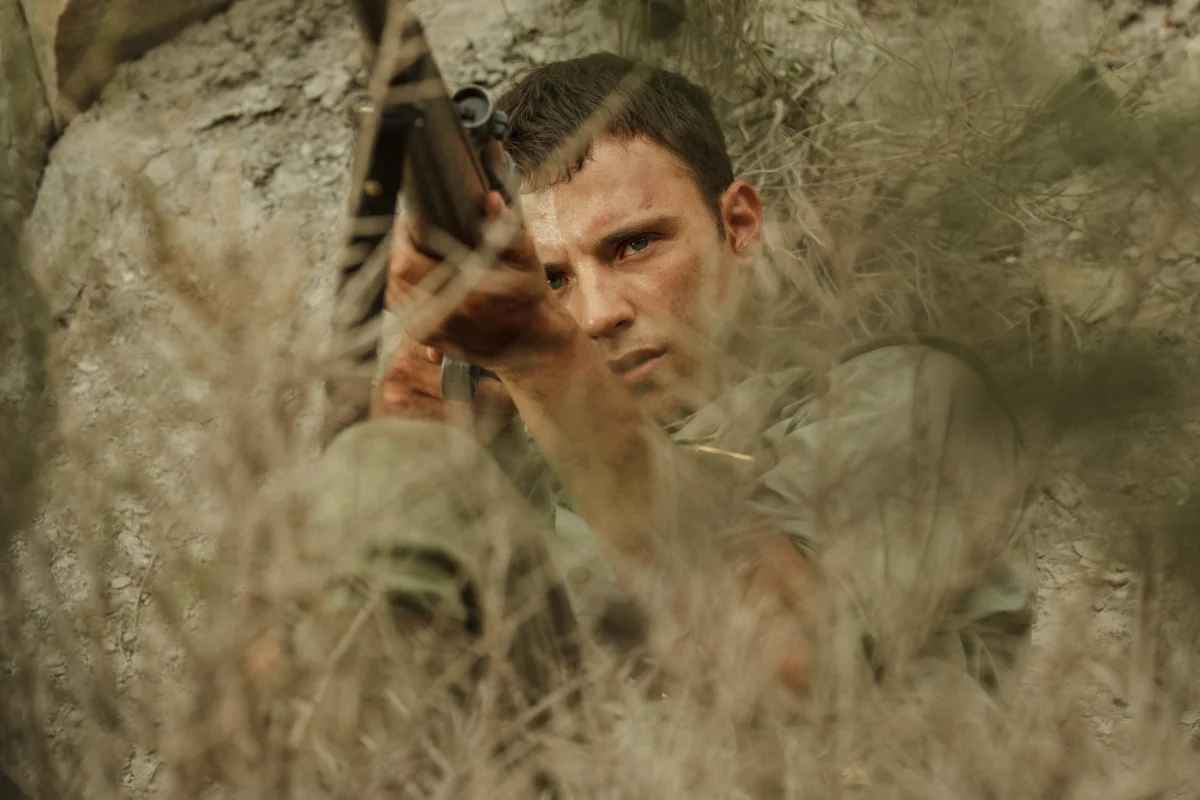
CANNES — In the sun-scorched expanse of the Almería desert, where the dust of spaghetti westerns has long since settled, a different kind of ghost is being summoned. Award-winning filmmaker Gerardo Herrero’s latest feature, Carte Blanche (Spanish La Bandera), is not merely a military thriller; it is a cinematic excavation of a historical trauma that many in Spain have spent a century trying to bury.
Based on the acclaimed 2004 novel by Lorenzo Silva, Carte Blanche explores the harrowing reality of the Rif War in Morocco—a conflict that served as the brutal training ground for the men who would eventually tear Spain apart during its Civil War. As the film makes its way through the Marché du Film at Cannes, represented by Latido Films, it stands as a stark reminder of the dehumanization inherent in colonial conflict and the enduring shadow of Francisco Franco.
Main Facts: A Descent into Depravity
Carte Blanche centers on an elite unit of the Spanish Legion in 1921. Following the catastrophic defeat of the Spanish army at the hands of Berber rebels, a small group of seven soldiers, led by a fanatical and increasingly deranged sergeant (played by Víctor Clavijo), embarks on an unauthorized mission of vengeance. Their objective is simple: to hunt down and eliminate Berber forces in the unforgiving mountains of northern Morocco.
However, the mission quickly devolves into a nightmare of moral decay. At the heart of the narrative is Juan Faura, portrayed by rising star Iván Pellicer. Faura is a disillusioned young man, a romantic soul crushed by heartbreak, who joins the Legion not out of patriotic fervor, but out of a nihilistic desire to die. Through Faura’s eyes, the audience witnesses the "carte blanche" (blank check) given to the Legionnaires—a permission to engage in limitless brutality against both combatants and civilians.
Directed by Gerardo Herrero, a veteran of Spanish cinema known for his ability to weave complex political themes into gripping narratives, the film also features historical figures who would become synonymous with Spanish fascism: José Millán-Astray (Mon Ceballos) and a young, ambitious Francisco Franco (Manuel Pico). Their presence provides the connective tissue between the colonial atrocities in Africa and the eventual overthrow of the Spanish Republic.
Chronology: From Page to Screen
The journey of Carte Blanche from a literary masterpiece to a feature film was nearly as arduous as the campaign it depicts. Lorenzo Silva’s novel has been a staple of modern Spanish literature for two decades, but its scale and the sensitivity of its subject matter made it a "difficult" project for the Spanish film industry.
1. The Stalled Initiative
Originally, Herrero intended only to produce the film through his Madrid-based Tornasol Media. A different director was attached, and the initial script was sprawling, requiring a budget that exceeded the typical limits of Spanish independent cinema. "The project stalled completely," Herrero recalls. "It ground to a halt because we needed to raise a level of funding that simply isn’t available in Spain for a standard feature film."
2. The Directorial Pivot
The project faced a "make or break" moment when it became clear that the original vision was economically unfeasible. It was then that Herrero’s co-producers suggested he take the helm himself. Known for his efficiency and deep understanding of the Almería landscape, Herrero accepted the challenge, rewriting the script to focus the narrative tension while maintaining the visceral impact of the combat.
3. Production and Extreme Conditions
Filming took place over six and a half weeks in August and September of last year. To capture the authentic "hell" of the Moroccan campaign, Herrero chose to shoot during the peak of the Spanish summer. Temperatures on set regularly hovered between 35 and 38 degrees Celsius (95–100°F). For the cast, the sweat and exhaustion seen on screen were not the products of makeup, but the reality of performing grueling physical maneuvers in the desert heat.
Supporting Data: The Economics of Realism
Producing a period-accurate war film on a modest budget requires a blend of logistical ingenuity and technical compromise. Herrero managed to bring Carte Blanche to completion for approximately €4 million ($4.65 million), a figure that includes advertising and distribution costs.
Location and Logistics
To keep costs manageable, Herrero utilized his intimate knowledge of the Almería desert. By centralizing the shoot in a few key areas—including an abandoned mine in Granada—the production avoided the massive overhead of moving a large crew between disparate locations.

- Geographic Strategy: The proximity of the Granada mine to the Almería desert allowed for a seamless transition between the "mountain" and "desert" sequences of the Rif.
- The Script Revision: A major sequence involving the Battle of Badajoz (a pivotal and bloody event from the later Civil War) was excised from the original draft. Herrero noted that this single sequence would have cost several million euros on its own.
Technical Authenticity
Despite the budget constraints, Herrero refused to rely solely on digital effects.
- Practical Effects: The film utilizes real gunfire and explosions, which were later "enhanced" by VFX rather than being entirely generated by them.
- Period Vehicles: Because the Spanish military refused to provide equipment, the production had to source vintage combat vehicles from private collectors across Europe.
- Costume and Safety: A point of contention for historical purists may be the soldiers’ footwear. While many Legionnaires historically wore alpargatas (espadrilles), Herrero opted for sturdy military boots. "I couldn’t risk an actor twisting an ankle," Herrero explained. "When you have to repeat a scene seven times… you simply cannot risk someone breaking an ankle."
Official Responses: A Wall of Silence
Perhaps the most telling aspect of the film’s production is the lack of cooperation from official Spanish institutions. While many European countries provide military assistance for historical films, the Spanish Army reportedly offered "absolutely no cooperation whatsoever" for Carte Blanche.
Herrero attributes this cold shoulder to the lingering sensitivity surrounding the Spanish Legion and the Civil War. "I assume this is because the whole subject still touches too many raw nerves," he told Variety. The Spanish Legion, founded by Millán-Astray and Franco, remains a controversial institution in modern Spain, often associated with the far-right and the darkest chapters of the 20th century.
This lack of institutional support forced the production to become entirely self-reliant, relying on private historians and collectors to ensure that the uniforms, weaponry, and atmosphere of 1921 were captured with haunting accuracy.
Implications: The War That Invented a Dictator
The Rif War is often referred to by historians as "Spain’s Vietnam," yet it remains curiously absent from the country’s cultural output. For Herrero, this omission is a mistake of historical proportions.
"Whether you call it the Rif War, the African War, or the Moroccan War… it strikes me as the most significant historical event in the history of Spain after the Civil War," Herrero asserts. The implications of the conflict, as explored in Carte Blanche, are three-fold:
1. The Birth of the "Africanistas"
The war created a class of hardened, brutalized officers known as the Africanistas. These men, including Franco, developed a military philosophy that viewed political opponents not as fellow citizens, but as "rebels" or "infidels" to be eradicated. The "carte blanche" they exercised in Morocco was the same logic they applied to the Spanish populace during the 1936 coup.
2. The Dehumanization of Conflict
The film serves as a psychological study of how men are broken and remade by war. Through the character of Juan Faura, Herrero explores why young men joined the Legion—often to escape crimes or personal heartbreak—only to find themselves transformed into instruments of depravity. The Legion offered a form of impunity that Herrero notes "simply doesn’t exist today."
3. The Structural Roots of the Civil War
Herrero’s most provocative argument is that the Spanish Civil War was not an isolated event, but a direct consequence of the colonial failure in Morocco. "Had the Legion not existed, perhaps none of this would have happened," he explains. Franco used the Moroccan campaign to gain the prominence and the loyal Moorish troops necessary to invade the Spanish mainland and overthrow the democratically elected Republic.
As Carte Blanche prepares for its international release, it challenges audiences to look beyond the battlefield. It is a film about the "story untold"—a warning that the violence a nation inflicts abroad inevitably finds its way back home. In the sweating, desperate faces of Herrero’s Legionnaires, we see the blueprint for a dictatorship that would silence Spain for nearly forty years.


Leave a Comment